
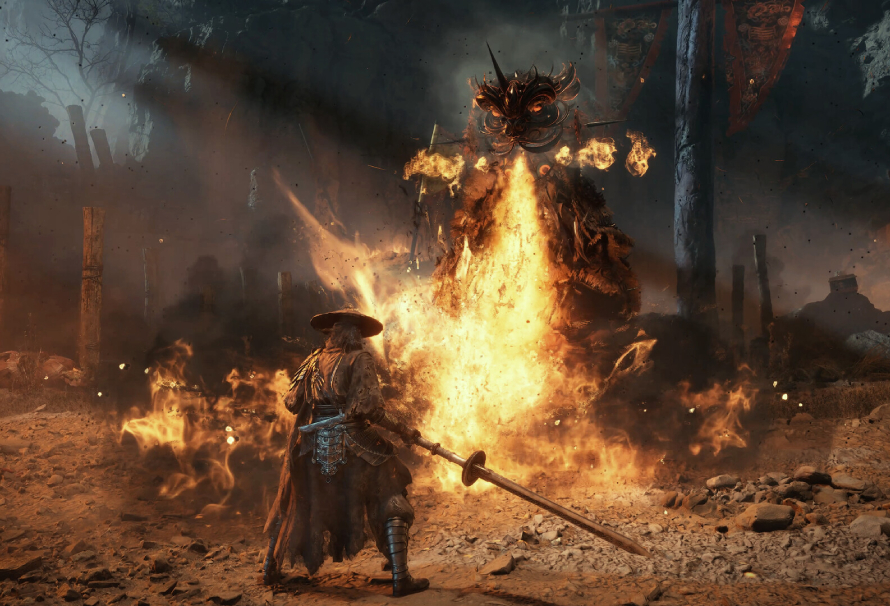
Kungfupunk is an intriguing term on the face of it, isn’t it? Cyberpunk and steampunk both describe what you’re getting from an aesthetic and thematic standpoint, and each could cover hundreds, perhaps thousands, of literary, big-screen and video game works. By comparison, the term ‘kungfupunk’ feels a little more channelled and focused – and rightly so.
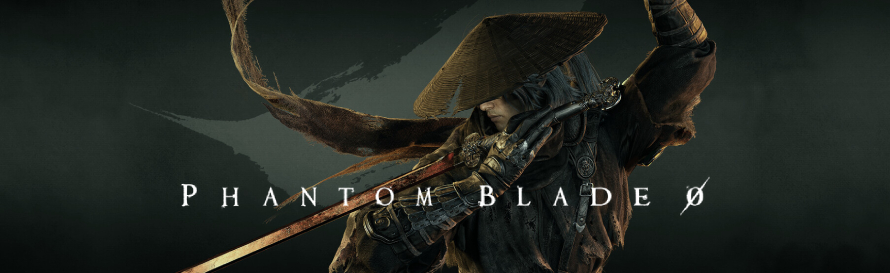
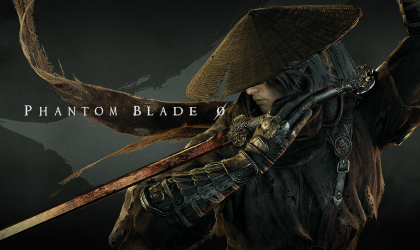
In the case of Phantom Blade Zero, the debut title from developer S-GAME, kungfupunk represents a combined mechanical, visual, narrative and atmospheric language that defines the game in its totality. Here’s what comprises kungfupunk and how it anchors Phantom Blade Zero so completely.
With Phantom Blade Zero taking the form of a hyperkinetic third-person action game, it makes perfect sense that Beijing-based developer S-GAME would want to infuse its latest effort with the authentic fight choreography that became such a recognisable staple of Hong Kong martial arts cinema’s halcyon days.
Enabling that throughline of traditional martial arts choreography to bleed so deftly into Phantom Blade Zero is a collaboration with Kenji Tanigaki. A mainstay of Hong Kong legend Donnie Yen’s Action Team and director of the superb 2025 martial arts flick Furious, he helps that traditional martial arts choreography bleed so deftly into Phantom Blade Zero. Honestly, if you haven’t seen it, get on that, stat.

As a result, Phantom Blade Zero bases its combat around blisteringly fast, fully motion-captured and balletic fight animations from a professional Hong Kong stunt team. The choreography prizes physical momentum and a lightning-fast exchange of strikes, blocks, evasions and counterstrikes over the more magical, floaty style of combat seen in games such as the Sword and Fairy series.
Put simply, if you’re a fan of Hong Kong wuxia epics such as Iron Monkey, the Once Upon a Time in China trilogy or the Fong Sai-yuk movies, the combat in Phantom Blade Zero will look and feel warmly familiar.
Phantom Blade Zero’s Hong Kong connection also runs deeper than its ties with Kenji Tanigaki, as Donnie Yen himself plays an extensive role in the project. In addition to contributing the expertise of his Hong Kong-based stunt team to S-GAME’s motion capture and fight choreography, Yen takes on the major role of Mó Yuan, lending his facial likeness, combat choreography and motion-capture performance to the character.
It’s also worth noting that this marks Yen’s first high-profile, fully acted and motion-captured appearance in a video game of this calibre.
If a different studio had developed Phantom Blade Zero and taken a markedly different approach, the game could have ended up as a fairly unremarkable – if probably still objectively attractive – period wuxia actioner. However, we do not live in that timeline. The version of Phantom Blade Zero in front of us instead presents a heady combination of traditional dynastic Chinese aesthetics and industrial-punk leanings, creating something really quite unique.

At the centre of the kungfupunk premise, Phantom Blade Zero has players tearing through a Jianghu – essentially a martial underworld – stuffed to the brim with sophisticated clockwork automatons, viscerally flesh-stitched fiends and augmented robotic enemies. Players can tackle these threats with a broad range of weapons, including polearms, dual blades, rudimentary firearms and even modular secondary weapons that can shoot fire and unleash other hazards.
The kungfupunk visual language also defines the world of Phantom Blade Zero in no uncertain terms. Our protagonist roams through a world thick with industrial decay and rusted architecture, where seemingly constant torrential rain lashes muddy roads and rural environments. To dispel any lingering illusion about the setting, you won’t find the impossibly clean, flawless décor and majesty of dynastic imperial palaces in Phantom Blade Zero. Of that, you can be sure.
Peer beyond the wuxia-inflected combat and wrecked industrial aesthetic that Phantom Blade Zero seemingly oozes from every pixel, and you’ll quickly realise that strong elements of Chinese folk horror underpin the entire affair. As such, Phantom Blade Zero’s kungfupunk leanings allow the game to subvert those terrors in new and often frightening ways.
A hefty dose of occult horror serves as the primary vehicle for this terror. It taps into the darkest Chinese folk myths but twists them to accommodate the industrial aesthetic of Phantom Blade Zero’s kungfupunk visual sensibilities.
The animated mechanical figures that attack the main character, Soul, provide a perfect example of this unholy amalgamation. In other games, these mechanised monstrosities might simply amount to a shambling mass of mechanical parts hell-bent on killing Soul. Here, however, the red threads that give these horrors life subvert their traditional role in Chinese folklore. Rather than suppressing spiritual possession and bad energy, the threads facilitate them.

The subversion of traditional Chinese folklore continues with the fact that the overwhelming majority of the enemies Soul encounters wear ritualistic masks to conceal their identities. In Chinese folklore, people often use these masks to ward off and repel evil spirits. Here, though, the game reverses that meaning and symbolism: the masks erase the wearer’s humanity, leaving only a nihilistic, murderous husk behind.
Perhaps the biggest element of Phantom Blade Zero’s occult leanings – and the one that dovetails most directly with the narrative – is Soul’s 66-day reprieve. After suffering a mortal wound and taking the blame for the murder of an important patriarch within his order, Soul has just 66 days to live.
A necrotic tether grants this reprieve, keeping Soul’s artificial heart ticking for 66 days. After that, Soul will perish and join the legions of animated dead he has sworn to combat.
Kung fu, industrialisation and the occult: these are the three pillars of Phantom Blade Zero’s kungfupunk setting, and there’s nothing quite like it.


 Add us to your RSS feed