
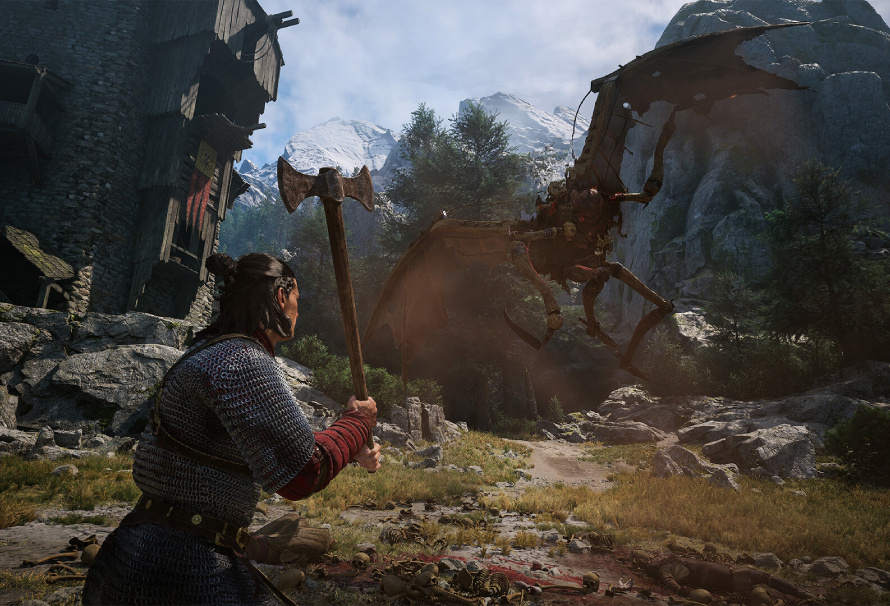
The quick, slightly lazy, but undeniably useful elevator pitch for The Blood of Dawnwalker is this: imagine The Witcher, but you’re a vampire in the Carpathian Mountains.
That premise alone is enough to make a lot of RPG fans pay attention. However, there’s far more to The Blood of Dawnwalker than that surface-level comparison. With its grim fantasy setting, reactive quest design, vampire-human duality, and serious RPG pedigree, Rebel Wolves’ debut is already looking like one of the most exciting action RPGs on the horizon.
At the time of writing, The Blood of Dawnwalker has reportedly appeared on more than two million Steam wishlists. Clearly, plenty of players are already watching this one closely.
To be clear right off the bat, The Blood of Dawnwalker is not being conjured into existence by an unknown studio. Polish developer Rebel Wolves is made up of industry veterans, including former CD Projekt RED developers who worked on The Witcher 3: Wild Hunt. That includes The Witcher 3 director Konrad Tomaszkiewicz.

That pedigree matters. Rebel Wolves already has a proven understanding of what makes a sprawling action RPG work. The team knows dark fantasy worldbuilding, choice-driven storytelling, and the kind of atmosphere this premise demands. Just as importantly, that background gives The Blood of Dawnwalker a real sense of creative confidence.
Vampires have been an irresistible subject for game developers for decades. Even so, few studios appear to be approaching the idea with quite the same energy and ambition as Rebel Wolves.
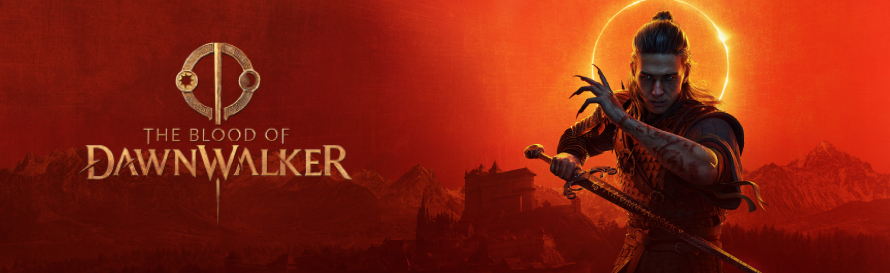
The Blood of Dawnwalker puts players in control of Coen, a tortured human-vampire hybrid trying to survive in Vale Sangora. This fictional 14th-century rural enclave sits deep in the Carpathian Mountains. As if being a social exile was not enough, Coen is also fighting to save his family from Brencis. This ancient vampire intends to subjugate the local population through slavery and regular blood taxes. He is, to put it mildly, not a good lad.
Against this grim and relatively grounded backdrop, Coen must use both sides of his nature. By day, he can operate as a human. By night, he can embrace his darker vampiric gifts. Crucially, this is not just a flashy gimmick. The Blood of Dawnwalker builds its quest structure around that split between human and vampire, day and night.

Most quests can be approached differently depending on which form Coen is using. In his human form, he has access to sword combat, spells, and branching dialogue options. That means he can rely on diplomacy, persuasion, and social engineering to get what he needs.
In that sense, he is not entirely unlike Geralt in The Witcher games. The downside is that human Coen is vulnerable to conventional weapons and hazards. On the plus side, he can restore his health with ordinary food.
Coen’s vampire form offers a huge range of immediate physical advantages. At night, he can defy gravity, unleash supernatural strength, and use heightened senses to uncover secrets. He can also tear into enemies with vicious claws and shadow-step through the darkness for stealthy kills.
Being a vampire does have drawbacks, though. The world changes after sundown, and some areas may become more heavily guarded. These spaces can require a stealthier approach. Coen’s human social skills and magical options are also unavailable until daylight returns.

Healing works differently too. Human food will not help a vampire, so Coen needs blood instead. He can feed on animals or humans, as you might expect. However, feeding in front of witnesses can quickly turn a desperate recovery attempt into a dangerous fight.
That is what makes The Blood of Dawnwalker so interesting. Being a vampire is not simply a straight upgrade over being human. It is an alternate state of being, with its own strengths, weaknesses, risks, and opportunities.
Neatly complementing the game’s human-and-vampire dynamic is its time progression system.
Unlike an open-world RPG such as The Witcher 3, where you can take your time and clear every quest marker, The Blood of Dawnwalker moves time forward whenever you complete a side quest or progress the main story. That means choosing one path may cause another to disappear.

It is a smart way to give decisions real weight. Rather than letting players see everything in a single playthrough, The Blood of Dawnwalker appears to be embracing consequence, scarcity, and replayability. Every choice matters because every choice costs time.
Combat also looks like a notable step away from the relatively loose swordplay of The Witcher 3. Instead, Rebel Wolves is building something more deliberate and technical.
The game uses a directional attack and defence system, with shades of Kingdom Come: Deliverance. Strikes land depending on the direction they are thrown. Incoming blows can be blocked or parried by matching the direction of the attack.
There is also a stamina system designed to punish reckless button-mashing. Attack too aggressively, and Coen can run out of energy. That leaves him exposed and defenceless for a short time.
Attacks, parries, and blocks also charge Coen’s special abilities. In human form, that might mean unleashing dangerous spells. In vampire form, it could mean triggering brutal execution-style attacks. In other words, hammering the attack button will not get the job done.

Taken as a complete package, The Blood of Dawnwalker feels wonderfully at odds with many modern industry expectations.
There are no live-service hooks. No seasons. No microtransactions. Instead, Rebel Wolves is offering a chunky single-player RPG with a contained narrative, well-written characters, meaningful choices, and around 50 to 70 hours of gameplay.
It also appears to have replayability for the right reasons. Players are not being asked to grind through busywork. Instead, the game’s quest structure, time system, and day-night decisions make different playthroughs genuinely appealing.
In short, The Blood of Dawnwalker is shaping up to be exactly the kind of dark fantasy action RPG many players have been waiting for. It looks ambitious, atmospheric, choice-driven, and refreshingly focused on delivering a complete single-player experience.
And honestly? That sounds pretty great.



 Add us to your RSS feed