
Game of the Year winners and nominees come and go, but some games simply never seem to age.
This elite group doesn’t just hold up technically against modern releases. They also boast gameplay loops, mechanics, and design philosophies that remain endlessly enjoyable years later.
Whether through timeless art direction, exceptional game design, or unforgettable worlds, these classics still feel every bit as good to play today as they did on launch day.
Here are ten games that have aged like fine wine and remain worth playing in 2026.

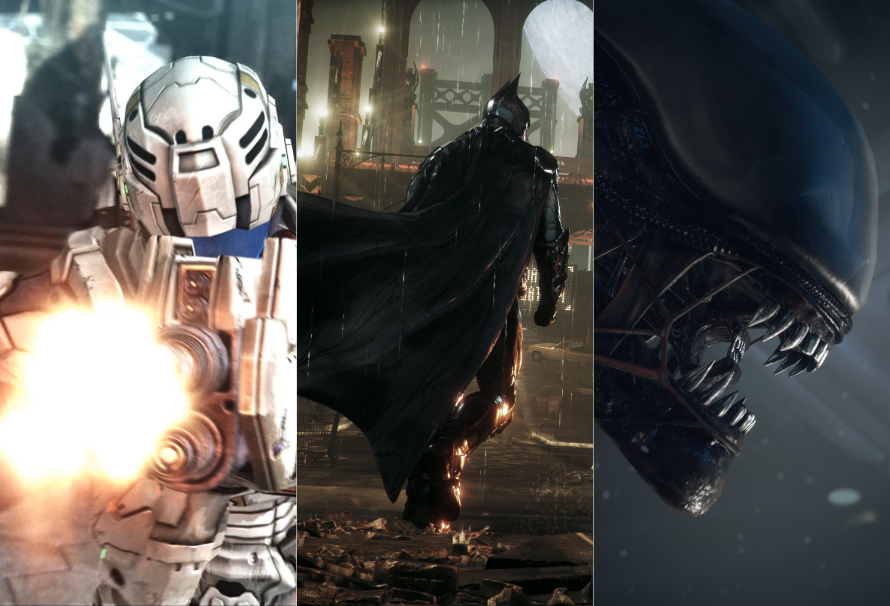
Arguably the best Alien game ever made and one of the finest survival horror titles of the modern era, Alien: Isolation remains a masterclass in tension and atmosphere.
Visually, it has barely aged at all. Creative Assembly perfectly captured the retro-futuristic aesthetic of Ridley Scott’s 1979 classic, creating a world that still looks remarkably authentic today.
Every corridor, computer terminal, and flickering light feels ripped straight from the film.
Beyond its visuals, Alien: Isolation delivers survival horror at its absolute best. Players must evade an intelligent and relentless Xenomorph aboard a decaying space station filled with hostile androids and lurking dangers.
There is no power fantasy here. There is no fighting your way to victory.
In Alien: Isolation, survival depends entirely on your ability to stay hidden and keep your nerve.

Serving as the finale to Rocksteady’s acclaimed Arkham trilogy, Batman: Arkham Knight remains the ultimate Batman fantasy.
Building on the foundations laid by its predecessors, Arkham Knight refined almost every aspect of the series. The free-flow combat system remains one of the most satisfying examples of multi-enemy combat ever created.
Traversal is equally impressive. Gliding across Gotham City feels fantastic, while the addition of the Batmobile expanded both exploration and combat opportunities.
Though divisive at launch, the Batmobile helped create a Gotham that felt larger and more dynamic than ever before.
Visually, Arkham Knight continues to impress. Rocksteady pushed Unreal Engine 3 to its absolute limits, creating a rain-soaked Gotham drenched in neon lights and atmosphere.
More than a decade later, it remains one of gaming’s most impressive open worlds.

When Burnout Paradise launched in 2008, it marked a major shift for the series.
Gone were the linear tracks of previous entries. In their place came Paradise City, a sprawling open world packed with shortcuts, jumps, secrets, and destruction.
The gamble paid off.
From the moment Guns N’ Roses’ Paradise City kicks in, the game establishes an energy that rarely lets up.
Its arcade handling remains fantastic, while the exaggerated crashes and destruction still feel immensely satisfying.
Compared to modern racers, Paradise City’s map may seem smaller. However, that compact design works in its favour.
Every road feels purposeful. Every shortcut feels rewarding. Every giant jump still delivers the same thrill it did seventeen years ago.
It remains one of the greatest arcade racers ever made.

After the slower and more horror-focused direction of DOOM 3, fans wanted id Software’s legendary shooter franchise to return to its roots.
What they received was something even better.
DOOM (2016) recaptured the spirit of the original games while modernising the formula in all the right ways.
The classic ingredients remain. There are demons to slaughter, keycards to collect, and oversized weapons to wield. The difference is the pace.
Movement is lightning fast. Combat is relentlessly aggressive. Every weapon feels powerful.
Then there are the Glory Kills. These brutal finishing moves turn every encounter into a spectacle and ensure that combat never loses momentum.
Nearly a decade later, DOOM (2016) still feels better than many modern first-person shooters.

For years, many players considered Castlevania: Symphony of the Night the benchmark for the Metroidvania genre.
Then came Hollow Knight.
Developed by Australian indie studio Team Cherry, Hollow Knight immediately captured players’ imaginations with its haunting world, rewarding exploration, and memorable cast of characters.
Players take control of a nameless insectoid warrior and descend into the ruined kingdom of Hallownest, uncovering secrets at every turn.
Released in 2017 to widespread acclaim, Hollow Knight blends precise combat, a brilliant Charm system, and stunning hand-drawn visuals into one unforgettable experience.
Nearly a decade later, it remains one of the finest Metroidvania games ever created.

Though it marked the end of Hideo Kojima’s time with the franchise, Metal Gear Solid V: The Phantom Pain remains one of the most ambitious stealth games ever made.
Rather than forcing players down a single path, The Phantom Pain embraces player freedom at every opportunity.
Every mission becomes a sandbox where experimentation is encouraged, and creativity is rewarded.
Its open-world structure still feels remarkably modern, while the Mother Base management system ensures every success and failure carries meaningful consequences.
The visuals remain impressive, while the game’s anti-war narrative has lost none of its impact over the years.
More than a decade later, few stealth games can match its depth.

Overflowing with creativity, charm, and innovation, Portal 2 remains one of the greatest puzzle games ever made.
Valve took the brilliant foundation established by the original game and expanded it in every direction.
The result was a larger adventure packed with inventive puzzles, unforgettable characters, and some of the funniest writing in gaming history.
The portal-based gameplay remains endlessly satisfying, while the addition of a fully featured cooperative campaign provided even more reasons to keep playing.
Fifteen years later, Portal 2 still stands as the gold standard for first-person puzzle design.

Few stealth games have aged as gracefully as Tom Clancy’s Splinter Cell: Chaos Theory.
Part of its enduring appeal comes from how much freedom it gives players.
Rather than relying on scripted sequences, Chaos Theory allows players to tackle objectives however they choose.
Armed with an impressive arsenal of gadgets, players guide Sam Fisher through intricately designed missions that reward patience, planning, and observation.
Dynamic shadows, advanced enemy AI, and multiple infiltration routes ensure that every mission remains engaging.
More than twenty years after release, Chaos Theory remains one of the greatest stealth games ever created.

Even more than a decade after release, Uncharted 4: A Thief’s End remains one of gaming’s greatest cinematic adventures.
Naughty Dog combined breathtaking visuals, blockbuster set pieces, and exceptional character writing to create a globe-trotting adventure that still feels remarkably modern.
Whether you’re exploring ancient ruins in Scotland, infiltrating lavish parties on the Amalfi Coast, or racing through Madagascar’s muddy streets, Uncharted 4 consistently delivers memorable moments.
Its legendary Madagascar chase sequence remains one of the most impressive action scenes ever created in gaming.
Combined with polished combat and spectacular production values, Uncharted 4 continues to represent the gold standard for cinematic action games.

More than anything else in PlatinumGames’ catalogue, Vanquish perfectly showcases the studio’s trademark style and energy.
Released in 2010, this sci-fi third-person shooter remains one of the fastest and most exhilarating action games ever made.
Equipped with an advanced combat suit, players slide, boost, shoot, and slice their way through armies of robotic enemies at blistering speed.
The action remains astonishingly fluid today, while the game’s distinctive visual style continues to impress.
Few shooters have managed to replicate its momentum or intensity in the years since.
More than fifteen years later, Vanquish still feels utterly unique and remains one of the most underrated action games ever released.



 Add us to your RSS feed