This blog article is a sponsored piece for The Last Plague: Blight
2024 may well go down as being the year of the survival game. There have been plenty of excellent genre options released this year, including the likes of Enshrouded, Nightingale, Bellwright, Core Keeper, Soulmask, and even interesting offshoots like Abiotic Factor or Palworld. Survival game fans have had plenty to choose from, and there’s still more to come.
In fact, fans will be getting another survival game soon – October 3rd to be precise – with the release of The Last Plague: Blight. It looks to be shaping up as a compelling debut entry from developer Original Studios, so we thought we would tell you exactly why we are excited about it and why, therefore, you should be too.
Why We Are Excited For The Last Plague: Blight
When it releases on October 3rd, The Last Plague: Blight, like many other survival releases over the years, will be launching into Steam’s Early Access, and frankly, there are few genres better suited to this model of release. With such an emphasis on repetition, be it gathering new materials or working towards upgrades, survival games are naturally less impacted when a new content patch drops or an update requires starting a new world.
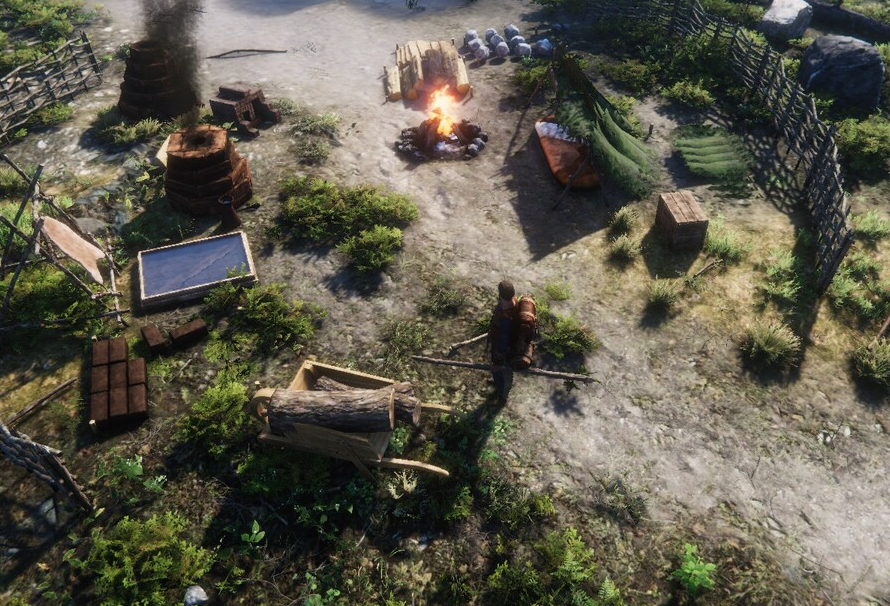
When you do jump in, you will find yourself in a world ravaged by a new mysterious, disease known as Blight. It has decimated humanity and although, thankfully, you have managed to escape, you have been into the wilderness, and need to learn to survive on your own. The result of all of this is a survival game that’s a bit more grounded than most currently on the market.
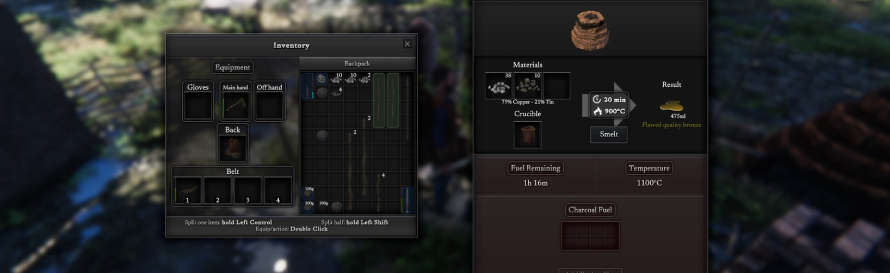
For example, instead of seeking out monsters for assistance or magic to help you fight, you’re going to be chopping wood to create a home, boiling water to ensure it’s clean, and treating your materials to make sure they actually last what lies ahead. The building mechanics also enable a full freeform experience, allowing you to build your base wherever you see fit. It’s going to be a lot tougher than most survival crafting games, but we are betting there are a fair amount of people looking for that right now.
Where you decide to build your base will be important, because not only will you be up against more realistic crafting mechanics but you will also need to survive against the elements themselves, along with whatever wild beasts stray too close to your camp, or your path to the next objective. Combine this with an in-depth injury and wound system – if you don’t look after yourself you’ll end up suffering until you can properly heal yourself – and you have a game ideal for those seeking a realistic survival experience.
Surviving alone can be hard – especially in The Last Plague: Blight – so you will be pleased to hear that there will be a co-op mode available during its Early Access phase which means you can try and fight against the cold and uncaring world with a friend. There are even future plans for the ability to collaborate and trade with NPC survivors, meaning you can create and foster some in-game friendships to help you survive the Blight.
This is but a small snapshot of what The Last Plague: Blight has to offer when it launches into Early Access on October 3rd and if you have been waiting for a new, realistic take on the open-world survival genre it’s definitely one that you should be excited about. Plus, if you can’t wait until then – or if you simply want to jump in a try it out for yourself – there is currently a free demo available over on Steam, so there really is no excuse.
Long before British developer Supermassive Games would scare the collective pants off of everybody with its Dark Pictures Anthology series, The Quarry and most recently its Dead by Daylight tie-in, The Casting of Frank Stone, it manifested Until Dawn into reality back in 2015. As we now sail past its ninth anniversary, Until Dawn is tipped to get a remake on PC and PlayStation 5 platforms next month so it feels timely to explore just why Supermassive Games’ most well-regarded horror effort is deserving of a remake.
Originally intended to be a first-person PlayStation 3 title focused on that console’s decidedly shonky PlayStation Move controllers, it didn’t take long for the talented folks at Supermassive Games to take over development duties and realise that Until Dawn would be much more effective as a traditionally controlled, cinematic horror adventure – and that’s precisely what we got.
Taking place from a third-person perspective, with an emphasis on cinematic flair, Until Dawn very successfully tapped into the teen slasher horror staples of the late 1990s and 2000s. Chiefly, this was achieved by putting players in rotating control of a group of eight temperamental and frequently bickering teens as they attempt to survive on the distinctly spooky Blackrock Mountain until, you guessed it, dawn.
Very deliberately embracing all of the best and worst aspects of that shopworn cliche, Until Dawn nonetheless felt extremely fresh and compelling when it was released back in 2015 because it shamelessly waded into those waters with complete conviction. Certainly, while Supermassive Games has broadened its output quite significantly since then Until Dawn still feels unique enough and stuffed with enough old-school thrills to be worth the price of admission.
It can be easy to take for granted just what degree of toil and artistry is required to make those old-school horror thrills feel both keenly palpable and satisfying for fans of the genre, and yet, Until Dawn managed to pull it all off with aplomb. Genuinely creepy and terrifying in appropriately equal measure, Until Dawn deftly mixed old-fashioned jump scares with the creeping dread of more contemporary fare alongside some delightfully wicked camera work. From sudden quick shots to some unseen horror leaping out of the darkness, to long panning, close-to-the-floor shots of some undefined terror slowly making its way through the shadows, Until Dawn’s direction is clearly influenced by horror movie cinematography and as such, Supermassive Games’ first horror effort remains held in deservedly high regard.
When it comes to the remake, fans will be pleased to hear they still have a lot to discover and appreciate in terms of this camera work, as developer Ballistic Moon has tightened up some shots, implemented entirely new ones and engineered every frame to better serve its characters and their enduring peril. The Until Dawn remake goes even further still, boasting a reworked prologue which adjusts the pacing of the narrative, allowing players to spend more time with the main characters prior to the main story kicking off.
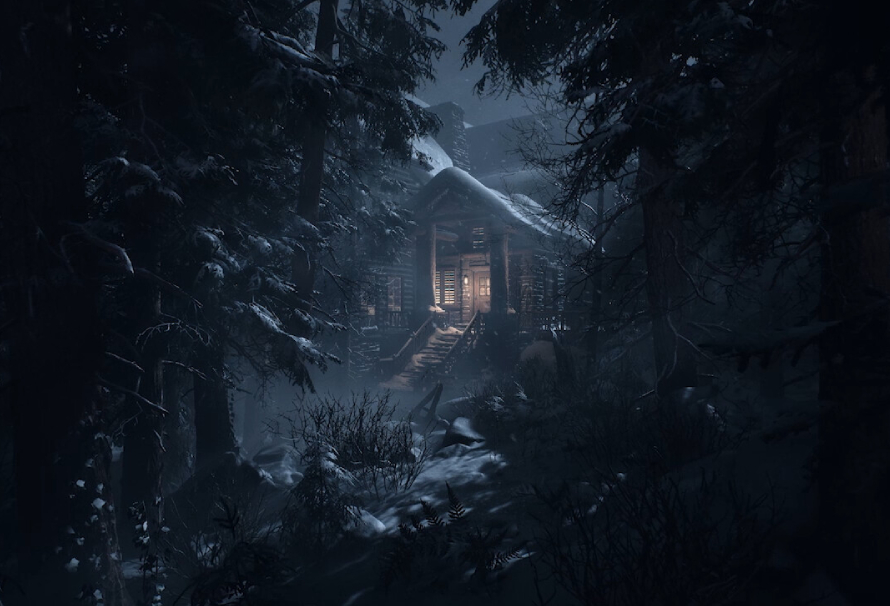
Contributing significantly to Until Dawn’s so-thick-you-could-cut-it atmospherics is the location itself. Like all the most iconic horror locales, Until Dawn essentially gives its location main character status, with the eerie, snow-dappled log house of Blackrock Mountain, together with the surrounding areas, providing a stirring backdrop to the horror adventure shenanigans which are playing out on screen.
Of course, Until Dawn wouldn’t be able to deploy its horror as effectively as it does if it wasn’t for the cast of characters that must navigate their collective way through this all-consuming nightmare. Ably anchoring Until Dawn’s engaging cast of characters, Supermassive Games breakout effort is also notable for starring some recognisable Hollywood faces too, including the likes of Oscar winner Rami Malek (Bohemian Rhapsody), Hayden Panettiere (Heroes, Nashville) and Brett Dalton (Marvel’s Agents of SHIELD). Much more than just names for the sake of having names, Until Dawn’s cast of characters is supported by fully motion-captured performances from actors on the stage, big and small screen and this lends a dramatic quality to each performance that helps Until Dawn to age better than it otherwise would have.
Another reason for Until Dawn’s original success was that it underscored its distinctly cinematic presentation with a non-linear narrative where the player had a great many opportunities to shape the story depending on their choices in key situations. Not only did Until Dawn properly empower the player with the agency needed to direct their own story, but it also provided the title with a great deal of replay value, a pair of facts that a new generation of players will surely appreciate when they get their mitts on the Until Dawn remake.
Already visually sumptuous, remake studio Ballistic Moon nonetheless found a number of ways to embellish Until Dawn’s retina-stroking visual presentation yet further still. First and foremost, a change of game engine is in order. Making the leap to Unreal Engine 5, the Until Dawn remake leverages the technical advantages of Epic’s cutting-edge engine to embellish those atmospherics like never before. With much higher quality physical materials, improved lighting, more complex environments and a step change in character model detail and animation to better support those great performances even more, Until Dawn in its remade form can confidently make a case for being one of the best looking horror games of recent years.
Beyond all of the aforementioned changes and improvements, the Until Dawn remake also brings additional collectables, secrets and new small areas to keep players busy when they’re not wetting themselves with terror – a fact that players both old and new will surely appreciate.
An often underrated genre effort, Until Dawn earns its remake by fearlessly leaning full-tilt into its take on stereotypical horror movies from decades ago in a way that few other titles have managed to successfully pull off. All in all, though the remake of Until Dawn leans a little more towards the conservative when we compare it to from-the-ground remakes – such is the desire of Ballistic Moon to thankfully hew close to the source material – the uplift in fidelity, together with a reworked prologue, improved camera and added collectables all serve to put an extra sheen on a modern horror classic that an all-new generation of gamers deserves to experience on the latest gaming hardware.
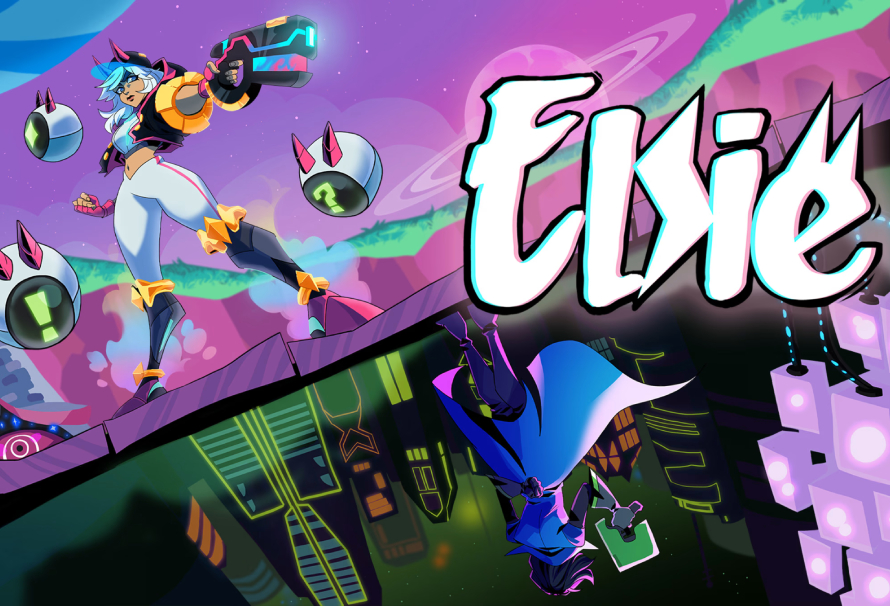
Elsie is a roguelike game that draws inspiration from the Mega Man series and adds a healthy dose of randomness and challenge. It’s a tough game that requires patience and skill, however, for those willing to put in the effort, Elsie offers a deep, replayable experience with a wide variety of character builds and a high level of difficulty.
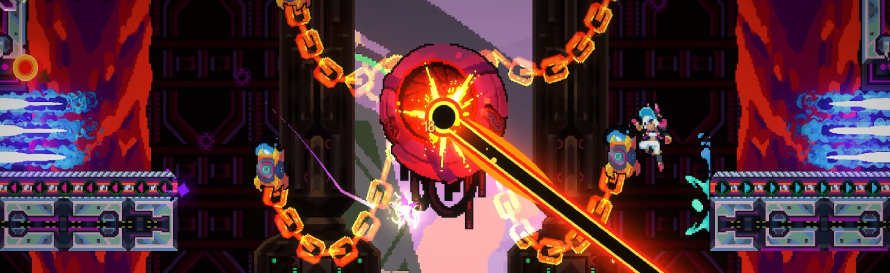
Graphically, it’s got a lovely, retro pixel art style which is perfect to help you identify when you are about to be overcome by an onslaught of bullets. The good news, however, is you can always activate your parry at the right time to avoid taking damage. You’ve also got a cool dash attack, your weapon to fire, and a couple of spells as well.
Elsie’s replayability and variety come from the weapons, spells, and passive upgrades you can discover throughout your runs. The meta-progression is solid, with you often being able to grab at least one new thing in between runs, and the way it handles its levels is really interesting.
Each world in Elsie features multiple bosses. Defeating them unlocks the true boss, a hacked robot. Once defeated, you bring them back to your base to learn more about the story. It’s a unique and engaging concept, although some players might find the difficulty a bit challenging but overall, I’ve been having a great time with it.
Whilst there is a small amount of bug squishing that still needs to be done – a few of which could be run-ending – I am sure the developers, Knight Shift Games, will sort them out in future patches. All-in-all, however, Elsie is a great roguelike for those looking for a unique, interesting mixture of chaotic platforming and bullet hell genres.
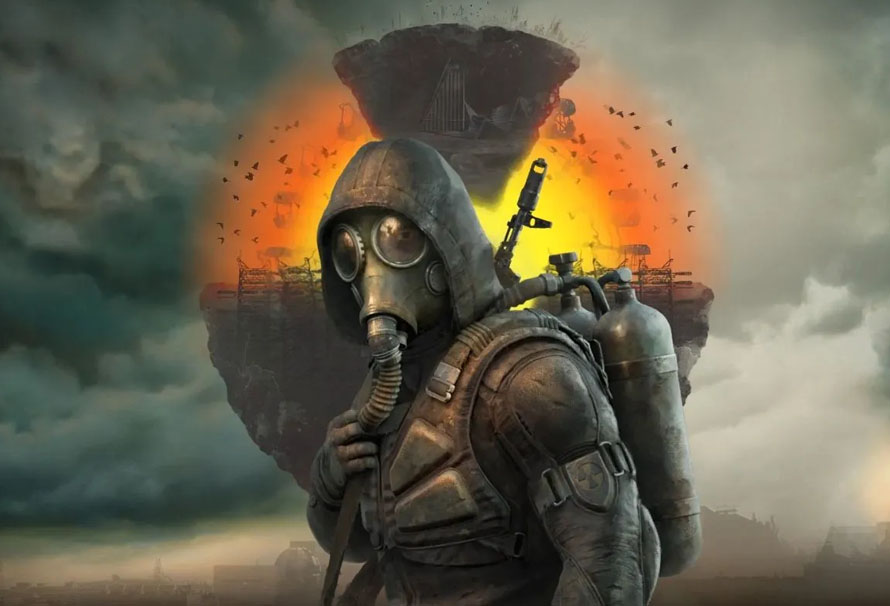
S.T.A.L.K.E.R. 2: Heart of Chornobyl is the next entry in the widely acclaimed S.T.A.L.K.E.R. series and puts players into a world filled with danger, mutants, and strange anomalies that go against the very laws of physics. It’s a dangerous world, and with the previous entries so beloved by fans and critics alike it’s no surprise that people are early anticipating a new entry in the series, especially as we’ve not seen one since 2009.
As a result, there are a lot of people hungry for more details on S.T.A.L.K.E.R. 2, and we’ve got those details for you right here. So, rather than wasting your time with any more intro, let’s get into everything we know about S.T.A.L.K.E.R. 2: Heart of Chornobyl from its release date to details on its gameplay, multiplayer, and even the system requirements.
S.T.A.L.K.E.R. 2: Heart of Chornobyl Release Date
S.T.A.L.K.E.R. 2: Heart of Chornobyl has experienced several delays due to various factors, including the Russian invasion of Ukraine, which directly affected GSC Game World, the Kyiv-based studio behind the game. Originally slated for an April 2022 release, the game has since been pushed back regularly with a now-confirmed release date of November 20th 2024.
Given the challenges the development team has faced, the delays are understandable, but anticipation has only grown with each announcement. Fans of the series have waited over a decade for a true sequel, and it appears that GSC Game World is committed to delivering an experience worthy of that wait. The game will be released on multiple platforms, including PC and Xbox Series X|S, with day-one availability on Xbox Game Pass.
S.T.A.L.K.E.R. 2: Heart of Chornobyl Story
The S.T.A.L.K.E.R. series is known for its richly detailed world and its narrative focus on the Chornobyl Exclusion Zone, a mysterious area surrounding the infamous nuclear power plant. Set in an alternate reality where a second explosion at Chornobyl occurred in 2006, S.T.A.L.K.E.R. 2 returns players to this irradiated and anomaly-filled wasteland.
In Heart of Chornobyl, players take on the role of a lone “Stalker” — a scavenger, explorer, and bounty hunter who ventures into the Zone in search of artefacts, which are valuable remnants of anomalous activity. The main story follows the player’s journey through the Zone, as they unravel a complex and branching narrative that involves multiple factions, each with their own agendas, rivalries, and moral dilemmas.
Developers GSC Game World have also hinted that Heart of Chornobyl will feature philosophical undertones, exploring themes of survival, morality, and the nature of humanity in extreme conditions which should be welcome news to fans of the series.
S.T.A.L.K.E.R. 2: Heart of Chornobyl Gameplay
The gameplay of S.T.A.L.K.E.R. 2: Heart of Chornobyl builds on the open-world, first-person survival mechanics of its predecessors, offering a seamless blend of survival horror, exploration, and intense firefights. Unsurprisingly the world of the Exclusion Zone is vast, dynamic, and unpredictable, with both hostile mutants and other Stalkers constantly posing a threat, and GSC Game World has stated that the new game will feature the most extensive and detailed depiction of the Zone to date, and it will be fully explorable from the outset.
At its core, however, Heart of Chornobyl remains a survival game. Players will need to manage their health, hunger, and radiation exposure while scavenging for weapons, ammunition, and supplies. The environment itself will also pose a significant challenge, with radioactive hotspots, anomalies (invisible zones of distorted physics), and deadly weather conditions constantly requiring players to adapt, whilst encounters with mutants and hostile factions can be sudden and brutal, forcing players to rely on a combination of stealth, quick thinking, and firepower.
Fans will also be glad to hear that customization and progression remain important aspects of gameplay in S.T.A.L.K.E.R. 2. Players can upgrade their equipment, such as weapons and armour, using materials and items scavenged from the environment and crafting and repairing gear will be crucial for survival in the harsh conditions of the Zone. Additionally, Heart of Chornobyl will feature an expanded quest system, with side missions offering unique rewards and insights into the world’s lore – we can’t wait!
S.T.A.L.K.E.R. 2: Heart of Chornobyl Multiplayer
Although the S.T.A.L.K.E.R. series has traditionally been a single-player experience, GSC Game World has confirmed that S.T.A.L.K.E.R. 2 will feature a multiplayer component, which is expected to be released as a free update after the game’s initial launch. While details about multiplayer are still limited, we do know that the mode will focus on PvP (Player versus Player) experiences, drawing on the intense firefights and tactical gameplay that define the single-player campaign.
S.T.A.L.K.E.R. 2: Heart of Chornobyl Trailer
S.T.A.L.K.E.R. 2: Heart of Chornobyl System Requirements
As a next-gen game built with cutting-edge technology, S.T.A.L.K.E.R. 2: Heart of Chornobyl is going to push your rig to its limits. With that in mind, here are the current Minimum and Recommended system requirements for PC:
Make sure you’re ready to delve into a strange, mysterious, and terrifying world by buying S.T.A.L.K.E.R. 2: Heart of Chornobyl here. Get a great price and shop in safety before descending into the very unsafe world of the Exclusion Zone.
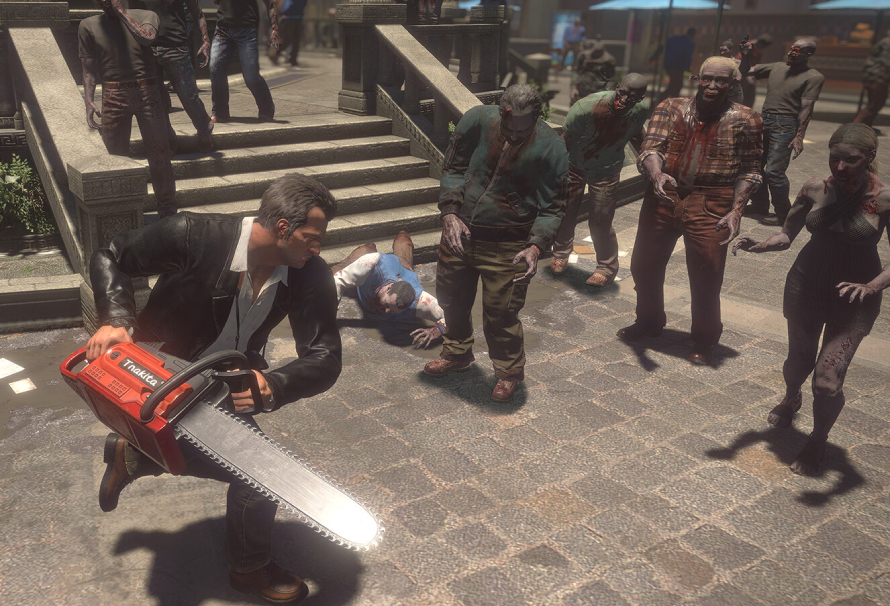
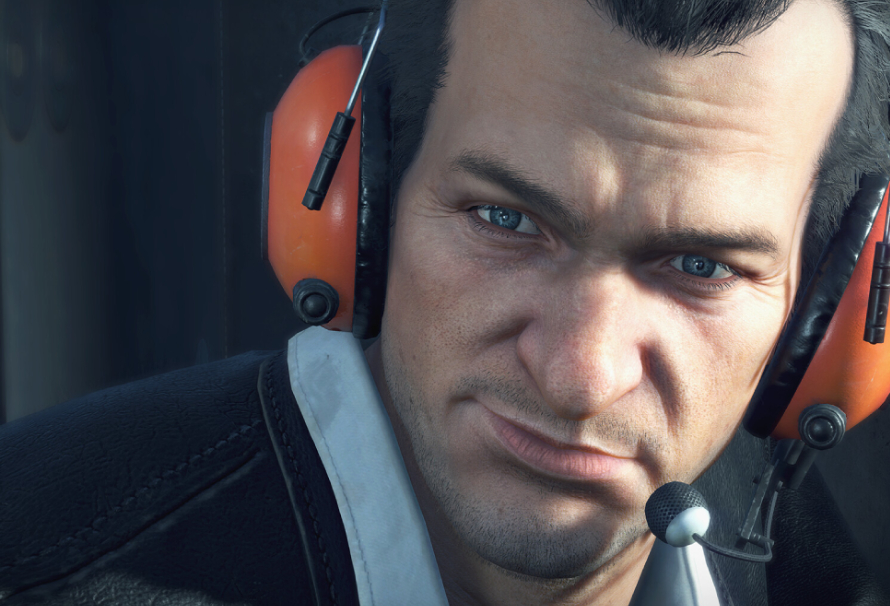
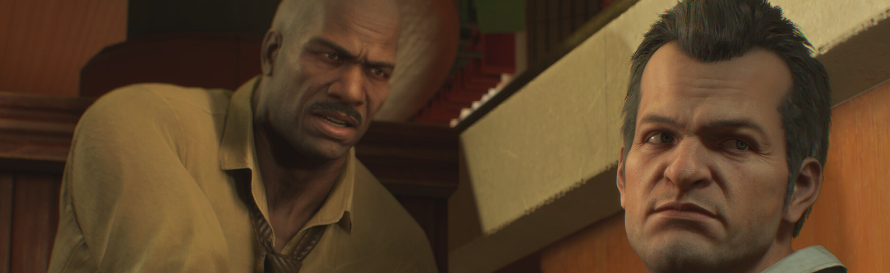
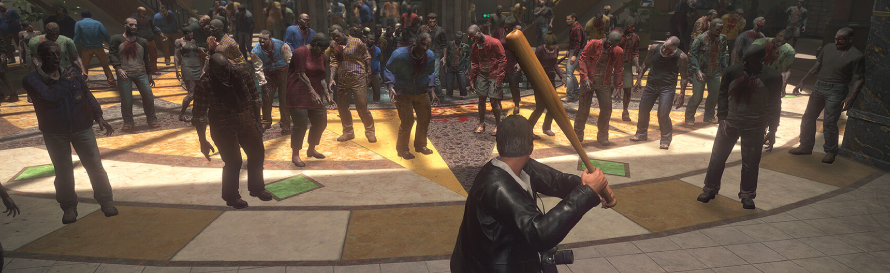
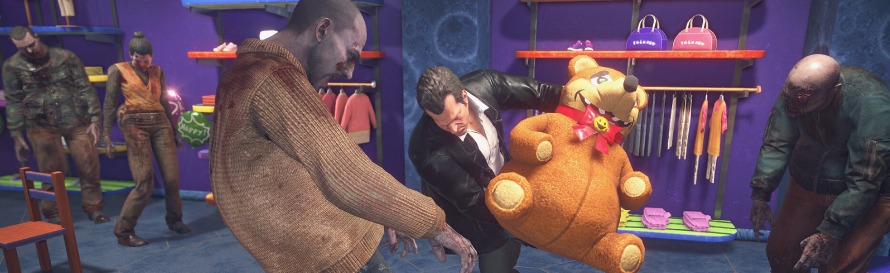
Get ready to slice through hordes of zombies with the best weapons in Dead Rising Deluxe Remaster. This iconic survival horror game is back with a remastered edition, offering a fresh take on the original Dead Rising experience. So whether you’re a seasoned player or new to the series, here are five of the best weapons to dominate the undead apocalypse in Dead Rising Deluxe Remaster.
Best Weapons in Dead Rising Deluxe Remaster
We’re going to level with you for a second, there are very few wrong choices when it comes to what could be considered the best weapons in Dead Rising. Given how incredibly silly the game is at its core if a weapon brings you joy, you should use it. That being said, however, this list of top weapons mainly focuses on weapons that do good damage or have good durability. Regardless of your weapon of choice, however, happy zombie hunting!
Excavator
Location: Crislip’s Home Saloon(North Plaza)
As it turns out, tools that are designed to break through concrete and whatnot are also very good at dealing with zombie hordes. With its powerful spiral blades and good attack range, the Excavator is a truly brutal weapon. It delivers incredible damage at a rapid pace, and its wide arc can hit multiple zombies at once, making it ideal for clearing hordes. While it may be slightly slower than some other options, its sheer power and stylish design more than compensate.
Small Chainsaw
Location: Space Rider Rollercoaster (Wonderland Plaza)
Don’t be fooled by its size. The small chainsaw may seem less intimidating than its larger counterpart, but it packs a surprising punch. It turns out that the smaller sibling of everyone’s favourite Evil Dead arm accessory is a powerful weapon in Dead Rising Deluxe Remaster thanks to its light nature and surprisingly good lifespan. The small chainsaw is a reliable and efficient tool for dispatching enemies and it can be easily stored in your inventory, making it a valuable backup option when you need a quick and powerful solution. You will have to beat Adam the Clown to unlock this little beast, but once you’ve done so you’ll have a much easier time cutting through hordes.
Ceremonial Sword
Location: Colby’s Movieland (Paradise Plaza)
Defeating Sean Keanan will unlock the powerful ceremonial sword,a worthy reward given its exceptional ability to cut through swathes of undead like a knife through butter. Delivering absurd damage, the ceremonial sword has surprisingly good mobility, and can even be thrown for a dramatic finishing move. So if you’re looking to channel your inner demon hunter, this sword is a must-have and while Frank may not have Dante’s acrobatic skills, he can still unleash devastating attacks with this weapon.
Lawn Mower
Location: Crislip’s Home Saloon(North Plaza)
Zombies and grass might have more in common than anybody would realise, but the only thing we can think of for sure is that neither of them is happy with you bringing the lawn mower out. A versatile and entertaining weapon, the lawn mower is effective against zombies both in its push mode, shredding them as you move, and in its handheld mode, delivering powerful blows. Choose the method that suits your playstyle and enjoy the carnage.
Servbot Mask
Location: Child’s Play (Paradise Plaza)
Look, we had to put one in here that wasn’t just about damage. Sometimes you need to just stop an enemy from seeing you, and for those times, there’s nothing better than plonking a Servbot mask onto their head. This stops them from being able to see – meaning they stumble around even more than usual – and whilst it can also be used to attack things, and that’s great and all, the main draw is definitely putting it on the best-dressed zombie and enjoying a brief respite from all of the horror and chaos that being slap bang in the middle of a zombie apocalypse entails.
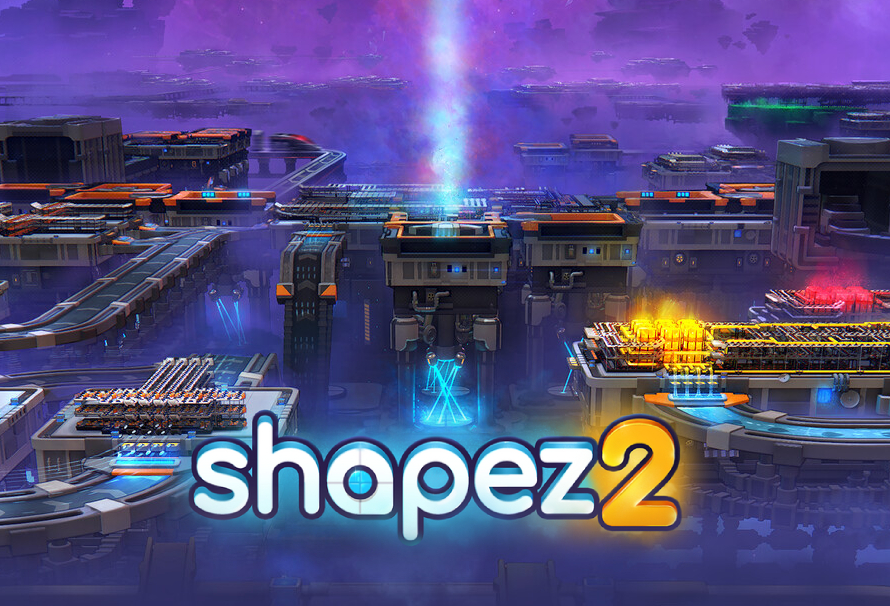
There’s a very specific sub-section of gamers out there that live for efficiency above all else, not least when it comes to their games. We don’t mean playing games quickly or speedrunning, well not in this case at least, but it means that the simple joy they get from correctly automating a process in a game is one that can’t be matched by anything else. If you’re one of those gamers, then you’re going to want to play shapez 2.
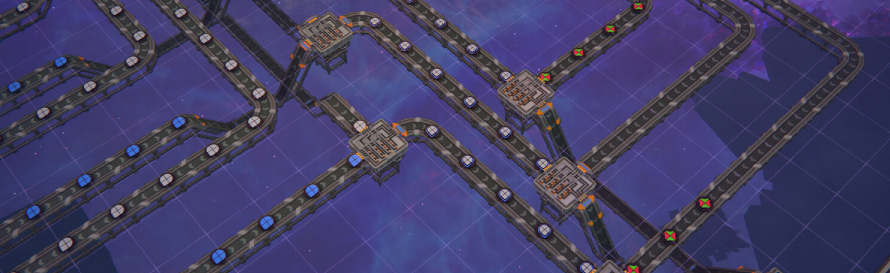
shapez 2 is, in its simplest form, a game all about building up a massive – and we mean massive – shape-building factory and making it as efficient and automated as possible. That’s it. A quintessential example of a game that’s not for everyone, and anybody who wants more than that isn’t going to find it here, it’s an exceptional example of the factory-building genre that’ll have fans salivating over every turn and cog.
Unsurprisingly, given the nature of the game, It takes a long time to get to the size you’ll eventually hit, but every step of the journey brings with it new challenges and tools, and new heights of optimisation to reach. It’s a good-looking but simple-looking game in terms of pure visuals, but the gameplay is anything but. There is a certain type of pleasure to a game that’ll bring you nothing but joy, as you sit back and watch your factory do everything you designed it to do, and then it allows you to build something new to make it even more complex.
Essentially, if you like sorting out factory lines in games like Satisfactory, Factorio, or any other automation strategy game, then shapez 2 takes that specific feeling and makes it into one exceptionally well-made game that you are going to love.
Easily one of the best purveyors of remakes and remasters in the games industry today, Capcom looks set to continue that streak with this month’s Dead Rising Deluxe Remaster, a full-fat remaster of 2006’s zombie-mashing odyssey that few would have expected. Thankfully while Dead Rising Deluxe Remaster keeps the core design of the original title fiercely intact, Capcom has nonetheless made great strides to make a remake that feels appropriately refreshed on current-generation gaming hardware. So without further ado, here is everything new that Dead Rising Deluxe Remaster brings to the table for new and old fans alike.
Completely Updated Visual Presentation Brings The Undead To (Un)Life
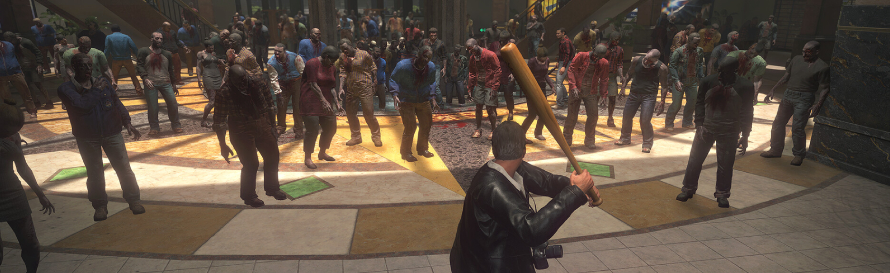
As with just about any remastering effort worth its salt, one of the marquee selling points of Dead Rising Deluxe Remaster is the substantial visual uplift the game has received over its 2006 source material. Taking full advantage of Capcom’s immensely scalable and capable RE Engine, Frank West, the thousands of zombies surrounding him and Willamette’s favourite mall have all arguably never looked better. Not only does the shift to Capcom’s latest iteration of the RE Engine result in smoother and more detailed visuals, but a lot of attention has been given to subtle details such as increased facial detail, more realistic physical materials and of course, much better blood splatters than what we saw in the original Dead Rising.
Fully Voiced Characters – At Last
A world away from the frequent silence of the original Dead Rising (an odd set of circumstances considering how loud and brash the game otherwise was), Dead Rising Deluxe Remaster brings a fully voiced cast of characters to the fore. Though characters from the original are now given a voice where they didn’t have one previously – such as mission giver Otis, for example – his witterings can be skipped if you so choose. Notably as part of this voice acting refresh, other previously voiced characters have been recast, including main protagonist Frank West.
Auto Saves Are Here To Save Your Controller (And Your Progress)
I dread to think how many poor OG Xbox 360 controllers were crushed or ruined in the hands of rightly aggravated players when after dying, they realised that Dead Rising hadn’t saved their progress automatically beforehand. Now a thing of the past, Dead Rising Deluxe Remaster employs a checkpoint system similar to the one seen in Dead Rising 2: Off The Record. What this means for the uninitiated, is that should Frank die, players can just continue after the most recent cutscene or area transition. Happy days all around.
You Can Run And Gun Without Worry
Though it might seem like a small thing that is easily missed, in the original Dead Rising, our boy Frank could hold and shoot a gun, but couldn’t run while doing so. That changes for Dead Rising Deluxe Remaster where our intrepid journalist can blast and dash with ease, though ammo should still be used frugally wherever possible.
A Smarter, More Deadly Undead Horde To Contend With
Despite what the majority of popular culture might tell us about zombies and their seeming lack of intelligence, Dead Rising Deluxe Remaster runs contrary to that line of thinking, bestowing the vast, festering horde with a cleverness that was almost completely absent from Dead Rising’s original outing. Now, zombies not only have improved pathing, so they can find their way around furniture and other such environmental obstacles easier than before, but they will actively try and force Frank into corners and other difficult-to-escape nooks and crannies to boot. Oh, and cop zombies will occasionally decide to shoot their firearms too, which is something else that they didn’t do before, so that’s nice.
Survivors Also Gain A Grey Matter Upgrade, Too
It’s not just the zombies who have gotten smarter for Dead Rising Deluxe Remaster, the numerous survivors that you’ll encounter in the game have too. No longer will they dumbly run into a horde of zombies if one exists between them and their objective, but instead they’ll look to skirt around the horde rather than just stumbling into it. Simply put, survivors are now much more aware of their mortality which is objectively great for your stress levels.
Survivor Affinity Gives You More Reasons To Care
In Dead Rising Deluxe Remaster, survivors aren’t just a monolith of sometimes clumsy, randomly effective companions. Thanks to the new survivor affinity system, if Frank gives each survivor various items according to their unique preferences, they will reward him with improved efficiency in combat, not to mention the ability to find valuable PP stickers for our granite-jawed hero, too.
Expanded And Refined Environments
It’s not just the visuals that have had a significant overhaul in Dead Rising Deluxe Remaster, the environments have also been meaningfully updated. Ranging from the significant to the not-so-significant but still neat, changes to Dead Rising’s mall include handy yellow paint that helps to direct you to your next objective and a new rooftop staircase that makes shepherding survivors to freedom easier than ever before. Elsewhere, there are additional elements in the environment that can be used to smash the undead hordes, such as the fruit hanging on the trees at the plaza entrance and a shiny new blender which can be discovered in the security room.
Get All The Endings Much More Quickly
One of the most thoughtful additions that Dead Rising Deluxe Remaster brings to the dance is a fast-forward feature. Now, while such a feature might not seem especially great on its own, it does mean that when you’re pursuing one of the seven different endings that the game boasts, you can skip forward precisely to the point in time where you need to do something different in order to trigger it. No more waiting around, then. Huzzah!
A Change Of Threads
Taking inspiration from Dead Rising 3, Frank can now change his wardrobe in Dead Rising Deluxe Remaster by simply popping into a clothing closet and picking from any costume that he has on hand. Hey, if you’re killing zombies and psychopaths, you need to do it looking your best, right?
Reworked Camera Functionality
One area that has been quite heavily reworked for Dead Rising Deluxe Remaster is the camera mechanic that sits at the core of the game. For a start, the number of photos that Frank can snap leapt from 30 to 100, and the camera itself can now be upgraded, allowing Frank to use things like flash photography to stun enemies. Finally, the erotica category of photos has been replaced with outtake photos.
Can’t wait to experience these changes for yourself and spend many happy hours taking on the undead in a myriad of creative ways? Then why not grab your copy over on the Green Man Gaming store – you would be braindead not to!
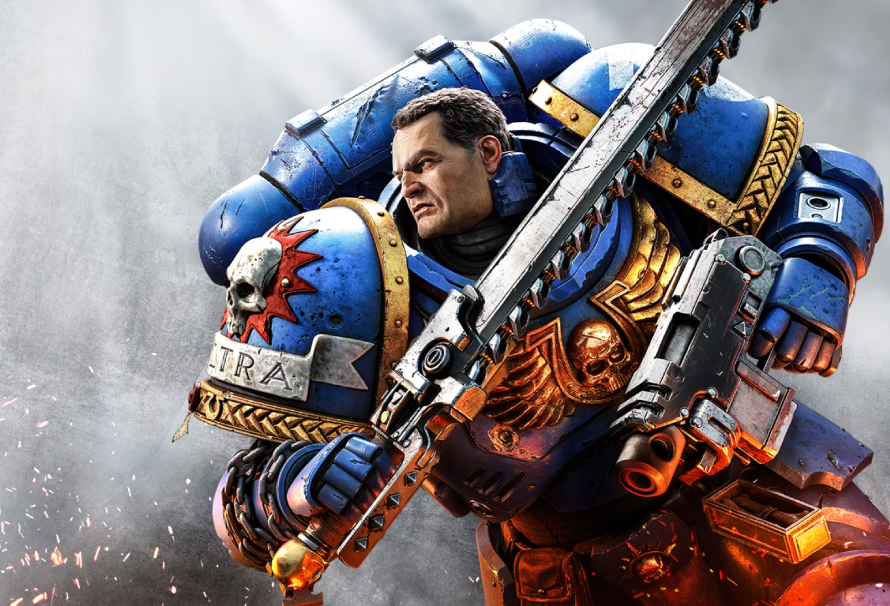
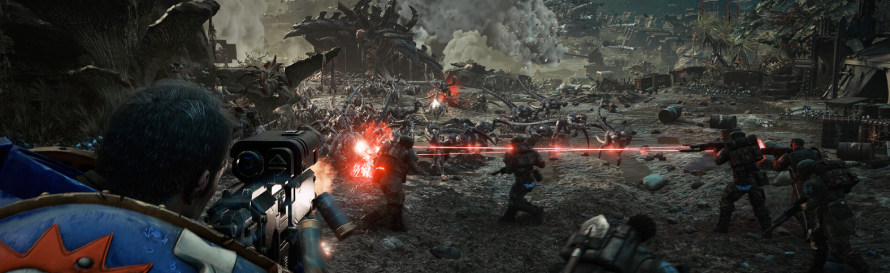
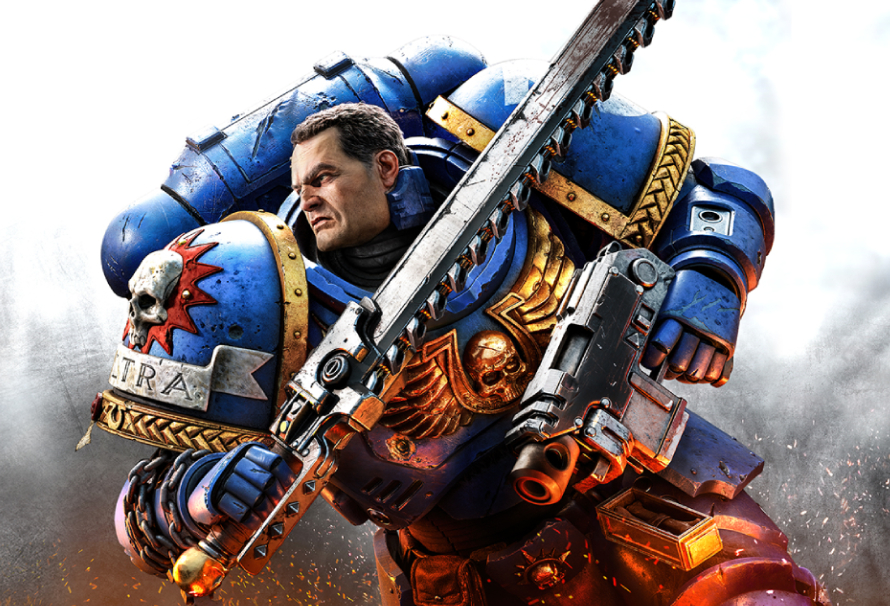
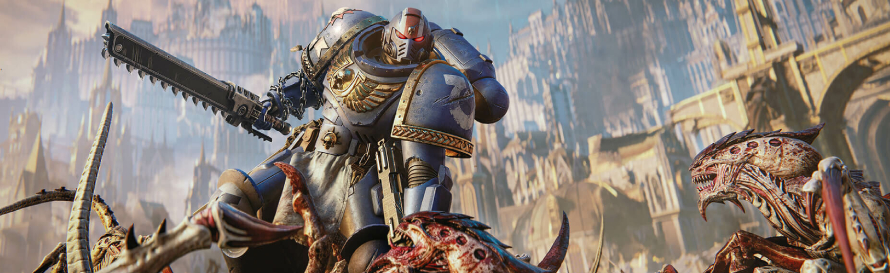
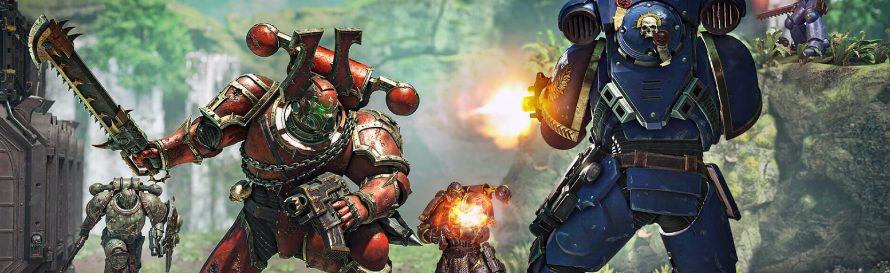
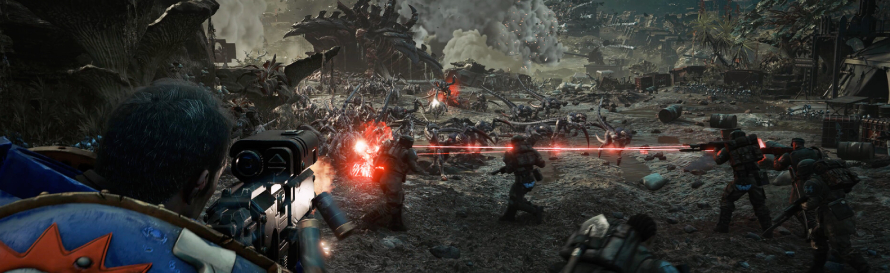
You’ve probably seen a lot of hype around Warhammer 40,000: Space Marine 2 and If you’re not familiar with the series, we’re here to tell you that it’s well-deserved. The long-awaited sequel to the fan-favourite third-person action shooter, Space Marine 2 is an absurdly violent and gory third-person action game that fuses melee and ranged combat in a way that makes you feel like you are slap bang in the middle of an action movie.
Alongside a hugely enjoyable campaign, that can be played either single-player or co-op and tells a compelling story set in the 41st Millennium, Space Marine 2 also manages to pack in fully-fleshed out PvE and PvP game modes too. In essence, what we’ve got here is an impressive action game that can do it all – as long as it all is violence, carnage, and lots of fun.
In the campaign, you follow the epic journey of Titus, a valiant Space Marine with a seemingly impossible mission. To complete this mission, he must trust in his powerful arsenal of weapons – including his trusty chainsaw sword – as he faces all manner of Necron enemies. Whilst the campaign is fairly traditional in its execution, the other modes offer more freedom in how you play and experience the Warhammer 40,000 universe. There are a handful of different classes to choose from, and a lot of the fun comes from not only mastering your own class but learning how to work together with others to become a brutally efficient killing machine. Have we mentioned that the game is violent? That seems important and worth repeating.
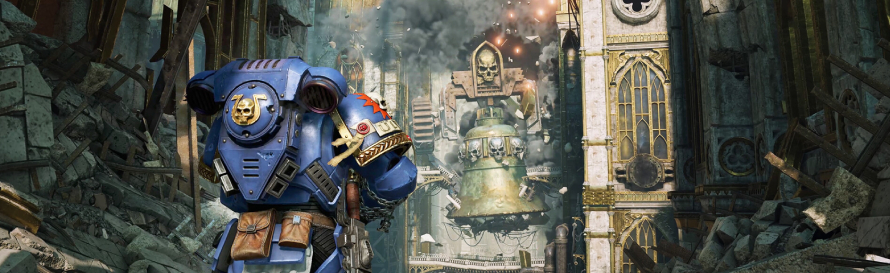
Alongside it’s incredibly slick action, which feels great at all times, it’s also a stunning game to look at. The alien worlds you traverse are beautiful, despite the copious amounts of viscera, and the graphical fidelity is such that you’ll wish you could explore and maybe just pull up a nice rocking chair and take a nap. You won’t be able to do that though, because there’s always more action to be found in this incredible sequel that is sure to please fans and newcomers alike and keep them coming back for more. For the emperor!
All the way back at E3 2006 (oh E3, how I miss thee), Square Enix would announce the next chapter in its tentpole JRPG mega-franchise. Spearheaded by not one, but two Final Fantasy titles destined for Sony’s PlayStation 3 console, attendees and watchers of the show would be introduced to Final Fantasy XIII, which would go on to release in 2009, and Final Fantasy Versus XIII, which would go on to not be released – at least in its initial form anyway. At this point in time, Final Fantasy Versus XIII was set to be directed by Tetsuya Nomura, the very same chap who had directed the 2005 CG movie, Final Fantasy VII: Advent Children, before going on to direct Final Fantasy VII: Remake, which would release in 2020. So at the very least, there was a comforting pedigree steering that particular ship.
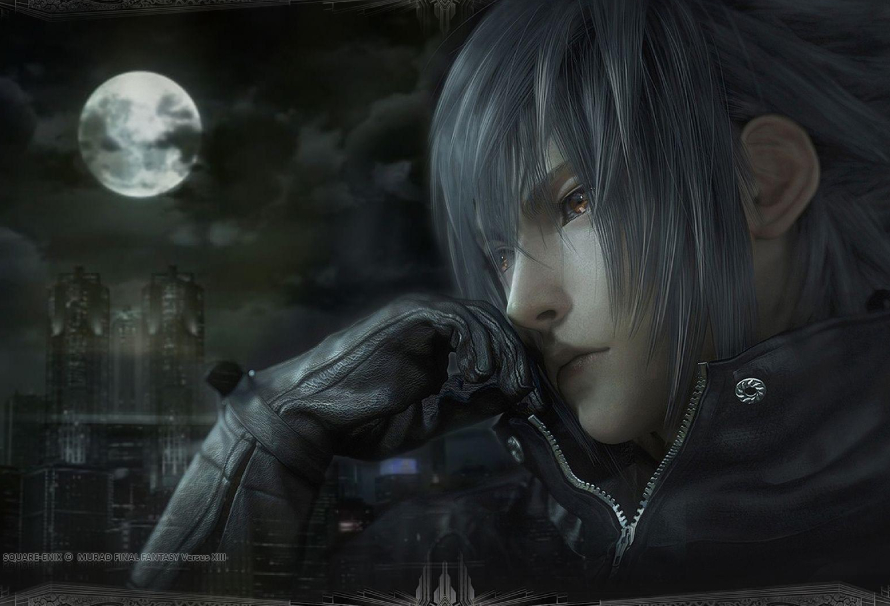
The initial reveal of Final Fantasy Versus XIII showcased a title that was very much at odds with the somewhat lighter, more shiny sci-fi themes that were glimpsed in the reveal for its series stablemate, Final Fantasy XIII. Leading with weighty quotes from Shakespeare about the nature of man, good and evil, Final Fantasy Versus XIII not only set its stall out as an epic, gothic RPG, but it also introduced us to the character that would go on to be the main protagonist of Final Fantasy XV ten years later – Prince Noctis. Though we’re getting a little ahead of ourselves here.
After an extended period of silence, it soon came to light that the direction that Final Fantasy Versus XIII was taking was at odds with ideas held by members of the development team, causing the game to be postponed. Compounding this delay was the fact that Square Enix was also grappling internally with technological barriers posed by both the ageing PlayStation 3 hardware and its Crystal Tools engine that was powering Final Fantasy XIII. Essentially, the engine was causing so many internal issues that members of the development team working on Final Fantasy Versus XIII were constantly being pulled into supporting the development of Final Fantasy XIII, just to make sure that the highly anticipated title shipped in a reasonable timeframe.
Making things even worse still was that when Final Fantasy XIII Versus did finally start development in 2010, it was almost immediately shoved straight into development hell again because Square Enix’s second bite at the MMO apple, Final Fantasy XIV, was struggling badly on release. In fact, that might be selling the situation short because Final Fantasy XIV had suffered such a botched launch and was riddled with so many bugs and technical problems that the team decided to rebuild the whole thing from scratch. Can you guess which Final Fantasy title had its developer resources seconded to aid in this venture? Yep, that’s right – once again the team working on the long-gestating Final Fantasy Versus XIII was once again pulled off the project to fight fires located elsewhere.
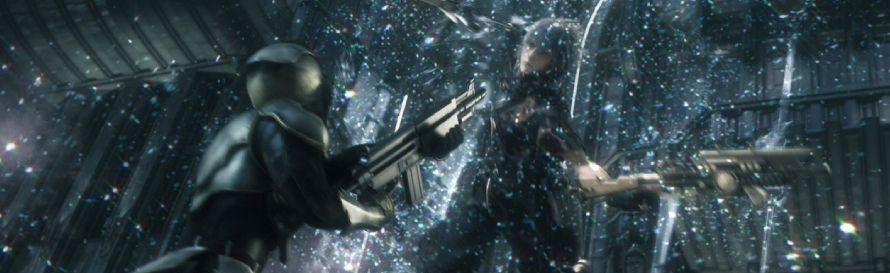
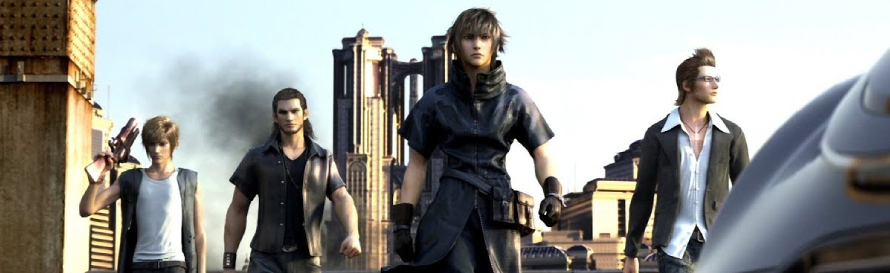
By the time 2011 rolled around the world was somewhat shocked to discover that Square Enix had decided to release a new trailer for Final Fantasy Versus XIII. Intriguingly, this latest batch of footage would show that Final Fantasy Versus XIII had taken something of a right turn, easing up on the relentless grimdark of its original reveal in favour of a lighter, more grounded setting, together with glimpses of green-stuffed rural areas that were utterly missing from its initial unveiling. Beyond an obvious tonal shift, this latest trailer for Final Fantasy Versus XIII not only gave eager fans a look at the two new characters that would eventually resurface in Final Fantasy XV, Noctis’ pals Ignis and Gladiolus, but also a peak at the real-time combat would also feature, including Noctis’ natty ability to teleport across the battlefield.
Though it wasn’t called Final Fantasy XV by name at that point, what we saw in 2011 was essentially the first bonafide footage from the game that would take that name and release a good five years later. Under the stewardship of new director Hajime Tabata, Final Fantasy Versus XIII completed its transformation into Final Fantasy XV and in doing so found itself formally integrated into the Fabula Nova Crystallis universe, sharing common themes and lore with other titles that exist within that setting.
More than that, Final Fantasy XV presented the series at large with something it had never seen before – a truly seamless open world which begged to be explored and in which secrets and side quests could be found in abundance. Further afield, Final Fantasy XV would innovate yet further still, giving players the first proper JRPG road trip odyssey that no games before or after have dared to mimic. This resulted in a genre-defining offering that made it easy to buy into its quartet of impossibly well-styled protagonists, because Final Fantasy XV invited you to be with them during all of their ups, and downs, countless banter and even when they’re just off goofing about cooking meals, fishing and more besides. Put simply, if you were a long-time Final Fantasy fan who was becoming burned out on the series, or a franchise newcomer looking for an epic JRPG that did things a bit differently, Final Fantasy XV was and remains a superlative entry in Square Enix’s long-running marquee intellectual property.
Ultimately what we got with Final Fantasy XV was a title that somewhat violently pushed back against the angsty, dark origins that Final Fantasy Versus XIII promised a decade earlier. With Final Fantasy XV, we had a title that very much extolled the values of brotherhood, friendship and togetherness in direct opposition to what looked to be the brooding and almost stiflingly grim tone that Square Enix’s latest offering was shooting for in a previous life.
Taking all of that into account, while Final Fantasy Versus XIII’s metamorphosis was long-gestating and certainly very drawn out, the result was arguably worth it and helped to give Square Enix’s most recognisable franchise a sorely needed shot in the arm. All the same, it’s difficult to not keenly feel a pang of curiosity about what could have been had Final Fantasy Versus XIII stuck to its original vision and not found itself as comprehensively railroaded as it did, time and time again.
Roaming open-world adventures with a dollop of crafting on the side are ten a penny and to say it’s something of a shopworn concept at this point would be an understatement. Enter then REKA. The debut effort from Emberstorm Entertainment, REKA meaningfully separates itself from other open-world crafting adventures thanks to, amongst other things, its unique central protagonist and its utterly refreshing setting.
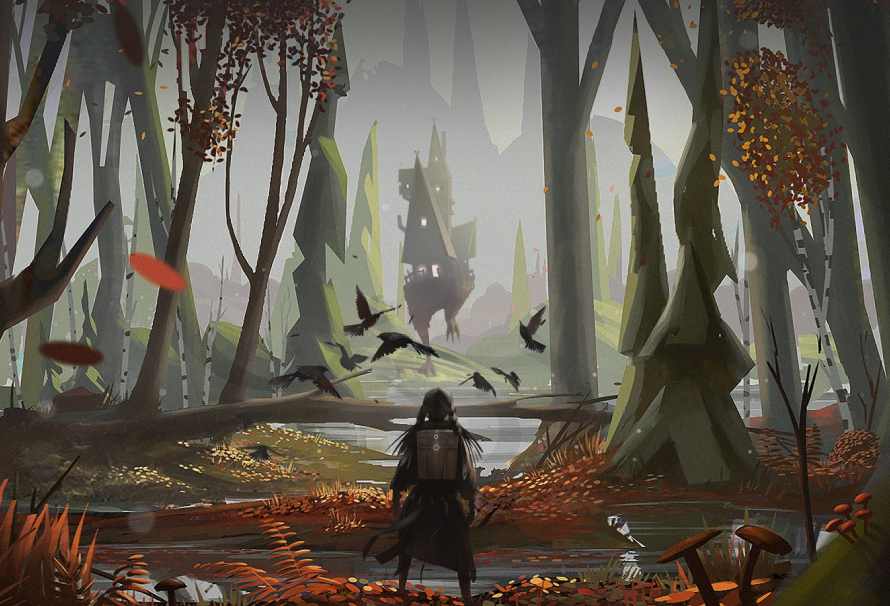
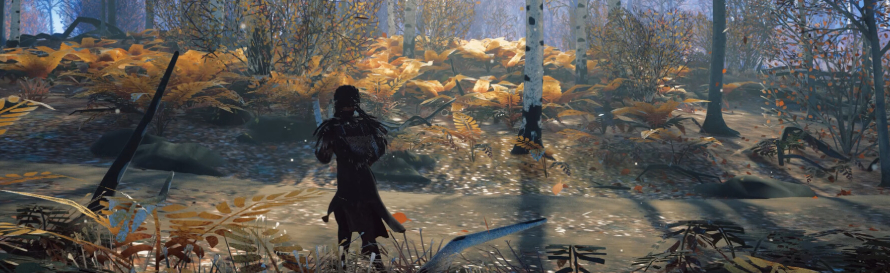
Rather than taking root in some banal and uninspired post-apocalyptic setting, REKA instead unfurls its tale within a fantastical take on the 19th-century Slavic countryside, where autumnal woodlands spread as far as the eye can see and the overbearing blaze of the summer season feels like it will never return. Making ample use of its evocative setting, REKA puts players into the shoes of its titular heroine who just so happens to be an apprentice to the legendary witch Baba Jaga, an odd arrangement that creates its own opportunities and problems in equal measure.
At its core, REKA is a two-part odyssey. Initially, as an apprentice witch, Reka undertakes her arcane studies from a humble starting point, completing quests, foraging for magical herbs, brewing potions and choosing to help or stifle the fortunes of the nearby villagers who often wander close to the magical conclave. As the game develops, REKA impresses upon players the need to explore and discover through its naturally opulent, procedurally generated landscapes, as all manner of settlements, mysterious characters and areas which abound with stunning flora and fauna manifest in front of your very eyes.
Speaking of opulence, despite the charming and somewhat twee look of REKA’s art direction, there is something of a grave, overarching story at play too. As a close apprentice of Baba Jaga, Reka is arguably the best placed to investigate the various unholy, unsavoury and generally dastardly deeds that her master indulges in on a daily basis. Do you bring to light Baba Jaga’s distressing secrets and gruesome deeds, or do you ignore them and simply choose to live out your life in ignorant bliss as a busy, albeit somewhat complicit, witch. And it is here where the second part of REKA’s design comes into sharp focus.
The second half of REKA is really about fully embracing all things witchy and it’s very much this side of REKA which helps to further detach it from the weaponised tedium that can so easily affect games of this ilk. As a witch, Reka has access to all manner of spells, conjurations and invocations that provide her with the means to affect the world surrounding her. From more subtle spells that allow Reka to simply turn on the lights in her witchy abode (more on that in a bit) or conjure a veritable golden brown tornado filled with the discarded leaves of autumn, to the powerful invoking of ancient arcane rituals to summon the dormant spirits of REKA’s sprawling woodland realm, developer Emberstorm Entertainment knows precisely how to make players feel as empowered as its titular, supernatural protagonist.
That feeling of power also extends to Reka’s ability to influence and control the local wildlife. By channelling her magical abilities, Reka can not only tame the various animals and other beasties that make up the realm but so too can she take them along on her jaunts around the world or even take them back to the bewitching cottage Reka calls home. Supplementing Reka’s skills in charming the local fauna, our talented witch is also readily capable of cleansing evil spirits that lurk in the dark corners of the world too, not to mention aid Baba Jaga in her own mysterious quest to upset the natural order of the world by unearthing a veritable bounty of buried secrets and forbidden magic.
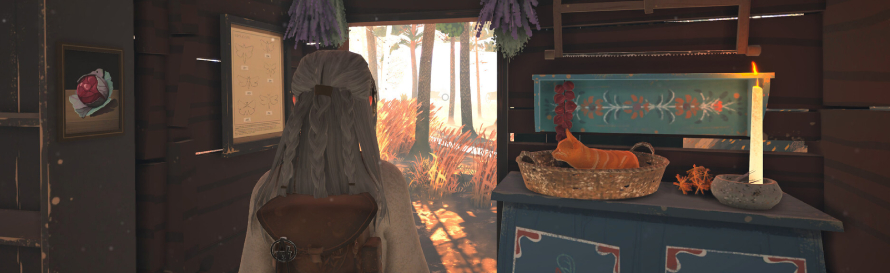
With feelings of inviting homeliness typically tied up with the autumn season, it should perhaps come as little surprise that REKA makes the most of this time of year, permitting players to not only sling a variety of spells as a powerful witch, but maintain their own enchanting abode to boot. Sure, while REKA fully allows players to cosily build, upgrade and rearrange their very own witch cottage however they see fit, it also prescribes a functional side to REKA’s cottage building too, enticing players to invest in all kinds of specialised apparatus that no witch should be without, such as summoning circles, potion brewing pots and much more besides. All of this offers up a wealth of progression opportunities to keep wannabe witches glued to the screen.
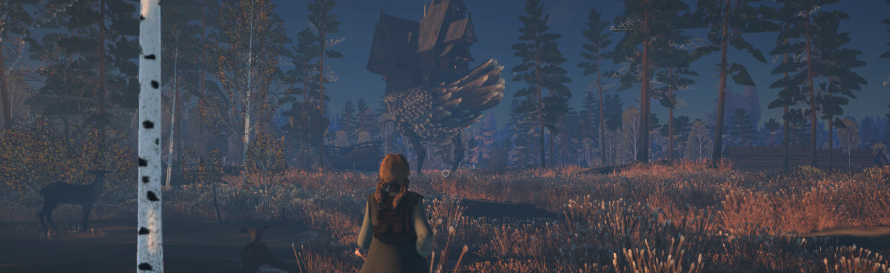
In a fashion not at all unlike Studio Ghibli’s endlessly imaginative adaptation of Howl’s Moving Castle, Reka’s magical home can also quite literally move across the world too. Appearing like a house sat atop a massive pair of strident chicken legs (because why not?), Reka’s home cuts quite the haunting figure as it effortlessly stalks across the world. More than that, just the sheer fact that REKA allows players to move their home ‘base’ in this way and effectively have it travel alongside them as they explore the game world, means that this is yet another way in which REKA seeks to stand apart from its genre contemporaries, where homes tend to be very much rooted in a single location.
Essentially a cosy open-world, base-building adventure that just so happens to also be a surprisingly in-depth witchcraft simulator, REKA deftly uses its unique setting to properly stand out in a genre that is becoming both overcrowded and oversaturated with far less ingenious offerings. Perhaps where REKA succeeds most keenly is in how it encourages players to become one with and work alongside the world, rather than just blindly mining it for resources in the most trite way imaginable. By giving players the ability to strike up fellowships with the various animals and spirits of REKA’s autumnal realm, not to mention the capacity to grow and nurture all types of life, it really feels like Emberstorm Entertainment has seized on something here that no other offering in the genre is really doing right now.
Of course, if you just want to kick back inside your walking chicken house with a warm brew, and work on the arrangement of your various plant pots, herb racks and potion cupboards while the storm-bruised clouds lazily blow a swirl of gold and brown leaves outside the window, then well, you can do that too.
The best September indie games will help you ease into the cooler months of the year and find some fun with friends, on your own, in the stars, and even with… dogs?! That’s right, it’s once again time for our monthly round-up of upcoming indie games, and like usual we’ve got a lot of cool games to look forward to this month.
So, whether you’re looking for a good time, a hard time, a bad time, or a morally questionable one, we’ve got something here that’s sure to satiate your hunger for new games. Plus, it’s always important to support and shout out indie developers, especially as we head towards the big AAA releases season in the lead-up to the Holidays. So here we go!
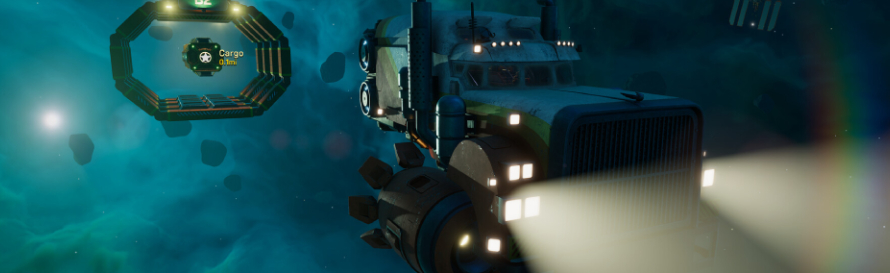
A space-trucking simulator, as the name very much suggests, Space Trucker plonks you in the cab of a space-faring lorry as you drive around the universe, hauling loads and making money. Unsurprisingly, it’s a very chilled-out time, and while the trucker genre isn’t for everyone, there are plenty of people out there who’ll enjoy just riding through the beauty of space in search of the next load of salvage to transport and sell. 10-4, good buddy!
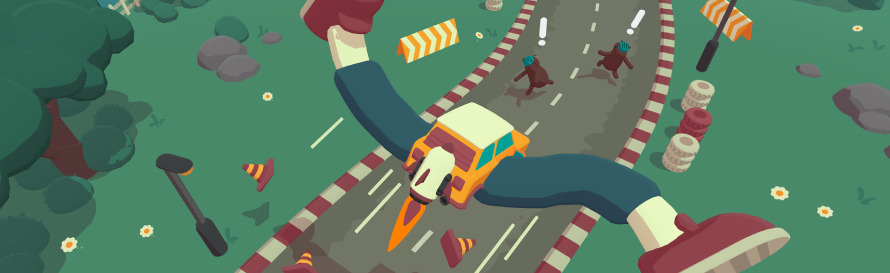
The “WHAT THE” series of games are all intensely silly and abstract and with WHAT THE CAR?, it looks like developer Triband will continue along those same lines. This time, you take on the role of a car – and other assorted vehicles and non-vehicles – for some unhinged racing with new mechanics thrown at you around every corner. Oh, and there will be plenty of laughs, obviously.
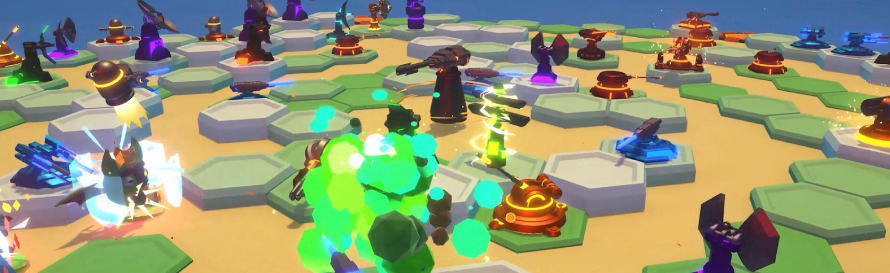
It’s fair to say that tower defence games, when done right, are a genre at their finest. The mix of new towers to unlock, strategies to master, and enemy types to overcome can be a great challenge, but in a less full-on manner than, say, an action game. Terrorformer TD looks like it could be the next great entry in the genre with procedural map design and a lot of interesting mechanics around cards and tile control. Plus, it has a very charming graphical style tying it all together.
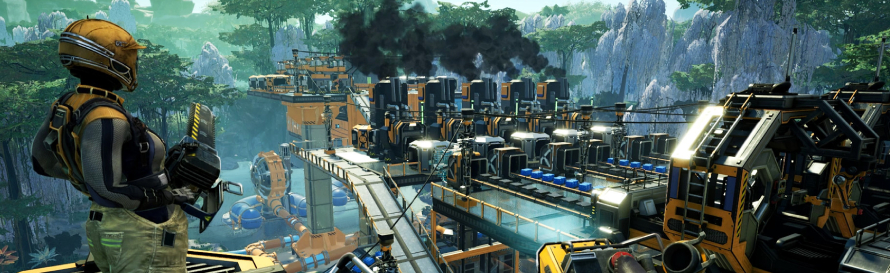
Satisfactory is one of the most in-depth crafting and automation games around, and having spent a fairly long time in Early Access, it’ll finally fully launch into 1.0 this month. If you like finding resources, crafting new items, creating factories, and a little bit of exploration, then you’ll love this. It’s also great in co-op, provided you can find other people to enjoy it with that is.
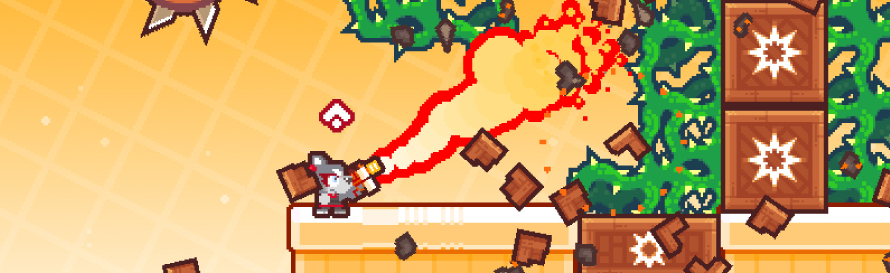
What could be better than being a dog with a grappling hook? How about two dogs with grappling hooks? Grapple Dogs: Cosmic Canines is a lovely-looking action-platformer sequel where you guide two dogs through different worlds and different challenges, all designed to make the most of their unique gifts. It just looks like a lot of fun, and why wouldn’t you want a piece of that?
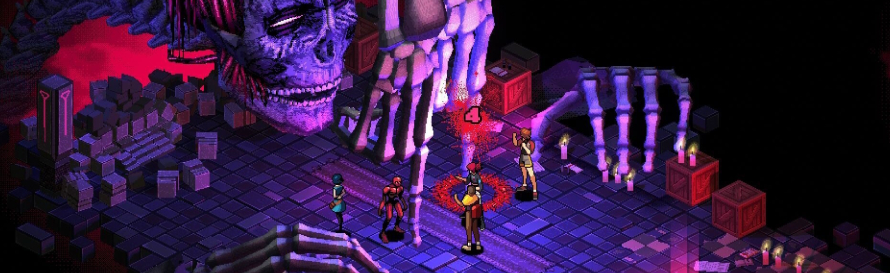
Demonschool is a tactical RPG with a heavy focus on story and managing your social status – with 15 other characters – with a dash of horror thrown in for good measure. Likely to be instantly recognisable to fans of the Persona series, due to some similar elements, Demonschool does boast a vastly different visual style, however, as well as a handy rewind ability, which helps get an advantage in combat. From where we are sitting, it looks like it’ll tick just about every box, and it’s sure to delight visual novel fans who may be looking for a little more gameplay than is typical for the genre.
Anyone who has read one of these round-ups before knows we love a good indie Soulslike. So enter Enotria: The Last Song. Pulling inspiration from Italian folklore, you play as the Maskless One who must not only face off against tough foes but also try to save reality from the Canovaccio. It also has a gorgeous art style and unique mask mechanic, that directly impacts your character skillset. Bellissimo!
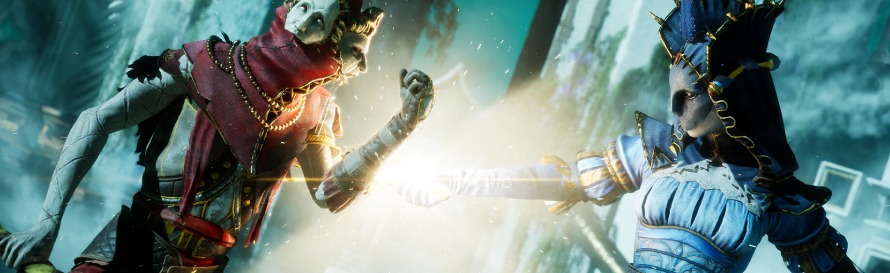
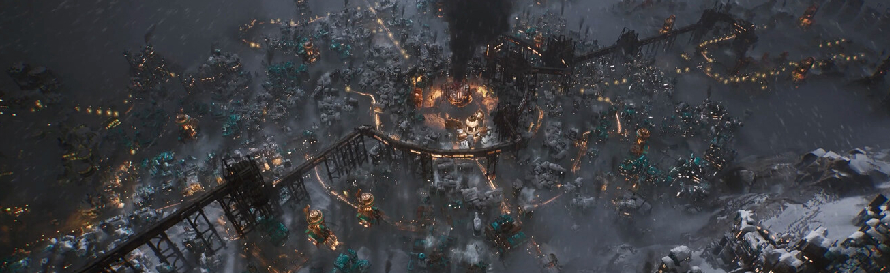
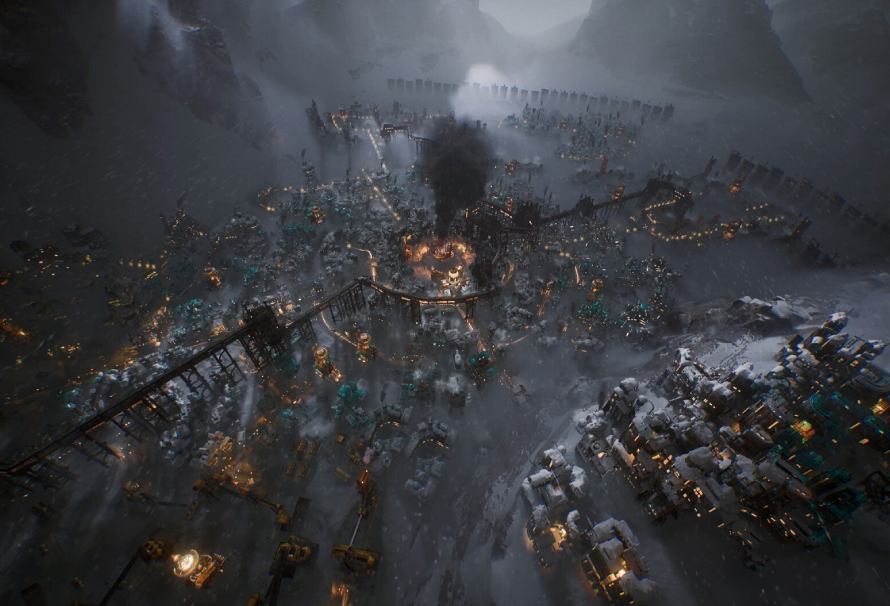
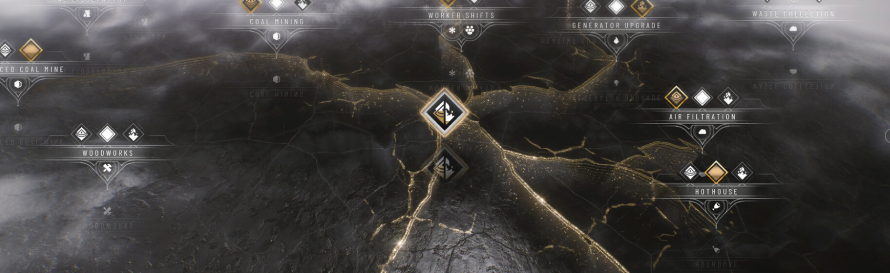
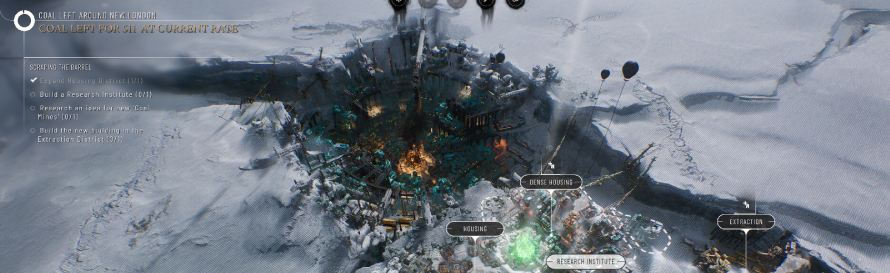
After a small delay from its original July release window, Frostpunk 2 looks as though it’ll be a fitting upgrade to the truly harrowing original. Expect more impossible decisions, more struggles for your people to try and overcome and no doubt even more unique and horrifying endings to uncover. If you want a strategy game that doesn’t pull its punches on the hard decisions, then this is sure to deliver.
Rounding out this month’s list we have VR racing game, EXOcars. Racing in virtual reality can be pretty exhilarating, if not a little nausea-inducing for some, experience and EXOcars looks like it will be nailing that experience. Based on real-world physics, you have to manage your speed and your suspension to overcome and defeat the other racers. It also has asynchronous multiplayer so you can take your customizable car out into the digital wilds and beat your friends around their favourite tracks – awesome!
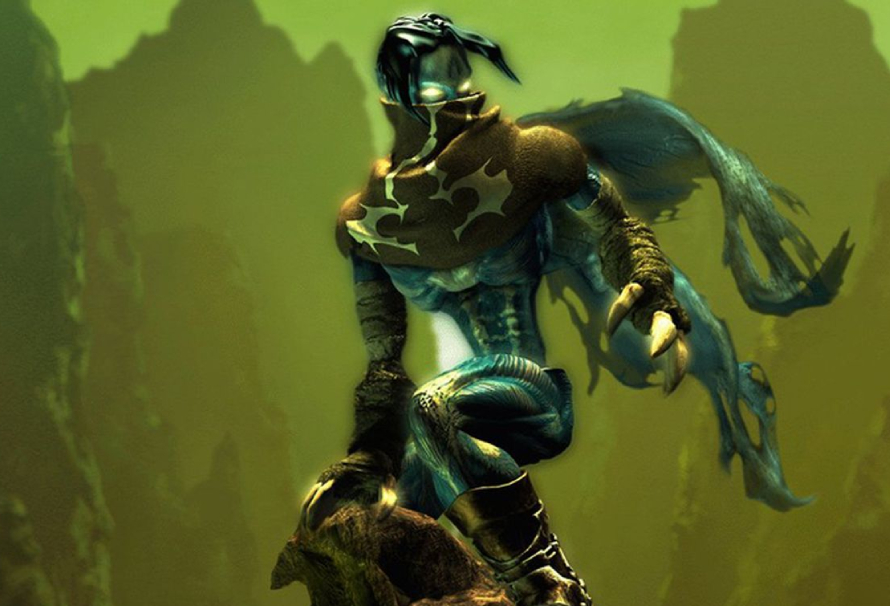
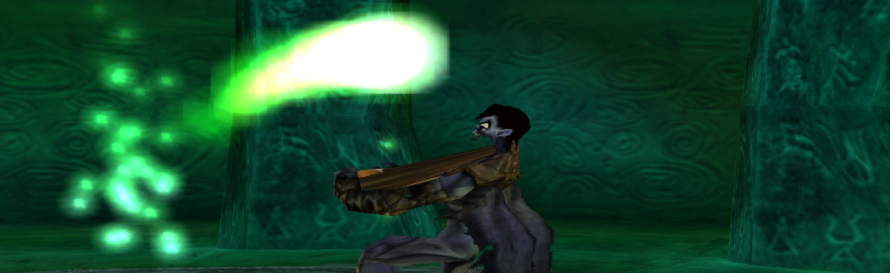
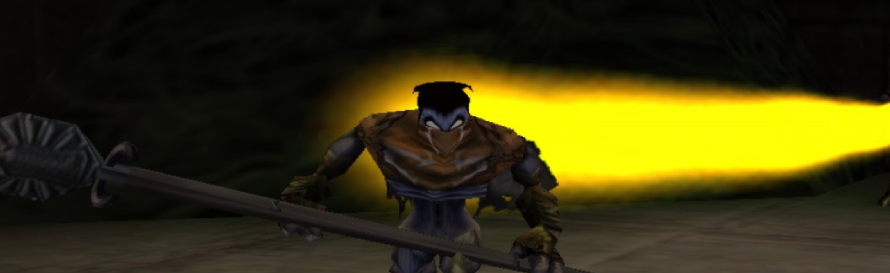
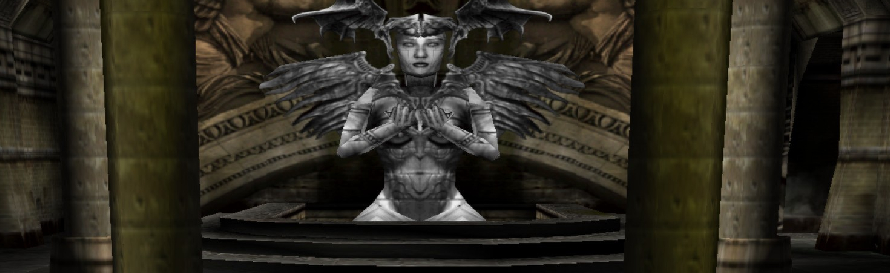
Ever since Legacy of Kain: Soul Reaver stalked onto the scene a quarter of a century ago, it’s fair to say that the trials and tribulations of its spectral protagonist, Raziel, have lingered long in the memories of those who were lucky enough to play it back in the day. With a whole new generation of gamers having now either not played Legacy of Kain: Soul Reaver, or don’t even know what it is at all, it’s on the 25th anniversary of Crystal Dynamic’s finest hour that we believe a remaster is long overdue. Here’s why.
A Genuinely Captivating Narrative
For the uninitiated, Legacy of Kain: Soul Reaver is actually a sequel of sorts to Blood Omen: Legacy of Kain, a grisly top-down action RPG which released for the PC and PSOne consoles earlier in 1996. Taking place roughly 1500 years after the events of Blood Omen: Legacy of Kain, Soul Reaver shows us a world devastated by the corrupted Pillars of Nosgoth. A collection of pillars that are essential to the balance of life in the world, their guardians were killed by Kain only for Kain to refuse to sacrifice himself to save them, damning the entire world of Nosgoth as a result. What a lovely fellow.
Instead of merely just letting players continue to take control of that game’s vampiric protagonist Kain, Legacy of Kain: Soul Reaver instead shifted focus to Raziel, one of Kain’s most trusted vampire lieutenants. Naturally, with older vampires being a fairly evil and paranoid sort, Raziel finds himself subsequently betrayed by Kain before being ‘reborn’ as a wraith courtesy of the Elder God, a hidden deity that controls the Wheel of Fate, an ethereal mechanism by which souls are reincarnated. With nothing but a burning vengeance in his soul (or whatever is left of it), Raziel becomes hellbent on killing Kain and in doing so we see themes of redemption, moral ambiguity and more all become woven into the grand tapestry of Soul Reaver’s narrative.
A World Of Opulent Devastation
There is perhaps no better avenue to become fully immersed in the blood-soaked plight of Raziel than to take in the environments which surround him. Soul Reaver invites the player to explore the depths of Nosgoth, a thoroughly destroyed world where the opulence of its past has been summarily replaced by a dark gothic nightmarish labyrinth of sprawling ruins, twisted metal and endless chasms. Exploring this gothic hellscape is also pleasingly much more interesting than just traipsing about in the traditional sense, as Raziel isn’t just capable of all the usual running and jumping one would usually expect, he can also use his massive wings to glide around the environment in ways that can only be described as being tremendously satisfying.
As such, a fully remastered Legacy of Kain: Soul Reaver would prove to be an arresting prospect, to say the least, as Raziel’s world would find itself wonderfully embellished by higher resolution, improved framerates and a greater attention to detail than was possible when the game released all the way back in 1999.
Two Realms For The Price Of One
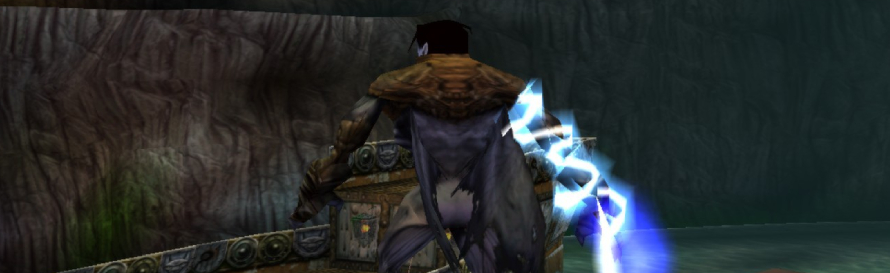
With Raziel finding himself newly reborn as a wraith, he also gets the added ‘bonus’ of being able to hop from the physical realm into a more incorporeal, spectral realm on command. It’s here where Soul Reaver’s commitment to environmental storytelling comes into play as the world twists and turns itself into an alternate vision of the physical realm, though here Raziel’s ability to physically interact with the environment is greatly limited. Much more than just a fancy gimmick, the dual-realm system is arguably the centrepiece of Soul Reaver’s action adventure design and game director Amy Hennig, who would later go on to work on the Uncharted games and next year’s Marvel 1943: Rise of Hydra absolutely made the most of it too.
Imagine the scenario – you’ve reached the end of a long path which concludes into a massive room where all manner of destroyed walls and rubble block the way to your destination and Raziel seemingly has no other route to take. By switching to the spectral realm, our ghostly protagonist may continue his tortured journey just by simply walking through it. When shifting into the spectral realm, though Raziel cannot interact with any physical objects such as the array of blocks and switches which form the basis of Soul Reaver’s puzzle-solving foundations, he can walk through water and other such elements of the environment that would otherwise prove to be impassible in the physical realm and it’s the use of this dual realm mechanic which give rise to some truly fiendish puzzles that have absolutely stood the test of time.
Perfectly Judged Progression And Combat
The kicker to all of Raziel’s funky, realm-shifting powers is that he needs to earn them by defeating each of Kain’s vampire lieutenants before having a showdown with the big bad himself, adding a truly satisfying feeling of progression to the whole affair. Bringing Soul Reaver’s combat system into sharp focus and starting off with just his trusty claws, Raziel can inflict a reasonable amount of damage on the various vampiric foes and spine-chilling horrors that he encounters during his otherworldly odyssey, though he can also make use of various weapons laying about in the physical realm too such as spears, staves, torches and more.
Beyond such violent applications, Raziel can also dispatch his enemies by throwing them into environmental hazards such as flaming pits, endless chasms, spike-adorned walls or even just regular old sunlight if your foe happens to be of the vampiric persuasion. The dual realm mechanic also has combat applications, with certain enemies only able to be damaged in the spectral realm, while Raziel himself will simply switch to the spectral realm rather than present players with a game over screen if he suffers too much damage in the physical realm, cleverly side-stepping the usual zero health fail state. This is just one more example showing how Soul Reaver didn’t do things at all by the book and was all the better for it.
There’s Just Nothing Like It
It’s perhaps telling that in the twenty-five years since Legacy of Kain: Soul Reaver stole itself into our hearts and minds, there’s not only been a gaping hole in the medium for a spiritual successor of some sort but so too has a full-fat, full-sugar re-release been conspicuously absent all of that time. With its beautifully dark tale of vengeance and twisted morality underscored by an intoxicatingly grim world destroyed by corruption, plus a dual realm system that permits a creative latitude of level design that other titles struggle to match, Legacy of Kain: Soul Reaver is absolutely overdue a remaster – especially as this masterpiece celebrates its momentous 25th anniversary.
While sprawling amusement parks and beloved animated movies often spring to mind when you think of the House of Mouse, the company has also produced a wealth of video games over the last three decades. Beyond the classic 2D platformers of the 8-bit and 16-bit eras, Disney has delivered a diverse range of titles and with the highly anticipated Disney Epic Mickey: Rebrushed on the horizon, there’s no better time to revisit the best Disney games ever made.
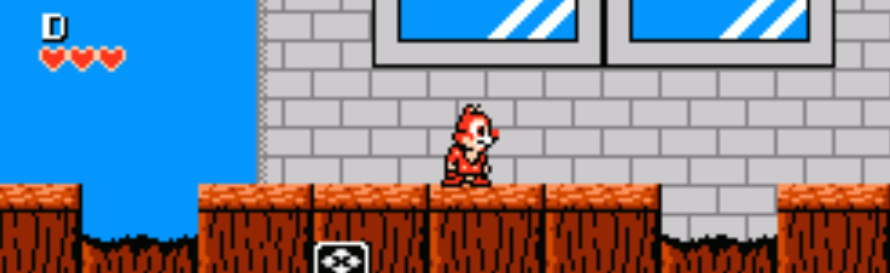
13. Chip ‘n Dale Rescue Rangers (NES)
Released on the humble NES home console back in 1990, Chip ‘n Dale Rescue Rangers is a side-scrolling, 2D platformer which invites one or two players to get stuck in. Though far from stellar and certainly much too short, Chip ‘n Dale Rescue Rangers nonetheless does an entertainingly wholesome job of putting people in the really rather tiny shoes of Chip and Dale, as they pick up objects to smash enemies and leap and dash across a range of themed levels in a bid to rescue a missing kitten. D’aww. Nowadays, you can play Chip ‘n Dale Rescue Rangers as part of the Disney Afternoon Collection which was released for PC, Xbox One and PS4 back in 2017.
12. Disney Speedstorm (PC, Consoles)
A free-to-play kart racer from developer Gameloft, Disney Speedstorm is actually a surprisingly decent genre effort for a number of reasons. Not only does it play very responsively and boast a vivid visual presentation that makes good use of current hardware, but it also does a good job of assembling Disney folks from all manner of properties, allowing players to play as characters from Monsters Inc., Beauty and the Beast, Mickey Mouse, Pirates of the Caribbean and more. Unfortunately, it’s not all sunshine and rainbows, as its free-to-play monetisation strategies mean a good chunk of grinding awaits those unwilling to unburden their wallets.
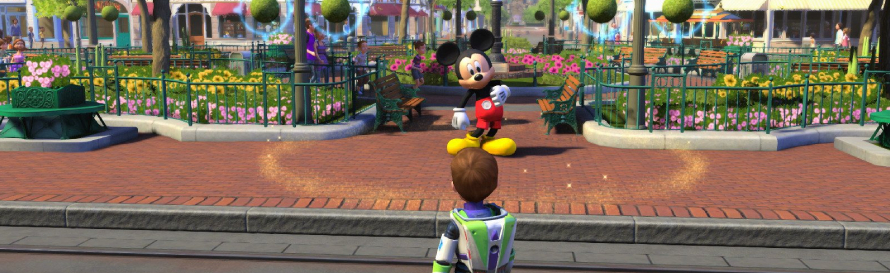
11. Disneyland Adventures (PC, Xbox)
Less of a game in the strictest sense and more of an experience, Disneyland Adventures almost feels like an extension of the advertising arm for Disney’s most famous amusement park. Filled with collect-a-thon style tasks, a spread of uneven minigames and a whole lot of trotting about, it’s fair to say that as a game, Disneyland Adventures hardly thrills. However, as a Disneyland ‘sim’, Disneyland Adventures excels as it provides an unparalleled digital replication of the Happiest Place on Earth and encourages players to meet and frolic with a range of classic Disney characters. Great for the little ones and adults alike, if you want to tide yourself over until your next visit to the real-life thing, this is the next best thing.
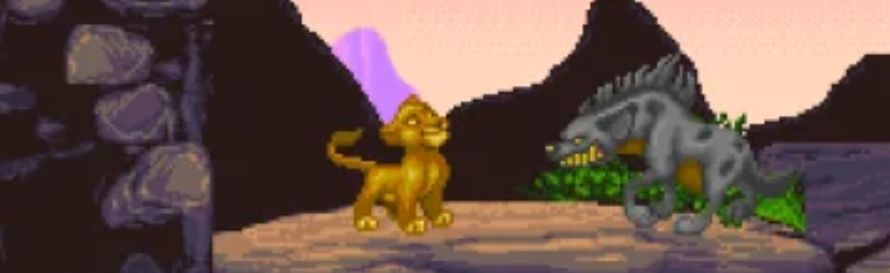
10. The Lion King (Super Nintendo)
The video game adaptation of Disney’s most iconic film of the last 30 years was always going to come under a whole heap of scrutiny and luckily, for the most part, it delivers a platforming romp that deftly echoes its big-screen counterpart. Essentially splitting the game into two halves, players take control of a young Simba in the first half as the heir apparent leaps about the African plains, defeating enemies and using his adorable roar to progress through puzzles. Predictably in the second half, Simba matures into a full-sized lion-beast and gains access to a range of combat-focused moves as the game shifts in tone accordingly.
Doing a great job of matching the movie’s memorable audiovisual presentation (an impressive feat considering the limitations of the 16-bit hardware of the time), The Lion King is a great Disney video game adaptation that sadly finds itself undercut by a punishing level of difficulty, mainly due to an abundance of enemies on screen at once and all-too-frequent blind jumps that must be taken on faith.
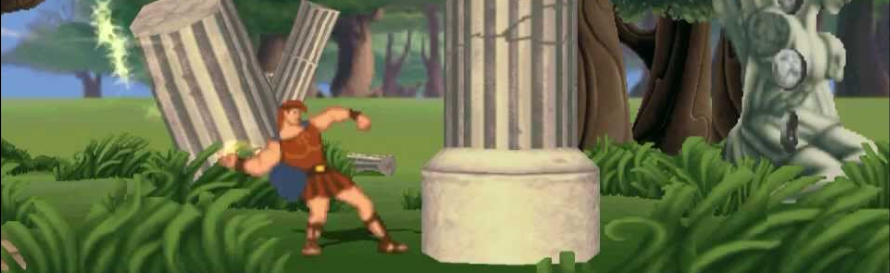
9. Hercules (PSOne)
Much like its strapping protagonist, Disney’s Hercules video game adaptation is brash, colourful and loud in ways that fans of both the movie and side-scrolling action efforts will surely appreciate. Cast as the titular Olympian, Hercules is a combat-focused platformer that has our well-meaning meathead smashing up all manner of baddies from the depths of Greek mythology. With an eye-opening blend of 2D art and 3D visuals, Hercules certainly looks the part, though an overly safe adherence to the gameplay style of the Disney titles from the older 16-bit era, albeit with a far shinier veneer, means that Hercules doesn’t stand quite as tall in this list as his namesake might suggest.
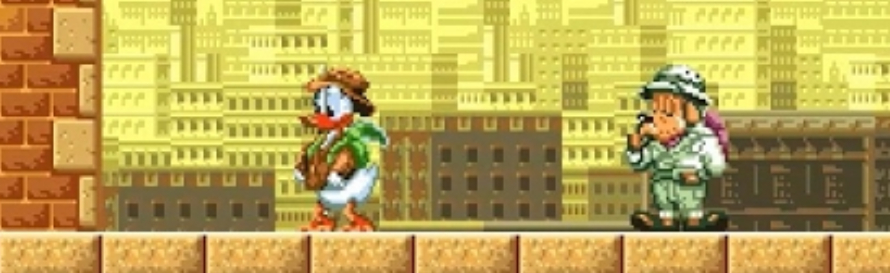
8. QuackShot (Sega Genesis)
Often overlooked, QuackShot was yet another standout Disney-licensed effort of the 16-bit console era that lingers long in the memories of those who were lucky enough to play it. As you might well infer from the title, QuackShot has players taking control of a predictably grumpy Donald Duck as he sets off on a journey to claim a bountiful lost treasure belonging to a great duck king of antiquity. A well-pitched mixture of platforming, puzzle-solving and with a dash of side-scrolling blasting and a hefty helping of Disney whimsy to boot, QuackShot has the ornery waterbird using a rather unique gun that can fire out popcorn, bubble gum and plungers as he blasts his way to a towering fortune.
7. Castle of Illusion (Sega Genesis, PC, Xbox)
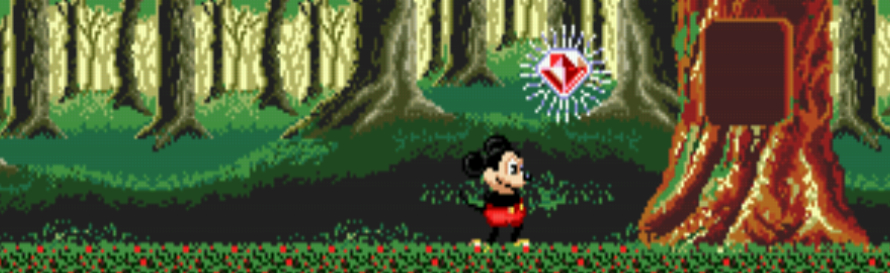
Disney’s Castle of Illusion Starring Mickey Mouse (to give its longer, more exasperating title), was widely regarded as one of the best non-Sonic The Hedgehog platformers on Sega’s 16-bit Genesis system when it popped onto store shelves back in 1990. Putting players in the big, ungainly-looking yellow shoes of Mickey Mouse, Castle of Illusion has our iconic-eared hero leaping his way through gorgeously realised 2D worlds as he attempts to rescue his beloved Minnie Mouse from a dastardly witch. With an audiovisual presentation that pushed the envelope of what one would expect from 16-bit hardware, together with some super responsive platforming shenanigans and enough Disney charm to weigh down Dumbo, Castle of Illusion is a great slice of Disney platforming that everybody should play.
Wonderfully, Castle of Illusion was remade in a 3D art style (whilst maintaining the 2.5D gameplay) back in 2013 for PC and console and can be nabbed right now on those respective digital stores.
6. World of Illusion (Sega Genesis)
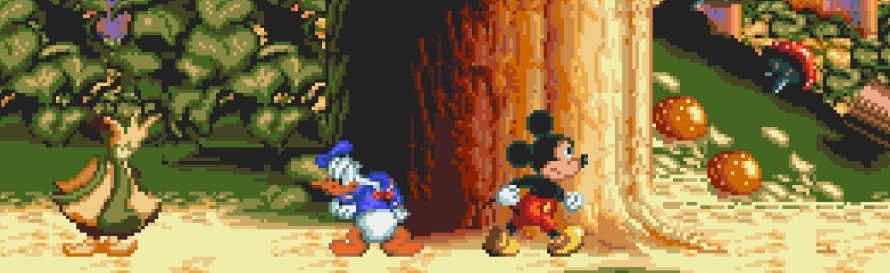
Much like the excellent Castle of Illusion before it, World of Illusion is a splendid little 2D platformer that once more has Mickey Mouse tangling with a nefarious magician in order to find a way home (what is it with Mr. Mouse and rogue arcane practitioners?). Where World of Illusion meaningfully separates itself from its predecessor is in the inclusion of a two-player cooperative mode which sees both Mickey Mouse and his frequent friend Donald Duck leaping onto the noggins of enemies and learning new spells that allow them to swim, fly and much more besides.
5. Epic Mickey (PC, Consoles)
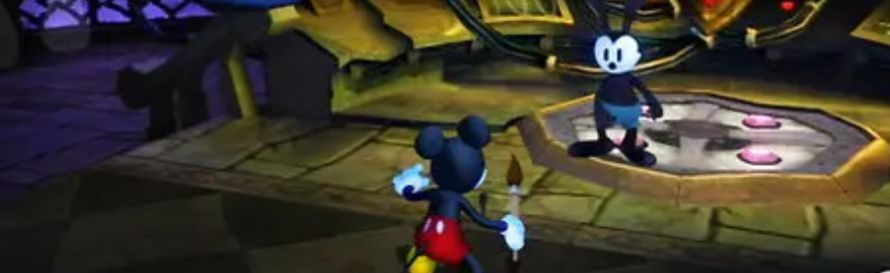
An entirely original and unexpected Disney romp from the mind of Deus Ex and System Shock designer Warren Spector, Epic Mickey envisions a scenario where our titular protagonist finds himself imprisoned in a mysterious world which is a dark reflection of Disneyland itself (Main Street U.S.A. being renamed as ‘Mean Street’ should give you an idea of where they were going with this).
A fully 3D platforming adventure, where Epic Mickey excels is in how it enables Mickey to leverage a magic paintbrush to conjure up quantities of paint and thinner that can be used to alter the very structure of the environment in ways that felt genuinely innovative for the time. Throw in an unexpectedly introspective look at Disney and its amusement parks and it soon becomes clear that Epic Mickey deserved far more than the muted commercial response it received on release. Here’s hoping its remaster gets a better reception!
4. Disney Dreamlight Valley (PC, Consoles)
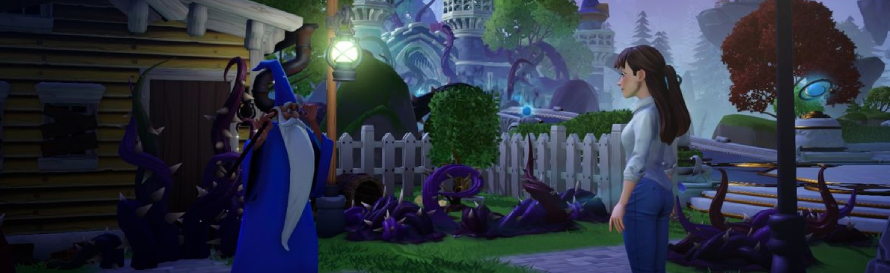
Disney Dreamlight Valley is a life sim that since its release in 2022 has proven to be enduringly (and often horrendously) engaging in ways that have proven troublesome for social calendars all around the globe. As an original adult character visiting their Disney buds from the past, you’ll get to customise your Dreamlight Valley settlement to your liking, invite a whos-who of Disney royalty to visit and take part in the proceedings as you complete quests for your residents, harvest the land, craft equipment, make new friends and all that other lovely, warm fuzzy stuff. I wasn’t joking either – it’s really best that you don’t have any social life of any kind before playing this, because you certainly won’t have one after you start.
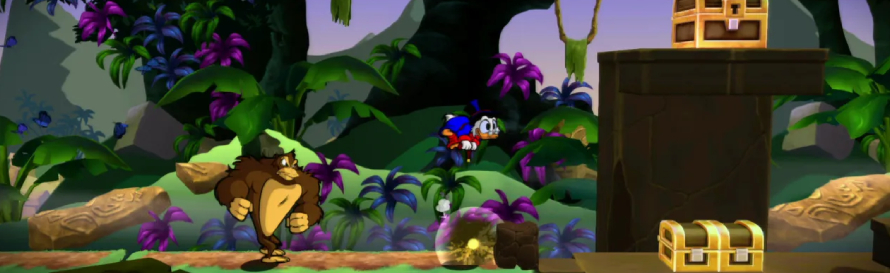
3. DuckTales (PC, Consoles)
Easily one of the most fondly remembered Disney games in this list, DuckTales is based on the late 1980s Disney television show of the same name and is a stellar little platforming effort in its own right. Though the plot, which has Scrooge McDuck travelling the world to make his hoarded fortune even larger by robbing a bunch of lost treasures, held little water, DuckTales nonetheless played magnificently as Scrooge leaps and wallops (with his trusty walking stick) his way from the depths of the Amazon to the cold vacuum of the Moon in search of his precious treasure.
Absolutely stuffed to the brim with Disney charm and enough legitimately challenging platforming to keep even the most committed genre fan grinning from ear to ear, players who aren’t crusty enough to remember DuckTales in its original 8-bit incarnation can get stuck into DuckTales: Remastered, an entirely revamped and superbly remade take on that Disney classic courtesy of the talented folks at WayForward.
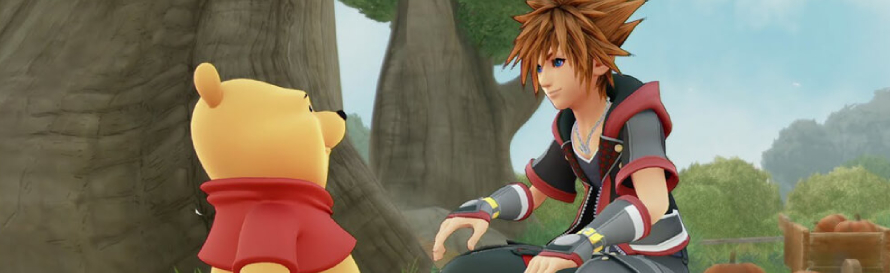
2. Kingdom Hearts (PC, Consoles)
Kingdom Hearts is a third-person action RPG that sees a young lad called Sora flanked by his loyal friends Donald and Goofy, as they leap across and into various Disney worlds in order to save his missing friends from a mysterious darkness known as the Heartless. From the dusty streets of Aladdin’s Agrabah to the vibrant messiness of Andy’s playroom in Toy Story and so many other iconic locations, Kingdom Hearts is a veritable kaleidoscopic dreamscape of different iconic Disney characters and locales that just beg to be explored.
What keeps the Kingdom Hearts games from claiming the top spot in this list – and again, this is just the opinion of this scribe (you’ll find plenty to the contrary) – is the sanity-eroding story which becomes far too convoluted, far too quickly, across the many games in the series. Coupled with some gorgeous visuals and great voice acting performances, the sugar rush appeal of leaping in and out of various Disney worlds with a massive cast of Disney characters is an evergreen attraction. You just need to decide whether you want to either dig into that almost impenetrable narrative or just ignore it altogether and stay for the ample quantities of Disney fan service.
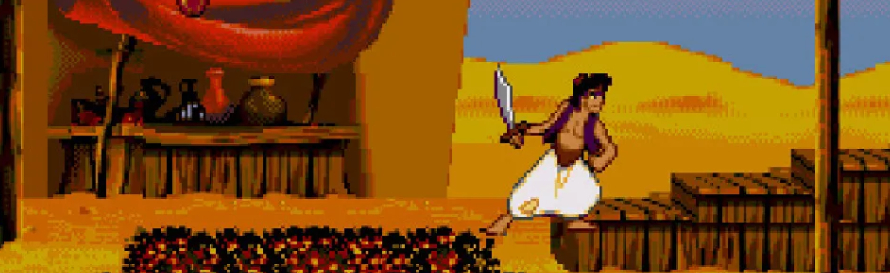
1. Aladdin (Sega Genesis, PC, Consoles)
Disney’s Aladdin is everything you could want – at least in the words of this humble scribe – from a licensed Disney video game. From the beautifully animated sprites that deftly evoke their big screen counterparts to the precise and ultra-responsive 2D platforming, perfectly judged level of difficulty and a frankly spot-on recreation of Alan Silvestri’s finger-rapping, earwigging movie soundtrack, Aladdin is the quintessential Disney game that everybody should play regardless of their age. Want some amazing news? Aladdin is available as part of the Disney Classic Games: Aladdin and The Lion King twin pack on modern platforms – so there is literally no reason not to enjoy it in all its glory!
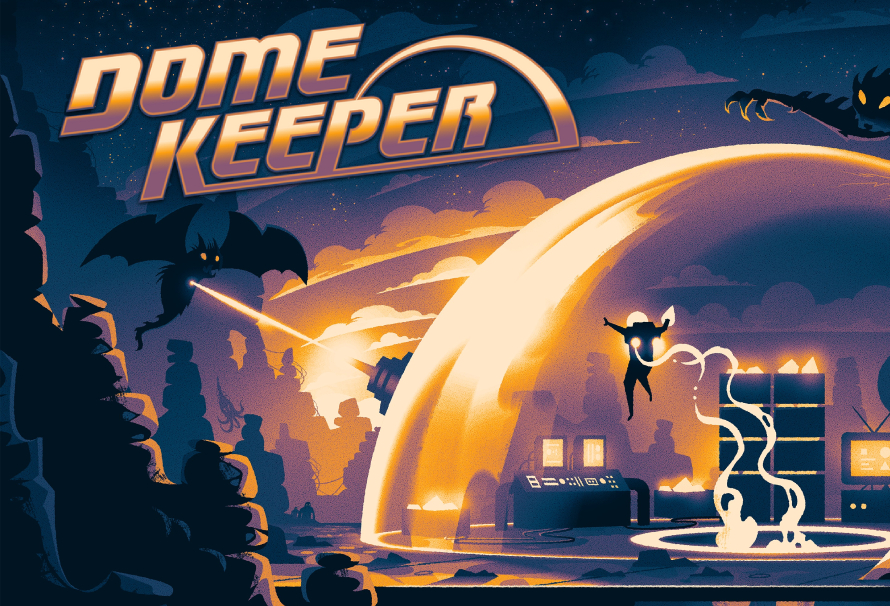
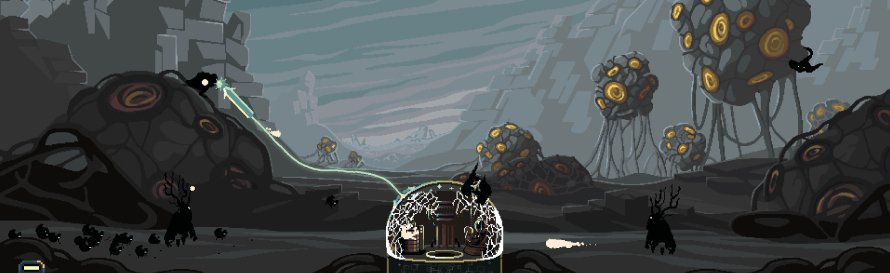
Dome Keeper launched back in 2022 and was already a brilliant little roguelike, however I found it to be a little too minimalist for my needs at the time. Two years later, however, it’s emerged back on my gaming radar following a massive update back in July, which brought with it a shocking amount of new content including its new Guild Assignments system.
For the uninitiated amongst you, vanilla Dome Keeper is a captivating blend of mining and tower defence with a dash of roguelike variety for good measure. You find yourself stranded on an alien planet, tasked with protecting your transparent dome from relentless waves of monstrous attackers. To survive, you must delve deep into the planet’s crust, gathering valuable resources to upgrade your dome’s defences.
The new Guild Assignment system, however, introduces a fresh challenge mode to the game. Instead of the standard gameplay, these assignments offer unique scenarios that will pose a challenge for new and existing players alike. For example, you might be tasked with defending against one specific type enemies, navigating a new and unusual map layout, or racing against the clock to gather certain resources. This adds a significant amount of variety and replayability, as it also gives you the chance to purchase new unlocks as you complete these special missions.
For me, that has basically meant I have been provided with more purpose, which was lacking for me previously. Suddenly every run is a challenge run, and one in which I can unlock a brand-new meta upgrade. It’s just a joy. It means you can delve into the mines below your little base in new ways, fight off waves above ground in different configurations, and enjoy a bunch of new monsters and gadgets as well. Plus, they’ve added a new loadout menu to prepare for the launch of multiplayer, and if there’s anything that’ll get me even more into the game, it’s the chance to do so with a mate or two.
Dome Keeper had an excellent base experience at launch, but I really feel like the A Keeper’s Duty update (to give the update its full dues) has completely reinvigorated the game. It’s a joy to play, and if you’ve been umming and ahhing about Dome Keeper, I can honestly say there has never been a better time to jump in.
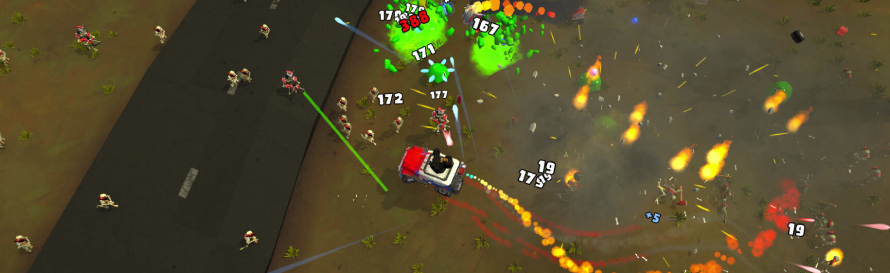
The joys of Vampire Survivors are all well-documented at this point. Despite being a seemingly minimalist game, and spawning a litany of genre stablemates, there’s just something about moving around mowing down ridiculous hordes of enemies as you go that is incredibly satisfying. The good thing about inspiring a whole genre is that often the games that come after you tend to bring something new to the table. This is exactly the case with Earl vs. the Mutants, which takes the formula, plonks it into a jeep with a mounted turret, and adds just a dash of affable Hillbilly into the mix.
The result of all of this is a game that feels immediately familiar but offers a significantly faster-paced experience. Unlike the more deliberate progression found in other games, Earl vs. the Mutants keeps players in constant motion thanks to the jeep and while the game doesn’t emphasize acquiring new weapons as frequently as some other titles, it compensates by providing a steady stream of passive upgrades. These enhancements gradually improve the character’s capabilities by increasing factors such as bullet quantity, size, and impact force.
Unsurprisingly, it’s all a lot of fun, and to add to the excitement, players can occasionally find drones that provide assistance by creating defensive barriers or collecting items. It’s a tried-and-true gameplay loop that feels excellent and as an added bonus, there are some passive upgrades for players to buy as a reward for completing levels. Whilst it might not be quite as complex as some of the other offerings in this genre, it’s no less enjoyable.
In fact, it’s arguably a better choice for new entrants to the genre than something like Death Must Die or Champion Shift. There’s an innate comedy of boosting over a hill only to land on a huge group of barrels and exploding yourself into nothingness that you really can’t find in other games. If you want to get into the bullet heaven/Vampire Survivors-like genre, and you’re not sure where to start, Earl Vs The Mutants is a great choice. It’s also ludicrously cheap too.
Though the eye-searing sheen of Microsoft’s Forza Horizon games might convince more contemporary players that the whole open-world racing shtick was pioneered by The House of Xbox, that whole template was actually conceived much earlier by the Test Drive Unlimited titles way back in the dark mists of 2006. Now with some thirteen years on the clock since the last entry in the series, Test Drive Unlimited Solar Crown is here in a bid to not only return the series to its past glory but also to meaningfully evolve it beyond what the series has accomplished to date.
The Pearl Of The Orient Provides An Evocative, Peerlessly Glossy Playground For Petrolheads
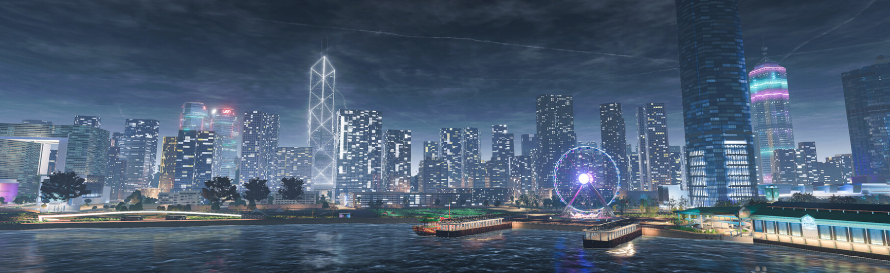
Arguably any open-world racer is only really as good as the world in which you find yourself motoring around in and right away Test Drive Unlimited Solar Crown makes a bold statement in that regard. Taking place in current-day Hong Kong Island that has been fully recreated to a 1:1 scale, Test Drive Unlimited Solar Crown makes the most of that city’s synergy of man-made and natural beauty, inviting players to speed beneath the fixed gaze of toweringly glossy skyscrapers in the Fortress Hill financial district, tear around the tree-lined streets leading up to Victoria Peak, or just lazily cruise past the iconic, though slowly moving, Peak Tram.
The boldness of this open-world choice is underscored by the fact that despite its alluring spectacle, Hong Kong as a videogame setting has been woefully underused and so feels resolutely fresh as a result. Certainly, outside of the street-level grittiness and compelling urban intimacy previously glimpsed in the excellent Sleeping Dogs, it’s fair to say that the Pearl of the Orient still has a whole heap of untapped potential as a videogame setting, to say the least.
An Extreme Attention To Car Detail Like Never Before
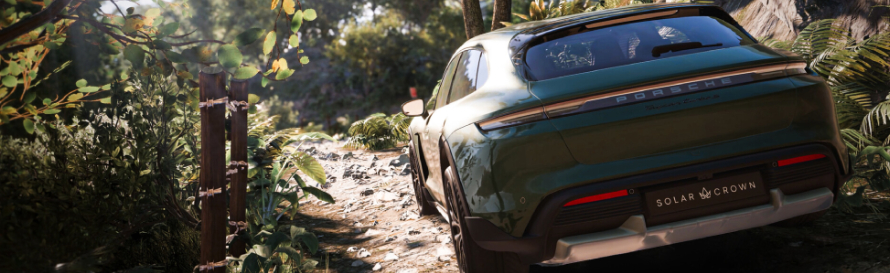
As much as Test Drive Unlimited Solar Crown exercises a very high amount of detail in its recreation of Hong Kong Island as a sprawling explorable landmass, so too has developer KT Racing also gone the extra mile (and then some) with its visual showcasing of the cars that will be zipping around the island. Boasting extreme attention to vehicular detail, every car in Test Drive Unlimited Solar Crown is an opulent approximation of the real-life article. From the slightly depressed, though ultra-sleek lines of the Bugatti Chiron through to the robust, yet low-key attractive everyday design of the 2010 Audi Q7, Test Drive Unlimited Solar Crown absolutely makes screen-stealing superstars out of its vehicular cast in a way that few other games successfully manage.
Beyond just the visual side of things, every one of the rides that you can hop into in Test Drive Unlimited Solar Crown is fully functional and featured to boot. Encompassing everything from fully interactive windows, togglable sunroofs and completely functional engines, KT Racing’s loving fixation on its broad spread of motor vehicles is far more than just skin deep.
Clan Warfare Gives Meaning To Your Open World Odyssey
Though Hong Kong Island is undeniably an attractive realm filled with all manner of different events in which you can take part, developer KT Racing has provided a real foundation for wanting to do all of it by virtue of its clan warfare system which serves as the basis of its progression systems. Much more than just some rote open-world playground filled with icons, every race or event that is successfully tackled you are awarded with varying amounts of money and reputation, with the former being used to (you guessed it) purchase shiny new cars, while the latter plays directly into the clan warfare system that sits at the heart of Test Drive Unlimited Solar Crown.
Essentially, when you earn enough reputation in Test Drive Unlimited Solar Crown you will gain the attention of the two ruling clans of Hong Kong Island – the elitist Sharps and the rebellious Streets – who will approach you separately to do special missions and events exclusively for them. Naturally, choosing one over the other doesn’t just exclude you from a whole heap of events (naturally encouraging replayability as a result), but it also results in different cars being made available to you as well.
Progression And Discovery Are King
Though winning races to make some towering stacks and reputation is great and all that, Test Drive Unlimited Solar Crown won’t just throw these events into your lap. Instead, wannabe street racers are encouraged to very much wander off the beaten path to find the best that Hong Kong Island has to offer beyond just what the in-game map tells you.
When you’re not taking part in special missions, guarding truck convoys filled with expensive goods, transporting eye-wateringly expensive hypercars from one location to another or progressing with one faction or the other to unlock new races, schedules and locations, Test Drive Unlimited Solar Crown is ostensibly about embracing the spirit of progression and discovery and in both cases, KT Racing’s latest effort looks to offer a bounty of riches and then some.
Immersing Players Into The Identity Of A Full-Time Online Street Racer
Taking advantage of the numerous leaps and bounds that have occurred in online multiplayer technology and connectivity that have happened since Test Drive Unlimited 2 raced onto the scene in 2011, Test Drive Unlimited Solar Crown is very much about forging an entirely separate online identity that solely revolves around cars, street races and the Hong Kong competitive racing scene as a whole.
Very much geared towards fostering a social space with your entirely customisable avatar and car collection, whether you’re in the glittering Solar Hotel or in one of the many car dealerships or meeting places, Test Drive Unlimited Solar Crown is as much about meeting new folks and expressing your passion for car racing and collecting as it is about the actual racing itself. And let’s be honest, if I was minted enough to own a Bugatti Chiron, I’d probably be spouting off about it to like-minded folks too.
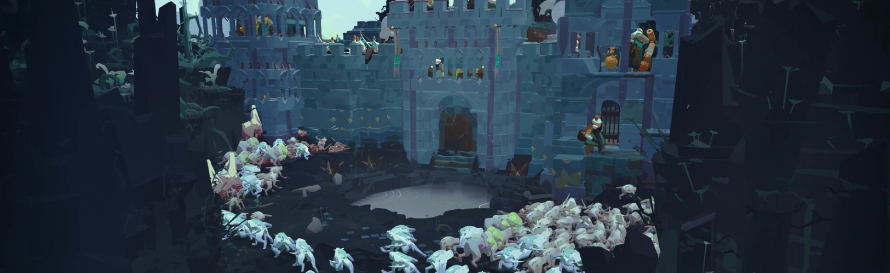
Hooded Horse just might be one of the most exciting publishers around right now. Outside of the incredible Manor Lords, they also launched Against the Storm last year, and Empires of the Undergrowth this year. There are loads of other good games too, but the one I want to talk about today is Cataclismo, which is sort of like if LEGO and a zombie horde survival game had a weird, video game baby.
At its core, you get to design and build your own fortresses on an incredibly granular level in true sandbox style. How granular this building is, however, is pretty hard to express so just imagine building using virtual LEGO and you will have a pretty good idea. It doesn’t stop there though, because as you’re building your castle up, and trying to make it look as good and as strong as possible, you have to fight off hordes of zombie-like horrors from the Mist.
These horrors will probe your defences during the day but it’s at night that they truly test your building skills. And we aren’t just talking one night, because Cataclismo tasks you with withstanding the onslaught night after night. It all sounds simple, but the way you have to micro-manage the running, upkeep and defence of your fortress is a constant, but thoroughly enjoyable, struggle. There’s also no end to the joy each player can have as they find their preferred construction style; whilst some will delight in the ability to create literal marvels, others will be happy to just make a nice box fort and be done with it.
Pleasantly, both strategies are solid, provided you master your different units and gain new unlocks as you survive each horde. What’s more, there are three game modes to enjoy and muck around with, each of which keeps the core gameplay while still feeling meaningfully different. In this humble Stone Mason’s opinion, it’s already a very good game and considering it’s in Early Access, it’s only going to get better from here.
Thirteen years is certainly a long time to wait for any game and yet fans of 2011’s Warhammer 40,000: Space Marine, including myself, will tell you that by all accounts Warhammer 40,000: Space Marine 2 looks to be worth it and then some. So with that in mind, here are ten things that we’re looking forward to most about Warhammer 40,000: Space Marine 2 when it releases next month.
Laying Down The Lore
With its galaxy-spanning narratives and endless conflicts, the Warhammer 40,000 setting is stuffed to the brim with rich lore that often reaches from one story to another. Space Marine 2 looks to be no different in that regard, with dynamic character conversations, audio logs, cutscenes and more all fleshing out the struggle that Lieutenant Titus and his Ultramarine brethren are experiencing against the intergalactic Tyranid threat. Put simply, Space Marine 2 will utterly immerse you in the lore of the grimdark Warhammer 40,000 universe and I am absolutely here for it.
Campaign Co-Op That Lets You Bring In Some Mates To Fight For The Imperium
Even though 2011’s Warhammer 40,000: Space Marine boasted co-op, it was wholly restricted to separate Exterminatus missions, which were essentially a take on the traditional horde mode game type rather than anything more substantial. For the sequel however, developer Saber Interactive has gone the extra mile, allowing up to three players to take on the Tyranid and Chaos forces together in a full-sugar, full-fat cooperative campaign.
Operations Keep The Co-Op Goodness Flowing
Beyond such a delectable main course, Space Marine 2 also offers up an additional PvE cooperative mode in the form of ‘Operations’, a connected three-player co-op mode that ties directly into the main campaign. Providing players with various missions to accomplish, these Operations also offer much-appreciated glimpses into the narrative beyond Lieutenant Titus’ own struggles.
Next Generation Visuals That Bring The Grimdark Of Warhammer 40,000 To Life
There’s no denying that Warhammer 40,000: Space Marine 2 is a hugely attractive effort – I mean just look at it. Lavishly decked out in cutting-edge visuals which bring the visceral escapades of the Adeptus Astartes to vivid life, Space Marine 2 is a visual showcase with spectacle to spare as hundreds of foes can be seen (and slaughtered in appropriately violent fashion), while the destroyed worlds and environments that are synonymous with the grimdark of the Warhammer 40,000 universe stretch off into the horizon.
A Violently Immersive Soundscape
Though Space Marine 2 is absolutely shaping up to be a stunning-looking genre effort, its visual presentation is just one-half of the sensory excellence that it hopes to impart to players. Also set to greatly impress is the sound design of Space Marine 2, encompassing a cacophony of roaring Bolter fire, the squelching of enemy bodies as a Chainsword buzzes through bone and gristle, explosions that rip through the earth and sends mud flying through the air and so much more. The sound design in Space Marine 2 more than matches its impressive graphics.
Enter The Tyranids (And The Chaos Marines)
Moving on from the largely Ork-laden cast of baddies seen in the first game, Space Marine 2 has elected to bring on an all-new group of really rather quite bad dudes for the Ultramarines to deal with. In the place of Orks come the Tyranids – a massive, swarm-like alien race from beyond the limits of the current known universe. Spreading like a plague throughout the universe and murdering, infecting and defiling all races equally, the Tyranid hive-mind will provide even the most hardened Space Marine with the sternest of tests as they attempt to stem the infestation. Oh and also the hulking, largely unbeatable Chaos Marines are popping along for the ride too. So that’s nice.
Eternal War Brings PvP-Focused Modes To Keep You Blasting Away
Not content to merely present players with a bombastic story campaign and an additionally chunky Operations cooperative mode, Space Marine 2 also brings a trio of PvP-focused modes to the table, where players take up the opposite sides of the Ultramarines Chapter and Chaos Marines respectively. Annihilation is a classic deathmatch style mode where the winning team is the one with the most kills, while Capture and Control has you occupying a zone that changes its location throughout the match, with the winning team being the one that has occupied the zone for the longest time. Seize Ground meanwhile, tasks each side with capturing and defending three different specific zones on each map.
An Expanded Class-Based System
Whether you’re batting for the folks in blue or you’re down with that Chaos lot, Space Marine 2 provides no less than six different classes for players to embrace as part of their intergalactic struggle. With the Assault class, you’re looking at a role where, because of a predictable emphasis on high damage and close-range combat, they become the perfect soldier for punching through enemy lines. The Bulwark meanwhile, as the name suggests, is the damage soaker of the group that can use a huge shield to not only eat damage but to protect their teammates too. The Heavy class is a big fan of oversized weapons that deal out huge amounts of damage, though the weight of such an arsenal directly translates into reduced movement speed. With a focus on stealth and single-shot, long-range damage, the Sniper does pretty much what it says on the proverbial tin. Then we have the Tactical class, representing the closest thing Space Marine 2 has to an all-rounder role that proves equally competent at dealing both long and short-range damage. Finally, the Vanguard is all about agility and speed, making them the optimal class for nabbing objectives and hitting the enemy’s flank when they least expect it.
A Never Ending War That Will Continue Long After Launch
Not content to merely present players with a chunky story campaign and the additional ‘Operations’ focused PvE campaign, developer Saber Interactive has also committed to a wealth of post-release updates and extra content. Though the post-release content roadmap has yet to be published as of this writing, we can certainly expect to have a wealth of free new missions, maps, weapons and much more as Space Marine 2 storms into the future and adds content to its Eternal War PvP and Operations based PvE modes. Bring it on.
A Varied Array Of Weapons & Tools Fitting For The Adeptus Astartes
Though the numerous Space Marine chapters are highly disciplined, walking engines of war, it’s really in the depths of their extremely high-tech arsenal that the Adeptus Astartes present the biggest threat to its enemies. From the traditional Chainsword that makes mincemeat of enemies in close quarters, to the trusty Heavy Bolter, Camo Cloak, Bulwark Shield and so much more, Space Marine 2 doesn’t just give wannabe Ultramarines a couple of weapons and send them on their way, but rather a sizable arsenal of different weapons and tools that can be used to turn the tide of any battle. There may only be war in Warhammer 40,000, but in Space Marine 2, there are also smart ways to fight that war too.
It was probably after desperately stealing some medication from someone’s ailing grandfather in 2014’s This War Of Mine, that I realised developer 11 Bit Studios had a real grasp of brutalist tactics and more pointedly, a handle on making the player twist their moral compass in the name of survival. There was nothing quite like it in 2014 and with the release of Frostpunk in 2018, that particularly gut-punching school of game design was given a much broader sweep and scale, tasking armchair leaders with taking care of an entire city locked in the midst of a climate apocalypse.
Some six years later, Frostpunk 2 seeks to bring back the series’ focus on brutalist strategy as it once more calls upon players to shepherd a population of desperate survivors towards the goal of their ultimate survival, all the while dealing with both external and internal pressures that relentlessly seek to imperil their very existence. That said, Frostpunk 2 does all of this against a somewhat different backdrop.
In Frostpunk 2 players assume the role of the Steward, an overseer of the interconnected city districts of New London and it’s a vocation that on the surface seems similar to the roles and responsibilities the player had in the first game. However, whereas the first Frostpunk title was very much a grim, survivalist nightmare with little hope for a better future, Frostpunk 2 instead shows us a world where prosperity can be attained, despite human nature. Certainly, much like its predecessor and other post-apocalyptic yarns, Frostpunk 2 keenly understands that the biggest threat to humanity is, you guessed it, humanity itself and so the sequel largely runs with this notion as its core message throughout.
As one might expect then, moral conundrums come thick and fast and in a world where just about everything that could go wrong does go wrong, and usually rather incredibly badly, Frostpunk 2 forces players to choose between awful and less awful outcomes regularly. For example, with a sizable younger workforce, you can pull them out of your child shelters (assuming you set them up in the first place) and send them down to work in your newly fashioned, but somewhat unsafe, Advanced Coal Mine. What do you do, however, when you discover that the mine has experienced a fault which could lock the young folks inside, effectively killing them, yet all the while their doomed toil results in key ore being processed to keep the lights on in your city?
Very much dovetailing into the idea of civilization progression that Frostpunk 2 is presenting is the biggest functional difference that 11 Bit Studio’s ambitious sequel brings over its predecessor, the Council. A conclave of various represented factions that each have their own skin in the game and which must provide you with a majority vote (out of 100) on whichever laws you attempt to create and pass, the Council is a central and very much macro part of Frostpunk 2’s brutalist strategy gameplay.
With outsized egos, odious politics and religious beliefs representing the array of factors that can influence decision-making in the Council, Frostpunk 2 ensures players aren’t just concerned with resource hunting and moral decisions but are also focused on chasing votes and appeasing factions to get what they want. Need to pass a law for increased technological innovation to improve crop yield for the sparse months ahead? Sure, such a law might make the technologically-obsessed Engineer faction happy, by the same token it’s likely to annoy the Foragers who shun such advances and instead believe in the natural bounty of the land. This can subsequently lead to conflict on other issues at a later date. Of course, if you’re feeling especially dictatorial, you may simply declare a state of emergency and bring a brutal crackdown on those who oppose you, splintering friends and family through violence and ensuring your political opponents know that you really aren’t someone to be messed with.
There are no good choices in Frostpunk 2, just marginally less terrible ones that still leave you with a gaping, all-consuming vacuum of utter blackness where your heart used to be. More so than the first game ever did, Frostpunk 2’s embrace of brutalist political strategies and myopic attitudes raise an uncomfortable mirror to the real world itself. Certainly, a glut of hastily made and panic-stricken decisions will affect those the worst-off in society the most, while the more affluent and capable find themselves largely insulated from the consequences of such choices.
Lest New London ends up an omnishambles of colossal proportions then, Frostpunk 2 invites players to attempt to strike some sort of balance that sees them keeping at bay the critical crises that threaten the city in its near term, while balancing the probability and risk of longer term crises and how they might unfurl further down the road.
You will never make everyone happy and it would be folly to try and do so, and yet, Frostpunk 2 asks the player to maintain a careful balancing act of the various factions in place via its new Council system. To that end, don’t be surprised if Frostpunk 2 has you ending up like some sort of maddened, attention deficit loon, as you struggle to balance the plates around you and/or just go into emotional tunnel vision and only deal with those immediate issues that loom largest on your radar.
Ultimately, the only thing colder than the expansive frosty wastes and frigid tundra which surrounds New London are the decisions you must make to keep the whole thing ticking over, and it’s very much these brutal decisions – in a seeming age of prosperity – that Frostpunk 2 looks to bring, once more, to the forefront. Bring it on.
Quite possibly the most promising Star Wars title in years, Star Wars Outlaws reimagines the Lucasfilm space opus as a huge open-world extravaganza, tasking players to strap on the boots of a rugged smuggler who must traverse, shoot, sneak and steal their way across the galaxy in an epic odyssey that takes place between Star Wars movies The Empire Strikes Back and Return of the Jedi.
Be sure to keep this guide in your favourites as we cover everything you need to know about Star Wars Outlaws including the release date, beta details, digital deluxe edition details, character list, story details, gameplay details, the latest trailer and more.
Star Wars Outlaws Release Date
Star Wars Outlaws has been officially confirmed for a full release on PS5, Xbox Series S/X and PC via Ubisoft Connect and the Epic Games Store on August 30, 2024. Star Wars Outlaws will not be released for PS4, Nintendo Switch or Xbox One platforms as of this writing, while a Steam release date also remains unannounced at this stage.
Star Wars Outlaws Early Access
Star Wars Outlaws Early Access – which allows players to get stuck into the game 72 hours early – will be available to anybody who purchases either the Star Wars Outlaws Gold Edition or Star Wars Outlaws Ultimate Edition.
Star Wars Outlaws Pre-order Bonuses
For pre-ordering any version of Star Wars Outlaws, you’ll gain access to the Kessel Runner Bonus Pack, which includes a unique cosmetic for your Trailblazer spaceship and a cosmetic pack for your trusty speeder. Lovely.
Star Wars Outlaws Special Editions – What Do You Get?
Besides the base version of Star Wars Outlaws, two special editions are available to players who would like to go the extra parsec. The Star Wars Outlaws Gold Edition provides the following goodies:
Star Wars Outlaws base game
Season pass
Up to 72-Hours Early Access
The Star Wars Outlaws Ultimate Edition meanwhile dishes up all of the below:
Star Wars Outlaws base game
Season pass
Up to 72-Hours Early Access
Rogue Infiltrator Bundle
Sabaac Shark Bundle
Digital artbook
Star Wars Outlaws Season Pass Contents
Should you purchase either the Gold Edition or Ultimate Edition of Star Wars Outlaws, or just purchase the Season Pass separately, you’ll gain access to awesome additional content, including:
Two post-release story expansions that broaden the universe of Star Wars Outlaws with all new characters, quests, missions and more
Exclusive access to the Jabba Gambit mission at launch in which Kay must do a job for Jabba the Hutt to get her new acquaintance, the slippery droid ND-5, off the figurative (and perhaps a literal) hook.
Access to the Kessel Runner Character Pack which provides Kay and Nix with a range of character aesthetics that have a somewhat Han Solo-ish vibe to them.
Star Wars Outlaws Story
The plot which acts as the roaring engine behind Star Wars Outlaws’ galaxy-spanning adventures puts players in the role of Kay Vess, a down-on-her-luck scoundrel looking for that one big heist that gives her the more tranquil life that she has so long desired. Unfolding between the events seen in The Empire Strikes Back and Return of the Jedi, Kay together with her steadfast companion Nix must blast, outwit and rob their way across the galaxy, flipping loyalties from one criminal syndicate to the next all the while staying underneath the radar of the all-seeing Galactic Empire as they seek both freedom and fortune in equal measure.
Star Wars Outlaws Gameplay
Coming from Massive Entertainment, a studio which firmly established its Disney open-world bona fides with 2023’s excellent Avatar: Frontiers of Pandora, Star Wars Outlaws is certainly in good hands to say the least. Broadly speaking, Star Wars Outlaws is split into roughly two very different portions – third-person, planetside adventuring and space-bound travel with more than a bit of intergalactic dogfighting on the side.
Starting with the latter, the Star Wars universe presents a sizable amount of real estate for wannabe scoundrels to explore. As such, this means Kay will use her Trailblazer starship to take her everywhere from the myriad dusty dunes and marketplaces of Tatooine to the glittering skylines of Coruscant as she searches for that one big payoff to set her (and Nix) up for life. Of course, Kay is hardly the only scoundrel out there looking for an outsized piece of the pie and combined with other criminal syndicates and the Galactic Empire itself, space combat is an unavoidable part of her job description when it comes to exploring everything the galaxy has to offer.
By using her trusty Trailblazer starship which can be upgraded throughout the game, Kay can employ all manner of laser cannons, missiles and more to disable or outright destroy her enemies as she takes on everything from junk fighters to top-of-the-line Imperial Tie-Fighters. Much more than just a fancy bit of travel and combat among the stars, Kay can also take on various different space missions for each of Star Wars Outlaws’ four main factions, resulting in everything from straightforward search and destroy missions, to escort sorties, salvage retrieval and more. Really though, it’s when Kay and Nix put their feet on terra firma that Star Wars Outlaws truly opens up.
Unfolding like a cross between the Uncharted games and Massive Entertainment’s own Division titles, the on-foot sections of Star Wars Outlaws are a punchy hybrid of ferocious third-person ranged and melee combat, tight-knit cover shooting and with a dash of stealth for those who wish to be neither seen nor heard for as long as possible. By establishing contrasting relationships with the four criminal syndicates in Star Wars Outlaws, Kay and Nix can take on unique faction missions that not only push the story forward further but allow our cheeky protagonists to gain new skills and abilities to boot.
Blissfully when you land on a planet, you won’t be on-foot for all of it either, since Kay’s speeder (which is also pleasingly upgradeable), isn’t just used for swiftly taking our crafty duo from place to place, but also packs enough firepower to deal with other nefarious folk that fancy their chances. Finally, it’s also worth keeping an eye on the scope of your criminal pursuits since if you cause too much destruction or draw too much attention, the Galactic Empire will send increasingly powerful forces after you in a manner that somewhat mirrors how the police star system works in the Grand Theft Auto games.
Where Can I Watch The Latest Trailer?
The latest trailer for Star Wars Outlaws is available to watch right now and you can catch it directly above. Chronicling the gameplay revealed during this year’s comprehensive Ubi Forward presentation, the latest trailer for Star Wars Outlaws provides a kaleidoscopic look at everything you can get up to in Ubisoft’s next open-world effort. From tricky stealth to furious third-person shooter combat, breathless exploration, faction dealings, space combat and so much more, this latest trailer does a sterling job of getting just about anyone with a pulse excited for Star Wars Outlaws when it releases this August.
Now that you know everything you need to become the galactic rapscallion you’ve always dreamed of, it’s time to lock yourself in for the galactic adventure ahead by picking up Star Wars Outlaws over on the Green Man Gaming store.