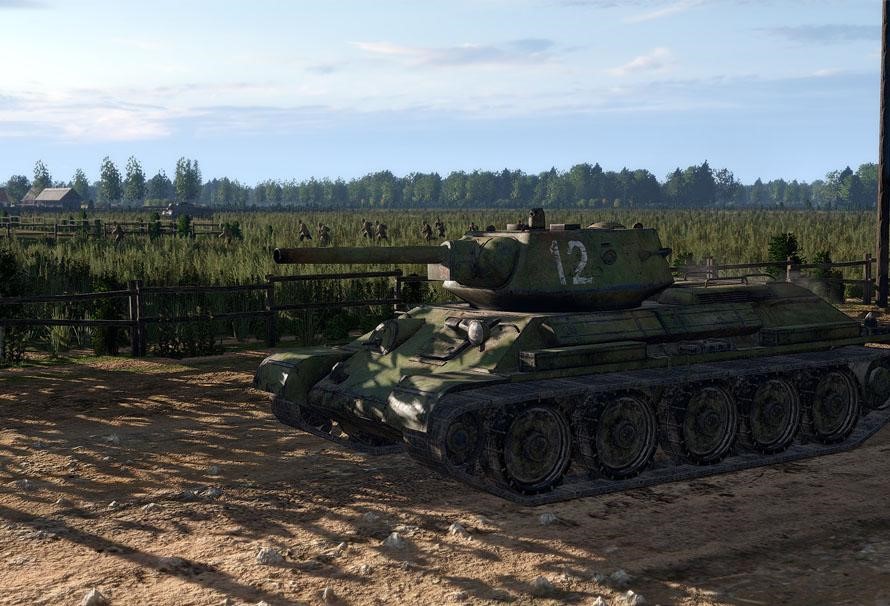
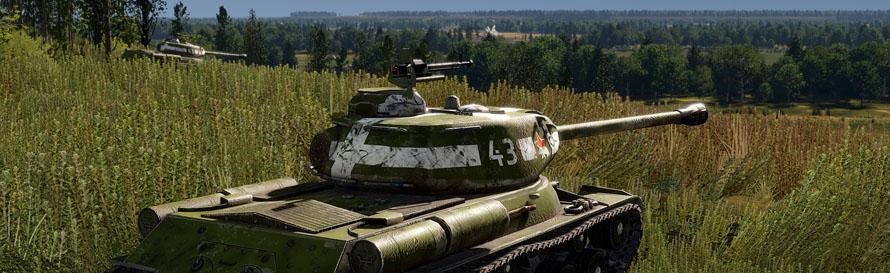
Steel Division 2 is a brand new historically
accurate World War II real-time battle simulator developed by Eugen Systems.
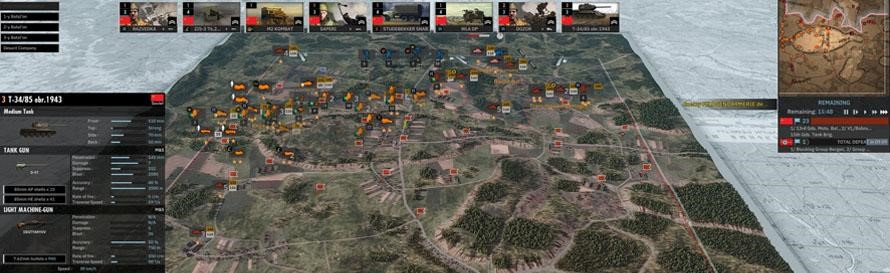
Taking place on the Eastern front of the conflict, it features 1:1 scale
turn-based army management interspersed with real time strategy as you take control
of the battlefield itself.
Here’s everything you need to know to get up
to speed.
Steel Division 2 Release Date and Development
The sequel to Steel Division: Normandy 44, Steel Division 2
was initially announced on July the 25th, 2018 and saw a full release on June
the 20th, 2019. Taking on board community feedback from Steel Division:
Normandy 44, the game features redeveloped combat mechanics, a new art style,
and a brand-new game engine, entitled the IrisZoom engine. Steel Division 2
also marks the first game to be independently published by creators Eugen
Systems.
Steel Division 2 Trailers
The first trailer for Steel Division 2 was
released alongside the announcement in July of 2018:
Following on from its announcement, several
trailers have been released by Eugen Systems. Amongst them a full in-engine
trailer:
With the most recent being the Launch Trailer,
showing off the final game:
Steel Division 2 Gameplay
Steel Division 2 is set on the Eastern Front
of World War II, during Operation Bagration, which was the Soviet offensive
against Nazie armies in Bielorussia. Steel Division 2 introduces several new
game modes alongside refinements and improvements made to the real time
strategy formula seen in prior Steel Division games.
Included within Steel Division 2 are 1:1 scale
real time battles in turn based Dynamic Strategic Campaigns, individual Real
Time Tactical Battles, and a brand new Deck Building System. Featuring over 600
units, 25 maps, and multiple game modes, the game includes several hundred
hours of gameplay over solo, competitive multiplayer, and co-op modes.
Steel Division 2 System Requirements
Is your system up to the challenge of the
Eastern Front? Check out the system requirements for Steel Division 2.
Minimum: OS: 64-bit Windows 10 / 8.1 / 7 with Service Pack 1 Processor: Intel Celeron G4920 (Legacy: i3-2100) , AMD Athlon 200GE Memory: 4 GB RAM Graphics: Nvidia GeForce GT 1030 (Legacy: Nvidia GeForce GTS 450), AMD Radeon RX 460 (Legacy: ATI Radeon HD 5570) DirectX: Version 11 Network: Broadband Internet connection Storage: 50 GB available space Sound Card: DirectX Compatible Sound Card
Recommended: OS: 64-bit Windows 10 / 8.1 / 7 with Service Pack 1 Processor: 4 cores Intel | AMD CPU (Intel i3-8100, AMD Ryzen 3 1200) Memory: 8 GB RAM Graphics: Nvidia Geforce GTX 1060 3 GB (Legacy: Nvidia Geforce GTX 780), AMD Radeon RX 580 (Legacy: AMD Radeon R9 290X) DirectX: Version 11 Network: Broadband Internet connection Storage: 50 GB available space Sound Card: DirectX Compatible Sound Card
Now you’re armed and ready with all the
information you need, soldier. Head to the battlefield, take control, and
re-live the most in-depth simulation of World War II. Steel Division 2 is out
now, and you can always pick it up at a great price at Green Man Gaming.
You can’t know where you’re going until you
know where you’ve been. Unfortunately for gamers and the gaming industry,
curation of the past is something that still needs a lot of work. Whilst some
companies do a great job bringing the hits of yesteryear back to life, often
legal or other issues prevent games getting a second chance at life.
Well I’m the Extremely Old Gamer and I’m here
to talk about ten games that you just can’t buy anymore on PC, at least not
digitally or brand new. If someone reading this wants to get them re-released,
now would be good.
The name of Prey has had a long and tortuous
history. Even discounting the attempts at a sequel and the eventual re-imagining-but-not-really
that was 2017’s Prey, the original game took eleven
years to make it to market. Not a great commercial or critical success, it
finally disappeared from Steam a couple of years ago and now Domasi
“Tommy” Tawodi’s adventure is rare to find.
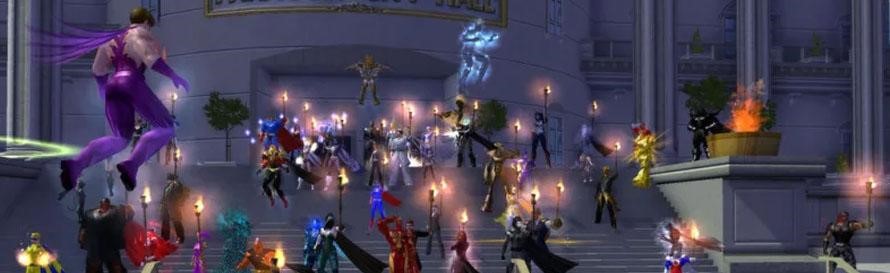
City of Heroes
MMOs were all the rage for a brief period in
the 2000s, and City of Heroes released in 2004 was one of the most imaginative.
It lasted through the period where World of Warcraft took the lives of so many
MMOs, the final update not coming until 2012 .Mourned by many, unofficial
fan-run versions have since cropped up.
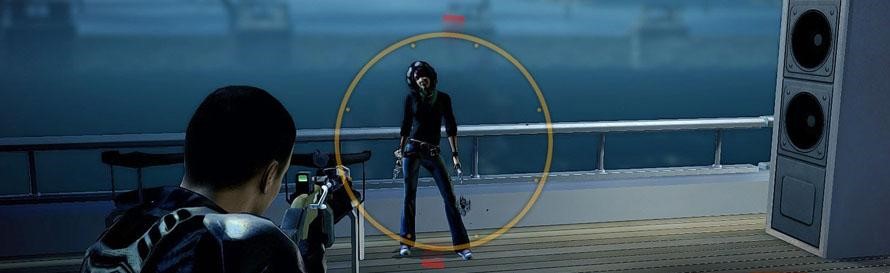
Alpha Protocol
The most recent addition to this list,
Obsidian’s spy-action-RPG disappeared from stores recently due to music
licensing issues. Obsidian are working hard to get it back available, but for
now the game no-one talks about but everyone recommends, is impossible to buy.
Driver: San Francisco
The Driver series has a chequered past, and
no-on expected Driver: San Francisco to be any good. But it was, and with a
trippy body (or car) swapping mechanic behind it, it was a joy to play. Sadly
departed, it’s not even available on Amazon (despite the Ubisoft website
prodding you to it).
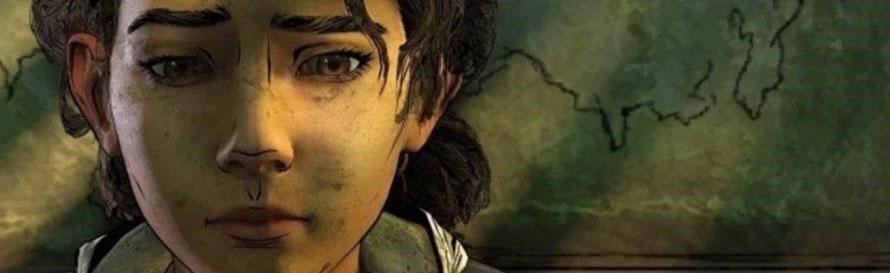
Telltale Games, like, all of them.
Telltale Games emerged over the last few years as a heavy hitter creator of narrative adventure games. Unfortunately, according to reports, there were several problems infesting Telltale. Upon its closure in 2018 its games began to slowly disappear from the sale, meaning the wonderful Tales from the Borderlands has gone, along with the peerless The Walking Dead.
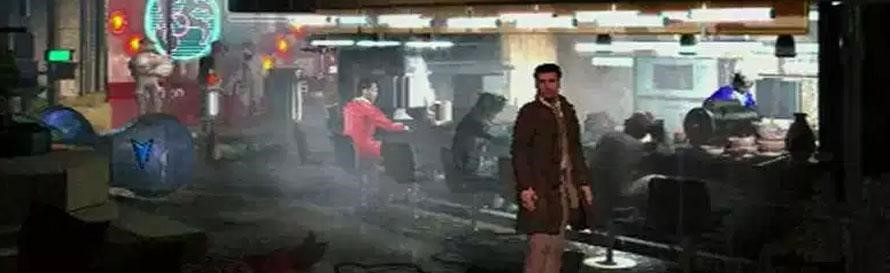
Blade Runner
Westwood were mainly known for their Command
& Conquer series, but they also dabbled in RPOGs like Lands of Lore, and
adventure games like the movie tie-in Blade Runner. Set alongside the original
1982 cyberpunk film, it was an ambitious attempt to portray the world of the
movie. Every time you played, the replicants you hunted were chosen randomly
from a cast of NPCs, a list which also included the player, the Blade Runner
Ray McCoy. Closer in plot to the book, Do Androids Dream of Electric Sheep,
it’s recently gained a new lease on life due to the work
of the ScummVM team. But only if you own the original files,
otherwise, you’re out of luck.
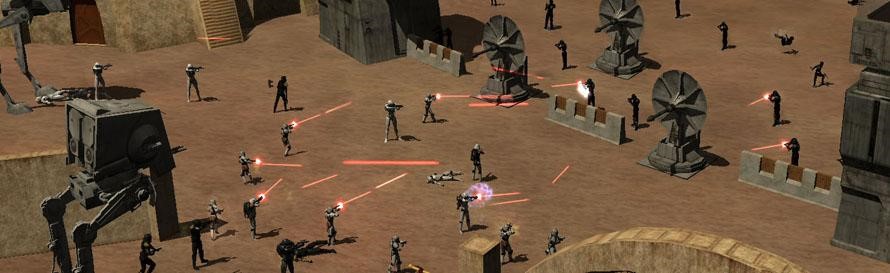
Star Wars: Galaxies
The MMO wars saw many casualties inflicted,
but none so keenly felt as the closure of Star Wars: Galaxies. With a list of
features so long that many MMOs haven’t caught up with it, it really set the
scene for later success by some more fantasy-based games. Lasting until 2011,
albeit in a much altered and controversial form, we salute this venerable titan
of the internet.
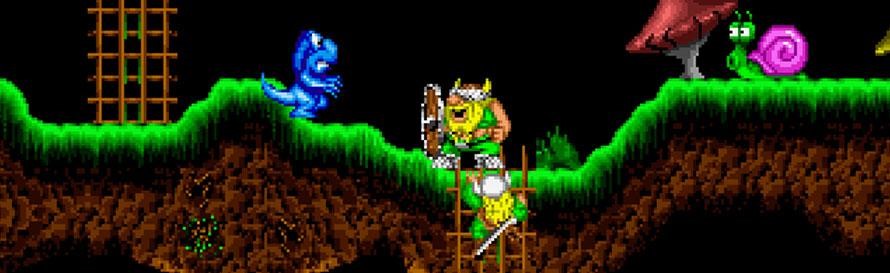
The Lost Vikings
One of the games that propelled Blizzard into
superstardom, The Lost Vikings was a platformer/puzzle game starring, well,
three lost vikings. Briefly available again on Blizzard’s Battle.net platform
in 2014, it has since disappeared from the internet again. Those dastardly
aliens must have abducted it.
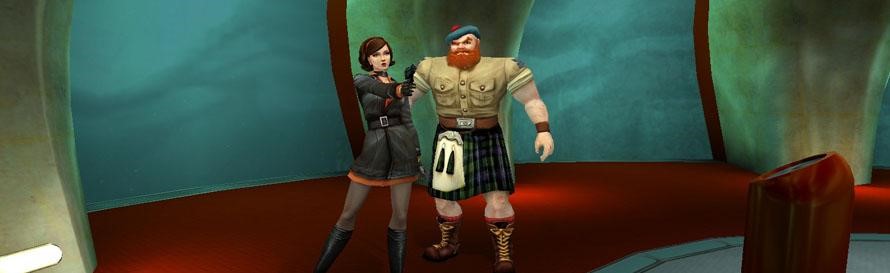
No One Lives Forever and NOLF 2
These days Monolith are known more for F.E.A.R.,
Shadow of Mordor, and its sequel, but back in the day they produced two
immersive sim masterpieces. No One Lives Forever and NOLF 2 featured British
superspy Cate Archer in campy 1960s Bond-inspired adventures, and were ribald
joys from start to finish. Packed not only with comedy that actually worked (a
rarity in games) and system-based gameplay, their disappearance from sale is a
true sadness.
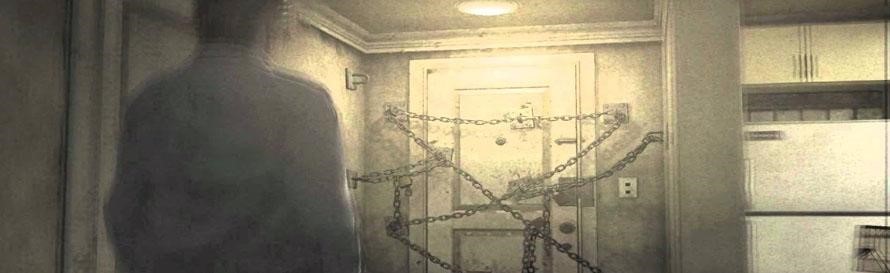
Silent Hill 2, 3, and 4
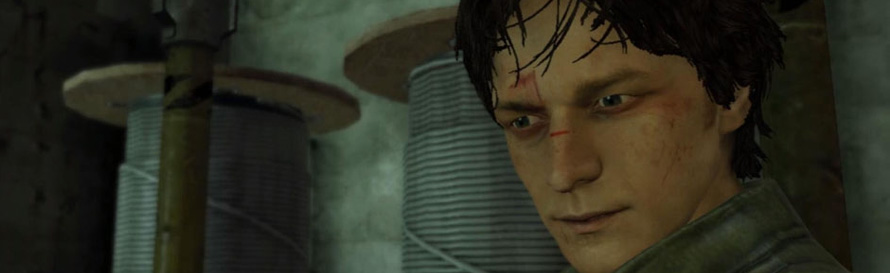
The Silent Hill series took the Resident Evil formula and leaned hard into the atmosphere, horror, and bizarre creatures that look like unfolded humans from your nightmares. The original never saw a release on PC, but 2, 3, and 4 all made their way to our beloved platform. Unfortunately, they are no longer available, so getting your hands on these amazing and terrifying games is a chore. Or requires a console. But hey, you can still buy Homecoming, right?
Time rolls on, and just like many of these games we’re outta time for this article. What are your favorite games you can no longer get on PC? Let us know in the comments, but first check on Green Man Gaming because you never know, your choice may have been re-released.
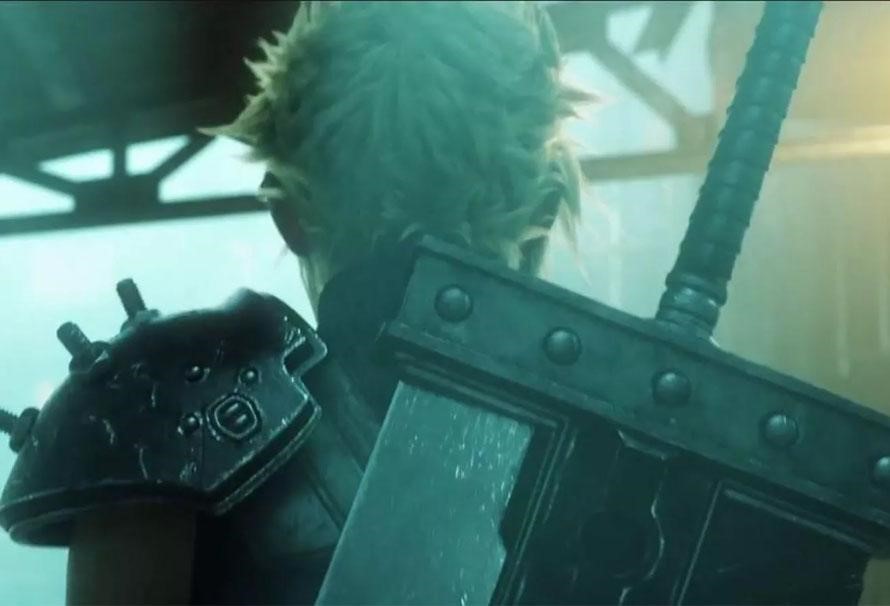
Final Fantasy VII’s remake is actually
happening. At E3 2019 this year we got to see a lot more of
the game than we thought we would during the Square Enix conference, and by Sephiroth’s
Beard it’s looking good.
One thing that’s supremely important to making
a good Final Fantasy game is the calibre of weaponry in it. Each game has their
own weapons, some good, some absolutely awful. Here’s our choices for the ten
best Final Fantasy weapons – ever.
Long, thin, and utterly unwieldy. But enough
about Sephiroth; his sword, Masamune, is also pretty impossible to use. That’s
why it’s so impressive that he whips it about doing all sorts of killing
maneuvers with the five-hundred-metre-long blade.
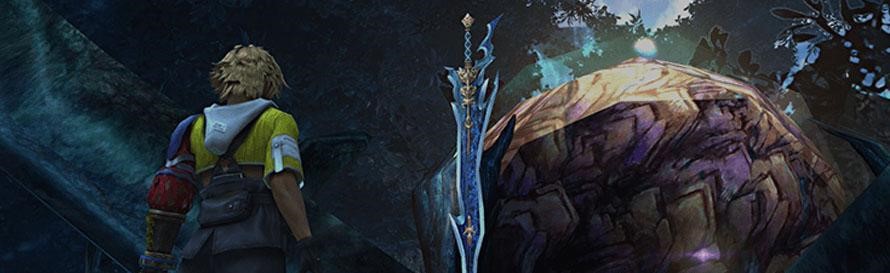
A rule of thumb in Final Fantasy is often the more awesome a thing looks the more awesome
it is. The Caladbolg from Final Fantasy X is an exemplar of this axiom,
Looking like a cross between lightning and crystal, it hits as hard as it
looks.
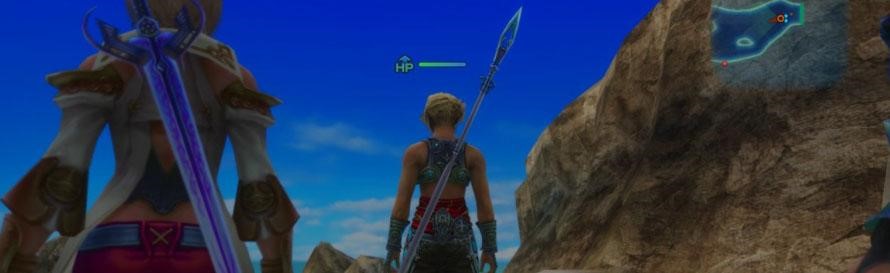
If you’ve ever wielded the Zodiac Spear then you’ve
gone through hell to get it. If you’re not sitting with a guide for Final Fantasy XII or you’ve not played it
before, chances are you’ll mess up getting this weapon just by playing the game
normally. But get it, give it to leading man Balthier, and watch as your
enemies fall like flies.
In Final Fantasy VII you get the Ultima Weapon by
defeating the Ultima Weapon. It’s a tough battle but it’s absolutely worth it,
because the Ultima Weapon is the ultimate weapon. It’s in the name. Right
there.
Just a paintbrush? How can that be a weapon?
In the hands of young Relm Arrowny in Final Fantasy VI it’s deadly. She uses it to paint, as you
would expect, but what she paints comes to life. Facing off against her foes,
she’ll stop to sketch them quickly, mimicking their abilities and using them
against them. Powerful stuff.
What’s cooler than a sword? A sword with a gun
built in, of course. Does it work or would it just blow Squall’s hand clean
off? Who cares, it looks rad as heck.
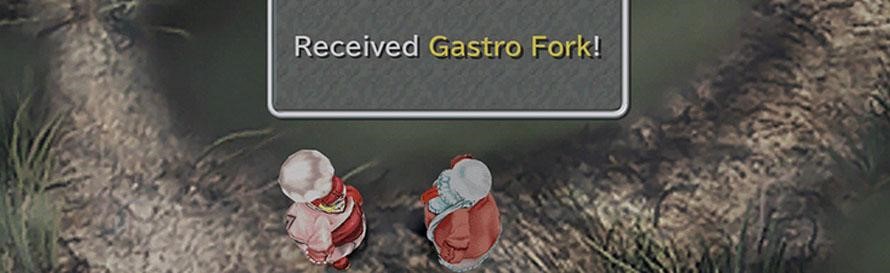
When they’re not just eating frogs, Quina Quen
is busy tasting their foes with gusto. A refined gourmand, they travel the
world in Final Fantasy IX not to save the world but
simply to taste the best out there. And what a weapon the fork is, because it’s
capable of scooping up even the toughest of enemies and converts them into
digestible form.
Some characters in Final Fantasy VII bring weapons to table. Tifa
Lockheart *is* the weapon. Armed with the meat and gristle bricks she calls
hands, she’s capable of taking down enemies with equal power to someone who turns into demons. Don’t mess with Tifa.
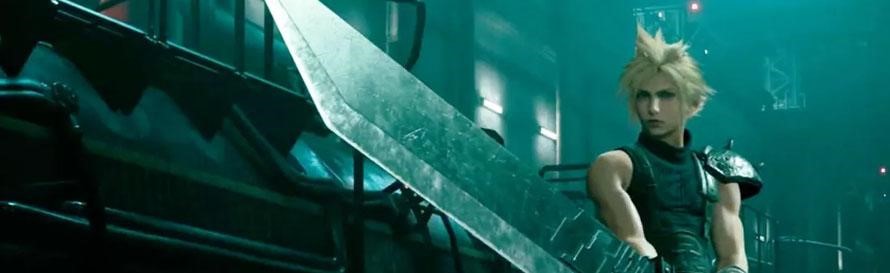
Sephiroth may have the longest sword, but
Cloud (and Zack) have the widest. Almost the same width as his own torso, Cloud
wacks upon foes to great effect with his airplane-wing sized weapon. Like many
in this list, would it work? Probably not, but who cares when it’s as iconic as
this.
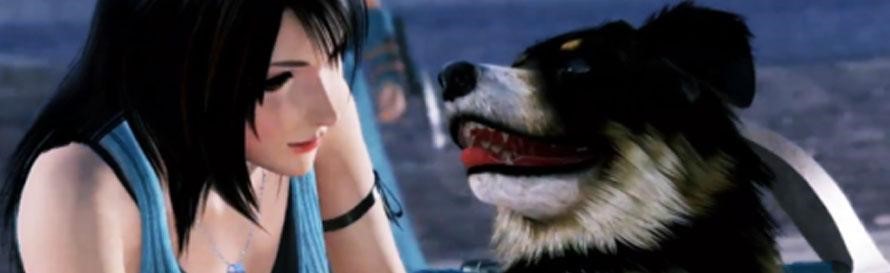
The secret best weapon ever devised is
humanity’s best friend. Angelo is a dog who accompanies owner Rinoa through the
adventures in Final Fantasy VIII, a dog who can be fired at
enemies like a cannon. Think about it, not only is Angelo a cracking weapon,
but after the battle’s done you can have a nice pat and give Angelo a treat.
Who needs anything more in life?
Those are our picks for the greatest Final Fantasy
weapons of all time, do you have a favourite we’ve missed off the list? Let us
know in the comments below.
If you’ve been paying attention to our social channels you would have seen the wonderful #loveindies campaign put together by Fail Better Games bringing you some great reviews of the ten best indie games you haven’t played. We thought they were so good we wanted to collect them all in a single post for you. So here are the Top ten indies you haven’t played.
A rip-roaring take on the Jules Verne’s fiction, 80 Days takes the well known Victorian setting and puts a steampunk twist on the whole thing as players compete against one another to travel the globe in the titular 80 Days. Generously drenched in the superlative writing that developer Inkle has long been known for, 80 Days is a non-linear adventure that casts players as Passepartout, the assistant to the famous Phileas Fogg himself who must not only ensure that his master has everything he needs, but also that an efficient and quick path be devised to navigate through some 170 cities, too.
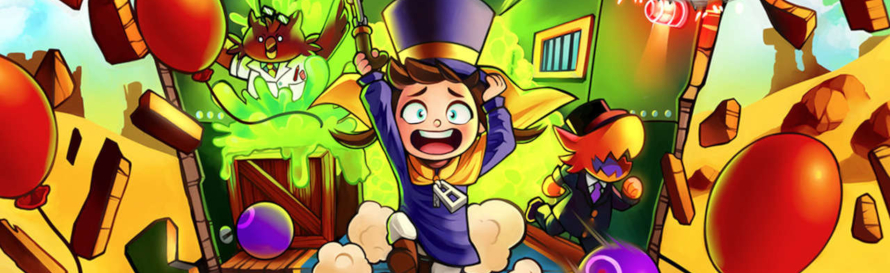
A Hat In Time
Harking back to the twee and bouncy 3D platformers of the late 1990s, A Hat In Time is a genre effort that entertains and charms in equal measure. Boasting enough cuteness to outright murder a small country, A Hat In Time casts players as a lost little lass who must assemble time crystals in order to power her ship and return home. Before that however, she must stitch together a range of uniquely powerful hats, travel to a variety of worlds such as a movie studio, a pirate ship and solve a fistful of mysteries. Look, if you’ve even a small twitch at the mere mention of the words ‘three dee platformer’ then A Hat In Time is pretty much essential alright?
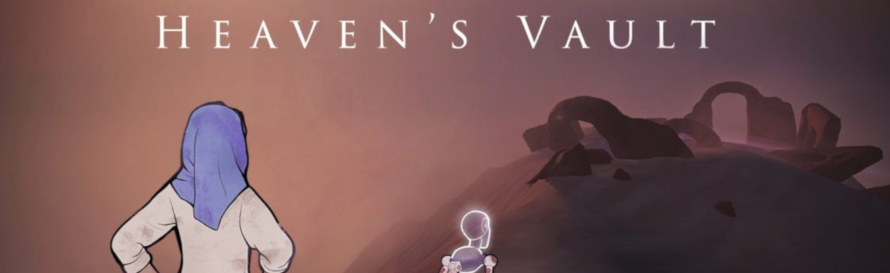
Tasked with tracking down a missing colleague in the Nebula, a mysterious area of space strewn with age old wrecks and ruins, Heaven’s Vault casts players as Aliya Elasra, an intergalactic archaeologist who must translate ancient languages to discover the fate of her friend. Accompanied by Six, a robot that spouts acerbic sarcasm with biting wit and high regularity, Heaven’s Vault is a non-linear, branching adventure that places paramount importance on the written word. If you’re a big fan of well-written, intelligent adventures that are stuffed with equally compelling characters, Heaven’s Vault is absolutely your jam.
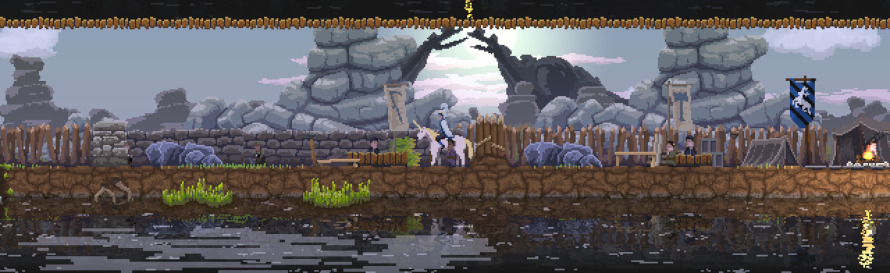
Putting players in the finely shined shoes of possibly the hardest working royal ever, Kingdom Two Crowns is a unique strategy effort that has you roaming mysterious lands in a bid to fashion a regal domain, as you gather resources, train soldiers and discover ancient artifacts. The goal quite simply is to keep your crown fix onto your noggin for as long as you can while bands of roving evil creatures, known appropriately as the Greed, attempt to snatch it. Boasting two different campaign settings that take in medieval Europe and feudal Japan, Kingdom Two Crowns is a wholly involving micro strategy title that is quite unlike anything else out there.
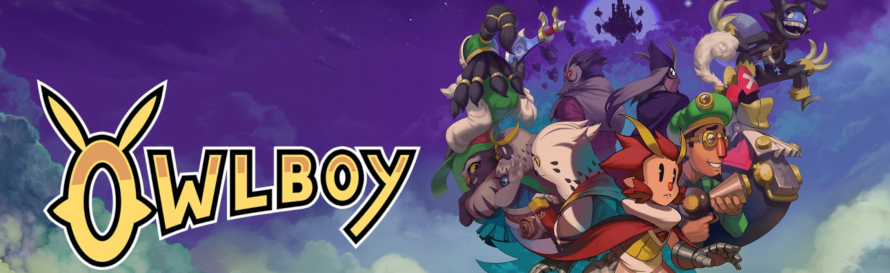
In development for some ten(!) years, it seems like a minor miracle that Owlboy was even released at all. Thank the stars then for developer D-Pad Studio, because the years of toil have allowed Norweigan developer to create one of the finest platforming epics ever made. As Otis, a mute who strives to fulfill his potential put upon him by his Owl brethren, events take a sinister turn when a band of nefarious sky pirates show up in pursuit of an extremely powerful artefact. Boasting pixel-perfect, flight-aided platforming action set across multiple worlds with oodles of secrets to discover and showcasing some of the most charming pixel art visuals to date, Owlboy is simply sublime.
The premise of Pix the Cat is beautifully simple. A grandly engaging and bite-sized score chaser, Pix the Cat is all about rushing a fiendish feline around a variety of increasingly labyrinthe psychedelic mazes, with a view to nab the longest, score giving conga line of eggs and ducks that one can possibly imagine against a fixed time limit. TL;DR? Well, Pix the Cat is basically mid-life crisis Pac Man off its face on a stein-sized kaleidoscopic acid cocktail. What’s not to like?
Don’t let the ultra retro-aesthetic fool you – The Last Door’s Atari 2600 styled supersized pixels can convey spine-shivering amounts of horror that allow the game to stand shoulder to shoulder with some of the most prominent members of the point and click adventure genre. Embracing its Victorian England setting to the utmost, The Last Door has players trying to discover what happened to a childhood friend who, in the midst of some mad scribblings, has hung himself with little explanation. Toweringly well written, thickly atmospheric and frequently horrifying, The Last Door stands as an evocative reminder that the genre is sometimes at its best when it has us confronting our worst fears.
Easily one of the most sharply written games ever made, The Sexy Brutale melds a traditional narrative adventure with Groundhog Dog puzzles to fashion something extremely unique. As a guest trapped at a party in the titular Sexy Brutale mansion, you are tasked with not only trying to escape but also to discover why the guests are being murdered one by one. Chuck in a bunch of powerful magical masks that allow you to do and access things you couldn’t do before, some tremendously witty writing and enough time travel to make Marty McFly blush, and it’s clear that The Sexy Brutale should really be at the top of your list. If it isn’t, I don’t know – you must hate fun or something.
A hauntingly melancholic effort, Where The Water Tastes Like Wine is a third-person narrative adventure that has you stalking the plains, towns and rural expanses of a folklore steeped Depression era United States. Tasked with paying off a mysterious debt by meeting strangers and hearing out their stories, players will run into displaced Navajo, desperate migrant workers and more besides as the game embarks on a metamorphosis into a considered meditation on the American Dream. If you like your adventures smart, emotionally resonant and stuffed with stories that linger long in the mind, then Where The Water Tastes Like Wine should be your next stop.
From the same hugely talented folk that brought us Kathy Rain, Whispers of a Machine is a Sci-Fi Nordic Noir (try saying that quickly) that puts players in control of Vera, a cybernetically altered investigator who is looking into a string of grisly murders. Very much a point and click affair, Whispers of a Machine is an ornately hand-drawn effort that packs in well over 4,000 lines of fully voiced dialogue, multiple branching story paths and puzzles that hit the logic sweet spot, rather than being either too easy or teeth-grindingly obscure. Oh, and our heroine can also ingest a substance called Blue that provides her with a range of superhuman powers and augmentations. So there’s that, too.
If you want to know more about any of the games above you can visit the Green Man Gaming website.
Ah, Father’s Day, the day where we celebrate dads the world over. If you have a good relationship with your dad it’s a reminder to just take a moment to appreciate ol’ pops.
Of course, you can also get them a gift. A
card, a bunch of flowers, a mug with a hilarious ‘best dad’ slogan on it. Or
you could get them a game.
If your dad games or wants to game, here’s our guide to some PC games that we’re sure they will love. We guarantee it*
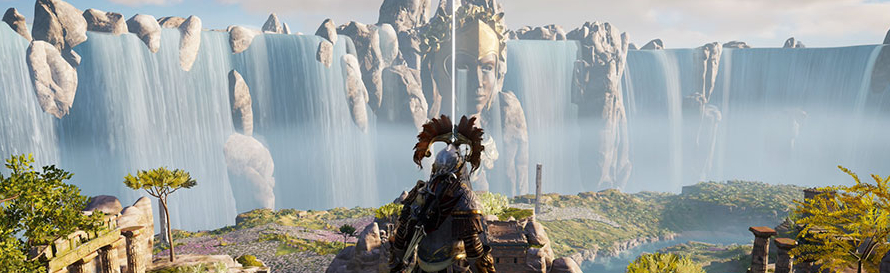
‘I never get any rest’ your dad might be heard to grumble. ‘Been ages since I had a holiday’ he’ll mutter under his breath. Surprise him with a trip to Greece. See the beautiful islands, make friends with the locals, experience life in the Classical period of Greece. Also, do a heck load of assassinations for good measure. His friends all holiday in Tenerife, but your dad? Your dad goes to Athens, 431 BCE.
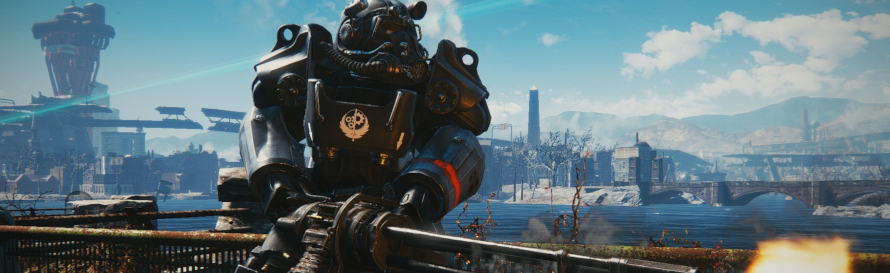
Has your father just finished watching Chernobyl? Get the ultimate tie-in game with Fallout 4. Let him live his nuclear dreams amidst the crumbling ruins of post-apocalyptic Boston. All the graphite outside the reactor that he can point a pointy stick at, just for the low price of a video game. He’ll be soon telling his mates all about the time he liberated the Commonwealth or visited Nuka-World. The perfect accompaniment to a high-brow radioactive drama.
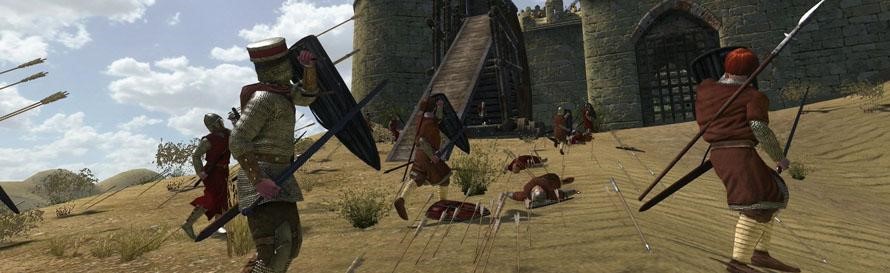
Dads often think that they’re the lords of
their domains, but in Mount & Blade: Warband they can make that a reality.
Carving out a slice of medieval life for themselves, it’s a perfect place to escape
to when reality gets a bit much. Combat, horse riding, army building, massive
battles, castle sieges, politics, and more. It’s just like real life, except
with fewer ‘putting the bins out’ moments.
If there’s one thing dads like to do, it’s to
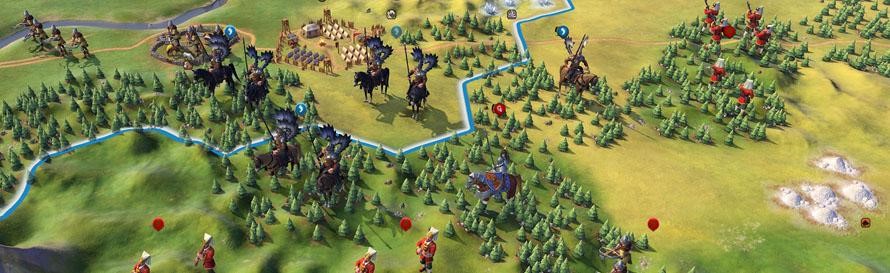
tell you that they know better. Civilization VI gives them the chance to prove
it once and for all. Oh you think I bought the wrong lightbulbs? Why don’t you
prove your chops by covering the world in a glorious Hungarian empire. Then
we’ll talk lightbulbs.
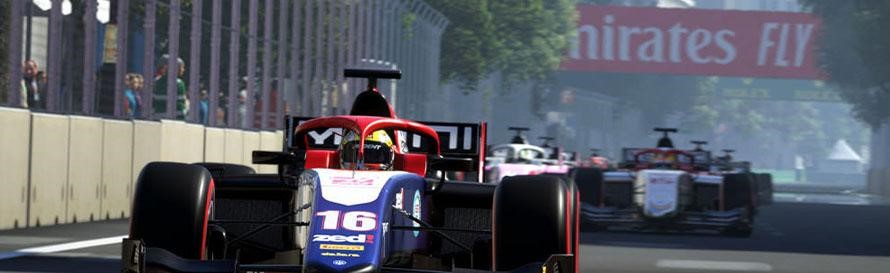
Dads also love, for some reason, racing. Many a Sunday is spent with their feet up, a glass of wine at hand, and the susurration of car engines whispering from the television. Why not take it a step further and actually get into the driving seat? Finally, get them to show that Jensen Button who’s the better driver. Spoiler, it’s your dad.
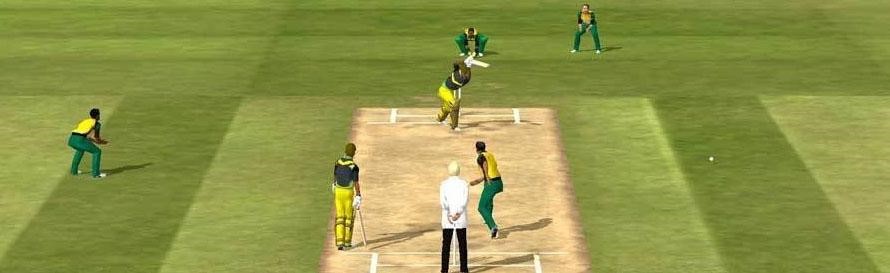
Cricket is the perfect dad game because what’s more dad than a game where you mostly don’t do anything? Perfect for a snooze through the afternoon, or most of the day if they’re honest with themselves. Cricket Captain 2017 lets them enjoy cricket whenever they like, by taking control of their own cricketing champions.
There’s a strange thing that happens when one
becomes a father. You develop, out of nowhere, an innate fascination with World
War II. In addition, you also become averse to spending money. Combine these
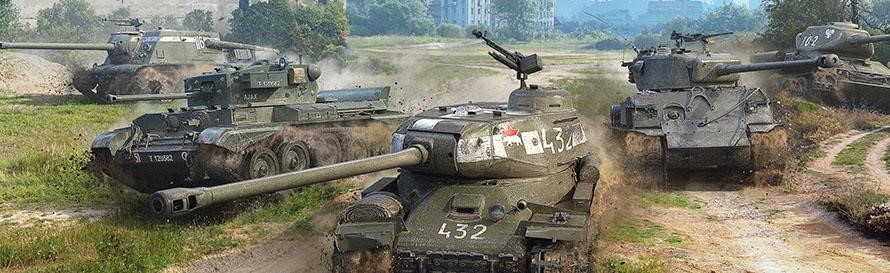
two urges with World of Tanks, a game about World War II tank combat, that
costs nothing to start playing. Win-win for papa dear.
Too much work, too many demands, got to see
the in-laws at the weekend, garden needs tending. We say heck to it all, dads.
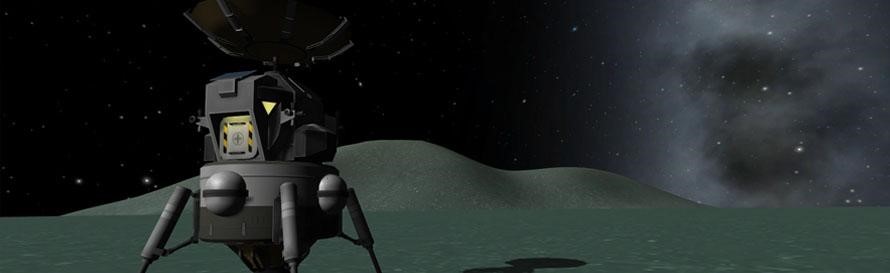
Head to space instead. Fulfilling not only the desire to get away from this
hell-planet and all its never-ending tasks and the meticulous model-building
impulse that many dads harbour, Kerbal Space Program is perfect for a late
night wander round the solar system.
So there you go, all the games you should
shake your dad at this Father’s Day. If they don’t love at least one of these,
we’ll eat our hat. Well, if we had a hat we would.
What games does your dad like playing, or if
you’re a dad yourself, what do you love playing? Let us know in the comments
below.
In its latest Nintendo Direct presentation – effectively substituting for an E3 press conference – Nintendo has revealed that it is developing a sequel to 2017’s The Legend of Zelda: Breath of the Wild.
Square Enix’s retro smash hit Octopath Traveler is on its way to PC, after originating on the Nintendo Switch and delighting fans of old school RPGs in 2018. Critics praised the game upon its original release for its variety, score, and unique aesthetic, but if you’re still on the fence, here are five reasons why you should pick it up, now that it’s made its way to PC.
Variety of protagonists
If you haven’t cottoned on via the name yet – in Octopath Traveler you play as eight different protagonists, each on a separate adventure where they can encounter the other protagonists and add them into their party. This offers great variety, a far cry from your typical JRPG which usually focuses on one singular protagonist with a varying amount of character development. The variety in jobs is impressive – from Cleric to Dancer, Hunter to Scholar – options are available depending on who you pick – with the ability to specialize with a secondary job to help make your party unique.
Path action system
Another defining feature of Octopath Traveler is the Path Action system, which affords each of the eight protagonists with a special skill that has applications in the overworld. For example, Therion the Apple-toting thief can steal powerful items from townsfolk, but his skill can also be applied in battle to see enemy HP. On the flipside, Alfyn the Apocathery can use Inquire to chat with townsfolk and reap important information, resulting in-store discounts and treasure locations. There are both noble and rogue path actions depending on your chosen protagonist, with the negative ones harming player reputation.
HD-2D Art Style
Where most modern Japanese RPGs have given up on the nostalgic aesthetic in chase of photorealism, shiny boots, and belt buckles, Octopath Traveller bucks this trend with its so-called ‘HD-2D’ art style (which has now been trademarked by Square Enix, don’t you know!) It creates this mysterious aesthetic which is just caked in depth of field and other post-processing effects alongside gorgeous pixellated character art who wander alongside 3D trees and fortifications. It’s unlike any other modern JRPG and if you like what you see from the screenshots, it’s definitely worth a look.
Classic turn-based action
Where other modern JRPG’s like Final Fantasy XV and Kingdom Hearts 3 have opted for real-time action, turning the classic system into a nuanced hack n slash, Octopath Traveler opts for a distinctly old school turn-based battle system with the usual suspects – critical hits, debuffs, you know the drill. However, that’s not to say its without innovation – exposing enemy weaknesses, getting rid of shield points and generally working out the combat puzzle is part of the fun in Octopath Traveler, and key to why even in its most grindy moments, it still shines – especially when there’s a gigantic imposing pixel beast to slay.
A gorgeous open world
The world of Octopath Traveler is incredibly varied. The game takes place on the continent of Orsterra and depending on your character playthrough the game will take you all over the place, through a number of exciting biomes. From the frost-tipped city of Flamesgrace to the misty melancholy of The Murkwood – Octopath covers a lot of ground, ensuring you aren’t bored by the same aesthetics when you’re pushing through its 60-hour story – which can easily turn into 100 if you’re the completionist type!
That’s right, between the 6th and 9th of June you can play Rainbow Six: Siege for the grand price of nothing. If you want to keep it, you can grab it on our promotion, but these three days are entirely free.
When does it start?
Preload: 05 June @1800 BST (@1200 CDT @0300 +1 BST) Server Open: 06 June @1800 BST (@1200 CDT @0300 +1 BST) Server Close: 06 June @1800 BST (@1200 CDT @0300 +1 BST)
But you might be thinking ‘why, even though it’s free, why bother playing?’. That’s why we’re here, to give you five reasons to check out Rainbow Six: Siege.
It’s gone from strength to strength
Even if you’ve already tried Rainbow Six: Siege when it came out and decided it’s not for you, there’s been three years of updates since then. New maps, new operators, new everything. There’s even solo modes now, so if you don’t want to play with people, you can have some fun.
The game’s been fine-tuned from what was already a damn good team shooter into something truly special. Every element has been looked at and in some cases, radically redesigned, to make this one of the best multiplayer games there is.
There’s an operator for you
No matter how you like to play, there’ll be an operator you like. Want to make alternate entrances or smash things down? Sledge. Want to leave some cluster bombs? Fuze. Want to set up a turret for your teammates? Tachanka.
Each operator brings unique benefits for the team, meaning no matter what you take you’ll be useful. And no matter your playstyle, there’ll be something for you.
Smash stuff up
The levels in Rainbow Six: Siege are absolutely destructible. If you don’t want to go around something, often you can go through something. Walls, floors, they’re all there for you to smash holes in.
Even if you don’t climb through you’ll be able to see through. Meaning you can make line of sight holes for you to get the drop on enemies. Marvellous stuff.
The difficulty curve is absolutely rewarding
It’s no secret that Rainbow Six: Siege can be unforgiving, but what’s less well known is that time put into Rainbow Six: Siege is utterly rewarding.
The way that each match ebbs and flows with the action is something that’s unlike anything else, and getting good enough to make a true difference in a match gives you an absolute adrenaline rush. If you bounced off it before, maybe now’s the time to try again.
It’s unlike anything else
The simple fact about Rainbow Six: Siege is that it’s utterly unlike any other multiplayer game out there. On the face of it, you might think you’ve seen it before, but the way the game is handled in a thousand ways puts it apart from the competition.
For example, death. If you die in a round of Rainbow Six: Siege, you stay dead. That’s it for that round. Meaning you have to pay attention, it’s tense, you have to be aware of the situation before you go in. It brings a sense that what you do matters, something sorely missing in many multiplayer games.
Rainbow Six: Siege is free to play between the 6th and 9th of February, and you can play it for free here.
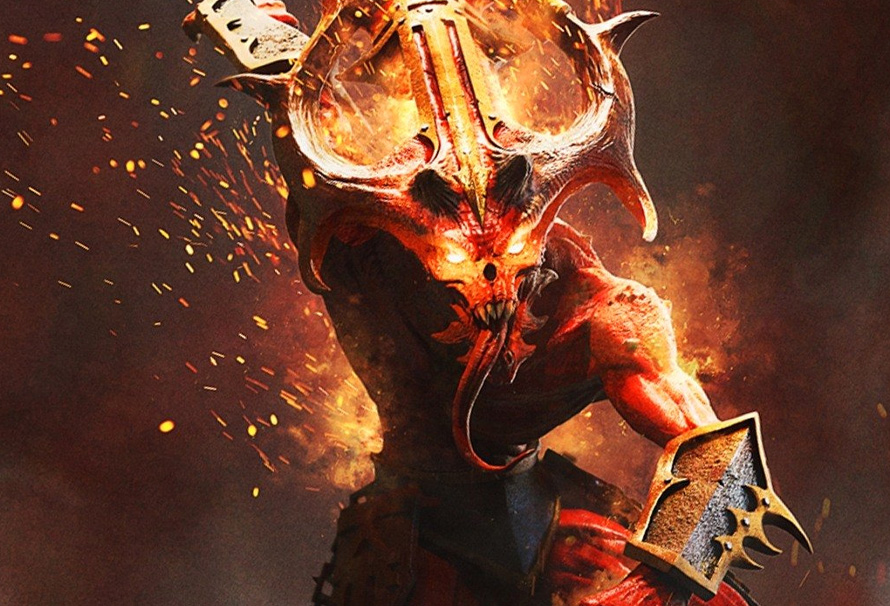
Warhammer: Chaosbane has ripped out into the world in a shower of gibs, if you own the Deluxe or Magnus editions.
Set in the old world of Warhammer Fantasy Battle, pre-Age of Sigmar, it combines that gritty, delicious Warhammer world with hack and slash action.
The question is, why has it taken so long for a game like this to appear?
The eternal wait
Since the glory days of Diablo, fans have been crying out for a Warhammer aRPG. Warhammer is almost too perfect a setting for an action RPG like Diablo. With enemies in their thousands and a strong line of heroes standing firm against the oncoming dark, it just makes sense.
Sometimes there’s a perfect storm of idea and execution. Dawn of War made a perfect RTS, Space Marine is a perfect expression of being a giant walking tank of a demi-god, and Vermintide is the perfect way of experiencing the terror and dread of dealing with a plague of rat-men.
A Warhammer-based action RPG is the perfect mix of power fantasy and grim darkness. Instead, however, we have sadly been looking for a Warhammer aRPG with eager eyes for years. We even received a 40k one first, something which is still surprising.
Thankfully the wait is over. Enter Warhammer: Chaosbane.
Skulls for the skull god
There’s a lot to be said for knowing exactly what it is you want to do. A lot of games fall prey to ideas that don’t work, are unrealistic, or are just half baked.
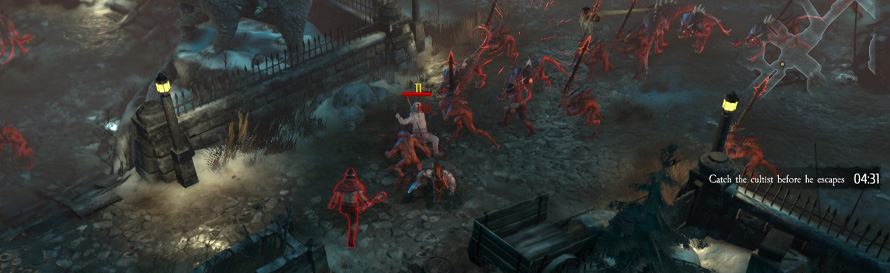
Warhammer: Chaosbane knows exactly what it wants to be. It’s very much in the mould of Diablo, Path of Exile, or Titan Quest. You plays as a hero, you defeat scores of enemies, and loot showers out like a veritable cornucopia of goodies.
In Warhammer: Chaosbane you play as an Empire Soldier, High-Elf Mage, Slayer, or a Wood Elf Scout. Each brings its own unique flavour to the world, with radically differing ways to play.
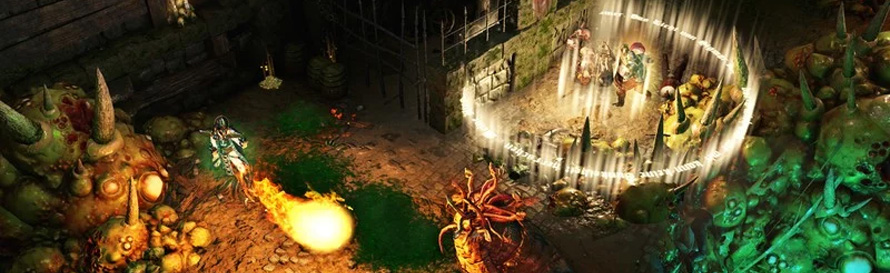
The key innovation in Chaosbane is through skills. Despite showers of loot being very much a thing, the focus is more on skills. Some skills even play out differently to in any other aRPG, for example, the Mage can control fireballs directly. No more will your fireball be flung past a group of grunting nurglings, instead you can tap space and suddenly steer right into them.
With each class offering a different way to play, as well as hordes of enemies both weak and powerful to plough through, Warhammer: Chaosbane feels like the power fantasy aRPG and Warhammer fans have been looking for. And that’s before we talk about theme.
Chaos Rising
It’s hard to overstate how perfect the setting is for an action RPG. Set in grim sewers and Chaos-infested regions, Warhammer: Chaosbane is a delight both visually and thematically.
Each section of the game is themed after one of the Ruinous Powers. Seeing you face off against furious Khornate daemons, disgusting diseased creatures infested with Nurgle’s rot, sensual and sublime Slaanesh foes, and cryptic Tzeentch creations. It’s a true joy for anyone who’s got even a passing interest in the universe, and it shows off the work and care that the developers have put into making this a full Warhammer game.
Warhammer: Chaosbane is out now, and if you’ve been looking for a meaty mouthful of mutilation and murder to sink your time into, this might just be what you’ve been looking for.
June is upon us with #Loveindies fever and with it comes E3. While this might not matter to everyone, it does mean that a lot of games should be announced in the coming weeks. In fact, there will probably be a few games released during E3 as people love a good stealth release. While many triple-A games will be announced, we are here for those good indie games.
This week also is the #loveindies celebration, so stay tuned to our social media as we talk about some of our favorite indies to date.
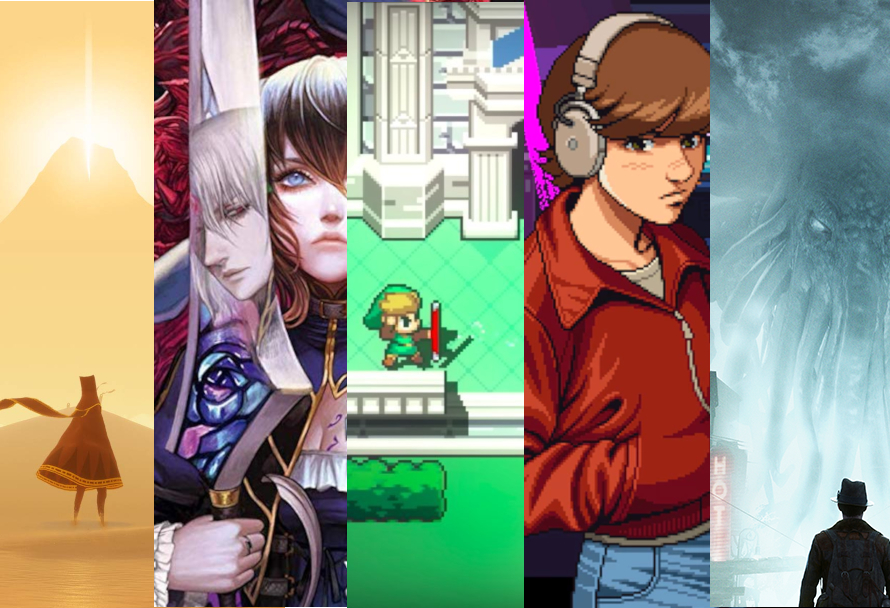
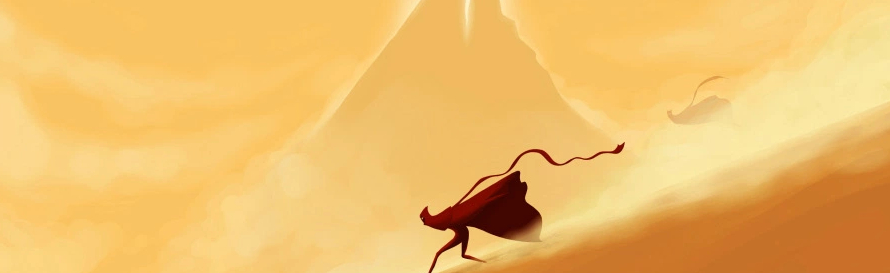
Journey
If you’ve never played Journey, then now is definitely the
time to do so. This is a truly incredibly experience that is as close to a
must-play game as anything can be. It is a simple, short, and highly emotive
game that has you battling the elements and interacting with the peculiar world
you find yourself in. It is quite simply one of the best games in recent memory
and it is finally coming to PC on June 6th.
Bloodstained: Ritual of the Night
After what feels like decades, we are finally approaching the release of this Castlevania successor. Bloodstained: Ritual of the night has undergone a magnificent visual redesign and should bring unknown hours of monster slaying. It will be full of unholy things, an obscene amount of abilities, and probably a lot of traps. You play as Miriam, an orphaned Alchemist who has had a very troubled past. As a result, you have awoken from a ten-year coma and are one of the few who can fight back against the horde of demons that now infest the world. You can start the hunt on PC, PS4, And Xbox One on June 18th, plus Switch on the 25th.
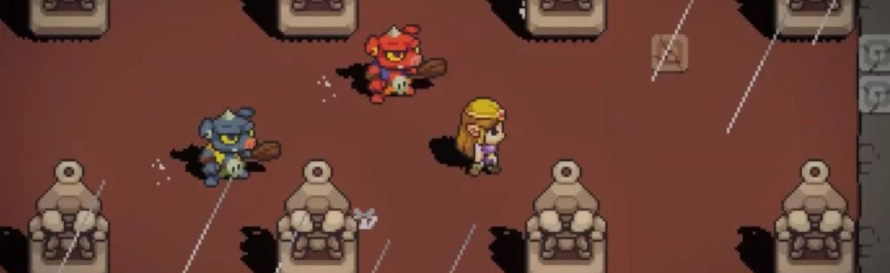
Cadence of Hyrule
It is time to drop everything you are doing and dance, this
time to the Cadence of Hyrule. A first for Zelda and Link, the game comes from
an indie developer instead of a big name. You get to move in time to the beat
to some incredible sounding remixes of the classic songs in the hope that you
can save the world once more. It is coming to Switch at some point in June
(expect a stealth release via E3).
198X
If you long for the good old days, then this may well be the
game for you. 198X is a coming-of-age story that has you jumping through
different genres, characters, and games as you make your way through the story.
It looks incredibly interesting thanks to the strange mixing of genres and
styles and could well be one of this year’s dark horses. You can experience
this nostalgia trip on PC and PS4 on June 20th.
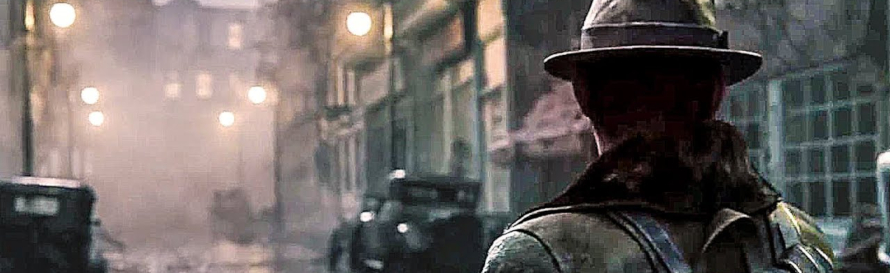
The Sinking City
If you like mysteries and tentacles, then this is probably the game of your dreams/nightmares. Playing as Charles W. Reed, an investigator who is plagued by visions, you have been drawn to Oakmont by unseen powers. Your only aim is to try and figure out what is going on, but the horrors that await you could well be more than you can take. It features an interesting investigation system as well as a dark Lovecraftian setting. You’ll have your chance to explore madness on PC, Xbox One, and PS4 on June 27th.
If you wanna share the love with your own indie passion you can check out the blog post on fail better games’ website and don’t forget to #Loveindies
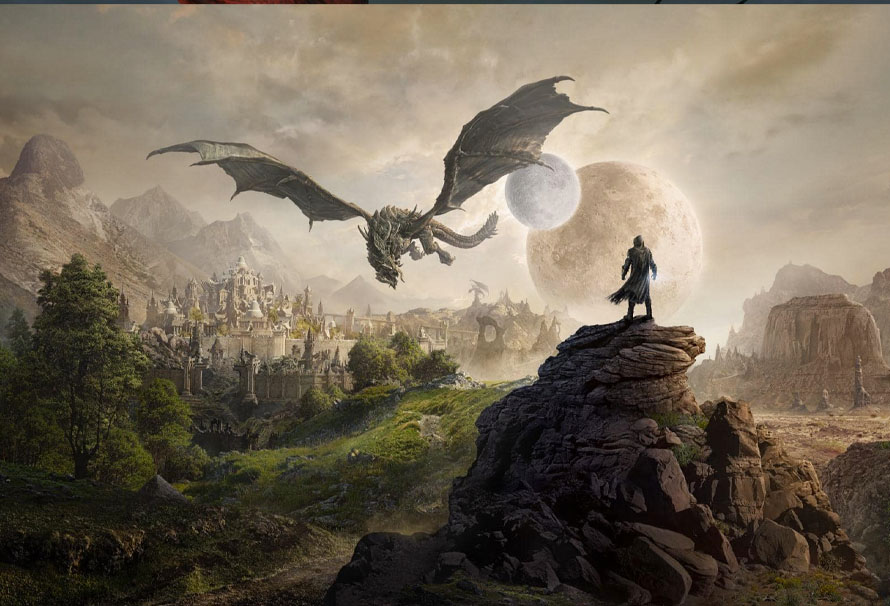
The Elder Scrolls Online is heading to cat-town, Elsweyr is the latest expansion to the long-running MMO and if you pre-purchased you can play it right now.
For twenty five years the Elder Scrolls series has taken us to many different places in Tamriel (and beyond). On the surface the series may appear to be a standard sword ‘n’ sorcery adventure, but there’s plenty going on that show just how weird the universe is.
To celebrate the release of The Elder Scrolls Online: Elsweyr, we’re taking a look back at some of the weirder things that Bethesda have put into their games.
Note: Before we get started, you’ll find scant reference to Sheogorath here. The Colin Hunt of the Elder Scrolls universe is more wacky than weird.
Warp in the West
It’s genuinely hard to overstate how ambitious Daggerfall is. A huge section of Tamriel for you to wander over with innumerable towns and cities to play through.
The plot is equally ambitious. What starts as an investigation into the risen ghost of Daggerfall’s former king becomes a race to find the Totem of Tiber Septim, a device that would activate a colossal construct, the Numidium. The player in Daggerfall must decide which of the seven factions in the game should receive control over the Numidium, furthering their own agenda as well as deciding the fate of the Iliac Bay region.
Except by the time Morrowind came about, it seems something went wrong.
By a strange twist of reality, every single faction in the Iliac Bay region gained their own Numidium, and used it to further their own goals. The Orcs gained their freedom, the Underking regained his heart, Mannimarco the King of Worms ascended to godhood.
There were forty-four states in the Iliac Bay before the Warp in the West. After, there were only four. And Tamriel was never the same again.
CHIM
CHIM is a small word but capable of creating such ire amongst the denizens of r/teslore.
Known as the secret syllable of reality, CHIM is a concept that once known, allows the knower to have almost unlimited power to reshape reality.
Whispered through books in the series, the concept of CHIM is still an integral part of the Elder Scrolls lore. We don’t have any firm confirmation of what it exactly is, how one uses or gains CHIM, or what its limits are. But some books in-game theorise that, for example, the sudden change in climate in Cyrodil from jungle to temperate was undertaken by Tiber Septim using CHIM.
Described as a revelation of one’s position in the universe and the nature of reality, some fans have theorised that with CHIM comes the realisation that the Elder Scrolls series are just video games. This allows god-like users, such as Vivec, access to the game creation kit. Basically, they mod the game. From within the game.
The Battlespire
Ah Battlemages. Good at magic, good at battle. But training a Battlemage is a tricky business. Lots of fireballs going through the air, lots of discovering the more war-like side to magic. Where can you train them up in relative safety?
Maybe you could try somewhere isolated. Or somewhere heavily fortified. Maybe you relocate your Imperial Battlemages to a different dimension so they can’t hurt anyone.
Or maybe all three. Enter the Battlespire, a floating fortress in a pocket dimension that serves as a training and testing ground for Imperial Battlemages.
Of course, even though it’s fairly safe, it’s still in a bit of daedric danger,
M’aiq the Liar
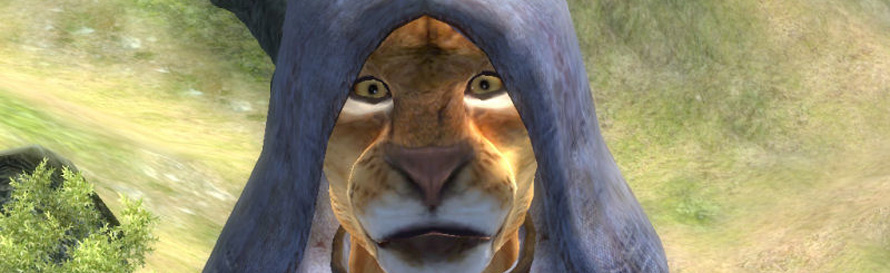
A staple of the Elder Scrolls series these days, first appearing in Morrowind he’s been in every instalment afterwards. M’aiq is a jolly fellow, a Khajiit with a direct line to the developers. Often giving cryptic clues or explanations for game systems, he’s weird enough in his own right.
But that’s before you discover M’aiq in Oblivion.
M’aiq’s adventures in Oblivion lead him across the land, always in the search for callipers. Every day he’ll stop and look for callipers, unless he has more than twenty of them already. This means that despite him being hard to find, you can bait M’aiq into coming to you. If you surround yourself with callipers, of course.
Khajiit and the Moons
Khajiit hail from the land of Elsweyr, which is why you’ll expect to see a lot of them in the next expansion for the Elder Scrolls Online. Their land is a mix of jungle and dusty desert, and of course, cats.
There are seventeen different variations of Khajiit, and they vary hugely between forms. Some are just small house-cat sized creatures, some have reversed knees like dinosaurs, and some just look like Tony the Tiger.
How do you get different Khajiit? It’s tied to the movement of the two moons Masser and Secunda. Every phase of these moons has their own associated Khajiit – even a lunar eclipse.
Khajiit all look the same upon birth, but after a few weeks their distinct natures begin to show. Will your child be a Cathay-raht or a Suthay-raht? Well, that depends on the orbs in the sky over Elsweyr at the time of birth.
Hopefully we’ll be seeing a lot more of the Khajiit in Elsweyr, especially some good old Morrowind cats.
Wood Elf Cannibalism
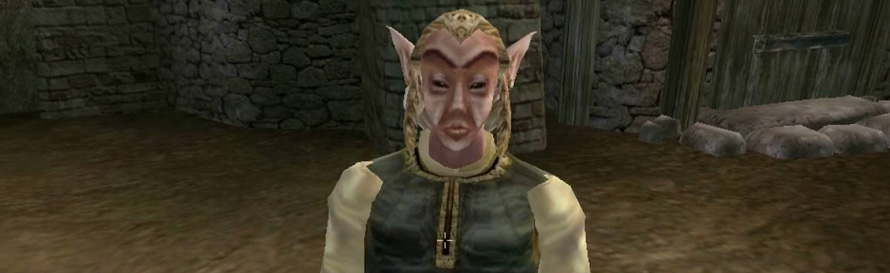
The Wood Elves, or Bosmer, are a diminutive species of forest dwelling elf. They have an affinity for nature, ranged weapons, and tend to have slightly squeaky voices. Ah, the comic relief race.
Except you have to remember that they’re all cannibals.
The Bosmer live in utter harmony with their great forests, living on motile cities that move through the woods. They also follow a path called the ‘Green Pact’, living in symbiosis with the Valenwood, their home. As a result they refuse to harm it in any way.
This means no cutting of wood, but more importantly, no eating of any plant matter.
They only eat what they kill, and this applies to battles too. So the next time you refuse to return a ring of healing to a friendly Bosmer, remember that he could be chewing on your corpse in a few minutes.
What everything is made of
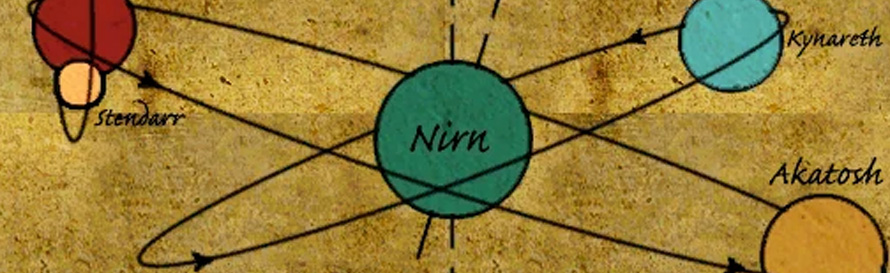
The world of the Elder Scrolls is called Nirn. It’s not like our planet, one rules by physics and scientific rules. It floats in the void of Oblivion on a plane called Mundus. This makes it distinct from the other planes of existence, mostly ruled over by various Daedric Princes and Gods.
Whilst the other realms are directly controlled and created by individual god-like creatures, Mundus was created by the eight divines (calm down Nords, Tiber Septim wasn’t a god yet at that point). They weren’t happy with this creation as they were tricked into it by Lorkhan. If you’ve finished Morrowind you’ll be familiar with at least part of him.
Lorkhan was punished for this deception, and his body was ripped apart. Part of it was buried in one of the towers which anchor reality, the volcano of Red Mountain. But the rest was used to form the moons that orbit Nirn. So if ever you look up and think ‘ah, what a nice view’, remember that you’re looking upon the ruined remains of a god.
In addition the stars themselves may be the corpse of another god, Magnus. Or they might be holes from which the other realms of Oblivion shine through. With everything in Tamriel, there’s differences of opinion.
Nirn isn’t like our world. It’s half made of ideas, half doomed god, and all crazy.
The Elder Scrolls Online: Elsweyr is available to buy and play right now. If you’re a Elder Scrolls fan, let us know in the comments if we missed any of your favourite weird lore from the series. Until then, we’re heading to Elsweyr.
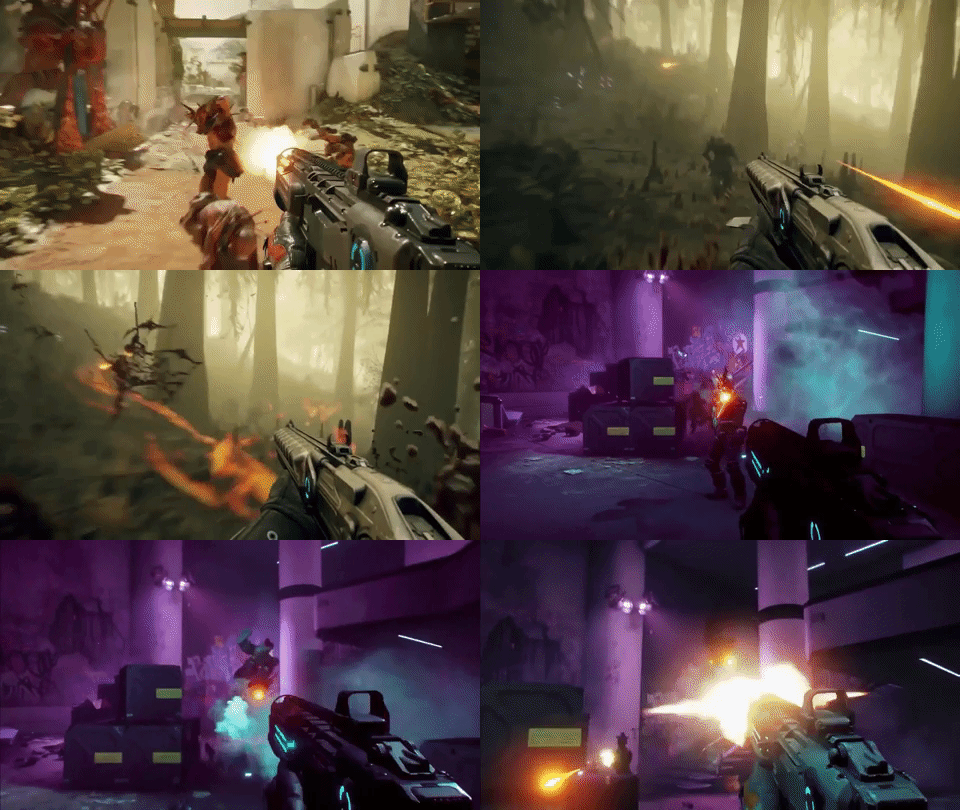
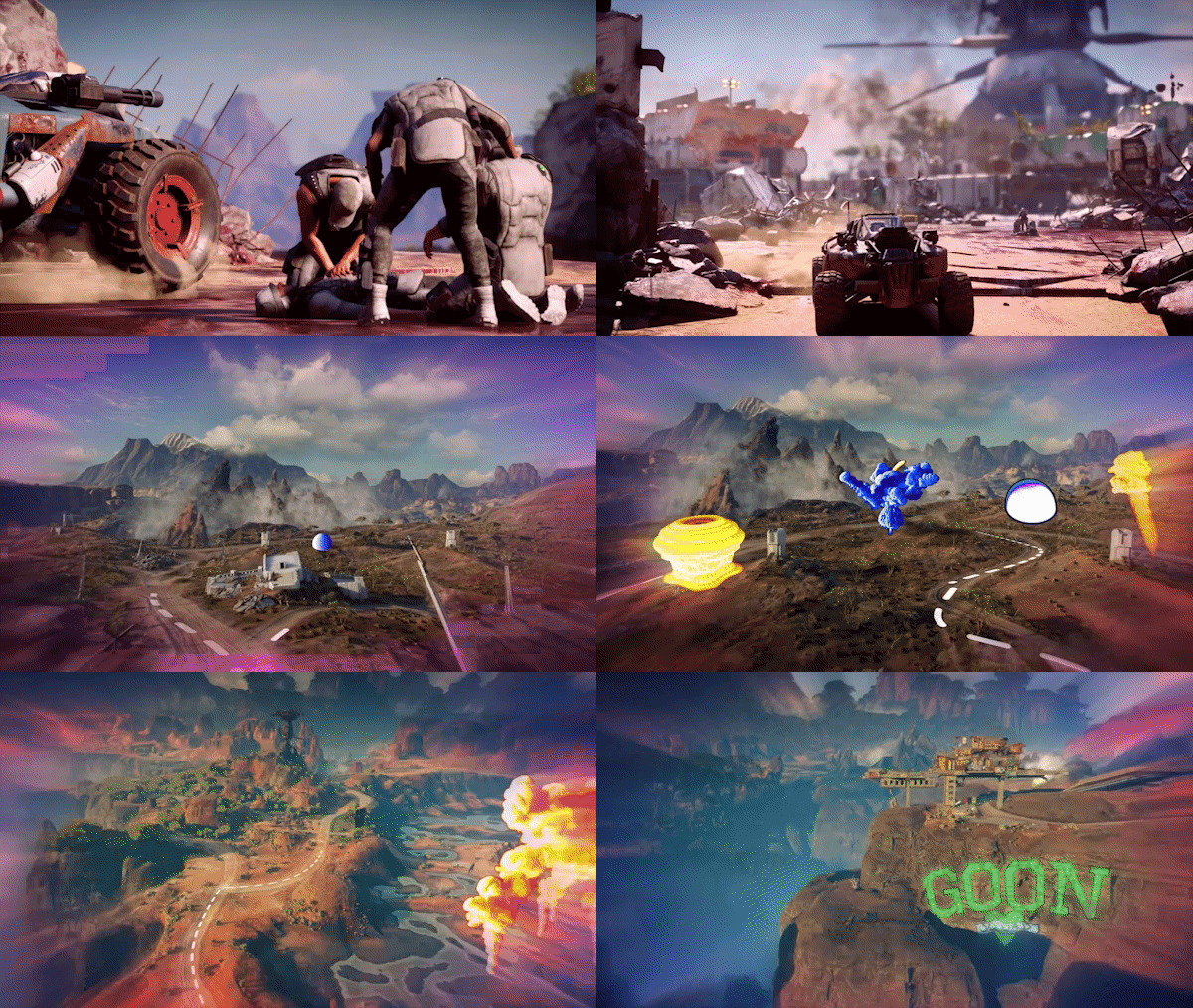
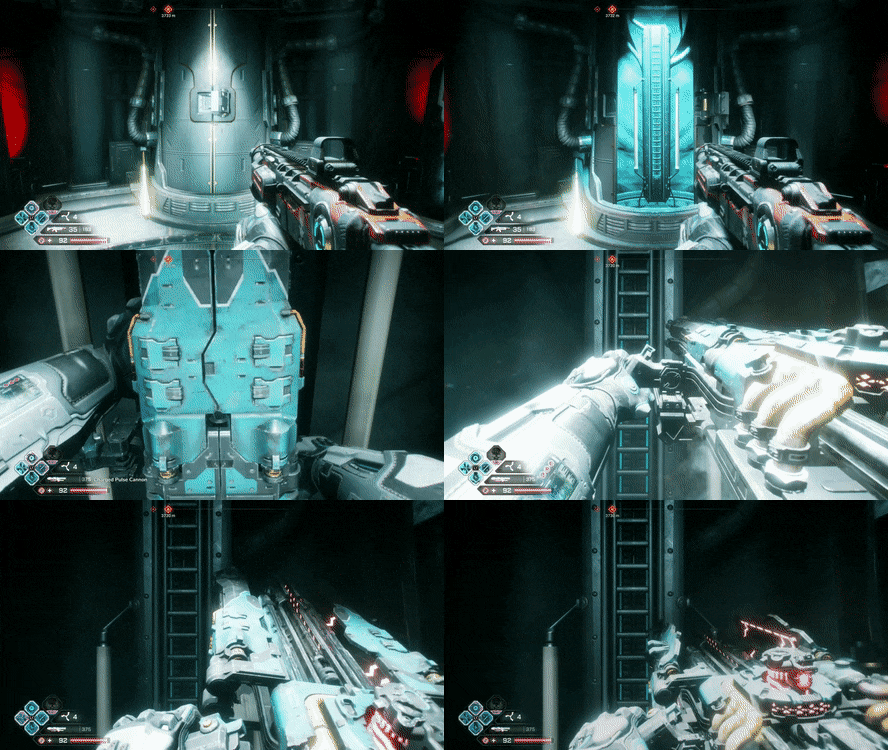
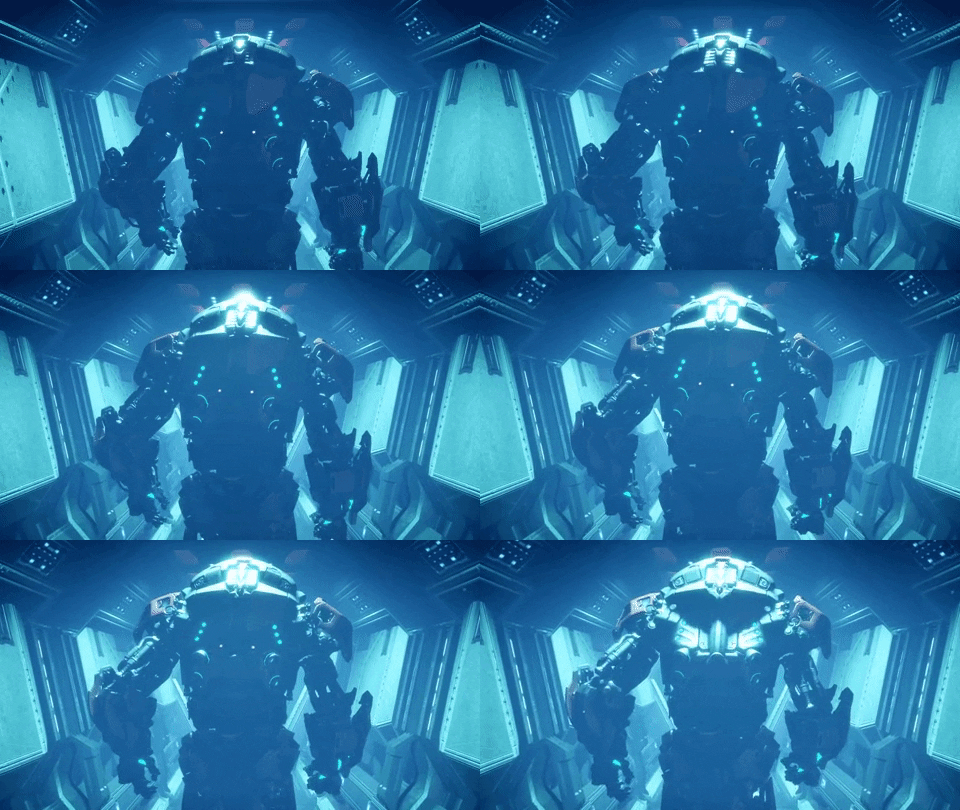
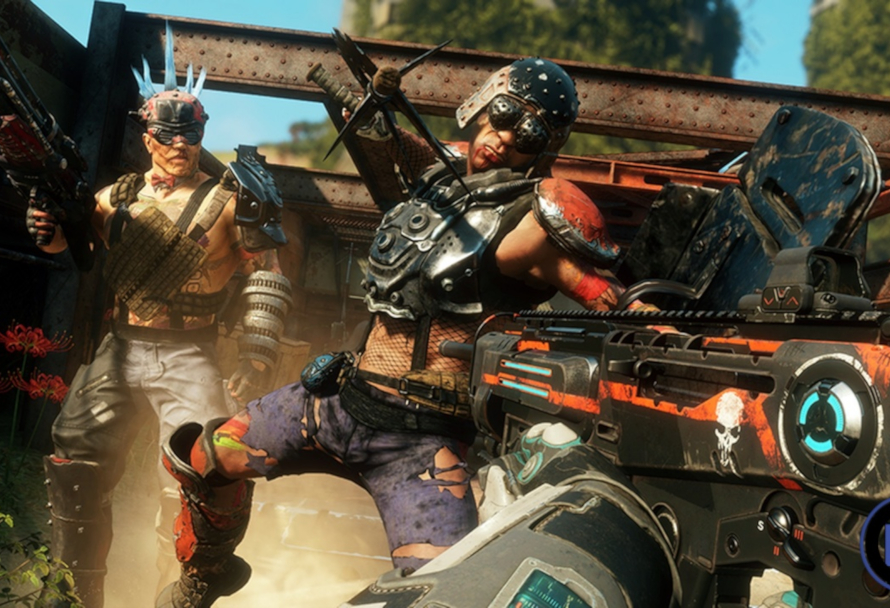
With Rage 2 out there doing the business, it’s worth shining a light on the fact that there is more to the game than it just being Shooter Man (or woman, actually) Mc Shooty Face Part Deux.
Indeed, roughly half of Rage 2’s design DNA (the shooty bits, obviously) come from The House That Doom Built – id Software. So with that in mind, here are ten ways that Rage 2 actually feels like a proper id Software effort.
1. The Music
If you close your eyes when Rage 2 starts up for the first time and allow its rhythmic industrial metal beats to violently invade your earholes, you’d not be mistaken for thinking that you were hearing the soundtrack for a new Doom title. I mean honestly, it’s like they went to Doom Music School and just copied the homework of other students. This is a good thing (although copying the work of others generally, is a bum move) because even though traditional id Software and Bethesda composer Mick Gordon doesn’t have the reins here, Andreas Kinger and his team do a grand job all the same. I mean, the sincerest form of flattery is imitation, right?
2. Movement
Arguably one of the things that made Doom in 2016 feel so great to play was the liquid smooth framerate that in turn underpinned a level of freeing, ultra-responsive movement that the player was afforded. Much like 2016’s greatest FPS (don’t @ me), Rage 2 effectively mimics Doom in this regard, allowing players to dash, slide and jump around the place as they unleash a ballet of violence upon their foes.
3. Overdrive Mode
There are fewer, more pure thrills in Doom than when you obtain the fabled Quad Damage power-up and begin laying waste to folk as if they were made of paper and you were made of scissors, or something. Anyway, dealing bucketloads damage feels great and Rage 2 replicates this sensation with aplomb via its Overdrive Mode which when filled, allows you to deal tons of extra damage and regen your health at the same time. Isn’t progress great?
4. The Shotgun
Let’s not beat about the bush here, an FPS is only really as strong as its shotgun – a bombastic lesson that id Software taught us as early as 1993 with the release of the original Doom. Well, guess what, Rage 2 has a shotgun – the Combat Shotgun, and it’s quite literally a banger. Like all the best boomsticks it produces absolute murder at close range, has a ton of palpable recoil and a super neat reloading animation. Shotguns are the lifeblood of the genre and don’t you let anybody else tell you differently.
5. No Shortage of ways to murder folk
Every shooter that id Software has released has provided players with a good dollop of creative latitude when it comes to shuffling enemies off of their mortal coil, and yep, you guessed it, Rage 2 is no different. Though we’ve already looked at Rage 2’s shotgun, there are so many more possibilities than that available – from razor-tipped boomerangs that behead your foes to the Nanotrite powered Shatter ability which slams enemies with such force against surfaces that they basically turn into a red mist. There is no shortage of ways to destroy the evil folk in Rage 2. Huzzah!
6. Familiar Bad guys
The main conclave of bad dudes in Rage 2, the mechanically augmented Authority certainly owe a debt to the equally cybernetically enhanced Strogg from Quake 2. A varied mixture of twisted flesh and embedded machinery, the foes Walker scraps with across Rage 2’s duration are as much a thing of a nightmare as anything else id Software has dreamt up previously.
7. The ultraviolence
Look, an id Software title without a seemingly inexhaustible supply of spontaneous blood and guts is like AC/DC without Brian Johnson, or the WWE without Brock Lesnar – it would be a terrible business. Luckily, Rage 2 keeps id Software’s penchant for spraying globs of the crimson stuff everywhere very much at the forefront of everything and effectively seals the deal as one of the most downright shooters’ money can buy. Nice.
8. A story that serves the action
In spite of its open-world macrostructure, numerous characters and plot threads, Rage 2 never feels like narrative quicksand – instead, the story feels more like a vehicle for the furious gun-to-face action, rather than anything more overbearing than that. Like the Doom and Wolfenstein games that came before it, Rage 2 straddles this divide perfectly, fashioning a story that services the action rather than the other way around.
9. All the Secrets
A wonderfully long-standing id Software tradition, secrets have been a part of every shooter that the Texan developer has released since Wolfenstein 3D lit up MS-DOS screens everywhere back in 1992. Refusing to buck the trend, Rage 2 not only has more secrets than an MI5 dossier, but it has some truly neat, Easter Egg shaped ones too – such as id head honcho Tim Willits being rendered as an NPC that is seemingly glued to his toilet seat. Absolute scenes.
10. The Power Fantasy
Like every other id Software game that has come before it, Rage 2 thrusts the player face first into an irresistible power fantasy. With 2016’s Doom, it was you breaking your restraints and shattering the skulls of the demonic hordes that were flooding the Mars installation before embarking on a journey of infinite, unstoppable violence. Rage 2 does the same thing – thrusting the super powerful Ranger armor into your hands at the very beginning of the game and ensuring that you only get much more, catastrophically powerful as the game goes on. Just what you need after a teeth-clenching day in the office really.
11. Honorable mention
I know we said “10 Reasons…” but this is just too good to leave out – Rage 2 takes id’s approach, of not taking themselves too seriously, to the next level. The one and only Danny Dyer lends his voice to the game in the form of the Diamond Geezer cheat code. Now imagine it, imagine Mr. Dyer lending his dulcet tones to the next Doom, or the next Wolfenstein? It would be brilliant, I mean, after all, this is the same lad that offered such gleaming pearls of wisdom as “if we didn’t have thumbs we could never eat a sandwich.” Top drawer.
For more details check out the official website or the GMG store for great prices on the latest games.
All things come to an end. Even our universe will one day end when we cease expanding and entropy brings a heat death to a tired and ancient reality.
But until then we’ve got video games, right?
For some reason the internet is currently abuzz with tales of endings, and the quality of finales. Well, we’re here to do one thing, and that’s cash in on current trends. So sit down, relax, and let us sing to you a song of games that actually ended pretty well.
Note: Gonna be heavy on the spoilers from here on out. Read at your own peril.
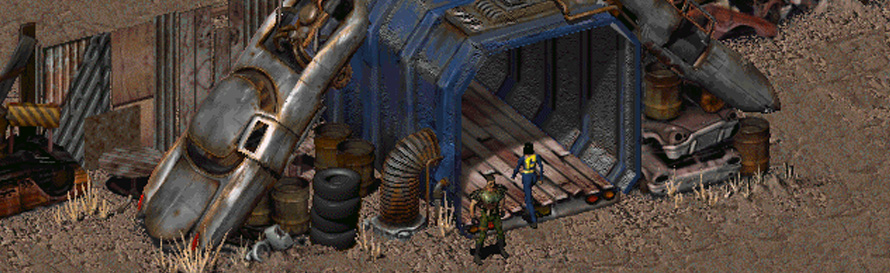
Fallout set the bar for all the sequels that followed in its wake. Mixing drama and a lighter touch to create a melange of wasteland-y goodness, it stands out as a near perfect RPG. The ending, even now, remains utterly astounding.
After traversing the wasteland to save your home, first from failing water supplies and then the terror of the super mutant threat, you return home. Only to be met by the Overseer who thanks you for all the work you’ve done for your people. Then, he tells you that you’re too dangerous to be allowed back in. That you’ll cause people to leave safety. That you’ll be the death of Vault 13. So the game ends with you, the Vault Dweller, walking with your head bowed low, back into the wasteland.
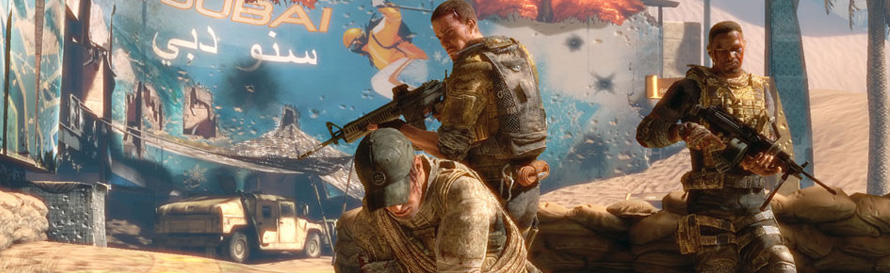
There’s a lot written about Spec Ops: The Line by writers far more knowledgeable and capable than me, but it doesn’t mean I can’t appreciate this love letter to Joseph Conrad’s Heart of Darkness. Set after Dubai become swamped by colossal sandstorms, you play the role of Delta Force Captain Martin Walker leading a team into the sand-strewn ruins of this once great city.
Things don’t go well in Dubai.
The road to hell is paved with good intentions, and each step you take in Spec Ops: The Line leads you closer and closer to hell. Each decision your character takes is logical but by the end of the game Walker is truly damned. The ending revolves around the twin revelations that Konrad, the enemy you’ve been chasing the whole game, is already dead, and that you have been an unreliable narrator this whole time, often hallucinating events.
How Walker deals with this and who you blame for Walker’s actions forms the core of one of the most excellent endings of all time. Do you take your own life, do you put your hallucinations to rest and face justice, or do you become Konrad. It’s a difficult choice, and one that’ll stay with you.
Shadow of the Colossus
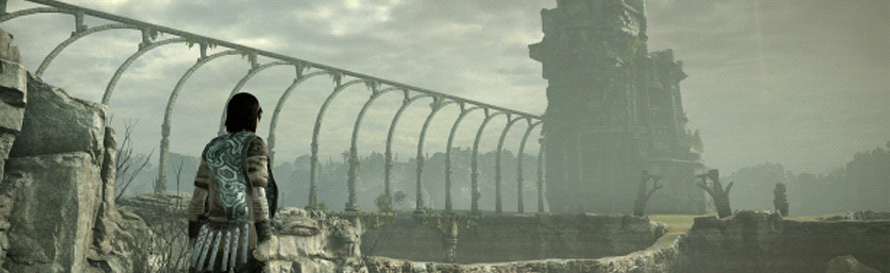
In which Wander gives everything to save Mono and bring her to life again, and possibly gives too much.
Forming a dark pact with a creature known as Dormin, Wander agrees to slay twelve colossi in order to bring Mono’s soul back to her body. Thus Wander sets out on one of the most beautiful and heart wrenching adventures in video game history.
The game ends in tears. After killing the colossi, Mono’s life is returned to her. But Wander has become corrupted with the dark presence of Dormin. In addition, pursuers have caught up with him, seeking justice for crimes committed prior to the game. Wander ends up having to give up his life to save Mono, seemingly transformed into a horned infant.
It’s a poignant and sad end to a poignant and sad game, and one that never fails to raise a tear or two.
The Last of Us
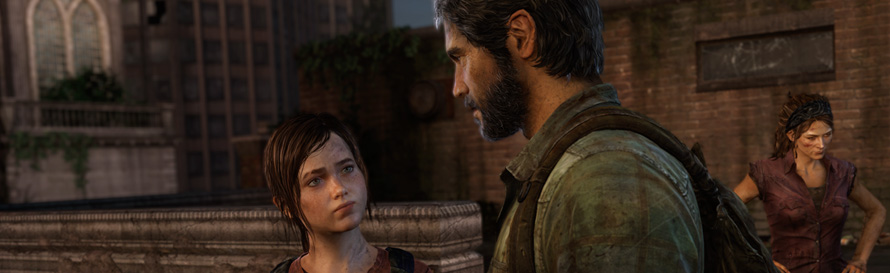
After a long slog covering an entire year, Joel and Ellie reach their destination. They’ve battled makeshift militia, roving gangs, The Infected, and much more. They’ve sacrificed friends and their own health. But they made it.
All that needs to happen now is for Ellie to be, well, dissected to unlock the cure her brain holds.
Joel lost his child in the opening to the game, and through adversity and time together, he’s come to see Ellie as a surrogate daughter. And he isn’t going to let some scientists tear her brain open to peek at the secrets within.
The game ends with a roaring rampage of violence through the Firefly facility that has been your goal for the whole game. In the end, Ellie confronts Joel about what happened, and he lies to her. She knows, and she accepts it. What else can she do?
It’s a quiet and personal end to a game that’s often careful and quiet, and it fits the theme perfectly. Humanity might be damned, but humans can still choose their fate, even in the apocalypse.
Portal 2
The original Portal was a surprise hit with, well, everyone.
Portal 2 was more in every way. Bigger, longer, probably funnier. And the ending had to do the same. Surprisingly, it succeeded.
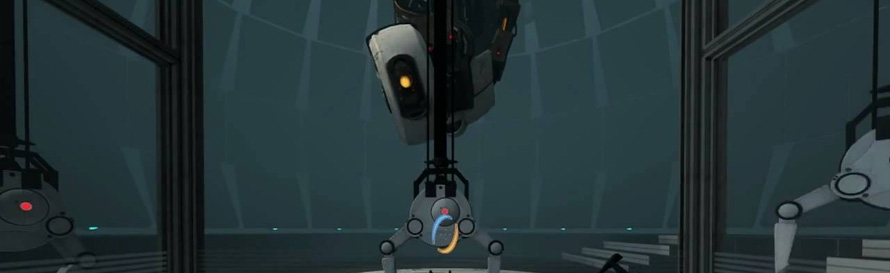
The moon shot. The song. The other song. The apology. The recanting of the apology. The other apology. The Companion Cube. The fields. The freedom.
It’s a perfect storm of pathos and comedy, and it is a perfect end to a pretty perfect game. There’s not much more to say, other than to reinstall it and play through for the umpteenth time.
Silent Hill 2
Silent Hill 2 is where we really nail down what the town’s doing. James’ journey through the foggy streets leads him to a hotel on an island, where he’s confronted with a hell of his own making.
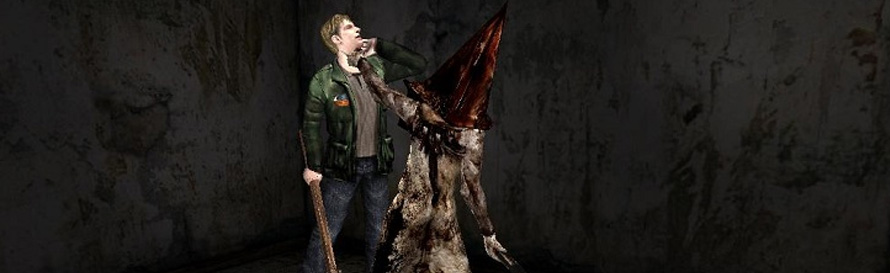
Similar to some other successful endings, the rug is pulled out from under the player’s feet. It hasn’t been three years since your wife died, and she didn’t just ‘die’. James killed her.
The whole town is constructed as a torment for James. Pyramid Head is a punisher for his sins. The disturbing nurses are a reminder of the hospital where he visited his wife, Mary, and of the guilt he felt, ogling the health professionals.
It all comes to a head in that hotel. And it’s there that choices can be made. Will you leave everything behind you, will you die, will you leave with a resurrected Mary to begin the cycle anew?
Or will you find out it was a dog behind it all?
The Walking Dead (S1)
It’s hard to remember now, but at one time The Walking Dead was exciting. The TV series has since squandered what goodwill it once had, and the game has had a series of revelations of workers being treated poorly which has tarnished its once good name.
But back in 2012 we were all blindsided by the appearance of Telltale’s The Walking Dead. Taking place just before and after the zombie apocalypse, you take on the role of Lee, a former prisoner just looking to survive in this new world.
But along with you, is Clementine.
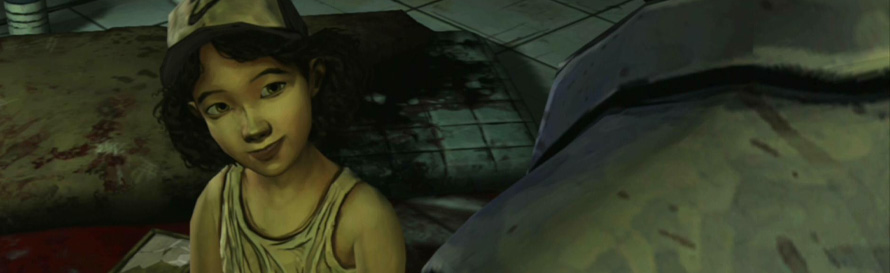
A young girl who’s lost her family, it’s up to you to try and keep her alive. Keep her going, and make sure she grows up as ok as possible.
The last episode of the first series is a cavalcade of heartbreak, ending with the reveal that Lee is definitely going to turn into a zombie. The game ends with Clementine having to leave, or kill, Lee. It’s almost too much. The last moments see Clementine escaping the zombie-infested city, being seen by two figures who remain indistinct, leaving her future in doubt (well, until series 2).
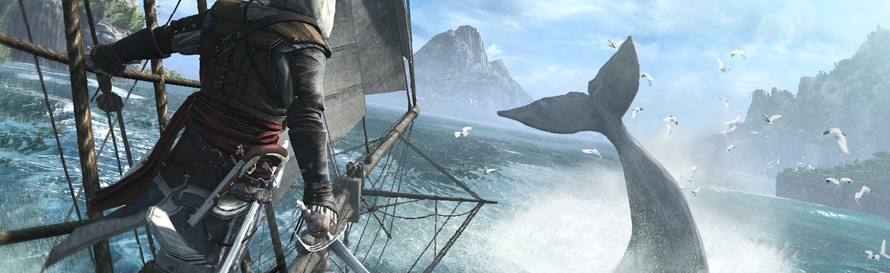
Assassin’s Creed IV is a weird beast. On one hand you have an incredible pirate game, and on the other you have the same Assassin’s Creed game that had been released five times previously.
One thing that sets Assassin’s Creed IV apart from the other Assassin’s Creed games is how unabashedly sentimental it is. Edward Kenway, the main character, isn’t so concerned with vast conspiracies involving pre-humans. Instead he cares about his fellow pirates, and when he discovers her, his daughter.
The end of the game does involve a vast conspiracy involving pre-humans, but the real meat of the ending occurs when you see him say goodbye to the other pirates. The Golden Age of Piracy is over, and one by one Blackbeard, Jack Rackham, Anne Bonny et al all fade out leaving him alone. Except for his daughter, who he meets for the first time.
The very last part you get to control involves Edward Kenway and his daughter, teaching her how to steer his brig, the Jackdaw. As the sun sets, he begins to bond with her. And I dare you to not have a tear on your face.
Journey
Speaking of tears… it’s Journey time.
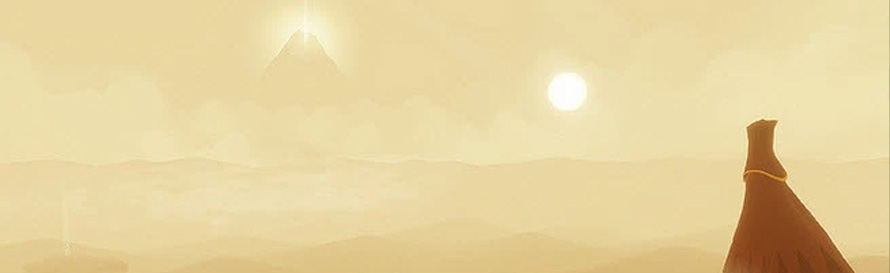
A game without words, the only means of communication is through cute chirrups that you and your potential co-op partners can make at each other. The game takes you through beautiful sandscapes where you ski down long sun-kissed vistas, and into dark underground monster-filled depths.
Your goal is always a mountain in the distance, each step is a step closer. Until you reach a cold area where the snow reaches halfway up your cloak. Alone, or with someone else, you collapse to the ground, unable to continue. Your cheeps becoming quieter as the game fades to black.
That’s when the ending starts to kick in. You awake and you’re amongst the clouds. Your co-op friend is back, and now you can almost fly. The music swells around you with Austin Wintory’s excellent soundtrack. It’s a true moment of elation after the absolute tragedy of a few moments before. The music almost becomes too sweet as you approach the mountain. The game pushes that feeling as far as it goes, fading out again, but this time to white.
The game’s ending comes with a look back at all the places you’ve just been, with a pair of shooting stars flying over the path of your journey. There’s nothing like it, and soon Journey will be coming to PC so if you haven’t played it, the time is coming.
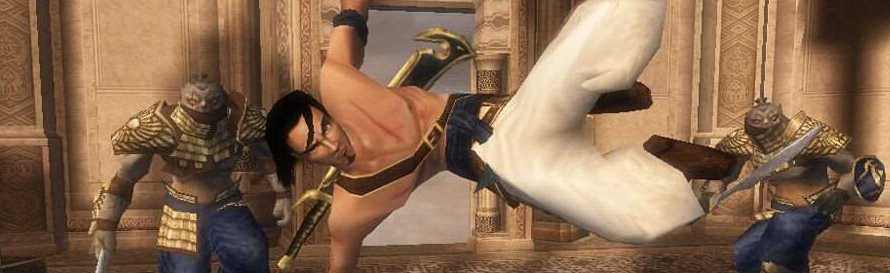
Prince of Persia: The Sands of Time starts when the titular Prince makes a huge mistake. Tricked by the evil Vizier, he uses the Dagger of Time and releases the Sands of Time, unleashing a time and sand based apocalypse upon the world.
Travelling through the Maharaja’s palace where the game takes place, the Prince meets with Farah. Unsure of whether or not to trust her, he eventually finds out she’s the daughter of the Maharaja, and more. They begin to fall in love with each other.
Eventually the Prince defeats the Vizier and seals the sands away again, but Farah loses her life in the process. As the Prince sends the sands back into containment, time rewinds to a point just before the attack on the Maharaja’s palace begun. Sneaking away from the encampment, the Prince stealths into Farah’s room.
It’s there that the ending takes place. It turns out the whole game, and the narrative that has been spoken along with it, has been the Prince recounting this tale to Farah. The Vizier is the only other person who remembers what happened, and emerges to attack the pair. Defeating him, the Prince leaves Farah with the Dagger of Time, and a secret word that only she knows which she told him in the other timeline. Stunned she watches the Prince spirit away into the night.
Third person action adventure games shouldn’t have endings this good, but I’m glad they sometimes do.
Honourable mention: The Prey 2 we didn’t get.
OK I said ten games, but here’s an honourable mention, simply as this version of Prey 2 was never released. Involving time, death, and more, it sounds like if it was pulled off, it could’ve been astounding. We’ll leave Chris Bratt from People Make Games (well, Eurogamer back then) to explain it in more detail:
All things come to an end, and this is the end of this article. Did we miss games you love with amazing endings? Let us know in the comments below.
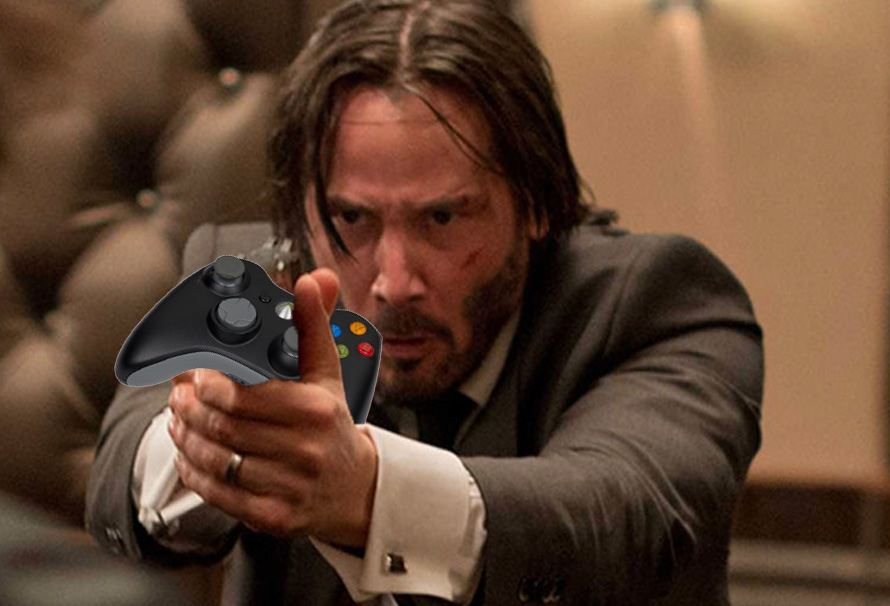
John Wick: Chapter 3 – Parabellum (try saying that five times fast) is in cinemas now. In addition, a video game is coming out, one that actually looks like it might be a good game based on a film. I know, hard to imagine.
But that’s in the future. You want to feel like John Wick now, albeit without the dead dog and the threats to your life. Here’s 5 games that’ll scratch that John Wick itch you’re feeling.
Wanted: Weapons of Fate
Before you close the tab, hear me out. The Wanted film was a very loose adaptation of Mark Millar’s Wanted, and the game is similarly loose with the subject matter. But one thing that’s absolutely tight about Wanted: Weapons of Fate is the gunplay. Firing bullets around corners and performing trick shots feels absolutely great in this short little movie tie-in. If you can get your hands on it, it’s absolutely worth a few hours of lining up fools so you can spin a bullet through their brains. Be the expert marksman of your dreams.
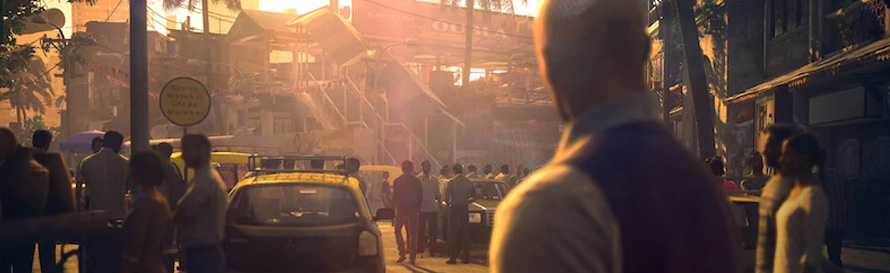
At the start of any Hitman game you’re a clod. An absolute dunce, wandering the levels like an aimless fool. Then you learn how to take out your target. Then you learn to do it smoother, better, quicker. Eventually you’re a veritable John Wick, sliding through the level like a ghost, leaving only corpses in your wake. Pulling off the Silent Assassin grade on a level makes you feel like a god. A god of death, but still, a god.
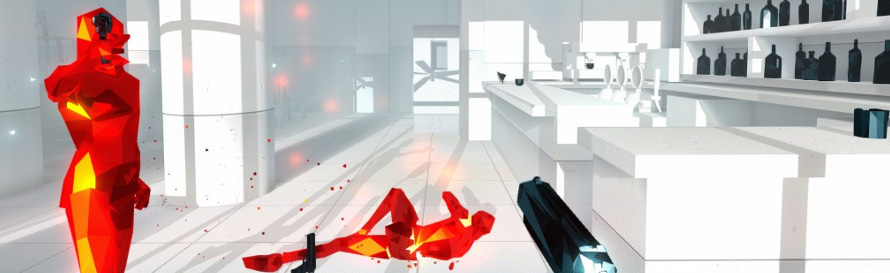
Time only moves when you do, that’s the way SUPERHOT (SUPER, HOT, SUPER, HOT, SUPER, HOT) works. Armed with anything you can grab your hands on against myriad foes all advancing inexorably on you. When this game works, and it works extremely often, there’s nothing like it. You zip in-between bullets, dodging blows, sending enemies into the morgue. And at the end of the level? You’re presented with a playback of your carnage, pauses removed. What a flawless machine you are.
The Max Payne Series
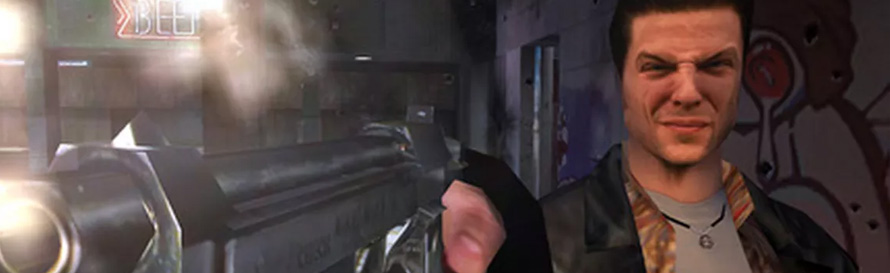
Max Payne is that unusual beast in that there’s not a bad game amongst them. Taking noir to extreme levels, they combine style and bullet time to stir up a wonderful melange of bullet-based beauty. The most shocking thing about Max Payne is that the first is old enough to vote, and still feels cracking today. Armed with sardonic wit, a painkiller problem, and more bullets than you can shake a pistol at, a bit of Payne is sometimes exactly what the doctor ordered.
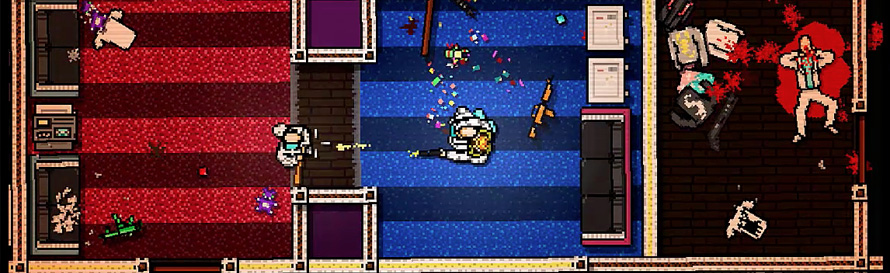
Hotline Miami
Hotline Miami is a top down rampage through level after level of intense gun-and-melee fights. Set in the 80s with an astounding soundtrack and utterly perfect controls, Hotline Miami is that perfect blend of art, design, and mayhem. Try playing it, I guarantee two things will happen. The first is you’ll look up the soundtrack on YouTube, the second is that you’ll not be able to play just one level. It’s gloriously outrageous, and outrageously addictive.
With those five games in your clip you’ll be able to hold off the John Wick jitters for a little bit. Do you have any nominations for John Wick-esque games? Let us know in the comments below.
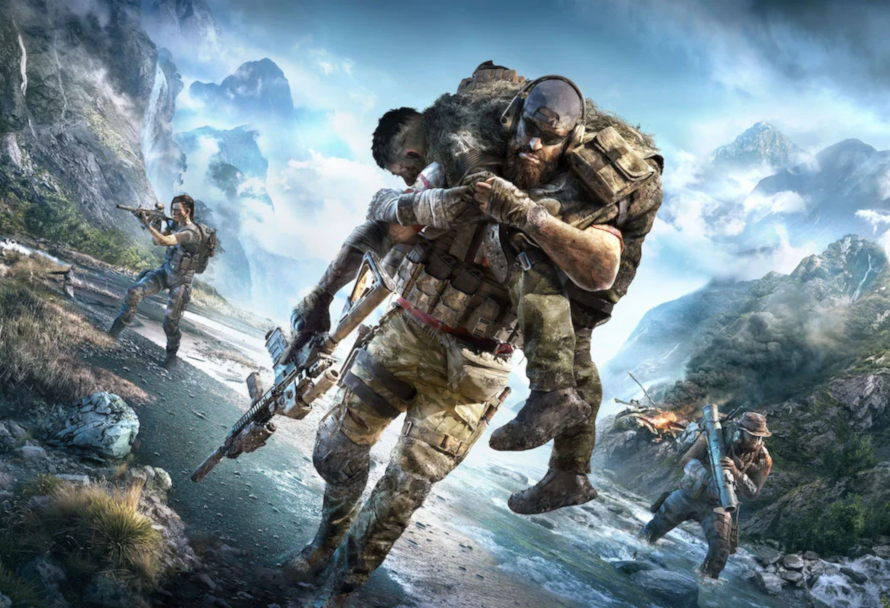
The latest game in the Ghost Recon series has been announced, and it’s a sequel to 2017’s Wildlands. It appears that the leaks were true, Ghost Recon Breakpoint will feature Jon Bernthal (of The Punisher fame) playing the main antagonist Cole D. Walker.
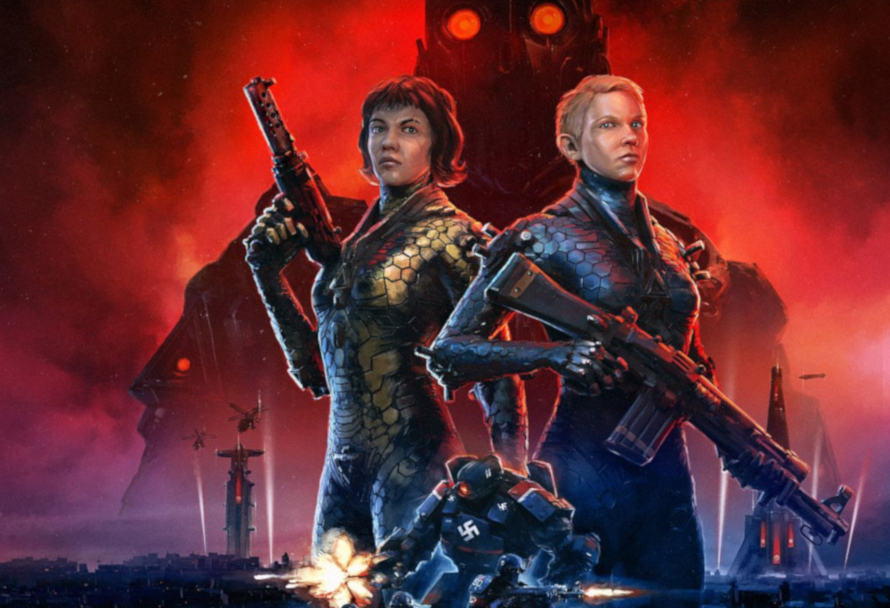
Developer Machinegames has revealed that it has enlisted the help of Dishonored and Prey developer Arkane Studios, in order to bring a Dishonored-style open-ended structure to the forthcoming Wolfenstein: Youngblood.
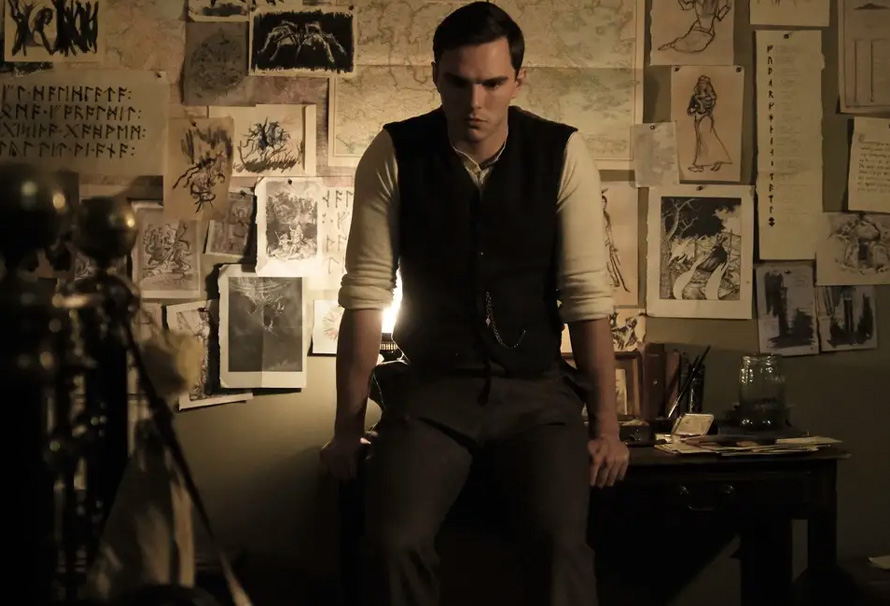
Tolkien is back in the news, a new film is out that aims to show a bit of the early life of the venerated fantasy author.
It’s had a mixed critical response, much like many games and films that have been based on J.R.R. Tolkien’s works. We’re lucky in that some games, like The Hobbit, Lord of the Rings Online, and Shadow of Mordor have all done justice to Tolkien’s world. But it’s not enough. The soil of Middle-Earth is fecund and there’s still room for new ideas to sprout.
Here’s five games based on Lord of the Rings that the games industry should make so we can play them.
Mordor Tycoon
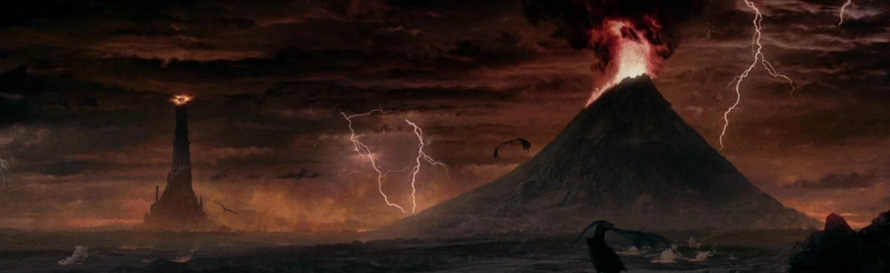
Mordor isn’t just a strangely rectangular area of land, no, it’s also the hub of all industry on Middle-Earth. Huge machines turn out armour and siege weaponry on a scale unseen throughout the rest of the land. All being run by myriad orcs, goblins, and other fell creatures from the spawning pits. Sounds like a management sim to me. Think of the satisfaction you could feel seeing your Mordor running away smoothly, like Dungeon Keeper, but without the comedy.
Shire Clicker
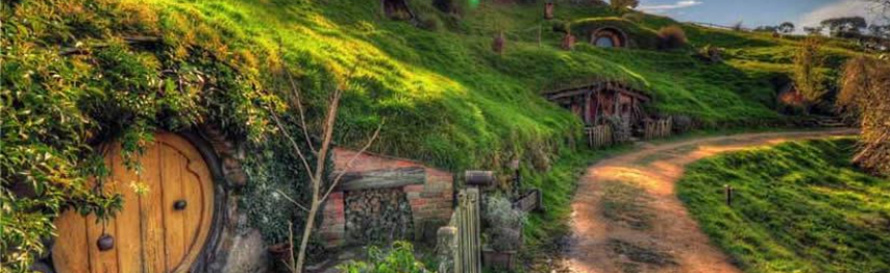
Click the hobbit holes to get the hobbits out and working the fields. Click the fields to gather crops. Click the Green Dragon to generate beer (in half pints). Click the ovens to bake pies. Oh no, hungry hobbits are here to steal your pies, click them to shake them off your delicious treats. Click and keep clicking. Click. Click. Click.
Moriacraft
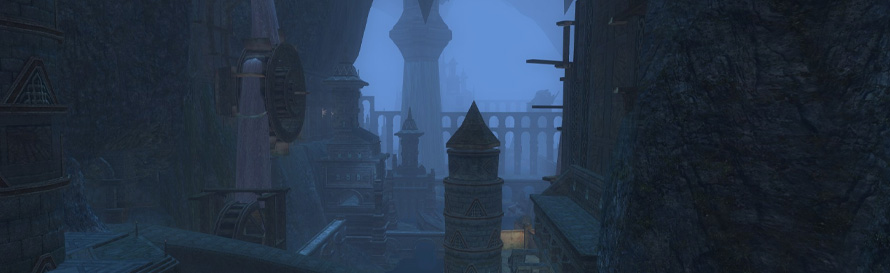
Moria’s a vast subterranean kingdom built, and later abandoned, by the dwarves. A dwarf game about mining out a huge underground fortress? I’m sure that already exists, so why not go the other way. Have it just be one dwarf, toiling away, digging out your personal kingdom in the mountain ranges. You’d go through a lot of stone pickaxes, but it’d be all your own work.
Gollum Survival Sim
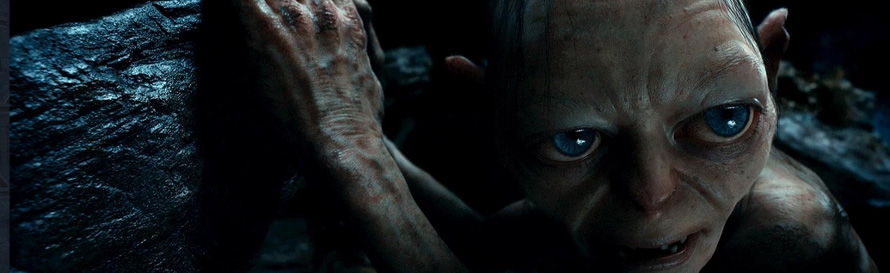
Gollum’s not a well boy. Between being poisoned slowly by the One Ring and a diet of mainly raw fish, he’s doing pretty poorly in his mountain hideaway. That’s alright though, as he’s a natural stealth master. Take control of Gollum as you fight for survival in the depths of the Misty Mountains, hide from goblins as you raid their supplies before retreating into the darkness. And always, make sure that your precious is safe, secret, and secure.
Tolkien Allegory Denier 2000
In Tolkien Allegory Denier 2000 you take on the mantle of the author himself, reborn into the twenty first century. The internet keeps saying your novels were allegorical, and that’s simply false. Why, the evil armies of Saruman and Sauron employing technology and mass industrialisation has nothing to do with your loathing of industry. Your fetishisation of simple country life hasn’t seeped into your novels, the idea is laughable. Your experiences in the first World War have coloured your accounts of war not a jot. They’re simply all wrong, surely. Absolutely. In this interactive fiction game, it’s up to you to defend your works against these horrid accusations that they’re allegorical tales of war and unchecked progress. No matter the proof.
Tolkien is in cinemas now, and we’re always looking for the next Lord of the Rings game. Have you any ideas about Lord of the Rings adaptations? Let us know in the comments below.
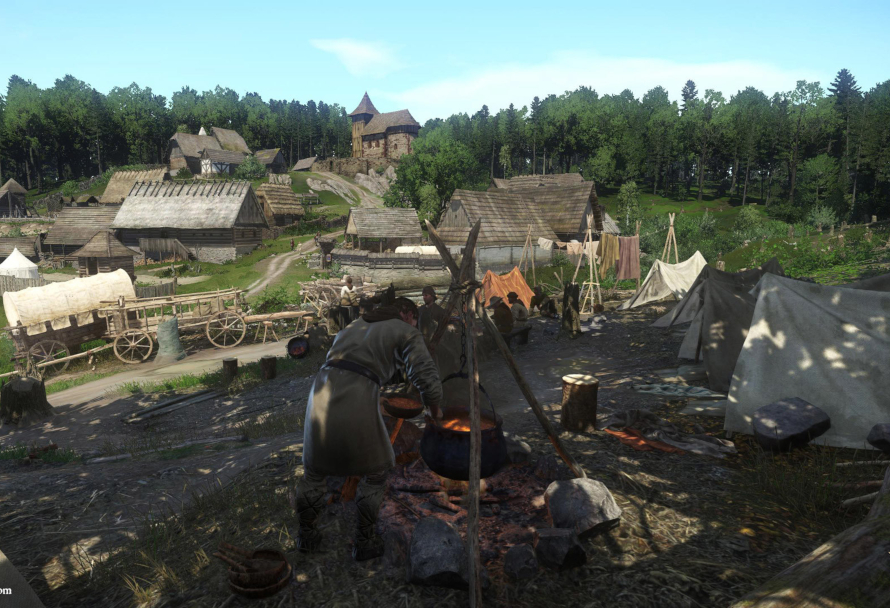
Developer Warhorse Studios and publisher Deep Silver have announced that A Woman’s Lot, the fourth expansion for Kingdom Come: Deliverance, will be released on May 28 on PC.