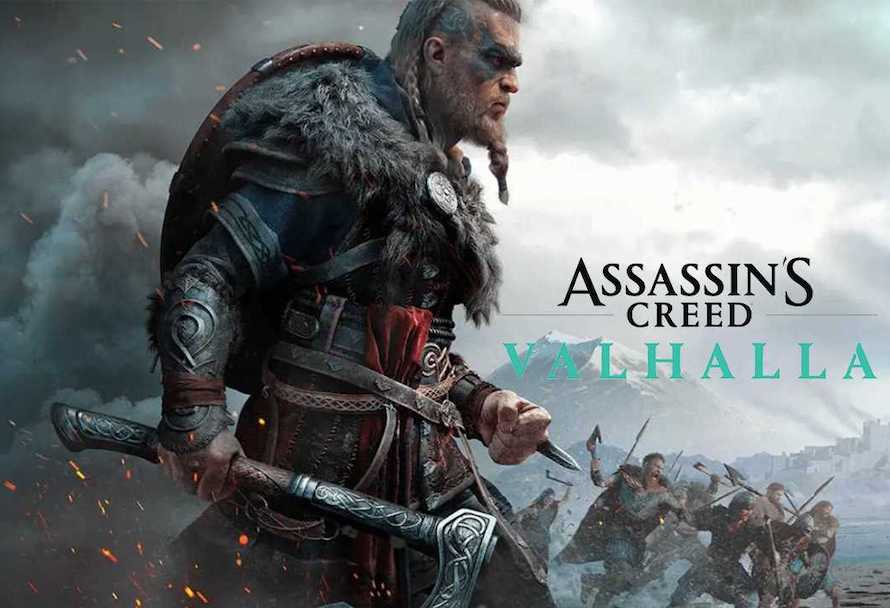
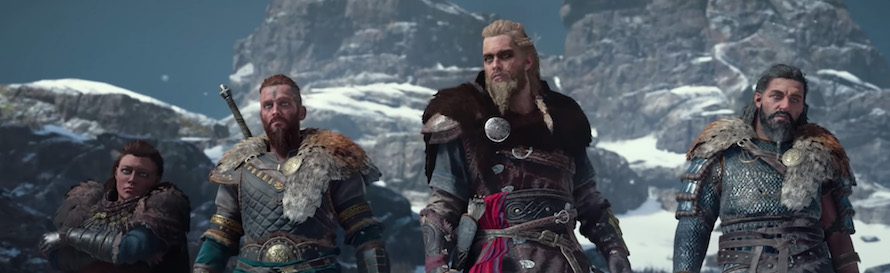
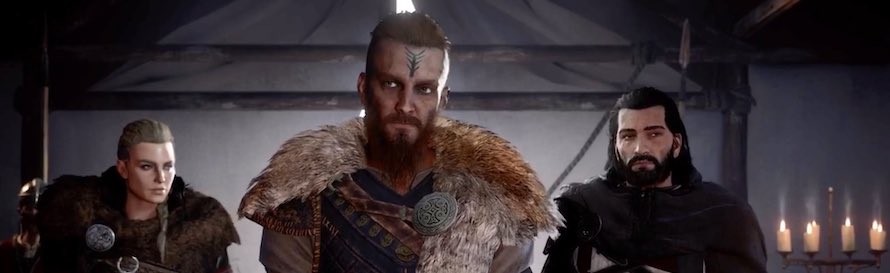
Assassin’s Creed: Valhalla is sure to be filled with brilliant characters that help sell the fantasy of being a Viking during the invasion of Britain. Each Assassin’s Creed game heads to new historical locales, taking the series to places such as Rome during the Renaissance, Ancient Egypt and Greece, and even the high seas during the golden age of piracy. Now we’re off to 873 CE and Anglo-Saxon England, where you’ll be determining the fate of a Viking clan as you fight for land and survival.
Walk back through the annals of time with us as we look at everything we know about Assassin’s Creed: Valhalla’s characters ahead of the game’s launch.
Eivor
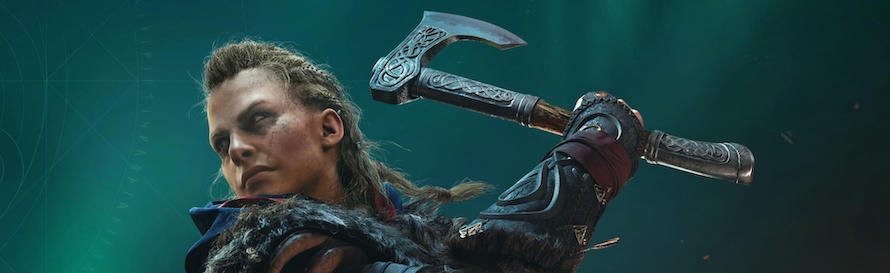
Eivor is who you’ll be playing as in Assassin’s Creed: Valhalla and is the main character. Playable as either male or female as it was in Assassin’s Creed: Odyssey, the game’s story will be identical no matter which gender you choose to play as.
Also known as the Wolf-Kissed, Eivor leads their clan of norsemen away from Norway in search of new lands, resources, and a place to call their own. Landing in Anglo-Saxon England and forming a new settlement, they also become initiated into the secrets of the Hidden Ones, gaining a Hidden Blade to use against their foes. Eivor had a harsh childhood which shaped much of their future, losing their parents Varin and Rosta and becoming adopted by King Styrbjorn.
Sigurd Styrbjornson
Sigurd is the elder brother of Eivor, through Eivor’s adoption by King Styrbjorn. Sigurd, along with Basim, are the pivotal characters behind much of what happens in Assassin’s Creed: Valhalla’s plot. Whilst Eivor was raiding Southern England, Sigurd departed on a journey to raid the distant lands of the East. There he found more than he was bargaining for, making the acquaintance of a Hidden One named Basim Ibn Ishaq. These two returned to Eivor’s side, gifting Eivor their Hidden Blade in the process.
Basim Ibn Ishaq
A member of the precursor to the Assassins, Basim is one of the Hidden Ones. Making a friend in Sigurd he travelled to Norway to meet with Eivor, encouraging them to lead the norsemen away from their ancestral lands to England. He also inducted Eivor into some of the secrets of the Hidden Ones, telling them of the Templar’s plot to control both England and the Norse..
King Styrbjorn
Though not the father of Eivor by blood, Styrbjorn stepped readily into this role after learning of the death of Varin and Rosta. Adopting Eivor he raised them alongside their son, Sigurd. Styrbjorn raised Eivor and Sigurd into strong warriors for the Raven Clan, however a rift grew between the king and Sigurd which ultimately caused his son to leave for Constantinople.
Now you should be acquainted with some of the most important characters and main characters in Assassin’s Creed: Valhalla. What are you looking forward to most in this latest entry in the Assassin’s Creed series? Head on over to our community forum and get talking.
Watch Dogs: Legion officially launched on October 29, 2020, for PlayStation 4, Xbox One, PC, and Google Stadia. Since then, it has also become available on PlayStation 5 and Xbox Series X|S.
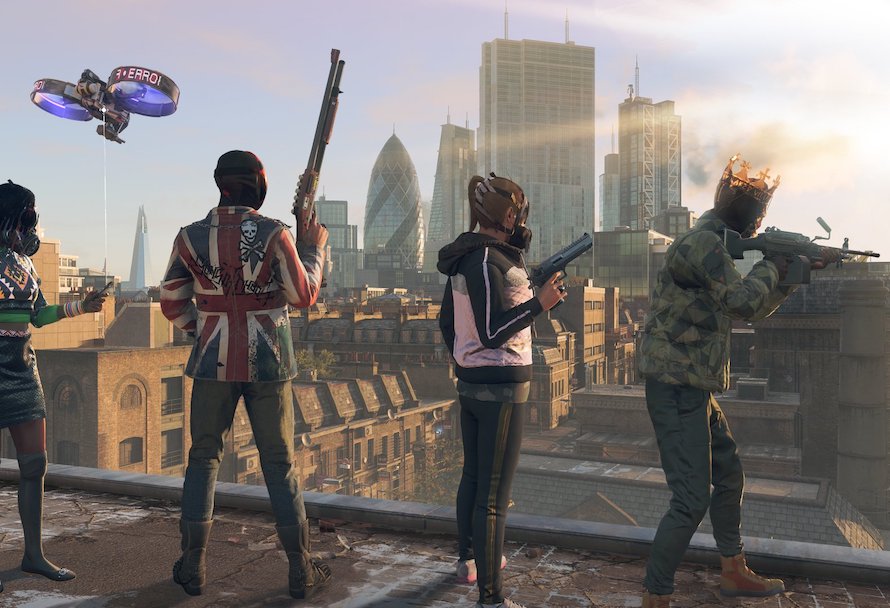
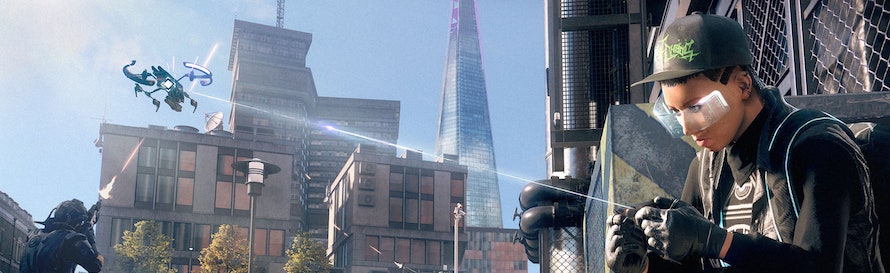
Set in a near-future, dystopian London, Legion plunges players into a post-Brexit surveillance state where a private military corporation known as Albion has seized control of the city. As a member of the underground hacker group DedSec—framed for a series of bombings—you must fight back, uncover the truth, and recruit everyday citizens to join your resistance.
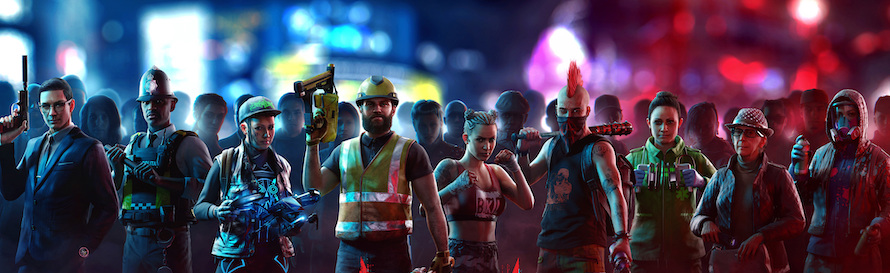
Developed by Ubisoft Toronto, Legion offers a compelling single-player campaign where you can play as virtually any character in the game world, each with unique abilities and backstories. Your goal is to rally London’s people, liberate boroughs, and take down the oppressive powers ruling the streets.
What About Multiplayer?
Multiplayer was not available at launch, but Ubisoft released the free online update on March 9, 2021, after a short delay from the original December 2020 plan. The update brought a robust set of multiplayer features as part of Watch Dogs: Legion’s ongoing post-launch content.
Online mode exists separately from the main campaign, meaning your recruited operatives in single-player do not carry over. Instead, players build a new DedSec team specifically for multiplayer activities.
Watch Dogs Legion Multiplayer Modes Explained
The online component adds several gameplay modes designed for both cooperation and competition:
Open-World Co-Op
Team up with up to three friends to explore London together, complete co-op missions, and take on spontaneous events across the open world. You’ll each bring your own recruits into the fold, creating strategic synergies in your squad.
Tactical Ops
These high-stakes missions are designed for four players and require careful teamwork, coordination, and communication. Tactical Ops are longer, more challenging experiences that play like heists or raids—perfect for those seeking a test of skill and cooperation.
Spiderbot Arena (PvP)
This fast-paced PvP mode puts up to eight players in control of armed Spiderbots in a free-for-all arena battle. Think Robot Wars, but faster, deadlier, and with a DedSec twist.
Invasion Mode
Returning from previous Watch Dogs titles, Invasion Mode pits players against each other in a deadly game of digital hide-and-seek. One player must hack the other without being detected, while the target must find and eliminate the intruder before it’s too late.
Whether you’re diving into Watch Dogs: Legion for the immersive single-player experience or teaming up with friends for online chaos, there’s a wealth of content to explore and a city to reclaim. Welcome to London. Now, let’s take it back.
The jobs system which sits at the core of Yakuza: Like A Dragon essentially dictates the key traits of the characters that use them. From providing specialised attacks to buffing up particular stats, each job can pretty shape the offensive strategy of every character in the game. The best way to think of jobs in Yakuza: Like A Dragon is as if they’re classes, as each one provides unique role-based benefits, strengths and weaknesses.
Yakuza: Like A Dragon Jobs – How Do You Get Them?
In Yakuza: Like A Dragon, jobs are split into three primary categories – character specific jobs, male specific jobs and female specific jobs. By dividing the jobs available in the game between these groups, Yakuza: Like A Dragon encourages players to diversify their group and seek out additional companions that exist beyond the core group of characters.
Many jobs in Yakuza: Like A Dragon have certain conditions which must be fulfilled in order for you to use them, such as reaching a desired experience level or chapter in the game. You can change a character’s job by heading over to the Hello Work office and choosing which new job you’d like to use – so long as you meet the aforementioned designated requirements.
Yakuza: Like A Dragon Jobs – How Do You Increase Your Job Rank?
Rather than just being static, jobs can be enhanced by improving their job rank. Like any JRPG worth its salt, players can not only gain regular experience to level up in the traditional sense, but beating tough bosses and laying waste to enemies in battle also provides a bounty of job points too.
When these job points are used to increase your job rank, not only do you stat increases on that particular character, but new skills are also learned that can be taken into battle. Whether that’s unlocking a new weapon style or enabling the use of a range of support and party assist abilities, each job in Yakuza: Like A Dragon provides players with sufficient creative latitude to define their play style however they see fit.
Here’s the kicker though – because your basic abilities and stat increases are carried over from one job to another, it makes sense to obtain and increase the level of as many jobs as you possibly can in order to maximise the number of abilities and skills that you’ll have at your disposal. After all, you can never have too many skills in your arsenal to unleash at any given time.
Yakuza: Like A Dragon Job Set – What Does It Include?
A special pack of downloadable content, the Yakuza: Like A Dragon Job Set includes a pair of special classes that can only be used by particular characters.
With the Devil Rocker job, players can not only unleash the madness and destruction performance, but also leverage guitar weapons in combat as well. The Devil Rocker job can be used by Ichiban, Zhao, Naba, Joon-Gi and Adachi.
Next up, the Matriarch job enables the two main female characters in Yakuza: Like A Dragon to go to town on their foes with heavy weapons and the hugely damaging Naginata spear. The Matriarch job role can only be used by Eri and Saeko.
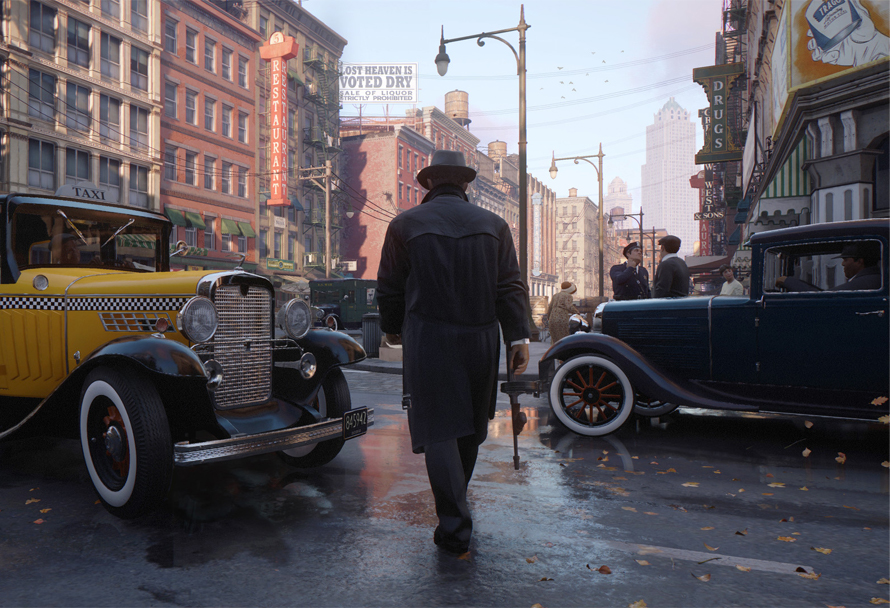
After 18 years, Illusion Softworks open-world 2002 mobster game Mafia has been remade for modern consoles. Developed by Hangar 13, the game has been rebuilt from the ground up, recreating 1930s Lost Heaven in all its gritty glory. As part of the remastered Mafia: Trilogy package, Mafia Definitive Edition launched on September 25, 2020 for PC, PlayStation 4 and Xbox One.
If you’ve already started digging into the game, you may have noticed a few changes beyond the bump in graphical fidelity and atmosphere. Hangar 13 made the decision to recast the game’s English cast to service the newly developed story with motion capture to add a new cinematic layer to the narrative. This means that your old favourite characters may not sound the same as they did in 2002. If you’re trying to figure out who is who in Mafia Definitive Edition, follow along with our handy guide to the new voice cast and all of the game’s main characters, prefaced by a small primer for the game’s narrative to get you up to speed.
Mafia Definitive Edition Story Primer
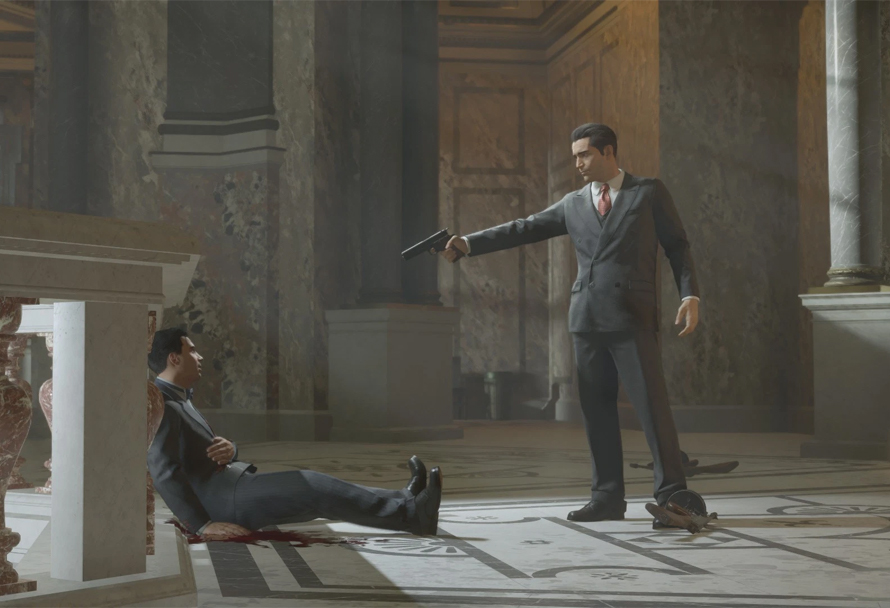
Mafia Definitive Edition is set in 1930s America during the Prohibition era in the fictional city of Lost Heaven. You play as taxi driver Thomas Angelo, an ambitious soul who gets mixed up in the Salieri crime family, making friends and enemies across the game’s narrative.
Tommy starts out as a driver for the Salieri family and he rises through the ranks to become a Made Man, assisting with Salieri’s many lucrative rackets and protecting the business from outside influence and rival gangs.
The main antagonist in Mafia is Don Morello, of the Morello Crime Family, who attacks Salieri and his cohort across the course of the game, resulting in a vicious mob war. The Morello gang use corrupt cops and underhand tactics in an attempt to undermine Salieri’s dominion, leading Tommy to thwart assassination attempts and take out informants. However, Tommy eventually becomes disillusioned with his colleagues and their methods, which creates an interesting conflict between the game’s main characters, and leads to a number of twists.
In the Definitive Edition, the game has been rewritten to tell a more sophisticated story than the original, but most of the beats remain the same.
Mafia Definitive Edition Characters and Voice Actors
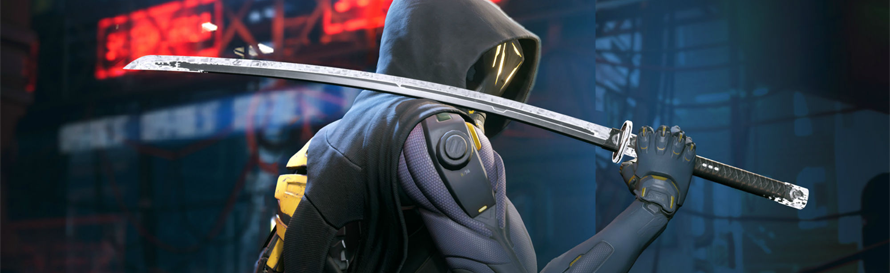
The slick, fast-paced cyberpunk action game Ghostrunner oozes action-packed gameplay based around speed, precision and momentum and looks fantastic in motion. With its wonderful-looking dystopian setting, Ghostrunner is an excellent adventure. With that in mind, we’re going to take a look at some of the Ghostrunner abilities and what players can expect from missions.
What is Ghostrunner?
Ghostrunner missions will see you hacking and slashing your way to the top of the Dharma tower to confront the tyrannical Keymaster. The Dharma tower is humanity’s last shelter after a world-ending cataclysm left humanity on the brink of extinction. Mara is the Keymaster and rules over what remains with an iron fist. With little regard for human life the strong prey on the weak. A crescendo of violence approaches and as the most advanced blade master ever created you will be at the forefront.
Featuring a one-hit kill mechanic you will need to be swift and accurate as you dish out your devastating attacks. Utilise your superior mobility to gain the upper hand, outsmart your enemies and take them down before they take you down.
Ghostrunner is meant to be a challenge, you will encounter death quite a lot and as such there are also a large number of checkpoints meaning you won’t need to keep retracing your old steps. Adapt and learn quickly and you will progress.
The Ghostrunner’s Moves and Abilities
You are a Ghostrunner – the 74th one in actual fact, and as such you have the upper hand on your enemies with a suite of powers to make use of. Speed and mobility will be your greatest assets but there are other Ghostrunner abilities that will provide you with that edge.
Wall run – you can run across walls to traverse large gaps.
Dash or Blink – you’re able to dash in any direction to either close distance or dodge out of the way of incoming projectiles. With the one-hit kill mechanic this will be a vital skill to master in order to progress.
Grapple – As the Ghostrunner you will have access to a grapple ability that allows them to latch on to certain items and propel them through the air towards them or past them. Useful for jumping gaps or getting behind enemy shields for an attack.
Tempest – acting like a force push, the Tempest ability allows you to create a force from your hand and fire it at an enemy to knock them back or off of platforms. The Tempest ability also has another use and can be used to deflect projectiles back at enemies. You only have to time the use of it correctly in order to deflect shots.
That’s just a few of the Ghostrunner abilities for players to master. There will undoubtedly be more to uncover as you play and climb further up the tower. With missions designed with motion in mind, Ghostrunner is fantastic fun and provides players with great adventure to master.
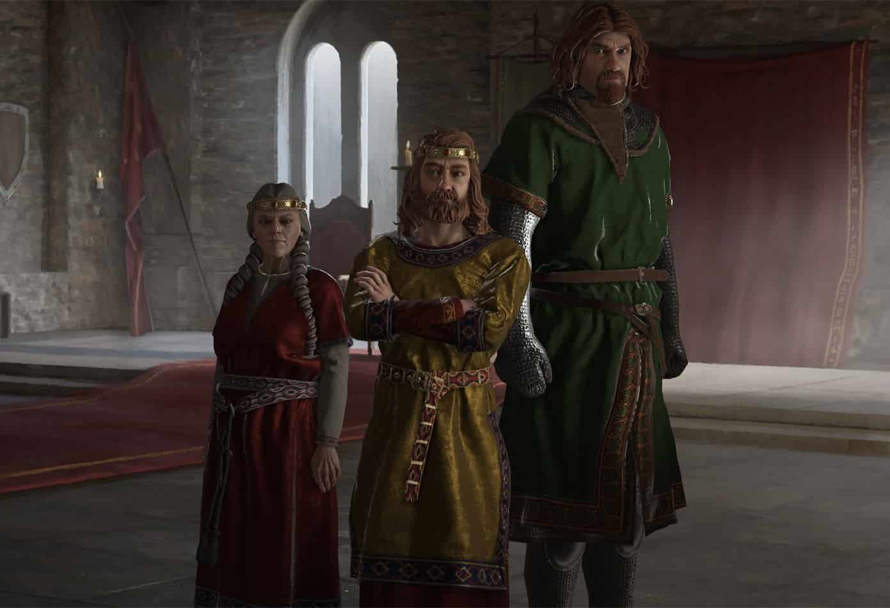
After eight long years of playing Crusader Kings 2, stubborn grand strategy fans will be very pleased to learn that the game has received a brand spanking new sequel with a suite of new features to make the transfer between games peaceful, but interesting. Paradox Development Studios Crusader Kings 3 launched on Microsoft Windows via Steam and Xbox Game Pass for PC on September 1, 2020, and has since been met with much critical acclaim.
Yet if you’re a series veteran with tons of hours in Crusader Kings 2, you might still be on the fence about your purchase of the next entry. What new features does this game bring to the table, and why is it worth upgrading? In this short guide, we’re going to run through some of the new features in Crusader Kings 3 that distance the game from its predecessor.
The overhauled UI and accessible tutorials
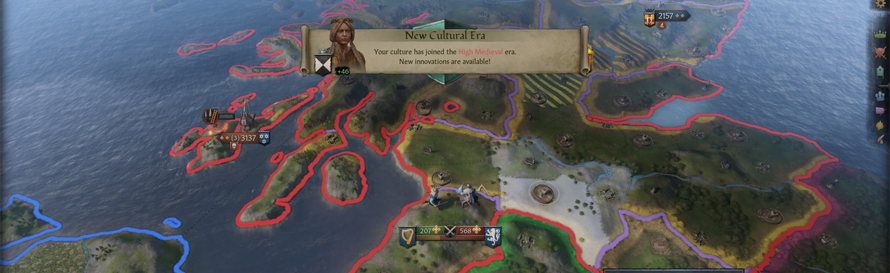
One of the most important new features in Crusader Kings 3 is the UI overhaul, which has simplified a lot of the more stubborn aspects of the interface and made it easy to understand for new players.
This is tied into the extensive tutorial system — new players can start their adventure in Ireland and learn as they play rather than being thrown into the deep end. It’s fantastic for newbies and lets you learn on the job rather than reading pages and pages of guides before you start. Grand strategy games are known for their complexity, so hats off to Paradox for implementing such accessibility.
One of the best parts of the UI is that you can hover over any word you don’t understand and the game will explain it. You can also trap explainer boxes to hover over the words within them and explain those too, if necessary. There’s even a gigantic encyclopaedia that covers everything you need to know if you have further questions.
3D Animated Characters
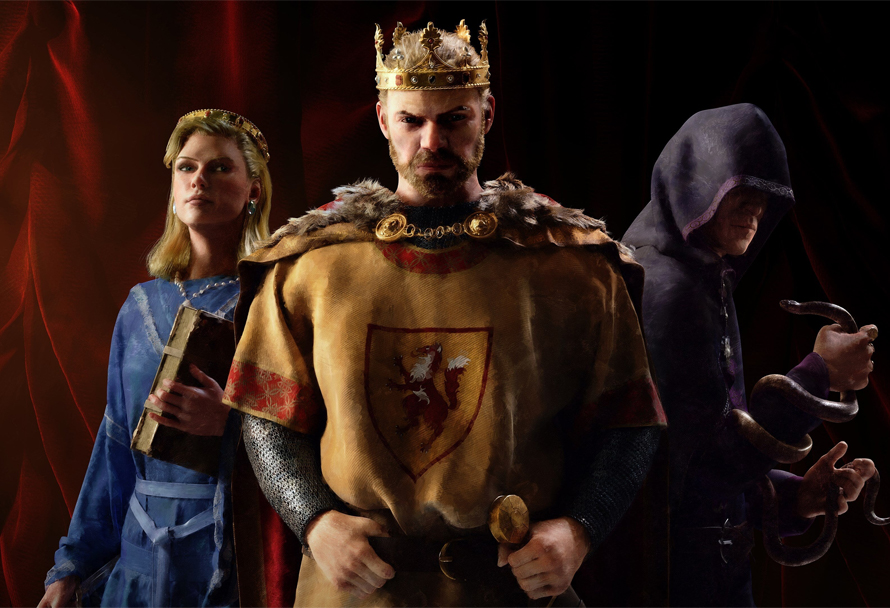
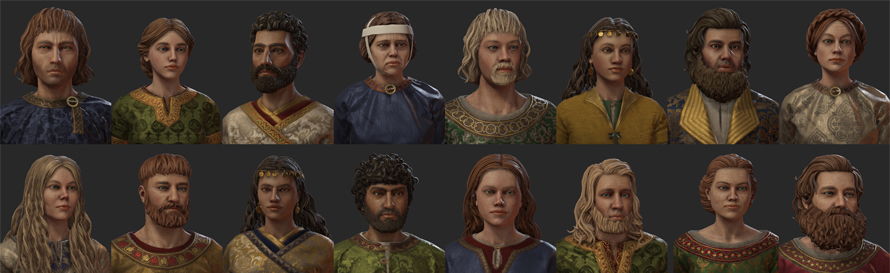
Every character in Crusader Kings 3 is fully animated. The game makes the leap from 2D to 3D models with intricate features that reflect inherited traits, illness and congenital defects. This really brings the game to life and makes the visual presentation a lot less stoic than previous entries in the series. It also makes roleplaying easier, especially when you use the barbershop to modify how your ruler and their relatives look to fit your playstyle.
The Lifestyle system and dynasty trees
New to Crusader Kings 3 is the lifestyle system, which lets players pick an RPG-style skill tree to follow for their current ruler until they die. As soon as you’re given control you’ll be asked to pick between the Diplomacy, Martial, Stewardship, Intrigue or Learning skill trees, with important benefits tied to each. Perhaps you want to make your ruler a mischievous manipulator with the scheming Intrigue tree and then pivot to a Martial strategist with your heir when your dynasty needs to expand.
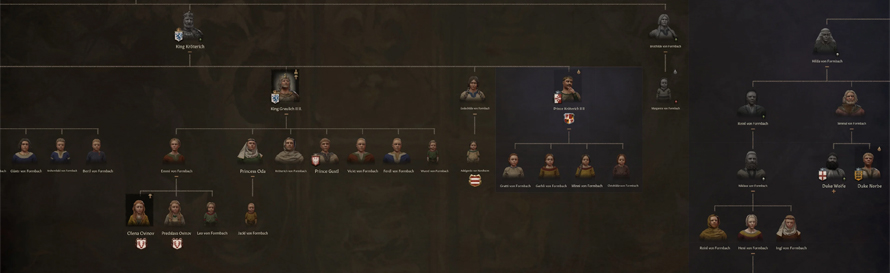
The choice is yours! Every skill tree features useful unlockable abilities that can be game-changing for a dynasty’s fortunes when used properly. You can also gain Renown by being a successful ruler, which you can then use to advance your dynasty tree to achieve abilities that affect your entire dynasty instead of just your current ruler.
Hooks and Dread
The favours system has been expanded in Crusader Kings 3, and players can now fabricate and obtain Hooks on other players. This means you can scheme to find out potentially earth-shaking secrets about your rivals and then turn those details into blackmail and important leverage. You’ll get some hooks on family members just for being related to them, but you can also work to acquire hooks on your rivals, which are even more useful.
You can keep a hook and use it at a crucial moment later down the line to force a marriage or make one of your vassals accept some vicious terms when you’re negotiating tax and levies. The best part about the hooks system is that you can often use a hook to negate the loss of opinion you would usually suffer from the act you’re trying to commit. This means there is an even greater incentive to scheme and spy on your rivals and friends. If you know their secrets you can make sure they never turn against you! If you take advantage of people, torture captives and generally be an aggressive nuisance you’ll also accumulate a new currency called Dread, which will make the rest of the world fear you for your lack of empathy and crafty ness. Use this new resource wisely alongside the Hooks system to dominate continents and rule the world!
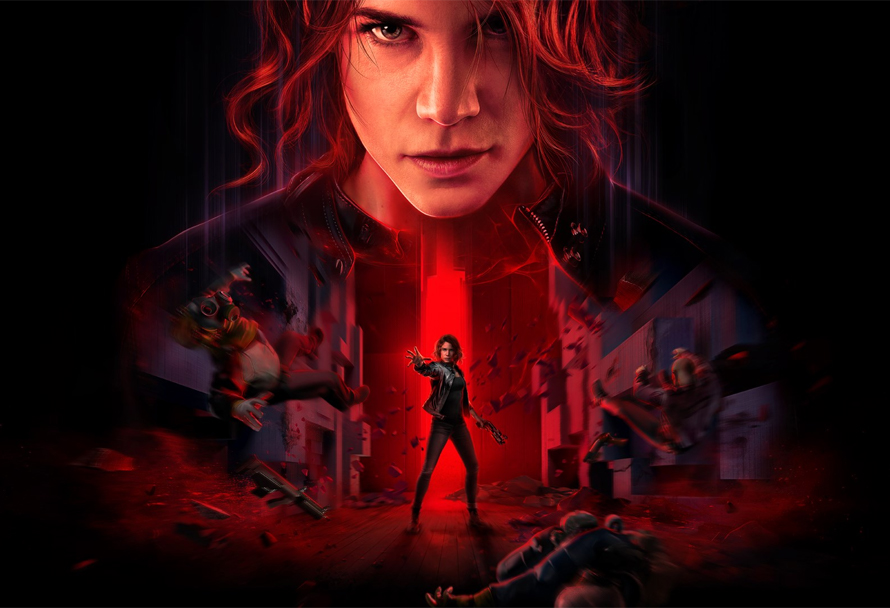
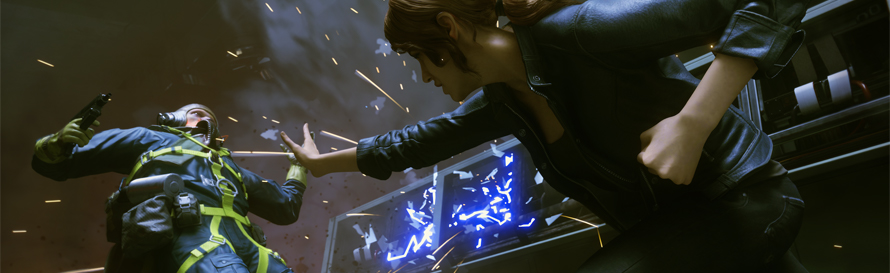
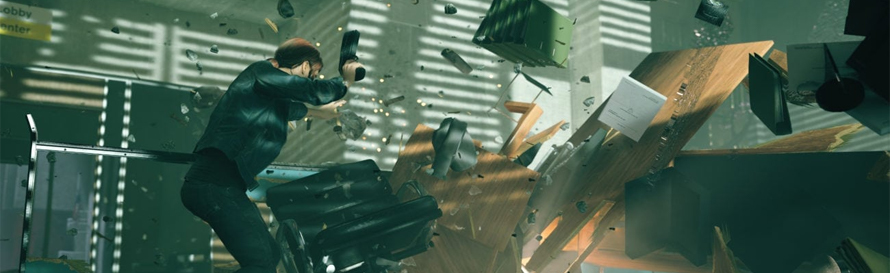
The definitive version of Remedy’s 2019 third-person shooter Control, the Control Ultimate Edition brings together the base game and all of the DLC and expansions which have been released since launch. As an added bonus, PS4 and Xbox One folks who purchase Control Ultimate Edition will also gain a free upgrade to the enhanced PS5 and Xbox Series X/S versions of Control when they release later on too.
The Base Game
If you’ve not yet played Control (what on earth have you been doing?), then the Control Ultimate Edition is absolutely the best place to acquaint yourself with Remedy’s astoundingly compelling shooter.
A masterwork marriage of third-person shooter mechanics and sophisticated narrative beats, Control casts players as Bureau of Control special agent Jesse Faden who must uncover the whereabouts of her wayward brother and fight back an invading supernatural force known only as the Hiss, which threatens to undo humanity as we know it.
As Jesse plunges ever deeper into the bowels of the Oldest House, she uncovers all manner of strange events, warped realities, corrupt governments and shocking tragedies in one of the most outlandish and wholly satisfying stories that Remedy has ever told.
Deftly leveraging the sort of open-ended level design that the studio has long been known for, players will wreak a special kind of carnage on their enemies as Jesse unleashes a two-pronged assault of cutting-edge firepower and telekinetic devastation. To say there’s nothing else quite like Control would be something of an understatement.
Included DLC, Expansions
Expanding the base Control experience in new, interesting and often unexpected ways, the Control Ultimate Edition includes the following DLC and expansion content.
Oh and if you haven’t completed the base game, you might not want to read any further as spoilers follow.
The Foundation
In Control’s first fully fledged expansion, The Foundation sees our flame-haired protagonist enter an all-new section of the Oldest House to combat a highly deadly Hiss variant. In addition to bringing new side quests, mods and abilities to the table, the Foundation expansion also brings a sizable number of recordings and documents for the player to collect.
AWE
Encompassing reality breaking ‘Altered World Events’, Control’s AWE expansion whisks players off to a previously unexplored area of the Oldest House where a mysterious, slumbering power has lurked for years.
Boasting some of the most ambitious level design seen anywhere in either the base game or its first expansion, Control’s AWE expansion is an eye-opening affair that directly crosses over with Remedy’s earlier supernatural adventure Alan Wake, as Jesse Faden lays waste to all-new foes in worlds that are both new and warmly familiar.
PS5, Xbox Series X Upgrades
Certainly a nice bonus to have for console folk, Control Ultimate Edition allows current generation console players to upgrade to the next generation versions of Control at no extra cost. Boasting higher resolution, improved framerates, greater levels of detail and ray traced visuals, Control on PS5 and Xbox Series X/S looks to be a massive leap over the current generation versions of the game.
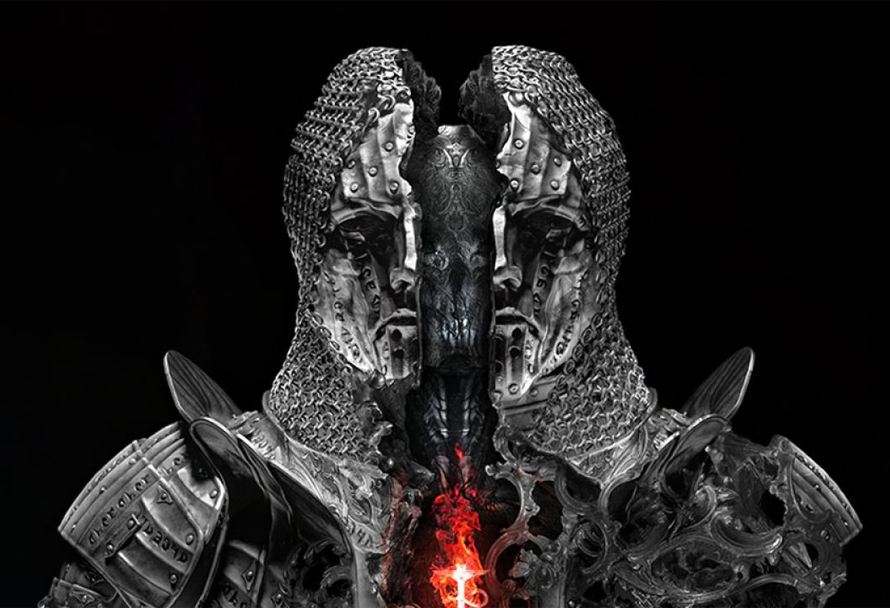
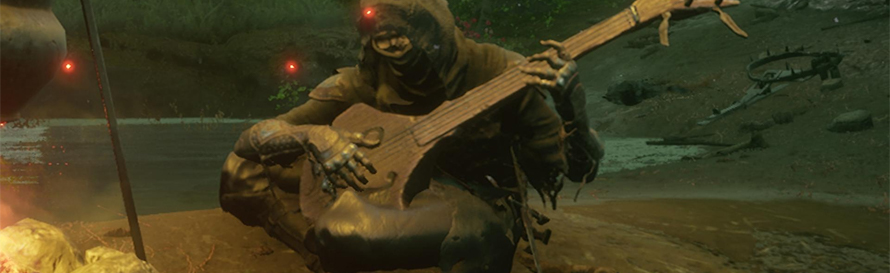
Mortal Shell is a rewarding and deep combat-driven RPG that features a story that seamlessly weaves itself into the dark world that surrounds you. Filled with lore and backstory, Mortal Shell builds a world that’s as tantalising as it is oppressive.
Playing as the Foundling inhabiting a protective Shell that also grants you extra abilities, you’re not directly given many reasons for your actions. If you just look at what the Foundling is told, you may come away confused. Thankfully, the world is rich with detail and extra information that helps build up a more clear picture of the world’s story. In particular, inscriptions and etchings give you details that help fill out the world, giving you more detail than just that in the main story.
We’re here to look into Mortal Shell’s lore and story, giving you our best idea of what’s happening in the game and in its backstory.
Mortal Shell’s Story
Key to understanding Mortal Shell’s story is looking at the history of the game’s world and how it’s reached the state it is when the game begins.
It’s the Wormfish that is at the heart of Mortal Shell and is probably the most important ingredient in its heady mix of scifi, fantasy, and dark gothic horror. Humanity has been seeking immortality since the birth of sin. Many different sources and much experimentation was undertaken in this search for life everlasting, but it was in an unlikely place that the answer was found.
The Wormfish, a visitor from the Void, held the key to humanity’s undying future. We do not know in what form this took but as an inscription states, “A worm split asunder becomes something new.” This may be a reference to the Unborn, which are the source of much of the game’s plot.
The Unborn are a parasite that travels with the Wormfish, they appear to be drawn to immortality, and when humans took the Dark Gift and became undying they started drawing the Unborn to themselves. These were known as the Revered.
One Revered, the Dark Father, began to consume his own Unborn. This twisted his form into a grotesque parody of human life, in addition, he was imprisoned for all eternity. His Unborn being harvested for the use of others. Inside each Unborn a gland can be found which, when consumed, grants certain powers. These can be glimpses of the future, access to the Void itself, and more.
In order to retain one’s humanity, sacrifices had to be made to feed the Unborn. These gifts of humanity, or Sacraments, came in the form of flesh and blood or even memory itself. Unfortunately over time these sacrifices and the influence of the Devout, immortal caretakers of the Unborn’s Sacraments, caused a terrifying madness to descend on humanity.
The Devout in turn were twisted by consumption of the Tar, a byproduct of Unborn glands, turning them into inhuman monsters.
The Foundling
In Mortal Shell you play as the Foundling, a pale creature that possesses unique abilities in the world. It seems you were intended to be a Seedling, an offspring of the Dark Father who would birth Unborn, giving humanity access to their pure nectar.
As you discover more about the world you find out that It seems humanity’s fall was caused by worshipping false gods and a desire to become gods themselves. Throughout the game you seek down the truth, and tear glands from fallen Revered and Devout, as you put an end to humanity’s hubris. Facing the final boss, The Unchained, it becomes clear that you, not them, are intended to ascend and take your place in the pantheon. The child, at last, surpasses the father.
Supermassive Games is renowned for attracting top-tier Hollywood talent to bring its experimental horror titles to life, with The Dark Pictures Anthology being no exception. With the success of Until Dawn featuring stars like Rami Malek and Peter Stormare, and Man of Medan starring Shawn Ashmore, Supermassive has consistently recruited big names for their interactive horror experiences. Little Hope, the second entry in The Dark Pictures Anthology, continues this trend with an impressive cast, featuring a blend of rising stars and seasoned actors who help shape the chilling narrative.
In this guide, we’ll delve into the details of the cast and their respective roles in The Dark Pictures Anthology: Little Hope, providing insight into their careers and the characters they portray.
What to Expect in Little Hope
The Dark Pictures Anthology: Little Hope is a survival horror game released on October 30, 2020, for PC, PlayStation 4, and Xbox One. Following the events of Man of Medan, it is the second instalment in the anthology series. The game is primarily single-player, though it offers two multiplayer modes: Shared Story, a co-op experience for two players online, and Movie Night, where up to five players take turns controlling different characters while navigating the eerie narrative.
The story revolves around a group of college students and their teacher who find themselves trapped in the seemingly deserted town of Little Hope, a place steeped in the history of 17th-century witch trials. As the characters investigate the town’s dark past, they experience strange, supernatural events and are forced to confront their own horrifying visions of past lives. The choices you make throughout the game will shape the fates of the characters, as they struggle to unravel the mystery of Little Hope and its chilling secrets.
Cast and Characters
Pip Torrens as The Curator
Pip Torrens plays The Curator, the mysterious narrator who appears across The Dark Pictures Anthology games. A guiding figure, The Curator comments on the player’s choices, offering cryptic insights into the unfolding narrative. Torrens is a well-known English actor, with notable roles in The Crown as Otto von Bismarck, Preacher as Herr Starr, and The Danish Girl. His voice and performance bring a layer of depth and intrigue to the series.
Alex Ivanovici as John, James and Joseph
Alex Ivanovici portrays multiple roles, playing John, James, and Joseph, three of the main characters linked to Little Hope’s tragic past. Ivanovici has appeared in films and games such as 300 (2006), Outlast (2013), Deus Ex: Mankind Divided (2016), and The Outer Worlds (2019), demonstrating a versatile talent for bringing a wide range of characters to life. In Little Hope, he embodies the weight of history as he navigates through the town’s horrific and mysterious past.
Will Poulter as Andrew, Anthony and Abraham
Will Poulter plays three key characters—Andrew, Anthony, and Abraham. Poulter is a well-known actor, recognized for his performances in films such as Midsommar (2019), The Revenant (2015), and Black Mirror (2017). His ability to portray complex and intense characters makes him a standout in Little Hope, where he plays multiple roles connected to the town’s dark history. His experience in psychological horror, particularly in Midsommar, adds a unique intensity to the game’s narrative.
Ellen David as Angela, Anne and Amy
Ellen David takes on the roles of Angela, Anne, and Amy in Little Hope. David’s acting career spans several decades, with notable appearances in Assassin’s Creed II (2009), Watch Dogs (2014), and Arthur (2011). She brings a sense of gravitas to the game, portraying characters from different periods, all of whom are caught up in the mystery of Little Hope’s haunted past. Her performances help create a deep emotional connection with the player as she faces horrific events tied to her various incarnations.
Kyle Bailey as Daniel and Dennis
Kyle Bailey plays Daniel and Dennis, two characters central to the storyline in Little Hope. Bailey’s previous acting credits include a range of television roles, and his performance in Little Hope demonstrates his ability to navigate complex psychological drama. As both Daniel and Dennis, Bailey’s characters are deeply entwined with the game’s core mystery, and his ability to portray vulnerability and strength plays a crucial part in the player’s emotional journey.
Caitlyn Sponheimer as Taylor, Tanya and Tabitha
Caitlyn Sponheimer portrays three different characters—Taylor, Tanya, and Tabitha. Sponheimer’s previous roles include appearances in The Boys (2019) and April in Autumn (2018). In Little Hope, she brings a dynamic energy to each character, each with her own story and connection to the town’s witch trial history. Her performances provide a sense of realism and relatability, making the horror elements of the game hit even harder.
Scott Haining as David
Scott Haining plays David, a character whose fate is tied to the twisted events unfolding in Little Hope. Haining is best known for his roles in British television series like Waterloo Road, Doctors, and My Parents Are Aliens. In Little Hope, his performance adds to the eerie atmosphere of the game, with his portrayal of David being integral to the overarching mystery.
Skye Burkett as Mary and Megan
Skye Burkett plays Mary and Megan, two significant characters in the game’s chilling narrative. Burkett is a relatively new face in acting but shows her range and skill in these roles, where she brings life to characters linked to the historical witch trials and their haunting consequences.
David Smith as Reverend Carver
David Smith portrays Reverend Carver, a key figure from Little Hope’s grim past. Smith’s previous television roles include appearances in Emmerdale, Coronation Street, and Waterloo Road. In Little Hope, he plays a pivotal role in the unfolding story, acting as one of the key antagonists whose actions have a long-lasting impact on the game’s tragic events.
Little Hope’s cast is filled with talented performers, each contributing their unique skills to create a rich, immersive experience. With these characters, the game weaves a tale of horror, history, and mystery, making every choice feel consequential in the pursuit of uncovering the truth behind Little Hope’s dark legacy.
There’s a lot of bosses in Terraria and each one provides a thorough test of your abilities and your preparation. Taking them on requires practice, skills, the right equipment, and of course – knowledge.
We can’t help with the others, but we can help load you up with all the info you need to know which order is best to take on Terraria’s bosses, and how you can take them down.
Pre-Hardmode Terraria Bosses
King Slime
Summon – Slime Crown
Strategy – A Slime Banner can be a big help, but otherwise stay mobile and watch its jumps to defeat it in no time.
Eye of Cthulhu
Summon – Suspicious Looking Eye
Strategy – For the first phase concentrate on using fire arrows. During its second phase simply dodge its charge attack then dive in for damage when it misses.
Eater of Worlds
Summon – Worm Food or break 3 Shadow Orbs
Strategy – Head to the surface and use penetrating weapons to take it down. Carefully manage loose segments to make sure you’re not overwhelmed.
Brain of Cthulhu
Summon – Bloody Spine or break 3 Crimson Hearts
Strategy – Focus only on the Creepers in phase 1 as the Brain cannot take damage. Phase 2 begins when the Creepers are dead, use platforms to keep out of the way and use your most powerful weapons to take it down.
Queen Bee
Summon – Abeemination or break its Larva
Strategy – Dodge its charging attacks and return the favour, then use piercing weapons to destroy its spawns as they appear.
Skeletron
Summon – Activate the Old Man’s Curse or kill a Clothier Voodoo Doll equipped Clothier.
Strategy – Use piercing weapons to target both the hands and the skull. When it uses its spinning attack, use ranged weapons to deal massive damage.
Wall of Flesh
Summon – Throw a Guide Voodoo Doll into lava.
Strategy – Run, run, and never stop. Kill The Hungry wherever you can then focus on the eyes and the mouth. When Leeches appear, use melee or penetrating weapons against them, and keep running.
Hardmode Terraria Bosses
Queen Slime
Summon – Gelatin Crystal
Strategy – Use the same tacticas as the King Slime boss but be warned, she moves much faster. When she pauses, kill smaller slimes to make sure you’re not overwhelmed. When at under 50% health she’ll fly, dodge her attacks and take her out.
The Twins
Summon – Mechanical Eye
Strategy – Take them out one at a time, we recommend going for Spazmatism first as that’ll help deal with the Cursed Inferno damage.
The Destroyer
Summon – Mechanical Worm
Strategy – Fight as you would the Eater of Worlds, though as it doesn’t split into segments, you shouldn’t find this too much of a challenge.
Skeletron Prime
Summon – Mechanical Skull
Strategy- Only the head needs to die for you to win, though destroying limbs makes the fight much easier. The safest way to win is to focus on the arms first.
Plantera
Summon – Plantera’s Bulb
Strategy – In the first phase simply kite and attack. Second phase requires precise dodging to avoid lunges. Kill tentacles whenever possible as they can overwhelm quickly.
Golem
Summon – Lihzarhd Power Cell at a Lihzahrd Altar
Strategy – Take down the fists first then the head, then focus on the body as you dodge the head’s fireballs and eye beams and the body’s leaps.
Empress of Light
Summon – Prismatic Lacewing
Strategy – During the day Empress of Light will be enraged, however she will always drop the Terraprisma if fought during daylight hours. Armed with a wide array of attacks, you’ll be dodging bolts, dash attacks, rays of light, spiralling stars, and a sword swarm. Just stay in the fight and deal damage when you can to whittle this boss down.
Duke Fishron
Summon – Fish in the ocean biome with a Truffle Worm
Strategy – Dodge its ramming attacks in phases 1 and 2 then get its health down. When it hits phase 3 be extremely wary as it will teleport and go invisible before ramming.
Lunatic Cultist
Summon – Kill all Cultists at the dungeon entrance
Strategy – Kill it as quickly as possible as its attacks get stronger over time and it can summon Phantasm Dragons or Ancient Visions as well as clones of itself.
Moon Lord
Summon – Celestial Sigil or defeat the Celestial Pillars
Strategy – The final boss of the game is a tough challenge. Attack its eyes though be warned True Eyes of Cthulhu will spawn when they’re destroyed. Defeat the core to win, you’ll be spending a lot of time hiding under solid blocks to escape damage or using a flying mount to dodge.
So there you have it, every boss in Terraria’s pre-hardmode and hardmode, ready for you to dive in and take them on. Do you have a secret strategy or boss order you prefer? Head on over to our community forum and let us know.
Grand Theft Auto Online has cultured a diverse community around itself over the past seven years, from casual players, to roleplayers, to the famed ‘Tryhards’, and creators. We are going to be focusing on the creators today. Thriving on crafting experiences for others to enjoy using Rockstar’s ‘creator mode’. Players will often find themselves joining a community created game mode at some point during their time playing GTA Online, so what are some of the best modes to sink your teeth into? To answer that question, we are going to be having a look through some of our favourites and delving into each one; examining them from their radiating core.
Rockets vs Insurgents — The Classic
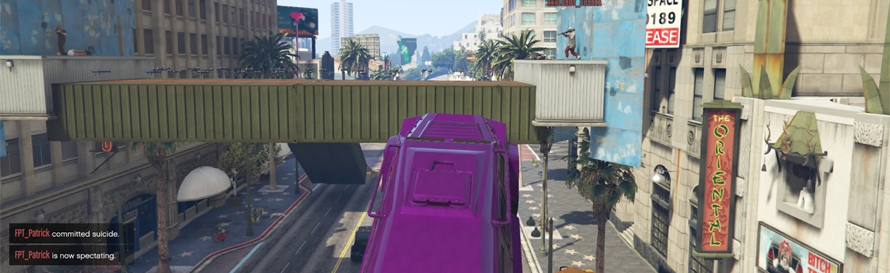
Have you ever wondered what it would be like to pit armoured vehicles against a barrage of Rpg fire from rage induced players? Will now you no longer have to imagine! Throughout the years there have been many adaptations of the core concept for this mode. Explained simply, a team of players are armed with Rpg’s on a platform while the other team has access to Insurgents, where they have to use ramps to try and knock them clean off that platform.
My favourite version has a ramp which runs up along the side of a building towering over the player’s platform; this small—yet powerful—addition adds to the overall experience as players on the Rpg team now have to worry about multiple angles to be attacked from. Good team coordination is essential in order to consistently have the edge over the Insurgent team. The mode itself is one that intertwines tense, adrenaline pumping moments as insurgents skim past your character or you will be driving with methodical thought and accuracy in order to hit the opposing team. All in all, it’s abundantly fun and enjoyable to play.
RPG Bowling — “Niko! It’s Roman, Let’s Go Bowling.”
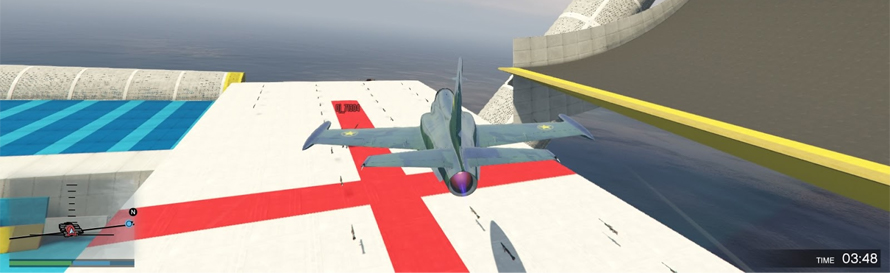
In GTA V we don’t have the extremepleasure of Roman from GTA IV calling us every five minutes asking to go bowling. So, it appears that the GTA V community simply had to find a way to get around this. Bowling has now been incorporated into GTA Online in a very unorthodox, but brilliant, manner. Similar to the last mode we discussed, one team will be on a platform armed with rocket launchers to add more spice into the flavouring of normal bowling and to top that all off: sprinkle in another team with cars, jets, enormous bowling balls, and you’ve got a recipe for utter chaotic fun.
The sheer terror of seeing six bowling balls hurling down a massive ramp towards you with a phalanx of super cars following close behind them to knock you off is a sight to be remembered as you try to fire a perfect shot on them. This mode has just the right amount of strategy and chaos to make everything work out in the end. So, Niko can indeed go bowling today after years of refusing…with the extra incentive of potential death from a bowling ball, that would be rather ironic, wouldn’t it?
Hole — A Destruction Derby In The Sky? Yes, Please!
Although the name may not be very glamorous, the mode certainly is, an atmosphere of overwhelming intensity and enjoyment can be found within. A handful of teams have to try and push each other into the titular “Hole” in the center of the arena until their own team is the only one left. Each team is given a handful of vehicles to select from, these range from smaller buggies, to jeeps, and heavy trucks. Respectively, each one has its own advantages and disadvantages. The nifty buggies will be able to turn quickly and with delicate ease, but, at the same time, when hit by a heavy truck at full speed it’s going to be doing cartwheels as if it was training for the olympics. The heavy truck however will suffer from a much larger turning circle.
Players will have to choose wisely in order to succeed, their driving skills will be put to the test, and above all else, fun is always guaranteed in this mode.
Runners Vs Zentornos — The Famous Mode Of GTA Online
Creating an article about this subject and not including this mode would be like making a sandwich without butter. The mode revolves around a parkour style race where one team will be on a tight beam with obstacles to navigate across in order to reach the other side. The other team, however, has to use Zentornos, or any other car the creator has selected for the mode, and knock them off the platform before they reach the other side and arm themselves with a barrage of weapons and vehicles to eliminate the Zentornos in one swift strike.
A mixture of delicious mayhem and cunning tactics is once again present and this mode is a cult-classic within the GTA Online community; revamped time and time again to be enjoyed by a new set of players.
Conclusion
No matter what mode you choose to play in GTA Online, one thing is certain, you will always seem to find enjoyment from the strangest modes, and that’s the key of GTA Online’s custom modes, the strange and wacky are oftentimes the experiences that deliver the most enjoyment.
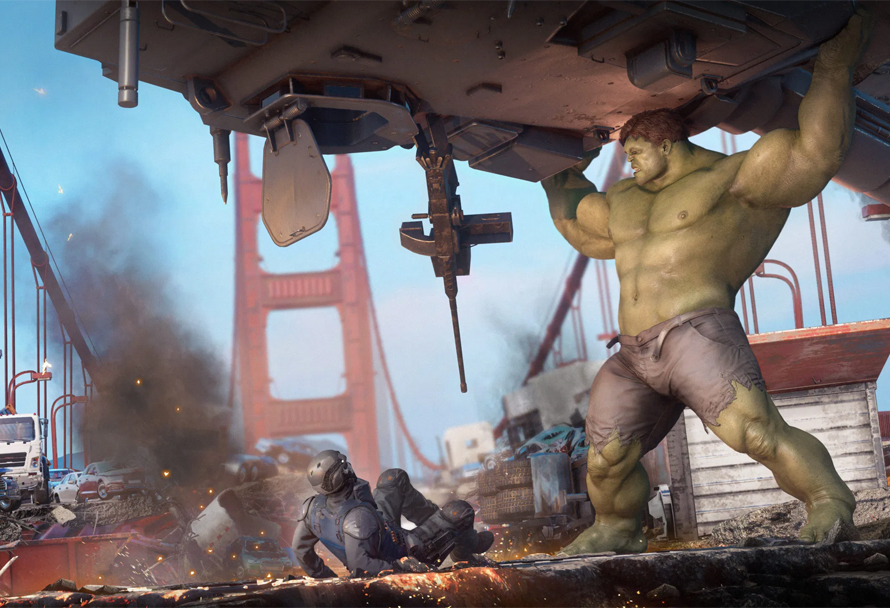
Marvel’s Avengers by Crystal Dynamics received a mixed response following its launch. While some players were captivated by the campaign and character-driven storytelling, others found the Destiny-style multiplayer grind less appealing. Still, a dedicated fanbase continues to enjoy the mission-based co-op structure and invest time in powering up their favourite heroes.
If you’re diving in – or returning after some time – you might find the levelling system overwhelming at first. This guide breaks it all down and offers effective strategies to level up your heroes efficiently.
Understanding Character Progression
There are two main systems to understand when levelling in Marvel’s Avengers:
Hero Level
This reflects your chosen hero’s skill development. As you earn experience (XP), your Hero Level increases up to a cap of 50. Each level grants one skill point, which you can spend across three trees:
Primary
Specialty
Mastery
These skill trees unlock new abilities and improve existing ones, allowing you to fine-tune your hero’s playstyle.
Power Level
Your Power Level is based on the gear equipped to your hero. Gear drops frequently and can be swapped out for better stats. There are six gear rarities:
Common (grey)
Uncommon (green)
Rare (blue)
Epic (purple)
Legendary (yellow)
Exotic (orange)
Each piece of gear increases your overall Power Level. As you progress, gear caps can be increased through upgrades using in-game materials. Initially, the soft cap is 130, which can be raised to 140 through upgrades, and even further using powerful artifacts.
Note: As of recent updates, the absolute Power Level cap has been raised beyond 150, allowing players to push into higher-level endgame content.
Efficient Ways to Level Up
1. HARM Rooms
The Holographic Augmented Reality Machine (HARM Room) is a training simulator located in the Chimera’s lower deck. While primarily designed for practising combat, it also provides steady XP. However, it can feel repetitive, so it’s best used for early levelling or challenge completion.
2. Hero Missions
Each time a new Avenger joins your team in the campaign, a Hero Mission Chain becomes available via the War Table. Completing these missions rewards XP, gear, and story content tailored to that hero. They’re an excellent way to build up new characters.
3. Focus on One Hero
To maximize efficiency, consider focusing on a single hero early on. While the campaign forces you to play as multiple Avengers, many missions offer flexibility in hero choice. Sticking to one allows you to reach high levels faster and gear up for tougher multiplayer content.
4. Explore the Environment
Levels are often larger than they seem, with hidden paths, chests, and side objectives. Use the in-game radar to track question marks and always investigate side paths for extra rewards, gear, and collectable resources.
5. Gear Perks and Catalyst Boosts
Most gear (excluding Common) includes perks that enhance various attributes like damage, defence, or status effects. For levelling, Catalyst perks are especially valuable. Look for perks such as the Prismatic Catalyst, which boosts XP gain and helps rank up Factions more quickly.
6. Villain Sectors
These missions pit you against campaign bosses like Taskmaster or Abomination and are excellent for farming XP and gear—especially near the level cap. They refresh daily and are available under Faction missions. They’re essential for late-game progress and resource farming.
Whether you’re a solo player enjoying the narrative or diving deep into the co-op multiplayer scene, Marvel’s Avengers offers a layered progression system that rewards dedication. Mastering the levelling mechanics and smartly managing your time will ensure you get the most out of your squad of superheroes.
Got your own tips or stories to share? Join the community and let your voice be heard – Avengers, assemble!
If you want to roleplay as a bearded wizard-king without carefully plotting congenital traits, you’re going to want to learn how to use the character creation systems in Crusader Kings 3. The third game in Paradox’s Grand Strategy trilogy does not yet feature a ruler designer, so your options are somewhat limited, but mods can help fill in the blanks as we wait for the inevitable update which adds such functionality. In the meantime, here’s all the ways you can change how your ruler looks in Crusader Kings 3.
The Barbershop system
To make some quick and dirty changes to your ruler’s appearance, you want to use the Barbershop system. To alter your character’s hair style and clothing, simply right click on their portrait when you have your ruler’s character sheet open. This will give you the usual options to marry and cause other kinds of mayhem, but what you’re really looking for is a small icon in the upper right corner which looks like a pair of shears.
This will take you to the barbershop menu. You can use the barbershop on your ruler and their spouse(s), as well as all of your children should you wish to condemn them to a life of ridicule at an early age. The options for changing hair style and clothing are fairly robust, but you can’t really make a character your own without digging into the labyrinth of chaos that is the Steam Workshop.
Crusader Kings 3 Character Customization Mods
You might surmise that modding Crusader Kings 3 could be a tricky endeavour, given the game’s apparent complexity. However, this couldn’t be any further from the truth. Like many games on the Steam Workshop, all you have to do is subscribe to the relevant modifications and they’ll quickly load into the game upon launch. There’s even a super handy ‘Mods’ menu in the game’s launcher, where you can enable or disable particular mods, access mod tools and tinker with your set up to curate the in-game experience that you want.
With that in mind, you definitely want to check out SarcFa’s Custom Ruler Designer, a fully-featured event chain that lets you build a character from scratch, modifying how they look and how they play, with tons of congenital and aesthetic traits to choose from to build the character that you want to roleplay as. The mod isn’t finished just yet, but it contains everything you’re likely looking for if you wish to customise characters in Crusader Kings 3.
There’s also the Fullscreen Barbershop by Agamidae, which does what it says on the tin. This mod lets you model and take screenshots of your custom characters in specific, culture-relevant scenes, and also includes the Barbershop for Everyone mod, which lets you customize anyone on the map, rather than those just in your dynasty. If you want to make a mockery of your ruler rival, this is the mod you’re looking for.
The Mafia Definitive Edition is just around the corner. With it being remade from the ground up, this Prohibition-era action-adventure game set in the fictional city of Lost Heaven is looking better than ever. Amidst all the visual upgrades the city of Lost Heaven itself has also undergone a few tweaks. Let’s take a look at some of the main changes to the Mafia Definitive edition map.
New Names
One of the more immediately obvious changes to the map is some of the changes of names of locations. These are some of the main suburb name changes that can be seen on the East side of the map.
Oak Hill renamed to Beech Hill
Hoboken is now known as Holbrook
New Ark has been renamed to North Park.
Central Island and the West of Lost Heaven have retained their suburb names.
New Places
The Mafia remake map has also seen some new places pop up. Whilst the whole map will look vastly different with a more densely packed city, taller buildings etc… There are some areas that have been expanded upon or are entirely new.
West of Little Italy and the Works Quarter has seen a big change to the Racing Circuit. It now extends much further and has a few ponds scattered around it.
The entire North of the map has seen a lot of changes with the addition of various ponds, new roads, and the brand new Lake Fyer sitting to the northwest of the dam. New building landmarks can be seen scattered around the countryside as well.
Heavens Peak is another new addition to the North which suggests a hill or mountain of some kind that overlooks the main city.
The Airport is another area that has undergone renovation. It now appears to be a lot larger with more buildings making up the main part of the airport.
Other Changes
There are a number of other changes that will be noticeable when actually playing the game. One of the major ones is that the whole map is now explorable from the start, removing the need for story progress.
There will now be more high-rise buildings within the city creating a more interesting skyline.
The density of the whole city has been altered with the addition of new buildings creating multiple new alleyways and shortcuts for players to take. This will make navigating the map a more enjoyable and varied experience. It will also make it a bit easier to run from the police.
Chinatown has seen some tweaks to its aesthetic and will now be more instantly recognisable.
You will see noticeable differences in both traffic and pedestrian activity between night and day cycles.
Tramlines have also been expanded and will now allow you to travel to more areas of the city.
There has been a lot of love and attention going into the Mafia Definitive Edition map and it looks like it will be better than ever for players to explore and carry out their nefarious deeds.
In Payday 2, the thrill lies in pulling off the perfect heist, whether you prefer the silent, strategic approach of stealth or the adrenaline-pumping chaos of a loud assault. Optimizing your perk decks, skills, and equipment is crucial for success in either playstyle. This guide provides effective starting points for building your ideal stealth or loud heister.
Stealth: The Silent Operator Build
A stealthy approach demands precision, patience, and a build tailored for minimizing detection. Here are some suggestions for the best stealth build in Payday 2.
Perk Deck:
Burglar: This is the gold standard for stealth. It significantly speeds up crucial actions like bag moving, lock picking, and pager answering, making it indispensable for efficient heists. (Requires the Clover Character Pack)
Note: The Yakuza perk deck, while offering movement speed, is not recommended for stealth as the health penalties make it extremely risky.
Essential Skills:
Forced Friendship (Basic): From the Mastermind tree, this provides extra cable ties, vital for controlling civilians.
Transporter (Basic): From the Enforcer tree, this allows you to throw bags further, reducing the time spent exposed.
Parkour (Basic): Increases movement and ladder climbing speed, allowing for faster navigation.
Note: Skills such as Stockholm Syndrome, and High Value Target are other potential options in a Stealth build but are not necessarily optimal for most stealth scenarios.
Weapons:
High-concealment weapons are paramount. The Judge shotgun with a Silent Killer Suppressor and the Cavity 9mm pistol with a low-profile suppressor are excellent choices for their stopping power and discreetness.
Throwables:
Quiet throwables like shurikens, throwing knives, or playing cards allow for silent takedowns and distractions.
Loud: The Armored Assault
When subtlety goes out the window, a loud build ensures you can survive and thrive in the ensuing firefight.
Perk Deck:
Anarchist: This deck converts damage into armour regeneration, providing excellent survivability in prolonged engagements.
Sociopath: This deck focuses on aggressive play, rewarding kills with armour and health regeneration, ideal for close-quarters combat.
Essential Skills:
Iron Man (Basic): Significantly boosts your armour, essential for absorbing heavy damage.
Underdog (Basic): Provides a damage bonus when surrounded by enemies, a common occurrence in loud heists.
Scavenger (Basic): Increases ammo pickup range, crucial for maintaining sustained fire.
Body Expertise (Basic): Converts a portion of headshot damage to body shots, improving damage output.
Surefire (Basic): Increases magazine size for LMGs, SMGs and Assault rifles.
Steady Grip (Basic): Improves weapon accuracy, vital for controlling recoil during extended firefights.
Parkour (Basic): Increased movement speed is important even in loud heists.
Optical Illusions (Basic): Decreases the chance enemies target you.
Berserker (Basic): Increases damage as your health decreases, rewarding risky plays.
Weapons:
Loud builds prioritize high damage and ammo capacity. The RPK LMG and the SpecOps SMG are solid choices, but weapon selection is flexible. Choose what suits your playstyle and ensures you have ample ammunition.
Throwables:
Frag grenades and HE grenades are ideal for clearing groups of enemies and creating chaos.
Payday 2 offers vast customization, allowing you to adapt these builds to your preferences. Experiment with different combinations to find what works best for you. These builds provide a good foundation for both stealth and loud playstyles. Remember, the most important aspect is having fun and mastering the art of the heist.
Despite its twee aesthetic and premise, there’s actually a fair amount of depth in Fall Guys which reveals itself through its numerous modes and levels. So naturally, we’ve put on our wolf suits and leapt into all of the game modes and levels which Fall Guys offers.
Game Modes
In Fall Guys, there are chiefly four game modes which encompasses the 25 different levels and minigames across the entire game. The Fall Guys game modes are:
Race Modes – These include minigames where the objective is to reach the finish line as quickly as possible in order to prevent yourself from being eliminated. Examples of race mode minigames include Slime Climb and Hit Parade.
Survival Modes – Survival mode minigames require the player to be among the last ones standing in order to proceed to the next stage in the Fall Guys Ultimate Knockout tournament. Block Party and Tail Tag are good examples of survival modes.
Team Modes – Team modes puts players into equally numbered groups and requires them to work together to complete an objective. Fall Ball and Jinx are both good examples of team modes.
Final Stage Modes – Only when the field of players has been narrowed sufficiently do the final stage modes kick off. The popular Hex-A-Gone is a perfect example of a final stage mode.
All Levels To Date
As we’ve seen, there are four broad categories into which the numerous Fall Guys levels and minigames fall into. So naturally, these are all the levels that are currently available in Fall Guys in addition to the game mode categories that they each fall into.
Race Mode Levels
Dizzy Heights: Navigate a spinning platform to reach the finish line.
Door Dash: Try and avoid the fake doors as you make a mad dash for the finish line.
Fruit Chute: Evade massive fruit being blasted down the race course as you attempt to reach the finish line.
Gate Crash: Attempt to predict the pattern of a moving door as you strive for the finish line.
Hit Parade: Do your best to evade obstacles of all shapes and sizes on your way to the finish line.
See Saw: Traverse a series of see-saws that must be balanced in order for you to get to the finish line.
Slime Climb: Overcome an increasingly challenging obstacle course as the rising slime nips at your heels on the way to the finish line.
The Whirlygig: Squeeze through an obstacle packed course of hammers, spinning platforms and more as you attempt to reach the end.
Tip Toe: One of the trickiest of all the Fall Guys levels, in Tip Toe players must navigate their way to the finish line – but only by carving a path on tiles that won’t fall through.
Survival Mode Levels
Block Party: Survive to the end by staying on the platform and avoiding the increasingly fast walls that come speeding toward you.
Jump Club: Keep hopping over a fast spinning beam in order to be the last one standing.
Jump Showdown: In Jump Showdown, players must be on their toes as they leap around a set of increasingly fast tubes which revolve around a central platform. However in order to survive, players must also evade the platform wedges which fall away over a fixed period of time.
Perfect Match: A good old fashioned memory test, players must flock to the tiles that match the picture on a big screen. Failing to do so causes the incorrect platform tiles to fall away.
Roll Out: Survival can only be assured if players are able to dodge a variety of swiftly moving rotating rings.
Tail Tag: A cheeky game mode to say the least, in Tail Tag players must grab the tail(s) of opposing players and ensure that they have a tail of their own by the time the time limit expires.
Team Mode Levels
Egg Scramble: The level begins with a massive pile of eggs in the centre of the arena. Players can win by keeping as many eggs in their section of the arena as possible by the time that clock runs out.
Fall Ball: Essentially Fall Guys soccer, the goal here is to simply roll more balls into the net of the opposing team than they do to yours before the timer runs out.
Hoarders: The goal here is simple – just ensure that the ball is in your portion of the arena at the point that the clock runs out.
Hoopsey Daisy: Leap through as many hoops as you can for your team in order to ensure the most points possible by the end of the timer.
Jinxed: Another old-fashioned classic brought bang up to date, in Jinxed the goal is to ‘jinx’ all the members of the opposite team.
Rock ‘N’ Roll: A true test of teamworking, players must band together to push a massive ball through an obstacle to the finish line before the opposing teams.
Team Tail Tag: A team version of Tail Tag, Team Tail Tag has players stealing as many tails as possible to ensure that their team has the most by the time the clock ticks down.
Final Stage Levels
Fall Mountain: A real test of those platforming and evasion skills, players must overcome a variety of massive obstacles, traps and other hazards as they attempt to reach the peak of Fall Mountain and snag the golden crown. Fall Mountain remains an enduring favourite among Falls Guys fans, that’s for sure.
Hex-A-Gone: Starting atop a tower of layered colored platforms, players must ensure that they’re the last ones standing as the small hexagon tiles that form each platform begin to fall through as folks begin to walk across them.
Royal Fumble: Another take on the Tail Tag game type seen elsewhere, Royal Fumble has the remaining players in the tournament rushing to nab the only tail in the match, as a variety of hammers, slopes and spinning platforms all conspire to make things very challenging indeed.
Romance makes the world go round and even supervillains deserve a bit of love. If the idea of romancing someone a little more naughty than the normal dating sim allows, then let us introduce you to Lovingly Evil. It’s a dating sim with a difference, and that difference is you get to create, and fall in love with, some wonderfully evil supervillains. Here’s everything you need to know about Lovingly Evil.
Release Information and Trailers
Lovingly Evil released onto PC on the 19th of August, 2020. If you want to get a little peek into how it works, here’s the announcement trailer, introducing you to the world of The Villain Conference:
That’s not all you’ll get for your visual delectation, developers Lizard Hazard Games have also released a launch trailer, showing off even more of Lovingly Evil:
Gameplay and Accessibility Features
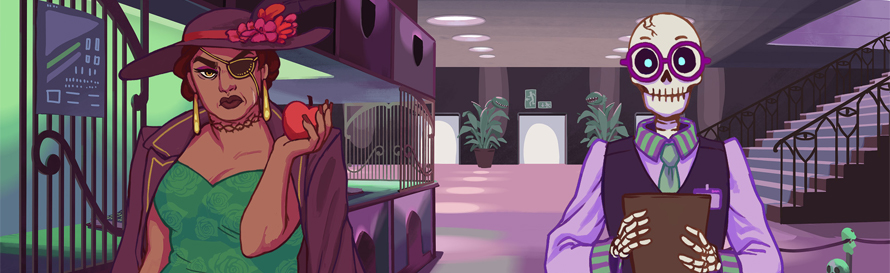
There’s tonnes to see and do in Lovingly Evil, with multiple branching storylines with different diabolical love interests to pursue, no two games are the same. The setting is this; you’re a villain and you’ve just arrived at The Villain Conference. You get your badge, guide, and phone, and off you go to mingle and meet the finest evil doers in all the land, for chat, networking…and maybe more.
Gameplay in Lovingly Evil sees you visiting various areas of the convention centre, chatting and networking with the villains populating it, and playing several minigames that help you navigate the sea of evil love. For example, get into an argument and you can play a card game themed around making compelling statements. Winning or losing these minigames all provide different outcomes, so don’t be afraid to dive right in and experiment.
The minigames are also optional, the in-game settings menu lets you customise the game as you see fit. If you find you’re unable to compete correctly at flower arrangement or quizzes aren’t your thing, you can simply turn them off. Developers Lizard Hazard Games have made accessibility the name of the game, with a wide variety of options available to make sure you feel at home in your evil avatar.
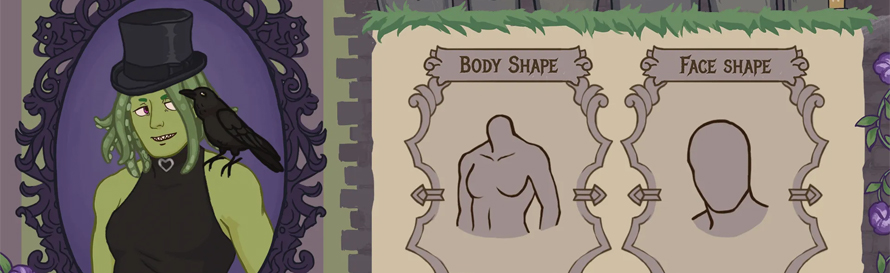
That extends to your character. When you start a game of Lovingly Evil, you’ll be asked to choose your appearance for your villain. Any body type can be combined with any facial hair, eye arrangement, and skin tone. Even more you can even choose your villain’s pronouns and their modus operandi for their evil acts. Choice is at the heart of Lovingly Evil, and that extends across the settings, the character creation, and how you play (and replay) the game.
Lovingly Evil is out now and it’s a perfect romantic destination for anyone desiring something a little more nefarious. Have you played Lovingly Evil? Head over to our community forum and tell us who your favourite villain to romance is, is it the Wicked Stepmother or were you entranced by Lucifer himself?
You’ve adventured, you’ve explored, you’ve fought corporations across multiple planets. But what next? Thankfully developers Obsidian have some new DLC in store for you for The Outer Worlds, and its release is just around the corner. So strap in, grab a weapon, and get ready to blast off for more Outer Worlds action. Here’s what you’ll need to know.
Release Date and Platforms
The first DLC for The Outer Worlds is titled Peril on Gorgon and will be dropping from orbit on September the 9th. You can expect to find this brand new adventure on PC, PS4, and Xbox One, with a Switch launch coming at an undisclosed point in the future.
This is the first of two planned story expansions, the second of which has no released title or date at this time.
Peril on Gorgon Trailers
Want to see where you’ll be heading? Obsidian have a huge slice of action and story lined up for you in Peril on Gorgon, and they have released two trailers ready to show off their new DLC.
First is the official trailer, giving you a taste of what you’ll be facing off against and where you’ll be exploring in Peril on Gorgon:
https://www.youtube.com/watch?v=lPVEUFOonuo
In addition to that, Obsidian have released a 12 minute look at Peril on Gorgon gameplay, complete with developer commentary, to really whet your appetite:
What’s New in Peril on Gorgon?
Obsidian are calling this first DLC for The Outer Worlds a narrative expansion, and given everything we’ve seen that certainly seems to be the case. In fact, Peril on Gorgon seems to be bigger than anyone expected, with a hefty new adventure packed full of things to see and do.
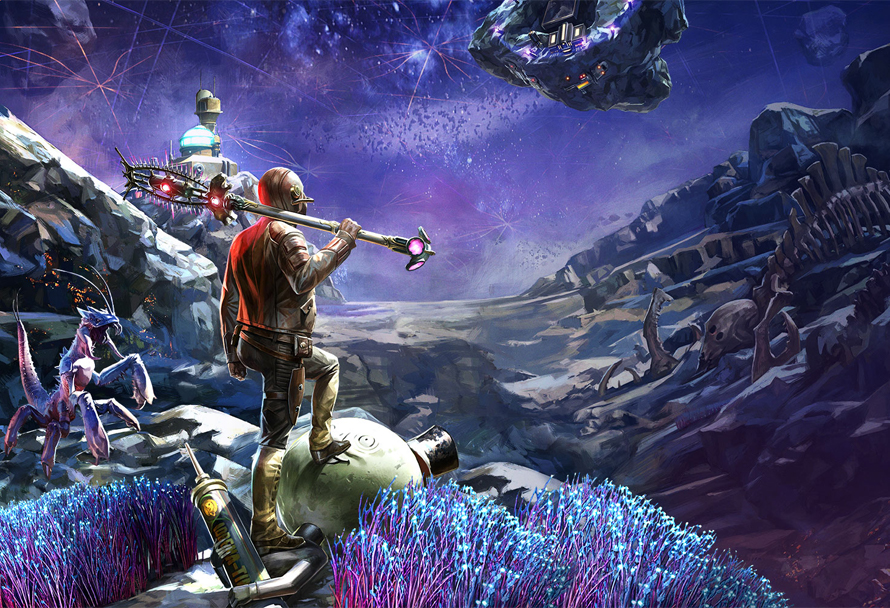
But first, here’s the intro to the story. Upon finding a severed arm and a strange message, the trusty crew of the Unreliable head to the Gorgon Asteroid. This asteroid was the site of a scientific undertaking that was incredibly ambitious, and unfortunately for the Halcyon system, eventually disastrous. It’s since been taken over by monsters, marauders, and worse, and you’ll have to fight to survive as you explore its mysteries.
Wealthy recluse Minnie Ambrose is who you’ll be answering to as you search for her mother, Dr. Olivia Ambrose. Dr. Ambrose has gone missing and as the head of the scientific project on the Gorgon Asteroid, there’s plenty of answers to uncover and mysteries to solve. Shortly after landing you’ll quickly become embroiled in an intrigue which will change the fate of the entire colony – forever.
With new areas, new weapons, new quests, new characters, and whole new storylines to explore, Peril on Gorgon is a colossal DLC for The Outer Worlds that’ll be sure to give the game a whole new lease of life for any experienced crew.
Are you looking forward to this new slice of action in The Outer Worlds? Head on over to our community forum and let us know what you’re most excited to see in Peril on Gorgon.
Outlast 2 is a brutal descent into madness, blending psychological horror with religious fanaticism, mind control, and trauma. As journalist Blake Langermann, players navigate a harrowing journey through the Arizona desert in search of his wife, Lynn. What unfolds is a disturbing tale full of hallucinations, hidden truths, and narrative ambiguity — and its ending leaves many with more questions than answers.
While there’s no single “true” interpretation of Outlast 2’s finale, we can break down the most prominent theories and discuss the clues hidden in the game’s twisted world.
Content Warning: This article discusses sensitive topics such as suicide, death, murder, and childbirth.
Jessica’s Death: A Hidden Truth?
Throughout the game, Blake experiences visions of his childhood friend Jessica Gray, whose apparent suicide is hinted to be the catalyst for his ongoing trauma. However, Outlast 2 subtly suggests a darker truth — that Jessica was assaulted and killed by Catholic school figure Father Loutermilch, who then staged her death to appear as a suicide. These flashbacks are interwoven with Blake’s present-day experiences, implying a deep psychological scar that colours everything he sees.
Some late-game hallucinations show Jessica with a wounded neck — consistent with the suicide story — while others depict her unharmed, reinforcing the idea that Blake is grappling with fragmented and manipulated memories. This ambiguity is a recurring theme in Outlast 2, emphasizing the unreliability of Blake’s perception.
Lynn’s Baby: Real or Imagined?
Perhaps the most debated moment in Outlast 2 is the birth of Lynn’s baby at the end of the game. Lynn, who never appeared visibly pregnant during the campaign, suddenly goes into labor after Blake finds her. She dies shortly after giving birth — but not before whispering the chilling line: “There’s nothing there.”
This moment calls the baby’s existence into question. Could the pregnancy have been a hallucination induced by the mind-warping signals broadcast by the Murkoff Corporation? It’s worth noting that no other character directly acknowledges the baby, and the player never sees it clearly. This supports the theory that both the pregnancy and the child were symptoms of the psychological manipulation central to the game’s story.
Blake’s Fractured Mind
By the game’s end, Blake is a broken man. His mental state, already strained by guilt over Jessica’s death, deteriorates rapidly under the influence of trauma, religious extremism, and Murkoff’s “microwave signal” — an experimental mind control technology first introduced in the original Outlast.
The signal causes hallucinations, violent behaviour, and full-on psychotic breaks in those exposed to it — especially in the town of Temple Gate, where most of Outlast 2 takes place. Blake’s increasingly unhinged perspective, his blending of past and present, and the surreal visuals all point to a man who can no longer distinguish reality from delusion.
Are There Multiple Endings?
Technically, Outlast 2 has a single-core ending, but there are subtle variations during the final vision of Jessica. In one version, she appears with a wounded neck. In another, she seems unharmed. This detail doesn’t drastically alter the narrative but reinforces the game’s focus on perception, trauma, and unreliable memories.
Unlike many other games, there are no dialogue choices or branching paths to trigger different endings – everything funnels into the same conclusion, albeit one left open to interpretation.
So What Really Happened?
The truth is, that Outlast 2 intentionally avoids giving players a clear answer. It’s a story about how trauma, guilt, and external manipulation (via Murkoff’s experiments) can completely unravel a person’s mind. Whether Lynn’s baby existed or not, whether Jessica’s murder was real or a guilt-fueled fantasy — it’s all filtered through Blake’s unstable psyche.
The most grounded theory is that Murkoff’s signal fractured the town’s population and pushed Blake over the edge, blurring the line between memory, fear, and induced hallucination. The result is a story that demands player interpretation — and rewards careful attention.
Have you ever wanted to peel across the sky above a simulated map of your hometown, frantically trying to control a superbly simulated airplane in the process? Well, Microsoft Flight Simulator 2020 may well be the game for you. The latest in the historic series of flight simulators is set to launch later this month, but given all the editions, airplanes and features, we thought it’d be best to pin down everything you need to know about the game before you pull the (joystick) trigger.
Microsoft Flight Simulator 2020 Platforms And Release Date
The Microsoft Flight Simulator series is known for being a PC exclusive given its strong ties to Microsoft since its inception in 1982, but Microsoft Flight Simulator 2020 happens to be the first game in the series to launch on any other platform.
The game is the first mainline entry in the series since 2006, developed by Asobo Studio of A Plague Tale: Innocence fame. It has been available for a few days now on PC via the Microsoft Store, Steam and Xbox Game Pass for PC.
It will also launch on Xbox consoles (Xbox Series X seems like a no-brainer) later down the line, but no firm release date has been announced for the console debut.
Microsoft Flight Simulator 2020 Editions And File Size
As well as a retail launch across 10 dual-layer DVDs, the game features a set of editions that will afford the player with a certain amount of airplanes and enhanced airports, depending on what they choose.
You can check out the full list of items on the official Xbox page here, but the general gist is that the Standard Edition includes 20 planes and 30 airports. The Deluxe Edition includes 25 planes and 35 airports, and the Premium Deluxe edition includes 30 Planes and 40 airports. Heathrow Airport is one of the enhanced airports of note from the Premium Deluxe Edition.
The pricing is as follows:
Microsoft Flight Simulator Standard Edition: £59.99
Microsoft Flight Simulator Deluxe Edition: £79.99
Microsoft Flight Simulator Premium Deluxe Edition: £109.99
The game also requires a minimum of 150 GB file space to be installed on a hard-drive or SSD.
Microsoft Flight Simulator 2020 Features
Microsoft Flight Simulator 2020 supports a wide range of HOTAS inputs and other flight peripherals, and simulates the entire topography of the earth using Microsoft’s Bing Maps data. The game was initially revealed at E3 2019, and it was later revealed back in July that it would be receiving VR and TrackIR support later this year, launching in tandem with the HP Reverb G2 head-mounted display.
Asobo Studio also plans to support the game with a variety of updates after launch, bringing new aircraft and features to Microsoft Flight Simulator 2020 in the future in the form of free and paid DLC across all platforms. Given that it took 14 years for this next mainline entry to arrive, post-launch support is going to be of the utmost importance for Microsoft Flight Simulator 2020.