Animal Crossing New Horizons offers players the opportunity to purchase a unique item known as Bell Vouchers. These nifty little tickets will definitely come in handy as you progress through the game and want to purchase more items from the shop. So, what are Animal Crossing New Horizons Bell Vouchers and how do you get them?
What are Bell Vouchers in Animal Crossing New Horizons?
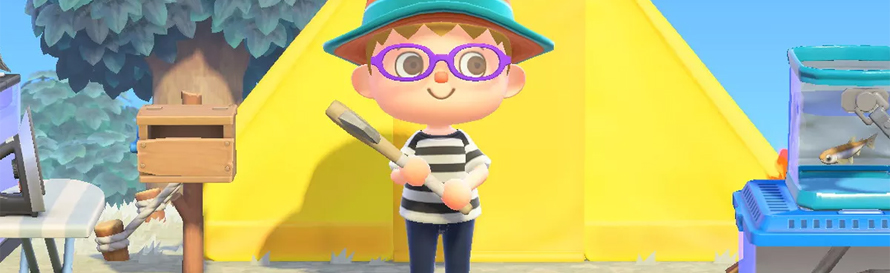
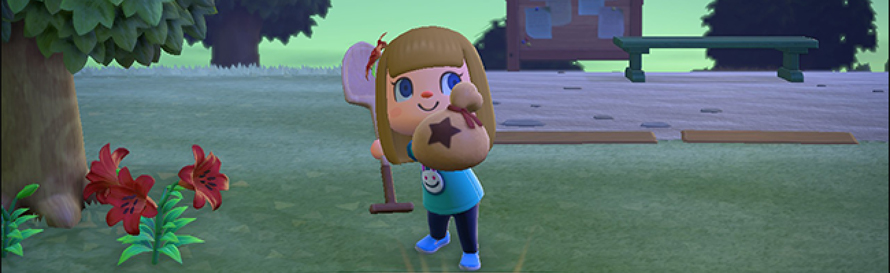
Simply put, in Animal Crossing New Horizons Bell Vouchers are a special ticket that can be purchased from the Nook Stop to receive Bells in exchange for Miles. The golden ticket will cost 500 Miles and can be redeemed for 3,000 Bells. So if there is an item you’ve been wanting to purchase, but don’t have enough Bells, a voucher might be a good option for you.
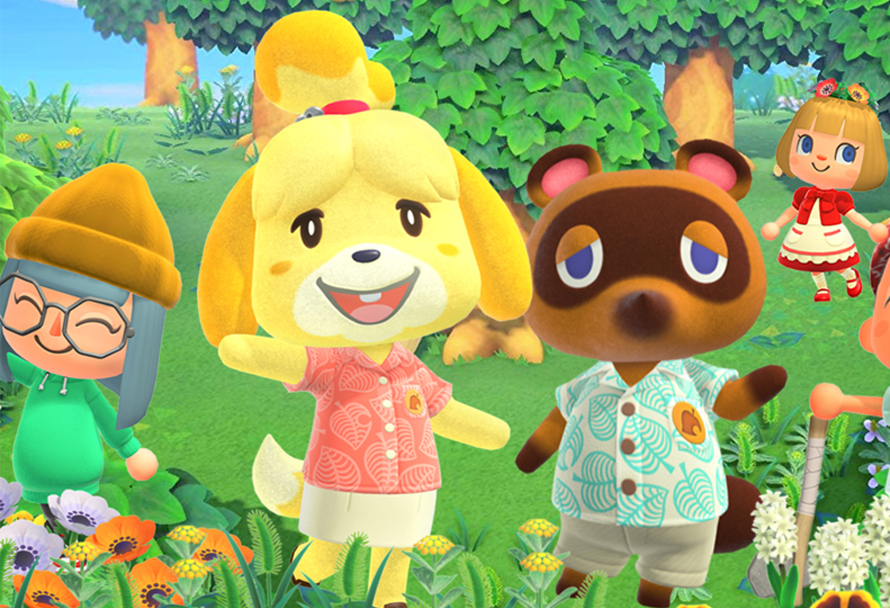
To get a Bell Voucher in New Horizons, you’ll need to have upgraded Resident Services from a tent to an actual building. Once you’ve done that, you’ll find Bell Vouchers for sale in the Nook Stop terminal. With the golden ticket in hand, you can redeem your voucher by visiting Timmy and Tommy at Nook’s Cranny.
If you aren’t able to upgrade Resident Services yet, you’ll need to convince Tom Nook to build Nook’s Cranny and have three new villagers move onto the island before you can begin building. Once the villagers move in, you should be able to build a new Resident Services.
To recap, here’s how to get Bell Vouchers in Animal Crossing New Horizons:
Upgrade Resident Services from a tent to a building
Visit the Nook Stop
Purchase a Bell Voucher for 500 Miles
Visit Timmy and Tommy to redeem your voucher for 3,000 Bells
It’s also worth noting that while you can turn Miles into Bells, it doesn’t appear that you’ll be able to turn Bells into Miles. I guess Tom Nook’s island monopoly functions on a delicate economical system.
If you’re new to the world of Animal Crossing, it can be quite intimidating. With so many areas to explore, things to craft, and items to collect, New Horizons can begin to feel like a burden if you’re not sure what’s going on. To help you feel more at home, here are a few Animal Crossing New Horizons beginner tips and tricks to help turn your island into your own paradise.
Pay Your Debts Quickly
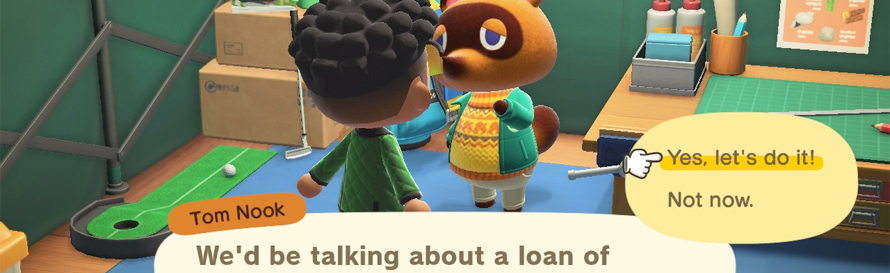
Say what you will about Tom Nook as a person…errr racoon, but he is quite the businessman. He’s convinced you and a bunch of strangers to move to a desolate island and is charging you to do so! Towards the beginning of the game, he will inform you that you owe him 5,000 Nook Miles and 50,000 Bells.
While this sounds like a lot, don’t worry, because it won’t be too hard to gather the Miles and Bells needed to pay off your debts. If you’re looking to pay off what you owe quickly, there is a fish in the game that can be sold for 15,000 Bells, which will go a long way to paying off your debt. If you’re interested, here’s a guide forhow to catch a Golden Trout.
Once you’ve settled your debts, you’ll be able to ditch the tent and build a home of your own. Additionally, you’ll also be given more storage, which you’ll quickly realise you desperately need.
Don’t Break the Rocks
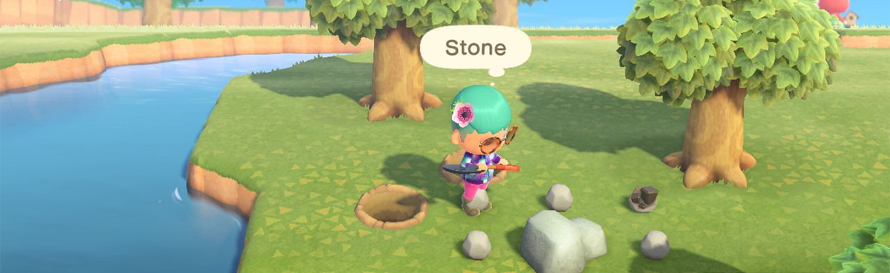
I know it’s tempting to eat a piece of fruit and crush a rock – but don’t – you’ll regret it. You see, if you break a rock, it’ll take a full day (a legit 24 hours) to come back and it will spawn somewhere random on your island.
Instead, you’ll want to use a shovel or an axe to hit the rock, without ingesting any fruit. Not only will this prevent the rock from breaking, but it’ll give you multiple items at one time, whereas if you break a rock, it’ll only drop one item. If you’ve already broken a rock or two, don’t worry, just be more mindful in the future.
You’ll Be Able to Get Better Tools
Let’s be honest, the toolset you start the game off with sucks, but as with most games, you’ll be able to upgrade your tools as you progress in the game so that they won’t be constantly breaking on you. Thankfully, you can purchase the “Pretty Good Tool Recipe” at the Nook Stop to get a completely new set of tool recipes.
The set can be purchased for 3,000 miles and will give you upgraded recipes for your axe, shovel, net, fishing rod, and watering can. Of course, these new recipes will require more materials to craft, but it’ll definitely be worth it.
Miles can be Turned into Bells
If you’re like me, you’re wondering why one island needs two different kinds of currency – seems unnecessary. Anyhow, if you’re trying to buy something and find yourself running low on Miles, you can purchase a Bell Voucher to turn some of your Miles into Bells.The voucher will cost 500 Miles and can be redeemed for 3,000 Bells.
Plant Money Trees Whenever Possible
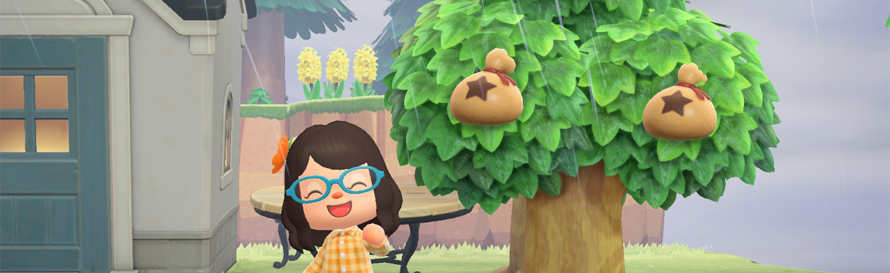
Despite the popular “money doesn’t grow on trees” adage, it turns out that in New Horizons it actually does. Once you’ve unlocked a shovel, you can grow a money tree by planting and digging up a glowing spot on the ground.
Once you’ve dug up the glowing spot, you can plant up to 10,000 Bells in the hole and the tree will produce three bags of however much you bury. So if you bury 10,000 Bells, your tree will produce 30,000 Bells in a few days. Not bad, huh?
We hope some of these Animal Crossing New Horizons beginner tips and tricks have been beneficial to you. Now that you know how to start, get out there and turn your island into your own personal paradise!
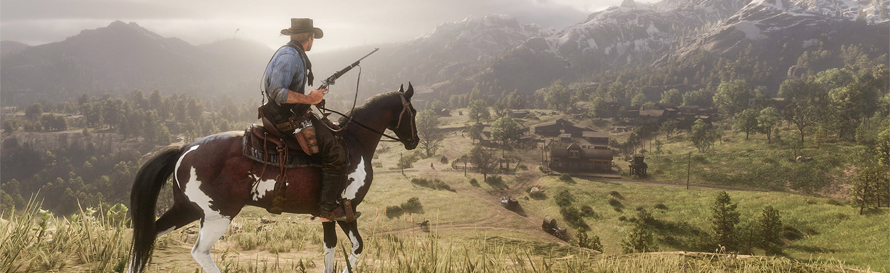
Being an Old West outlaw has very few perks – there’s a distinct lack of job security, no danger pay and the possibility of a cougar tearing you to pieces every time you wander in the Wild West. However, perks of the lawless job include treasure maps, a relic of a bygone era that can lead to precious loot in Red Dead Redemption 2’s campaign and Red Dead Online. In this article, we’re going to show you how to find treasure maps across both modes, how to redeem them and their rewards.
Treasure Maps in Red Dead Online
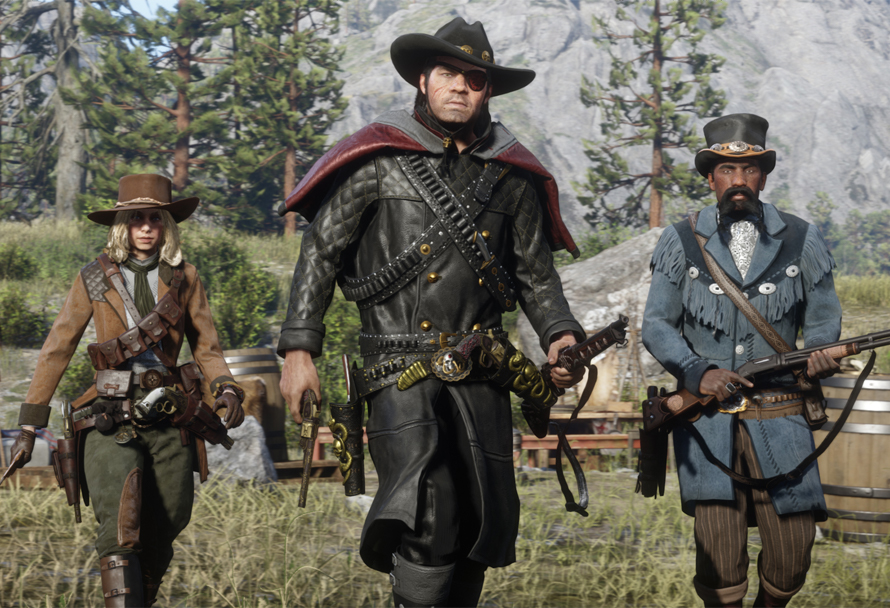
Whether you’re a new player or a seasoned veteran, you’ll most likely be familiar with treasure maps in Red Dead Online. You’ll get one for finishing the tutorial, and then subsequent treasure maps will unlock as you rank up. You can also get treasure maps for clearing out Gang Hideouts which crop up at random points on the map.
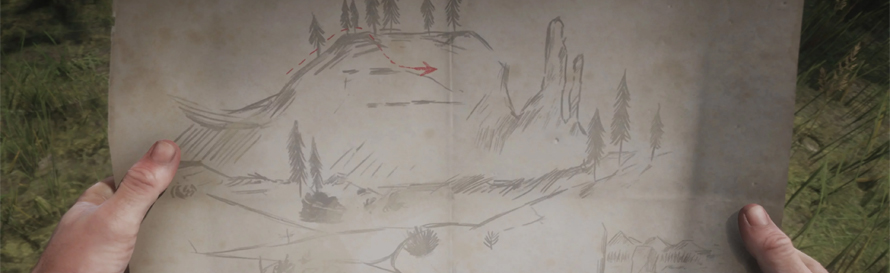
Open up your satchel when you receive one and you should see it at the top of your inventory. Open it up and the game will zoom out to a map mode, offering a vague cross-section of the map for you to study. This part is random – treasure chests and lockboxes can appear in different parts of this map marker, so make sure you explore them in their entirety. Crucially, you need to activate Eagle Eye, which is what you usually use to track down animal trails and hunt prey.
Once you’ve turned the world grayscale, you want to wander around until you feel a vibration in your controller and follow the strength of the vibration. Beyond that, you can also use Eagle Eye to spot chests if you’re within a certain vicinity (this can be upgraded through the Collector role.)
You’ll see small particles floating around the top of the chest, highlighting it in yellow. There you go!
Treasure Maps in Red Dead Redemption 2
In Red Dead Redemption 2’s campaign, things are a little different. You have to buy or stumble into treasure maps to kick off the contained missions they provide. Each treasure is more developed than the online counterpart and requires a good few more steps to be completed.
Le Tresor Des Morts
How to unlock: This map is available to those who purchased the Special and Ultimate Editions of Red Dead Redemption 2.
Jack Hall Gang
How to unlock: Stumble into Maximo Valdespino, treasure hunter after you complete Chapter 2. If you can’t find him, eventually you’ll be able to find the map at your local Fence.
Poisonous Trail
How to unlock: Head to Cairn Lodge in Ambarino, near Cairn Lake, and look under the bed for a lockbox.
High Stakes
How to unlock: You’ll find this map via a random encounter with a lost man near Riggs Station or Cumberland Falls – again if you can’t find him, buy the map from your local Fence.
Landmarks of Riches
How to unlock: This is a PC-exclusive treasure map that can be unlocked by heading to the Obelisk, a point of interest marked on the map near Strawberry.
The Elemental Trail
How to unlock: Head to the Sea of Coronado in New Austin and look for a corpse – shoot the rope to drop the body and loot it for the map.
Now that Mount & Blade II: Bannerlord has officially launched and received multiple updates post-release, it continues to grow into the expansive medieval sandbox experience fans have long hoped for. With deep campaign mechanics involving warfare, politics, trade, and family-building, plus an evolving multiplayer offering, Bannerlord is more than just a sequel – it’s a platform for all kinds of medieval mayhem.
Here’s where things stand with multiplayer, co-op campaign hopes, and what you can expect in the future.
Is There a Co-op Campaign in Mount & Blade II: Bannerlord?
As of now, Mount & Blade II: Bannerlord does not support a native cooperative campaign mode. Taleworlds Entertainment previously acknowledged that implementing full campaign co-op was too complex to include at launch or in the early post-release updates.
However, there are a few key points worth noting:
Taleworlds has not ruled it out entirely. Co-op support has been discussed as a potential future DLC or post-release feature, though nothing official has been confirmed as of early 2025.
There has also been mention of a potential battle-only co-op, where players could join fights together even if they cannot explore the campaign map cooperatively.
The Modding Community to the Rescue
The Mount &Blade modding scene is as active as ever, and several co-op campaign mods are already in development or available in early forms. While these are often community-led projects and may require workarounds or have limitations, they show promising signs of turning the dream of campaign co-op into reality.
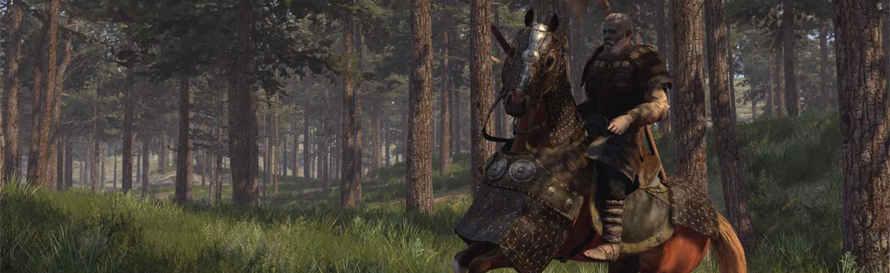
One standout is the “Bannerlord Online” mod, which transforms the single-player world into a persistent multiplayer sandbox where players can meet, fight, trade, and explore together. It’s still evolving, but it’s worth checking out if you’re itching for shared adventures in Calradia.
Mount & Blade II: Bannerlord Multiplayer Game Modes
Even without a co-op campaign, Bannerlord’s multiplayer modes offer engaging, competitive combat with tactical depth. As of now, here are the key multiplayer experiences available:
Captain Mode
Team-based battles (up to 5 players per side)
Each player commands their own squad of AI soldiers
Objectives revolve around capturing flags or eliminating the enemy team
Strategy is essential – coordinating troop movement and communicating with allies can turn the tide
Customizable unit types separate from the single-player campaign
Captain Mode provides a satisfying blend of RTS and action, and its large maps encourage tactical flanking, ambushes, and long-range engagements.
Skirmish Mode
6v6 PVP matches
Players spend points to deploy troops, with a tradeoff between unit strength and number of respawns
Emphasizes resource management, class selection, and adaptive tactics
Includes a perks system for deeper customization and loadout flexibility
Skirmish Mode is fast-paced and rewards smart, team-focused decision-making. Whether you go in as a heavy cavalry monster or a swarm of light infantry, there’s room to experiment and adapt.
The Future of Multiplayer in Mount & Blade II: Bannerlord
Taleworlds has expressed interest in expanding the multiplayer offering with at least four core modes total, though new official modes beyond Captain and Skirmish have yet to be formally added. The community continues to speculate about potential additions like:
Siege battles (already a popular modded experience)
Battle Royale-inspired survival modes
Custom lobbies with full battle editors or campaign-style features
With ongoing support and a healthy modding ecosystem, there’s a good chance we’ll see multiplayer evolve in new directions — especially with community feedback continuing to shape development.
While Mount & Blade II: Bannerlord still lacks native co-op campaign support, its multiplayer offerings provide solid competitive experiences, and the active modding scene is filling in the gaps for fans seeking shared adventures. Whether you’re leading troops into battle, crafting a dynasty in single-player, or jumping into the fray with friends online, Bannerlord offers unmatched freedom in medieval warfare.
For now, keep an eye on updates, dive into mods, and join the community — Calradia has never been more alive.
Fans of deep, turn-based airborne combat strategy will be cheered to hear that Green Man Gaming has expanded its published line-up with Aeronautica Imperialis: Flight Command, an entirely brand new entry into the Warhammer 40,000 universe which will release for PC this May.
Based upon the hugely popular Games Workshop property of the same name and emerging from veteran UK studio Binary Planets, Aeronautica Imperialis: Flight Command puts players in the shiny (or not so shiny) shoes of a high-ranking Flight Commander in the Imperial Navy or a Skwadron Kommanda of the Ork Air Waaagh!
Flight Command Takes Warhammer 40,000 To The Skies
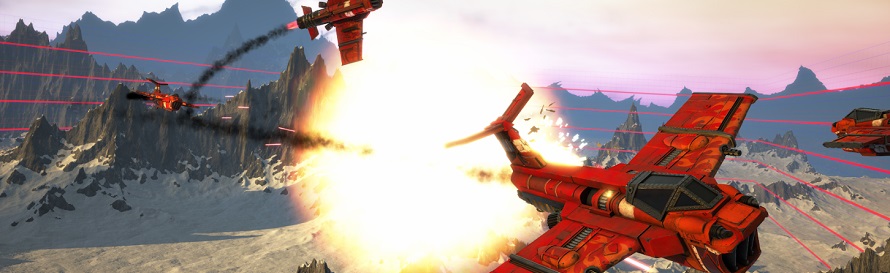
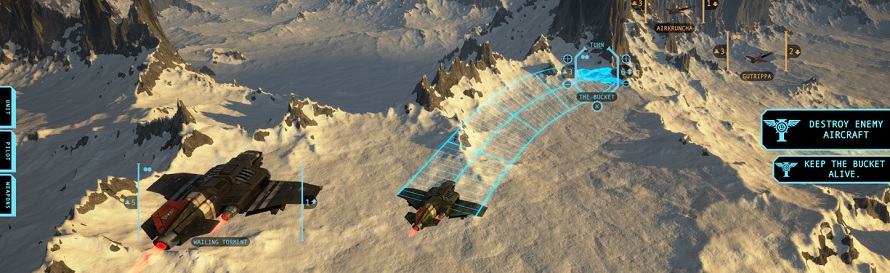
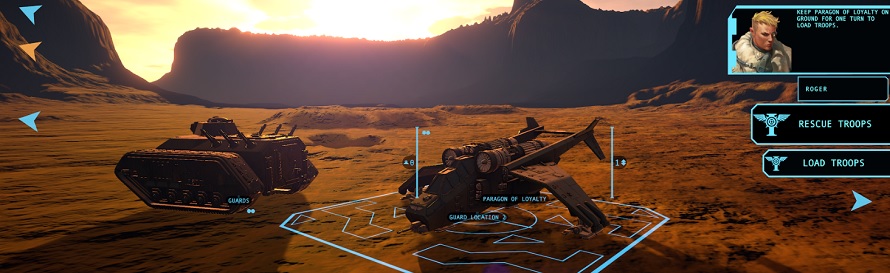
With a veritable fleet to command in turn-based tactical combat scenarios, players will wage war both in the skies and on ground-based targets as they take control of a wide range of Warhammer 40,000 craft including Marauder Bombers, Thunderbolts, Bombas and Fightas as each side struggles for aerial superiority.
Channeling this conflict is the cinematic single-player story campaign that Aeronautica Imperialis: Flight Command encompasses. An entirely self contained campaign set on the classic Rynn’s World setting that is linked together with jaw-dropping cinematic sequences, in Aeronautica Imperialis: Flight Command’s single-player campaign players will take players on a sky-soaring odyssey stuffed with intense dogfights, spectacular ground strikes and much more besides.
Beyond the epic single-player campaign of Aeronautica Imperialis: Flight Command are eight mission-based scenarios that players can get stuck into too – either as single-player skirmishes, or against other players in online multiplayer competitive encounters.
An Airbourne Strategy Effort That Everybody Can Enjoy
Deftly suited for armchair generals and tactical newcomers alike, Once players have been suitably coached by the ten training missions of Aeronautica Imperialis: Flight Command, a bounty of tactical opportunities become available. These include crucial actions such as permitting players to dish out commands to various fleet elements, directly affect ship controls such as altitude and speed, while also enabling the deployment of a wide range of devastating weapons systems.
Key to Aeronautica Imperialis: Flight Command are the functional differences that exist between the two very different Imperial Navy and Ork Air Waaagh factions, as each has a set of unique units and abilities that the other does not.
Ultimately though, Aeronautica Imperialis: Flight Command empowers players to wage war in the skies like never before, putting a massive range of large and small ships at their fingertips in the sorts of scenarios that just haven’t been explored in previous video game adaptations of the Warhammer 40,000 universe.
“Following the creation of our Digital Partners Programme at the end of last year, we are very proud to now announce our first game under this new system and couldn’t be happier that it’s Games Workshop licenced title” commented Ian McGregor, Chief Marketing Officer for Green Man Gaming.
“Games Workshop are worldwide leaders in tabletop miniatures gaming, and the Warhammer 40,000 brand is a supreme testament to that. After 45 years at the top, it’s not surprising that Games Workshop has an incredibly dedicated and enthusiastic fanbase, and we can’t wait to show what we’ve been working on, whilst also welcoming a whole new audience of passionate gamers to this phenomenon.”
Game Features:
Fully licensed models that come straight from Games Workshop
Turn-based strategy like never before – a deep yet visually engaging combination of simultaneous turn-based strategy and atmospheric cinematic action.
Choice of two factions – the noble Aeronautica Imperialis or the savage Ork Air Waaagh!
Seven unique self-contained story driven scenarios.
All scenarios can be played against single player AI or head-to-head online.
An engaging single player campaign.
A robust training system suited for tactical rookies and veterans alike.
In-depth tactical elements including altitude, pilot commands and a wide range of weapon systems.
Published by Green Man Gaming, Aeronautica Imperialis: Flight Command will launch on Steam for PC in late May 2020 priced at £18.99 / $24.99 / €22.99.
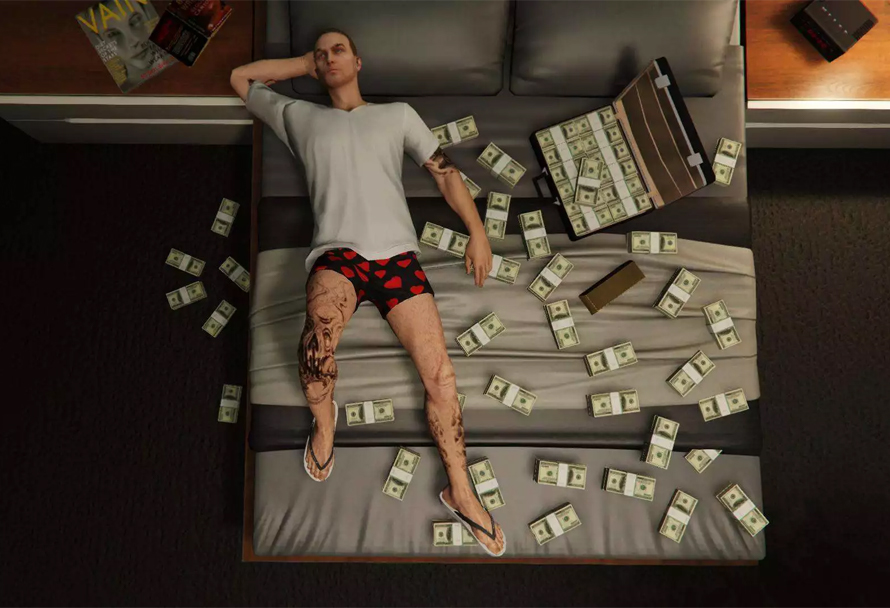
Cash is king in San Andreas, and nowhere is the chaotic crush for capital more obvious than in the game’s volatile stock market, where you can buy and sell shares to make money fast in the game’s campaign mode. In this guide, we’re going to show you how to do this most effectively and make the maximum return on investment from your hard-earned cash. Here’s how to game the stock market in Grand Theft Auto 5.
Use Assassination Missions
The easiest way to make a lot of money very quickly is to use Lester’s Assassination Missions to disrupt the stock market and swing the pendulum in your favour. Keep playing through the narrative until you reach a mission called The Hotel Assassination, which is given to Franklin by Lester Crest, the dorky heist master. Complete that mission to unlock a string of assassinations where you’ll be tapped to take out CEOs and other high-profile VIPs.
You can use these missions to game the stock market by investing and pulling your money out of rival stocks to make tons of cash. However, keep in mind that the longer you wait in-game to conduct these optional missions, the more money you can invest in the stock market. At the end of GTA V you’ll be a lot more well off than you are when these missions first become available, so consider waiting until you’ve got millions in the bank to spend on investments.
How To Use The BAWSAQ And LCN
First off you want to head to your phone and pull up the stock market. Before the events of each mission, you should follow the below tips to invest in a stock that will afford you a high return once you finish and pull your cash out. You should invest all of your money from all three characters into the one stock listed for the maximum payout. You can also advance time by making any of the protagonists sleep and checking your portfolio on your phone – this should inform you when the best time to cash out is. It’s also beneficial to invest on a Monday, but not essential.
The Hotel Assassination
Pre-mission: Invest in Beta Pharmaceuticals
Post-mission: Sell Beta Pharmaceuticals for profit, then invest in Bilkinton Research, wait three days and sell at a high return
The Multi Target Assassination
Pre-mission: Invest in Debonaire stocks
Post-mission: Sell Debonair for a profit, then invest all cash into Redwood Cigarettes. Wait two to four days by sleeping in the game and sell stocks at a massive return.
The Vice Assassination
Pre-mission: Invest in Fruit Computers
Post-mission: Sell Fruit Computers for a profit, then invest all cash into Facade. Wait two days by sleeping in the game and sell stocks at a massive return before they drop.
The Bus Assassination
Post-mission: Invest in Vapid stocks and wait two in-game days then sell the stocks for a high return.
The Construction Assassination
Pre-mission: Invest in Gold Coast stocks
Post-mission: Sell Gold Coast stocks for a high return. You should now be rich beyond your wildest dreams.
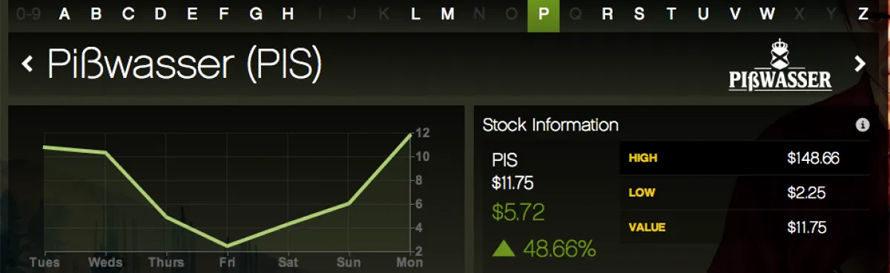
Beyond the above, there’s also this handy website which provides stock data for every item on the BAWSAQ, which you can use to make informed decisions on investments and make money outside of the assassination missions.
Most gamers know that space is full of some weird stuff, and that, for the most part, it’s the kind of stuff you’re better off blowing up with a spaceship. While Space Invaders might be the most famous example of what’s wrong with space, R-Type taught us to keep calm in the face of the impossible.
So let’s make our methodical way through the alien horrors of the R-Type series.
Use the Force
R-Type was released in the dawning modern age of gaming, after the crash of the early 80s. While initially an arcade game, it also found its way onto home consoles. Like the contemporary series Gradius, R-Type redefined the side-scrolling shoot-em-up, with developers Irem bringing a new vision to the genre.
Even today, many people think of side-scrolling shooters and bullet hell games as frenzied, reactive affairs. Yet R-Type set itself apart by slowing things down, introducing a deliberate pace that rewarded memorisation and pattern recognition over twitch-based reflexes. While punishingly unfair, that unfairness only lasted until the player learned how to navigate through on subsequent lives.
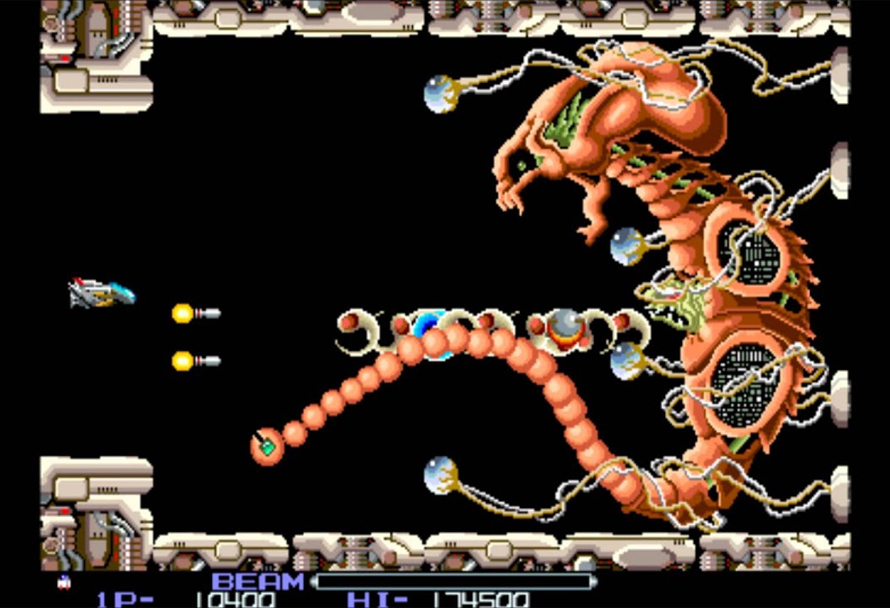
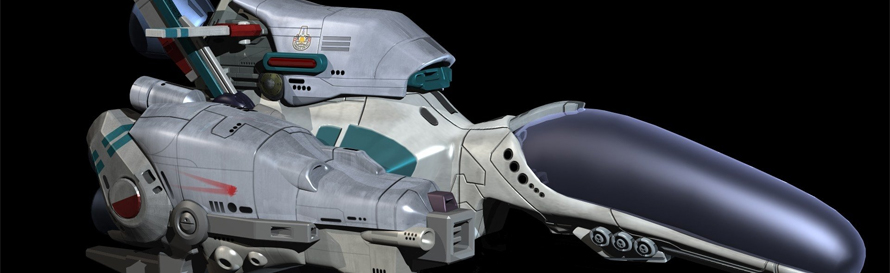
R-Type featured a unique visual identity, drawing heavy influence from H.R Geiger, particularly his contributions to the Alien franchise. Like many Japanese games before and since, R-Type merged the technological with the organic, with stages transitioning from the blackness of space to weird womb levels dominated by mutated horrors. The ultimate source of the ruckus in R-Type was the bio-engineered weapon species called the Bydo, which, inevitably, turned against mankind. In R-Type, it’s the player’s job to stop them getting their weird tentacles everywhere by saddling up in an R-9 “Arrowhead” spaceship.
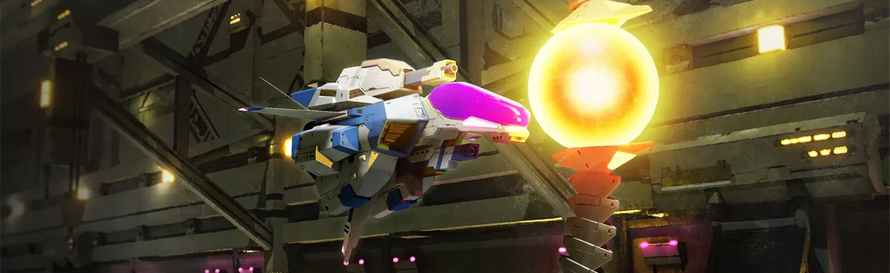
R-Types most iconic gameplay feature was the Force (no, not that Force). A Force was a glowy blob the player could obtain over the course of a level. Players had the option of positioning a Force at the front or rear of the spaceship or leaving it to fly and fire independently. Crucially, the Force was also indestructible, which meant that canny players could use it to intercept and block enemy attacks, opening up new responses to enemy attack patterns. High-level R-Type play is defined by this cunning and advanced use of the Force module.
R-Type received lavish praise on release and is still regarded as one of the best shoot-em-ups ever. Critics cited its crisp, colourful graphics, exciting gameplay and unique approach to the genre. It did, however, receive some criticism for its extreme difficulty, which calls to mind the kind of criticism (justified or otherwise) levelled against modern hardcore games like the Dark Souls series or Cuphead.
Geiger Counter
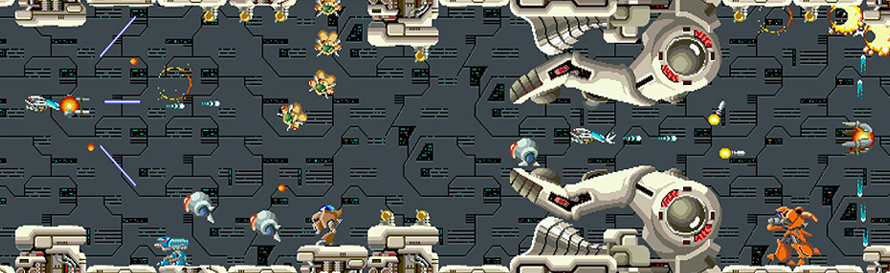
R-Type II was an anticipated follow-up to the success of the original game. As a sequel, it didn’t bring many new changes to the series, acting more as a refinement and slight expansion on the original. It featured new weapons, more enemies on-screen at any one time, and an even sharper difficulty curve than the original game.
In many ways, it was designed to appeal to players who had already mastered the series’ first outing. Levels were even more claustrophobic than before, both due to the game’s overall darkness and its more cluttered level design.
The SNES port, titled Super R-Type, was a reimagining of R-Type II. The most notorious change Super made to its parent title was the removal of in-stage checkpoints. This made a hard game even harder—hard enough to alienate some gamers.
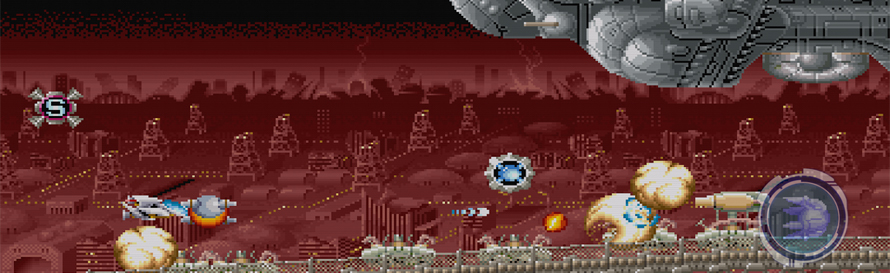
R-Type III: The Third Lightning was the first R-Type game to skip the arcades, released only on the SNES. Its primary departure from the previous games was the introduction of new Forces, which opened up new gameplay styles. The introduction of the Hyper Wave Cannon added a risk/reward dynamic to the game, giving players access to a powerful new weapon at the potential cost of their ship overheating. Like its predecessors, it released to strong reviews, and it received a port to the Game Boy Advance roughly a decade after its initial release.
Delta Wave
Bringing things into the 3D era, R-Type Delta was released for the PlayStation in 1999. Though it retained the side-scrolling gameplay of its predecessors, it updated the series with 3D graphics, creating a 2.5D visual style that allowed enemies to emerge from and disappear into the background, and for levels to wrap around corners, among other visual tricks.
Players could choose from multiple ships, each with different weapon styles. Delta introduced the Dose System, which allowed the Force modules to absorb energy, which players could then unleash in a ship-specific ultimate attack. Delta received strong reviews and the classic shoot-em-up style gave R-Type a unique throwback vibe in a sea of fully 3D games.
Final Frontier
As its name suggests, R-Type Final was intended as a last hurrah for the series at the time of release. Developed for the PlayStation 2, Final once again featured full 3D environments, but its stand-out feature was the huge range of ships on offer, with over 100 ships available to the player.
R-Type had always featured H.R. Geiger-inspired near-sexual imagery, inspired by his work on Alien, but Final abandoned all pretence, with the last acts of the game playing out against a backdrop that can only be described as two human silhouettes getting jiggy with it. All told, Final received positive reviews and seemed set to end the mainline franchise on a positive note.
While we’ve covered the linear sequence of the R-Type games, there were also several spin-offs and experimental R-Type games over the years, like R-Type Leo and R-Type: Flash of the Void. While most kept to the same basic formula, the two R-Type Tactics games took things in a new direction. They fused series staple gameplay elements with elements from tactical role-playing games, creating something decidedly different to R-Type’s core philosophies.
After a long period of silence, R-Type is set to make a comeback with the ridiculously named R-Type Final 2, and it didn’t help fan scepticism when the announcement landed on April 1st. Yet it turned out to be no joke, and Final 2 is in active development with an expected release on PlayStation 4, Switch, Xbox One, and PC. There’s little information about what Final 2 will bring to the series as yet, but fan expectation is sure to be high after a sixteen-year hiatus.
In the meantime, R-Type fans can enjoy the classics in the form of R-Type Dimensions, which includes full 3D remakes of R-Type and R-Type II, seamlessly integrated with the classic versions so that players can switch between the two with a button press. The original version of Dimensions was released in 2009 on the Xbox 360, but saw a recent, 2018 port to Steam, Switch, and PS4 under the title Dimensions EX.
While the side-scrolling shoot-em-up has largely disappeared, the spirit of R-Type persists in the popular resurgence of demanding, hardcore games best typified by the Dark Souls series. Perhaps one of the closer descendants of R-Type is Cuphead, a game that shares its fiendish difficulty based on pattern recognition and memorisation.
Bullet hell games of this style are rare now, with modern indie bullet hell games more often embracing a frenetic, adrenal pace. But with R-Type Final 2 on the horizon, series fans won’t have to accept substitutes for much longer.
Just like in Mount & Blade: Warband, the world of Mount & Blade II: Bannerlord is shaped by its diverse and often conflicting factions. Set in the continent of Calradia during a time of political fragmentation, Bannerlord introduces eight major factions—each with unique cultures, unit rosters, and strategic positions.
Here’s your complete guide to all the major factions in Bannerlord, including their strengths, lore, and military specialities.
Aserai
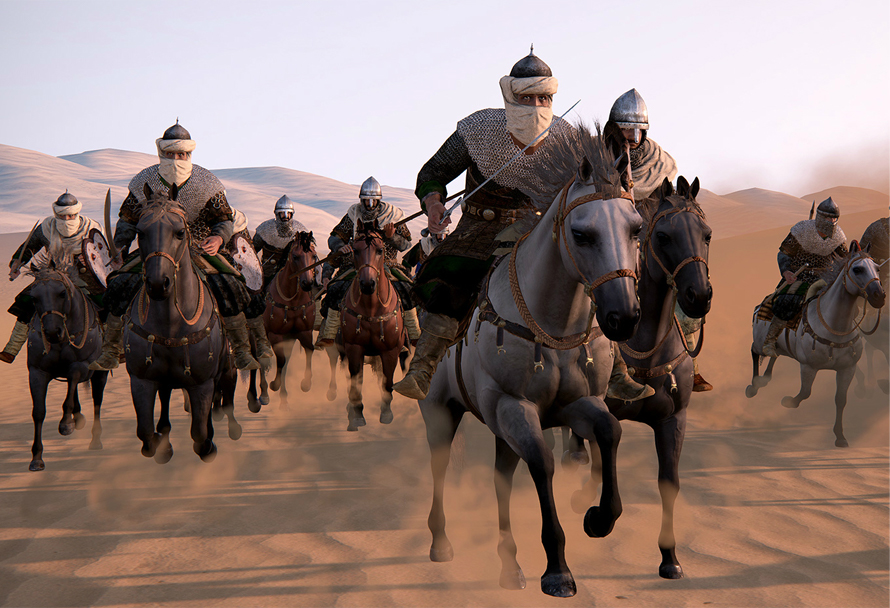
The Aserai are desert-dwelling people who inhabit the arid southern lands of the Nahasa. Inspired by pre-Islamic Arab tribes, the Aserai excelled at versatile cavalry warfare and trade. Their military lineup includes fast-moving light cavalry, deadly horse archers, and strong skirmishers. The Aserai benefit from cheaper trade penalties, making them excellent merchants.
Strengths:
Strong cavalry
Great economy and trading perks
Effective desert warfare
Battania
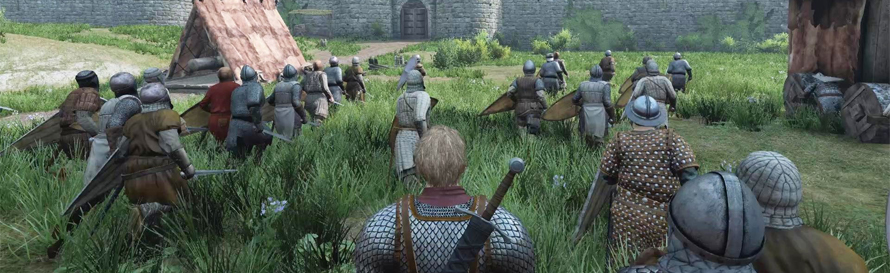
Battania controls the dense forests and rugged highlands of western Calradia. Drawing inspiration from Celtic and Pictish tribes, the Battanians are master ambushers with some of the best archers and guerrilla tactics in the game. Their troops get bonuses in forest battles, and their infantry are formidable in close-range combat.
Strengths:
Top-tier archers (Battanian Fian Champions)
Forest combat bonuses
Strong ambush and skirmish tactics
Khuzait Khanate
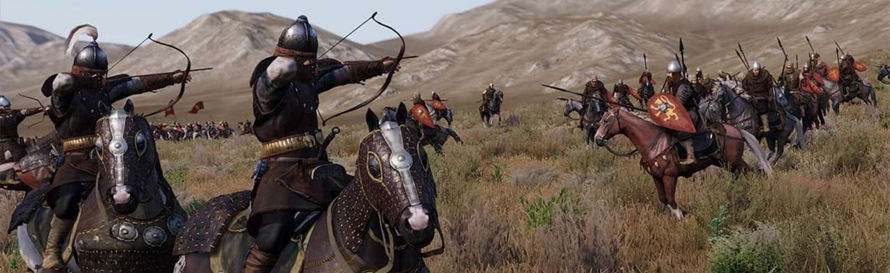
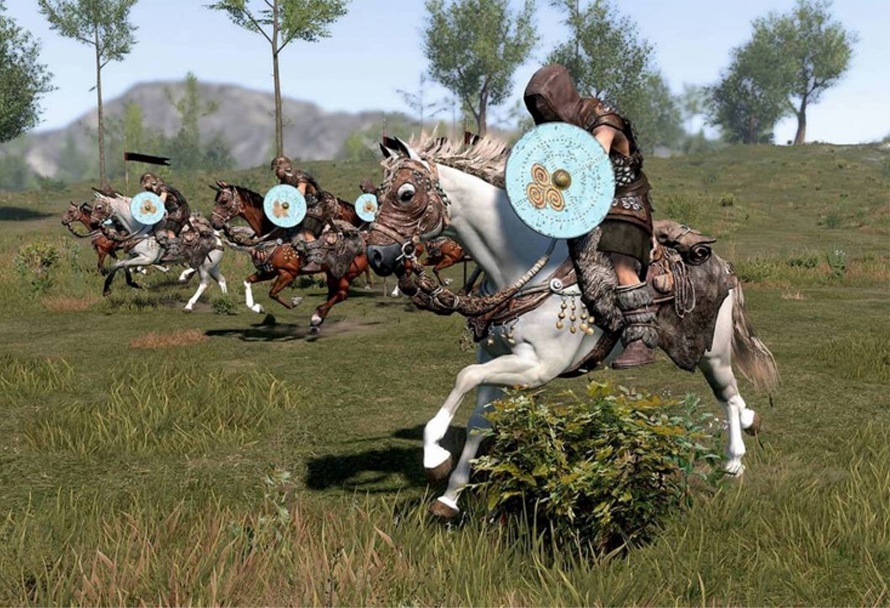
The Khuzait dominate the eastern steppe, drawing heavy inspiration from the Mongol Empire. Their armies are defined by light and heavy horse archers, giving them incredible mobility and ranged damage. Khuzait cavalry can quickly encircle and harass enemies, making them deadly in open-field battles.
Strengths:
Best horse archers in the game
Fast-moving armies
Strong in open terrain
Northern, Southern, and Western Empire
The once-unified Calradic Empire has splintered into three rival factions after the death of the emperor. All three Empires share a similar culture, troop tree, and unit roster, but they have different leaders, locations, and political goals.
Northern Empire
Located in the heartland of Calradia and led by a council-oriented leadership, the Northern Empire claims legitimacy through tradition. It borders Battania, Sturgia, and the Khuzait Khanate.
Southern Empire
Ruled by Rhagaea, the widow of the last emperor, the Southern Empire claims dynastic legitimacy. It is geographically isolated by deserts and mountains, giving it a natural defensive edge.
Western Empire
Led by the military strongman Garios, the Western Empire believed in strength through force. It’s the most aggressive of the three factions and borders both Vlandia and Battania.
Shared Empire Traits:
Balanced troop tree with strong heavy infantry and siege capabilities
Excellent armoured cataphract cavalry
Effective in siege warfare and set-piece battles
Sturgia
Inspired by Norse and Slavic cultures, Sturgia dominates the northern, snow-covered forests of Calradia. Their military focuses on heavy infantry and shock troops, including the iconic Sturgian Berserkers. While their cavalry is lacking, they’re strong in harsh terrain and brutal melee combat.
Strengths:
Excellent heavy infantry
Forest and snow bonuses
Strong early-game units
Vlandia
Vlandia, located in the fertile west, is a feudal powerhouse modelled after the Normans and other early medieval Western European states. Vlandians rely on elite crossbowmen, shock cavalry, and a feudal military structure. They also benefit from increased influence gain, helping them dominate the political game.
Strengths:
Top-tier cavalry and crossbows
Large starting territory
Strong feudal governance and vassal system
Each faction in Mount & Blade II: Bannerlord offers a unique playstyle and strategic opportunity, whether you’re drawn to the raw cavalry power of the Khuzaits, the dense forest ambushes of Battania, or the disciplined might of the Empire’s legions. Whether you’re fighting for unification or conquest, your choice of faction shapes everything from your battle tactics to your political goals.
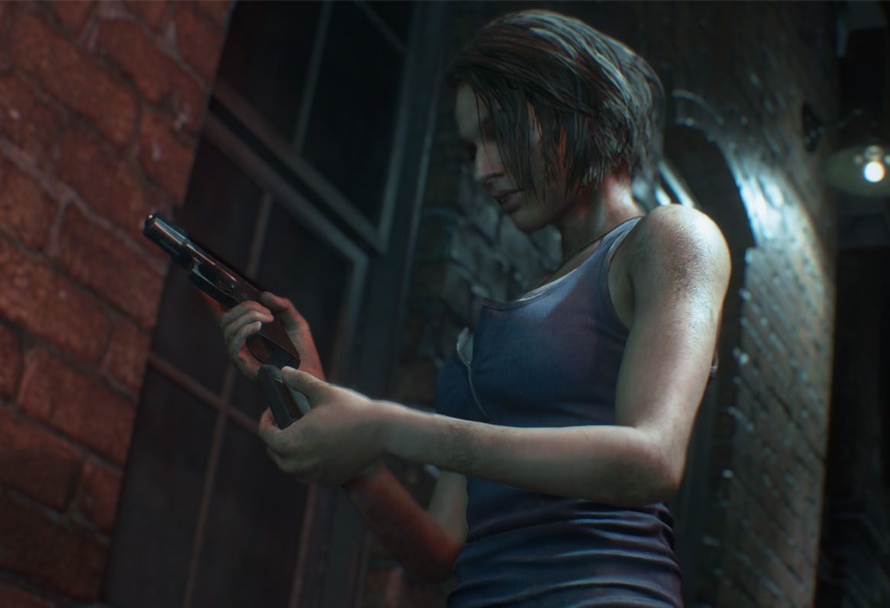
Released on April 3, 2020, Resident Evil 3 Remake offers a terrifying reimagining of the 1999 classic, bringing a new level of horror to Raccoon City. Alongside Jill Valentine, players will encounter a terrifying roster of creatures that will stop at nothing to hunt you down. From classic undead horrors to mutated bio-weapons, here’s a look at the confirmed enemies and monsters that you’ll face in the remake.
Resident Evil 3 Remake Enemies List
Nemesis
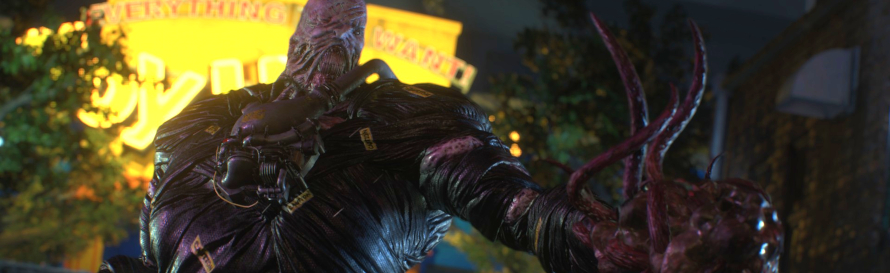
The towering Nemesis is undoubtedly the most iconic enemy of Resident Evil 3, and the remake brings him to life in ways that make him more menacing than ever. As the relentless bio-weapon tasked with hunting Jill Valentine, Nemesis is a constant threat throughout the game. His presence is terrifying, and his AI has been significantly improved for the remake—he can appear at unexpected moments, chasing you through the streets of Raccoon City, and even wielding weapons like a rocket launcher. The game emphasizes the constant danger of Nemesis, making him an unforgettable antagonist.
Zombies
Raccoon City’s zombies make their return, and they’re more terrifying than ever. These reanimated corpses are the backbone of the Resident Evil series, and their presence is as chilling as always. In the remake, the zombies are quicker and more aggressive, with improved AI that makes them more unpredictable. Whether they’re lurking in shadows or stumbling towards you in the street, these classic enemies will be a constant source of fear.
Hunter β
The deadly Hunter β returns in the remake, and these creatures are a terrifying evolution of the original Hunter from the Resident Evil series. With their amphibian-like appearance, Hunter βs are fast and lethal, making them one of the most dangerous enemies in the game. They attack with deadly leaps, and their enhanced agility makes them difficult to evade. These creatures will keep you on edge every time they appear.
The Gravedigger
The Gravedigger is a memorable boss battle in Resident Evil 3 Remake, and it’s just as terrifying as it was in the original game. Created from a mixture of T-Virus-infected corpses, the Gravedigger is a massive, worm-like creature that will emerge from the underground to attack you. The battle with the Gravedigger takes place in a sewer area and adds a unique layer of horror to the game, making it one of the standout encounters.
Sliding Worms
These disgusting worm-like creatures are the offspring of the Gravedigger, and they emerge from the sewers to add more horror to an already nightmare-inducing setting. Sliding Worms are small, but they’re incredibly aggressive and can swarm you in numbers. If you’re not careful, they can overwhelm you in tight spaces, making them an unsettling addition to the game’s roster of enemies.
Giant Spiders
For fans of creepy crawlies, the Giant Spiders return in Resident Evil 3 Remake, and they’re more horrifying than ever. Created as a result of the T-virus infection, these large, grotesque arachnids scuttle across walls and ceilings, creating moments of pure terror for anyone with arachnophobia. They can appear unexpectedly, and their sheer size and venomous bites make them formidable foes.
Crows
Crows, infected by the T-Virus, make a brief but unsettling appearance in the remake. While they aren’t the primary threat, they do add to the overall sense of dread and unease in Raccoon City. These aggressive, mutated birds are capable of swarming players and attacking in large groups, making their presence all the more terrifying.
In Resident Evil 3 Remake, you’ll face off against a terrifying array of creatures, each more horrifying and deadly than the last. From the unstoppable Nemesis to the grotesque Gravedigger, every enemy adds a layer of tension and danger as you try to survive the nightmarish streets of Raccoon City. Whether you’re dodging a rocket-wielding Nemesis or trying to escape from a swarm of giant spiders, Resident Evil 3 Remake ensures that danger is always lurking around the corner.
Prepare yourself for a heart-pounding experience as you navigate through the ruins of Raccoon City, fighting to survive against a terrifying cast of enemies.
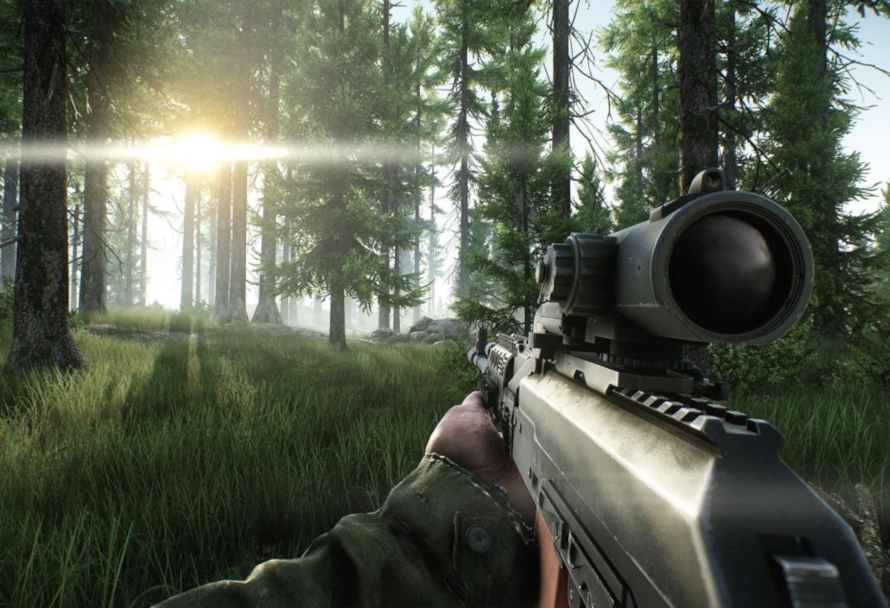
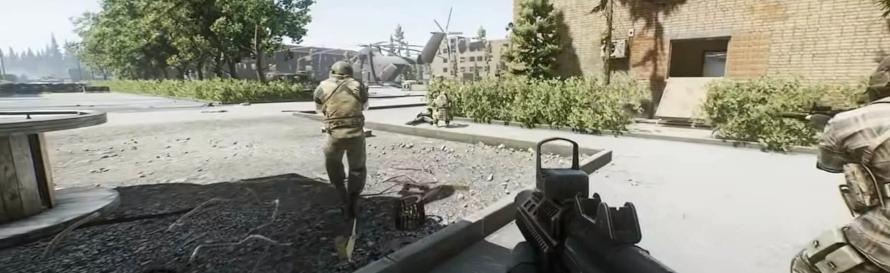
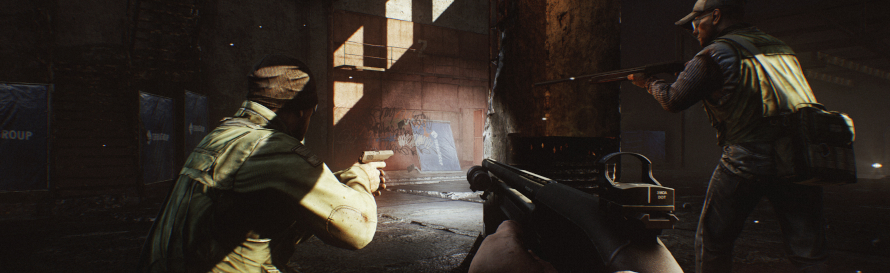
Escape for Tarkov has recently released the 0.12 patch. Along with the additional content and in game changes there has also been some tweaks on the settings side. Whilst it’s not a game with perfect performance it is slowly getting better. But what are best Escape from Tarkov graphic settings.
Best Performance
For a lot of us high frame rate is key, so here are a few pointers for helping to boost those numbers.
Textures – Running textures on low will help give a bigger boost to your overall FPS, but Escape from Tarkov is a good looking game, so you don’t want to make it look ugle. Having textures on Medium is a good middle ground.
HBAO (Horizon-Based Ambient Occlusion) – This is a resource eater. Turn it off. Sure it can make your game look more realistic, but if you’re looking for performance increases this is one to have off.
SSR (Screen Space Reflections) – SImilarly you don’t need SSR on and will save on some processing power.
Anisotropic Filtering – This affects how sharp the games textures look at a distance. Having it switched off can save a lot of resources although some feel it makes the game look a bit weird.
Overall Visibility – Having this cranked up can use up unnecessary PC power. Finding the sweet spot will probably be unique to your PC, but setting to 1000 is a good starting point.
Shadow Quality – Not only do higher shadow settings use more resources, it also makes it tougher to see your enemies. Go for a Medium setting for a good balance of nice visuals and performance. Or Low is you don’t care how the game.
Other Useful Settings
There a multitude of useful Escape from Tarkov settings. Here are a few more tips on the general settings that should help you overall.
Lobby FPS Limit – Just set it to 60, there’s no real upside or downside.
Game FPS Limit – Go for Max which is 120fps. You’re going to want as many frames as possible when playing. The worst is when you could be getting more, but you’ve limited it for no reason.
Vsync – Off. A lot of people say having Vsync on causes input lag. That’s the last thing you want in a game where quick reactions are key.
Sharpness – This one comes down to a personal preference and doesn’t hugly impact performance.
Z-blur – This setting blurs your image whilst turning your head or running. Just turn it off.
Noise – Noise adds a film grain effect. Having it on doesn’t really improve anything, but switching it off, will make the game look better.
Grass Shadows – Having this on simply makes it harder to spot people lying down in grassy areas. Do yourself a favour and turn it off.
Chromatic Aberrations – Turn this one off. Having it on reduces some of the clarity of your image. With it off you’ll have a better chance of spotting sneaky people!
For most of Escape from Tarkov best settings, it comes down to your individual rig and personal preference. But utilising some of these should help to give you a performance boost in some areas. Whilst also providing some better clarity on your image.
Somehow, Baldur’s Gate 3 is now a thing – an actual thing that you’ll be able to play when it releases in Early Access later this year. Perhaps more surprising than that fact is that Baldur’s Gate 3 is also shaping up to be mind-shatteringly good, and if you don’t believe the hype, here are ten reasons why you probably should.
1. Baldur’s Gate Is Back!
This is a point that cannot be stressed enough really. Given that there is a finite limit to how many times one can replay the Bioware/Black Isle developed Baldur’s Gate games from two decades ago, to say that fans have been hungering for more adventures in Baldur’s Gate and the wider Sword Coast setting is quite the understatement indeed. It’s almost time to return to one of the RPG genre’s most compelling fantasy settings and we couldn’t be happier.
2. The Folks Who Developed The Divinity: Original Sin Games Made This
Unless you’ve been lounging under a particularly heavy rock for the last five years, you’ll know that Belgium based outfit Larian Studios has put out a couple of stone-cold RPG bangers with Divinity: Original Sin and Divinity: Original Sin 2. As such, the fact that Wizards of the Coast have trusted them with the development of Baldur’s Gate 3 should be quite the cause for celebration – not least because it looks like they’re going to craft one of the best fantasy RPGs in an age. No pressure folks.
3. The Visuals – Just Look At It
Using an evolved version of the same game engine that powered the Divinity: Original Sin titles, Baldur’s Gate 3 simply looks incredible. With finely detailed, organic-looking environments and a camera that zooms in close to characters during dialogue scenes, revealing a wealth of lifelike detail and a range of artistic flourishes, Baldur’s Gate 3 will certainly be a treat for the eyes, to say the least.
4. You Get To Define Your Own Origin Story
As was par for the course in the superlative Divinity: Original Sin games, Baldur’s Gate 3 also provides players with substantial creative latitude to define the origins of their protagonists. By allowing players to determine everything from traits, class type, histories, through to relationships and world outlook, bespoke origin stories will intersect with non-linear quests to create playthroughs that are rife with nuance and uniqueness.
5. Breathtaking Amounts Of Player Choice
Neatly underscoring the superb origins system is the sheer amount of player choice that Baldur’s Gate 3 looks set to permit. Much like its classically revered predecessors, Baldur’s Gate the Third would appear to be very much an advocate of letting the player decide their own destiny. From a massive variance in the previously mentioned origin stories, through to a massive amount of branching dialogue and quests with multiple endings, Baldur’s Gate 3 is poised to absolutely ruin your social calendar.
6. The Mind Flayers Are The New (Old) Big Bad
If you have even a cursory knowledge of Dungeons and Dragons, you’ll likely be familiar with the tentacle faced Mind Flayers. Essentially the Bad Eldritch Lads of the Forgotten Realms Dungeons and Dragons setting, the Mind Flayers have implanted a parasite in your head which slowly corrupts you over the course of the adventure in a bid to turn you into an insidious agent for evil. Worse (or better) still, is the fact that you can telepathically communicate with other folks who also find themselves afflicted with the same parasite too. Fun!
7. Innovative Turn-Based Combat That Rewards Imagination
Though the notion of turn-based and initiative driven combat is hardly a new one in the RPG genre, Larian Studios wields the concept with an innovative flair in Baldur’s Gate 3. Chiefly, there is a newfound focus on creative mischief that we really haven’t seen elsewhere before.
For example, a new Shove command allows you to quite literally propel enemies into pits, barge them into traps and nudge them off ledges. Elsewhere, an intriguing Dip ability allows you to quite literally submerge your weapon into elements in the environment, such as putting a club into a fireplace to set it ablaze, or fortifying a shield by dumping it in a pool of enchanted waters.
8. Legendary Heroes From Forgotten Realms Past Could Well Return
Though Baldur’s Gate 3 is set 100 years after the events chronicled in Baldur’s Gate 2, and both the titular city and Sword Coast region have changed as a result of the passage of time, it looks extremely likely that heroes and key characters from previous games could well return. Certainly, it’s worth bearing in mind that many races in the Forgotten Realms setting do not age in the regular sense, so don’t be surprised in the slightest if folks from previous games crop up throughout Baldur’s Gate 3.
9. Baldur’s Gate 3’s Many Secrets Demand Vertical Exploration
In the RPGs of old, which not only included the Baldur’s Gate prequels but also similarly templated efforts such as the Icewind Dale and Torment titles, discovering secrets was largely a case of piling points into the ‘Detect’ ability/stat and stumbling across concealed loot in the environment. Well, Baldur’s Gate 3 takes things further. A lot further.
By employing an evolved version of the same game engine that gave such vibrant life to the Divinity: Original Sin games, Baldur’s Gate 3 hides a veritable avalanche of secrets high in nooks and crannies of areas that can only be reached by making generous use of that shiny new Jump command. Such a dynamic doesn’t quite turn Baldur’s Gate 3 into a full-tilt platformer, but it does breathe refreshing life into exploration in a way that the genre hasn’t really seen until now.
10. Online Cooperative Multiplayer That Allows Players To Do Their Own Thing
Tapping in neatly into the fond memories of being huddled around a table with friends as a game of Dungeons & Dragons tabletop gets underway, so too does Baldur’s Gate 3 embrace a similar approach to community play as it allows up to four players to tackle its mammoth offering together in cooperative fashion via online play.
More than that, Baldur’s Gate 3 allows players to split away from their party too – so you could have one player in town fetching supplies, while miles away, the rest of the group plunders its way through a subterranean dungeon stuffed full of baddies. Nice.
With no release date set but an early access coming later this year, join the Green man Gaming Community site and stay up to date with the latest gaming updates.
Ah VR, what a wonderful new horizon. If gaming is about escapism, then VR is about helping you truly live another life. The chance to explore new worlds, and have them be so realistic you could touch them, is something that only really exists when you’ve got a VR headset on, and maybe a cat trying to get your attention and scaring your half to death. If you’ve just picked up a headset, then you’ll need to know all about this list of best VR games for PC.
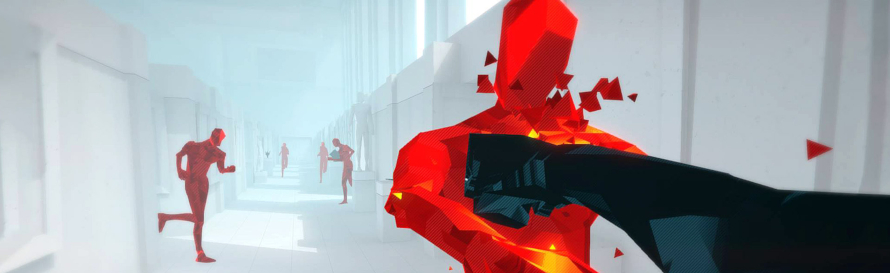
You may well have already played SUPERHOT on console or on PC normally, but I promise you it’s not the same game in VR. Well, I mean, it is the same game, but in VR it’s elevated to an entirely new realm. Punching a giant orange humanoid is intensely satisfying, but so is cutting a bullet as it races towards you, throwing the knife at your attacker, and then yeeting a plate at his friend just to assert your dominance. Just get it, join the cult.
9. VR Dungeon Knight
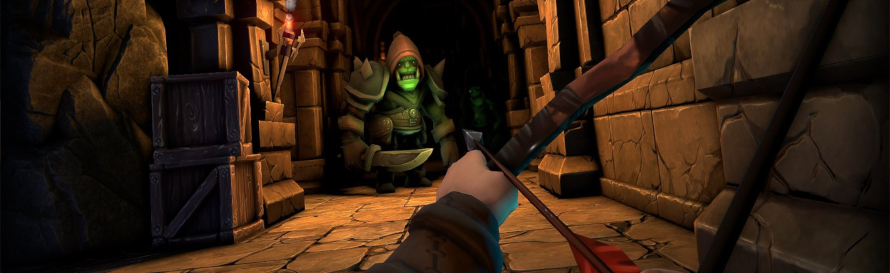
This is by far and away the smallest game on this list. Made by just one person, VR Dungeon Knight is a dungeon crawler with a real emphasis on allowing for multiple playstyles. It’s still in Early Access, but that just means it’s always getting updated with new classes, weapons, and playstyles. It’s a horrifically overlooked gem of a game, but hopefully, we can all change that together, because it really is one of the best VR games on PC.
8. Pistol Whip
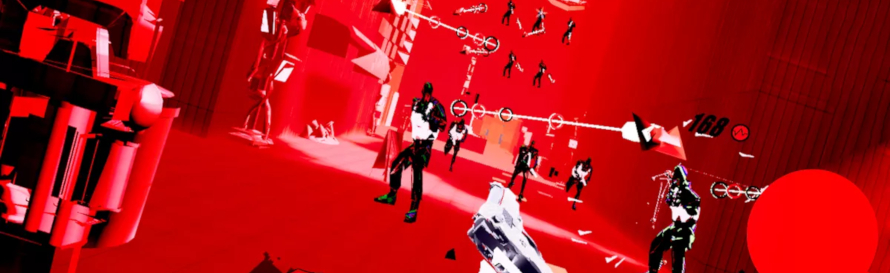
Pistol Whip dares to ask the question “What if John Wick was turned into a rhythm game?” and what it results in is one of the best VR games on PC, and one of the best rhythm games in a long time. Granted, Beat Saber is excellent too (and we’ll get to that), but Pistol Whip is just so intensely dirty in its beats. Every track warps the world around you, and you get extra points for shooting in time with the music. It’s just an incredibly satisfying experience and one that you’d be a fool to miss out on.
7. Beat Saber
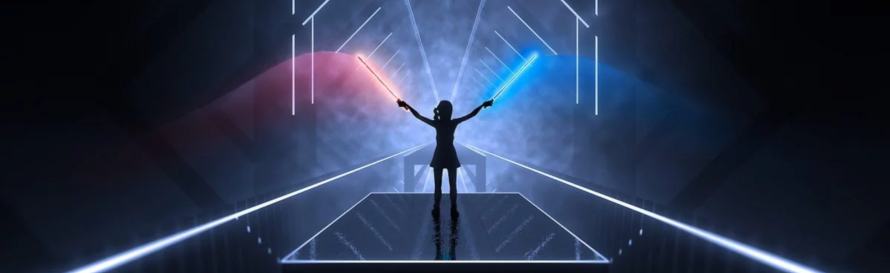
See, told you we’d get to it. Beat Saber is probably one of the games that could be considered VR’s killer app. It’s an astounding display of music meets lightsabers, and it’s the kind of thing that can only work in VR too. It hits a similar part of the brain to Guitar Hero, especially as you progress through the difficulty levels and have to try and deflect an unending stream of boxes coming at your face. Just buy the damn game.
6. Asgard’s Wrath
While everyone has heard of Beat Saber, far fewer people have heard of Asgard’s Wrath. The word you’ll see bandied about whenever someone talks about Asgard’s Wrath is ambitious. It’s ambitious in its scale, its systems, and its immersion. There’s nothing that comes close to it when it comes to being the whole package. If you imagine it to be like Skyrim in VR, but made especially for VR, then you should immediately understand why people like it so much, and why you should hurry up and join them.
5. Until You Fall
Until You Fall is a roguelike melee game where you have to hack and slash your way through denizens of a corrupted planet. The thing that makes it truly special is the combat, while swords in VR can often feel good, the actual combat can sometimes be rather basic. Until You Fall has you parrying strikes, dodging, and using special abilities with ease. It can be horrifically difficult, but every single moment will have you in awe of your own excellence just before throwing a new boss at you and reminding you where you belong.
4. Robo Recall
This game is free as long as you own the Oculus controllers. Free. You’re an agent tasked with cleaning up a robot uprising. It’s all very tongue in cheek though, so don’t expect it to be a horrifying experience. Robo Recall allows you to grab enemies and then throw them at each other, use them as shields, or just tear them about bare-handed. It’s all wonderfully tactical and the arcade-style missions allow for nigh-infinite replayability too.
3. In Death
Another roguelike you absolutely must own. Instead of melee combat though, In Death is all about archery baby. You have to shoot your way through purgatory and into other realms, each of the enemies you fight can easily kill you, so you have to be very careful if you want to survive. The movement is really cool too, you can either throw a shard which allows you to teleport, or shoot an arrow if you want to go further. There’s something wonderful about only using one tool in a game, and In Death does it very well.
2. Budget Cuts 2
Stealth is weird in VR, and also much harder than in a normal game. This is largely because of the viewpoint, you are your camera, so looking around a corner automatically exposes you. Budget Cuts, and Budget Cuts 2, laugh in the face of this by allowing you to open up holes in space/time and then letting you peer through them. You also get a really cool bow in the second one, which is why its here instead of the original game.
1. Boneworks
Physics-driven VR experiences can often feel like little more than tech demos. It’s annoying because they’re usually the most exciting thing about VR. Thankfully, Boneworks takes all of those little tech demos and rolls them into one incredible interactive world. You can punch enemies to death, hold them at arm’s length, yeet bricks at things, turn handles. Basically, you fully immerse yourself in the world, and it’s one hell of a game as a result.
While 1983 might not seem that long ago in cinema terms, it’s ancient history on the video game timeline.
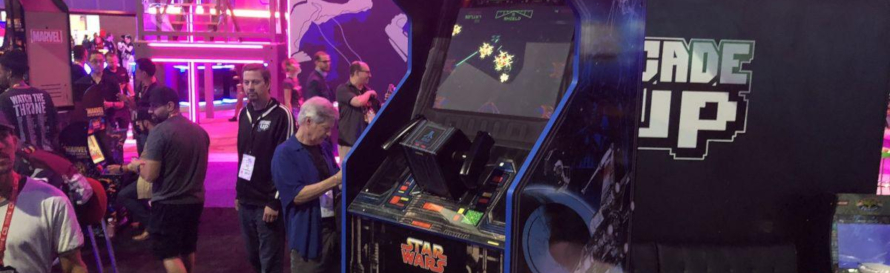
People still talk about the Return of the Jedi today, for instance, while 1983’s Star Wars (aka Star Wars: The Arcade Game) is very much from a long, long time ago. Since then, there have been over one hundred games tied to the Star Wars brand.
Yet gamers should take some time out every now and then to remember the history of their hobby, no matter how ancient. So let’s take a visit to the Old Republic to remember the game that put Star Wars on the video game map.
Before the Dark Times
In terms of choice, quality, technology, and popularity, it wouldn’t be hard to make a case for the gaming industry being in the middle of a Golden Age right now. Perhaps it’s not a coincidence that this era’s flaws—excessive commercialisation, predatory mechanics, over-saturation, and a helping of Sturgeon’s Law—were just as prevalent in the historically-recognised Golden Age of Gaming.
The Golden Age is usually said to have run from 1978, the year of Space Invaders, to around 1983. The age, in general, marked the rise of arcades. With them came the early evolution of gaming from a niche hobby to an entrenched element of popular culture, echoing the similar evolution that took us from the insular world of late 90s consoles in the post-arcade years to the all-pervasive gaming world of the modern-day.
For those old enough to remember it, 1983’s Star Wars still weighs in as one of the best video games of all time. It was a culmination of video gaming’s Golden Age and, in fact, was one of the last great examples of that age.
Despite its wild popularity, the Star Wars franchise didn’t crack the gaming world until the original trilogy was nearly over. The first Star Wars game, The Empire Strikes Back, released in 1982, a year before the final movie in the original trilogy. But it only took one game for Star Wars to take over arcades.
A New Hope
By modern standards, Atari’s Star Wars was hopelessly primitive. Its gameplay was modeled on the climax of A New Hope and consisted of three phases. The first was a dogfight in the skies (or space, anyway) above the Death Star. The second was the approach to the Death Star trench across the no moon’s surface. The third was the flight through the trench, the aim being to reach the end and unleash that fateful proton torpedo. Players could select three difficulty levels (or “Waves”), the easiest of which would omit the second phase. On completion, the game would loop back to the beginning, becoming harder.
In an unexpected twist, there were no demands on the player to wrack up a huge kill count. In fact, players only needed to survive to fire the torpedo heard around the galaxy—to “use the Force”, which would lead to a huge payout of bonus points. It was a peculiar nod to the objectives of the movie and speaks to the game’s relative sophistication. It even calls to mind similar easter eggs in modern games, like the Far Cry series’ “wait and win” secrets.
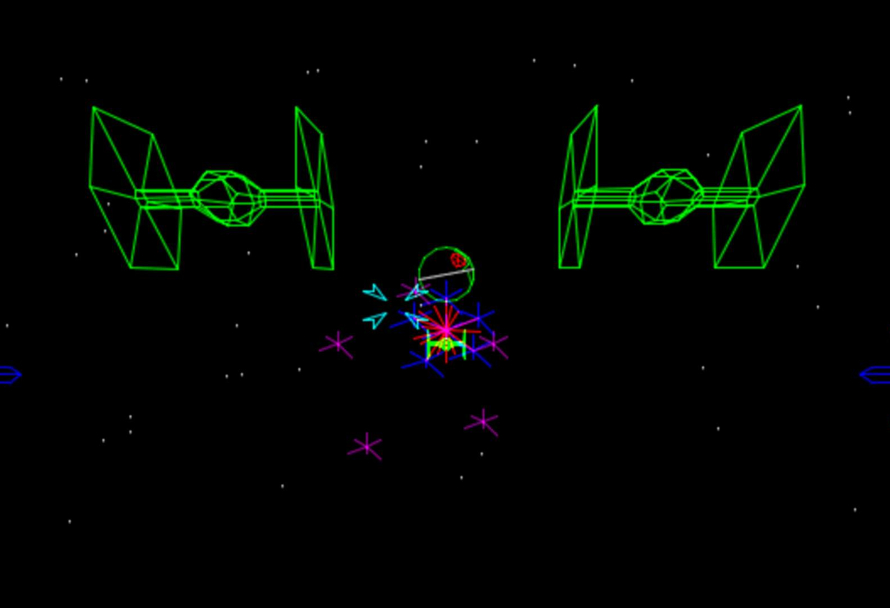
All of this action was sketched out in vector-based wireframes, calling to mind the visuals of Luke’s targeting computer from A New Hope. Vector graphics were still new-ish to gaming at this time, and they allowed for complex yet clear visual constructs and a sense of true 3D, which hadn’t been achieved in such fidelity before. Even to modern gamers, the graphics look crisp and recognisable. No mean feat at the time.
In 1983, Atari’s Star Wars was mind-blowing. The quality of the vector graphics blew away contemporaries and the synthesised audio was astounding for its time, creating recognisable interpretations of A New Hope’s most iconic lines at a time when voices weren’t a common feature in games.
Naturally, the Star Wars license bolstered the game’s popularity, too. Young gamers in 1983 were just as mad for Star Wars as they are today, and they had fewer outlets for their obsession to boot.
Sadly, there’s a physicality to arcade games that can’t be easily replicated or explained for the benefit of younger gamers. Gamers playing Star Wars in 1983 controlled the iconic X-wing via a flight yoke. The sit-down cabinet took that level of immersion even further and, combined with the visuals and audio, the experience was the full HOTAS set-up or even the VR of its time.
Atari’s Star Wars received a 1985 sequel in the form of The Empire Strikes Back, which released as a conversion kit for the original. It updated the action to the snowfields of Hoth and the blockade around the planet, with the player controlling Luke and Han respectively.
Its gameplay was largely unchanged, and with the waning of the Golden Age and the related decline of arcades, Empire saw less attention than its predecessor. As the game came in the format of a conversion kit, many arcade owners didn’t see the point in upgrading the original Star Wars cabinets to the new edition.
Still, Star Wars ‘83 and its sequel weren’t entirely lost to future generations. Though many players may have missed them, both games could be found buried as easter eggs in the GameCube’s Star Wars Rogue Squadron III: Rebel Strike.
The legend of the Star Wars 1983 arcade game survived into future games in the franchise, too. Future titles echoing the space battles of the franchise were inevitable, eventually leading to the wild popularity of the X-Wing series of games and other dogfighting titles, like the aforementioned Rogue Squadron, Star Wars: Starfighter, and the spaceborne elements of Battlefront II (both the old and new version).
The Last Jedi: Fallen Order
The history of Star Wars video games has turned out to be oddly circular. As George Lucas himself would have it: “It’s like poetry, it rhymes”.
Atari’s Star Wars belonged to a tiny pool of Star Wars games, most of them straight adaptations of scenes from the movies. In the following decades, Star Wars would balloon as a franchise to create the ascended fanfic playground of the old Expanded Universe. Video games were no exception, and Star Wars games ran the entire gamut from releases that still make Top 10 Best Games lists to offerings that would win a video game equivalent of a Golden Raspberry Award.
With Disney’s acquisition of Star Wars, the Expanded Universe was retired to become the Legends brand. With it went the free-for-all on Star Wars in video gaming, as EA became the sole license holder for Star Wars video games. This narrowed the gaming universe of Star Wars back down to two canonical properties: DICE’s Battlefront series and Respawn’s Jedi: Fallen Order, bringing the Star Wars brand in gaming full circle.
If there’s a lesson to take from this, it’s probably that the appetite for a Star Wars dogfighter with all the bells and whistles the times can muster will always be the way to a Star Wars gamer’s reactor core. Even fresh off the high of Jedi: Fallen Order (and however they felt about The Rise of Skywalker), fans would be as happy to see a new space adventure in 2020 as they were in 1983. It is, after all, right there in the name of the franchise. Do you have fond memories of Atari’s Star Wars or the games it helped inspire? Comment below and share your nostalgia.
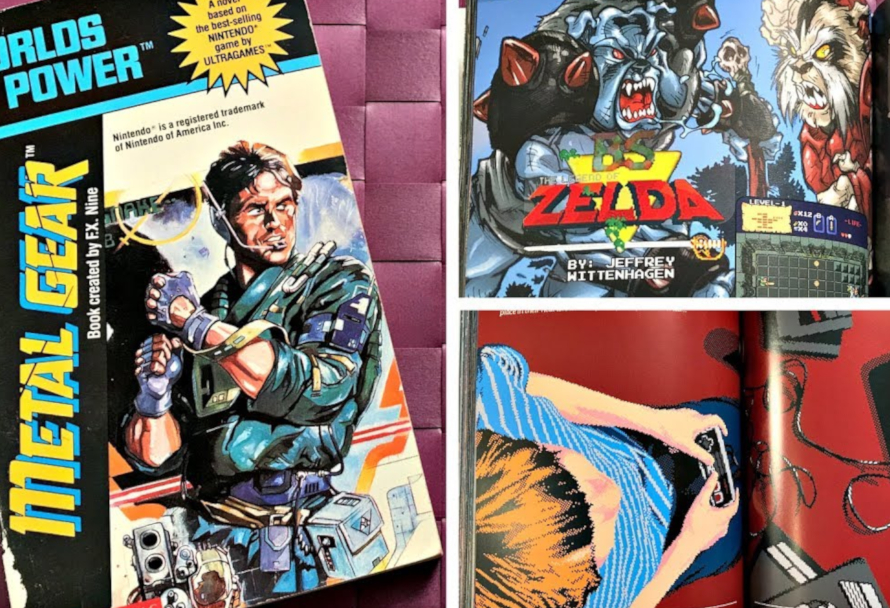
World Book Day lets us come together on the first Thursday of every March to celebrate the best fiction medium that’s ever existed. That’s right, the video game tie-in novel.
Many games contain a novel’s worth of text and fiction, but strangely the video game tie-in novel is still underused. Maybe that’s a shame, maybe that’s for good reason. But this World Book Day you can decide for yourself when we look at the 5 best video game books to ever be written, along with the 5 worst. To clarify we are looking at books written about existing video games, not books that became popular video games, so no Witcher on this list.
Best Video Game Books
5 – Elite Dangerous: Premonition
Sometimes all you want out of life is a bit of intrigue and some space combat. If that’s what you’re looking for then you’ll be hard pressed to do better than Elite Dangerous: Premonition by Drew Wager. Filled with robust three dimensional characters and some of the best spaceship combat ever penned, this novel is definitely one of the best video game books out there. For seasoned Elite Dangerous players there’s even more to enjoy, as many of the in-game events that players influenced are directly referenced or included in the book. Brilliant stuff.
4 – Mass Effect: Retribution
Drew Karpyshyn is the brain behind much of the plot of the original Mass Effect games, and it shows in Retribution. Set immediately after Mass Effect 2 this novel comprehensively explores the Illusive Man’s plots, the imminent threat of the Reapers, and the dangerous technology that comes from the mix of the two. Enjoy if you’re a Mass Effect fan, enjoy even more if you feel the series went off the rails after Mass Effect 2.
3 – Halo: The Fall of Reach
You wouldn’t expect an FPS series starring a giant green warrior to spawn a great novel but you’d be wrong. Author Eric Nylund brings a third dimension to the Halo series with this novel, taking you behind the helmets of SPARTAN super-soldiers. You see their fears, their worries, and how they fight for what they believe in. Often heartbreaking as you look at how SPARTANs are made and trained, this novel is well worth anyone’s time, Halo fan or not. Especially if you’re interested in war fiction, sci-fi or otherwise.
2 – War Crimes
Christie Golden is an experienced hand at the tie-in novel, having written for pretty much every property out there. She’s never been better than when she wrote of the trial of Garrosh Hellscream. Set in between Mists of Pandaria and Warlords of Draenor, this World of Warcraft tie-in novel is essential reading for any fan. Betrayal, intrigue, action, backstory, and far-reaching consequences that still rock Azeroth to this day. War Crimes is definitely one of the best video game books ever written and definitely the best World of Warcraft tie-in novel.
1 – The Book of Atrus
Myst is a game about books and so The Book of Atrus is a book about a game about books. Set as a prequel to the venerable puzzle game, it sets up the rules of the world and its magic perfectly through the master-student relationship at the core of the novel. Not only filled with dense fiction exploring a rich mythical history, this novel is notable for helping launch the career of David Wingrove, the lauded author of the Chung Kuo series. This hefty tome starts a trilogy that not only stands up today for its quality, but for being written at a time when tie-in novels, let alone good video game books, were a rarity.
Worst Video Game Books
5 – Stormrage
Focusing on one of the least popular and least exciting characters in World of Warcraft, Stormrage is a game book that more than anything underwhelms. It’s possible to read every single one of its pages and walk away remembering nothing, no characters, no plot points. You definitely read it because there it is, finished, but what happened? No-one can tell.
4 – Torment
Planescape: Torment is a game notable for being one of the first that treated you, the player, as an adult. You can read, you can comprehend complicated characters, you can keep up with a vast plot. The book on the other hand has none of what made the game and the setting so compelling, reducing characters motivations and leeching a large amount of the bizarreness out of the world. A great swing and a miss.
3 – Knee-Deep in the Dead
You wouldn’t expect an FPS series starring a giant green warrior to spawn a great novel and you’d be right. Join Doomguy, sorry, Flynn Taggart as he fights off hordes of the dead and the demonic. And er, that’s it. Imagine someone playing the original Doom and writing down every single thing they do without elaboration, excitement, or style. You’ve just read Knee-Deep in the Dead.
2 – Baldur’s Gate
You’ve heard of things being so bad they’re good, unfortunately that’s not the case with the Baldur’s Gate tie-in novel. Stripped of most of the memorable characters from the game and with little of the plot intact, this frankly bizarre novel has to be read to be believed and would sit at the top of our list of terrible game books if it were not for…
1 – Mass Effect: Deception
Mass Effect: Deception is not only one of the lowest rated video game tie-in novels of all time, but one of the lowest rated novels. So bad it made BioWare offer an apology for its multiple issues and inconsistencies with the game series, Mass Effect: Deception is frankly a must read for any author. If only to learn how not to do it. Alas, it’s hard to get that version of the novel anymore as with the third game in the series, BioWare stepped in to offer some post-launch fixes.
So there you have it, ten novels, some great, some not-so. If you want to talk about game novels why not head over to our community forums and let us know what your favourites and least-favourites are, join the conversation this World Book Day.
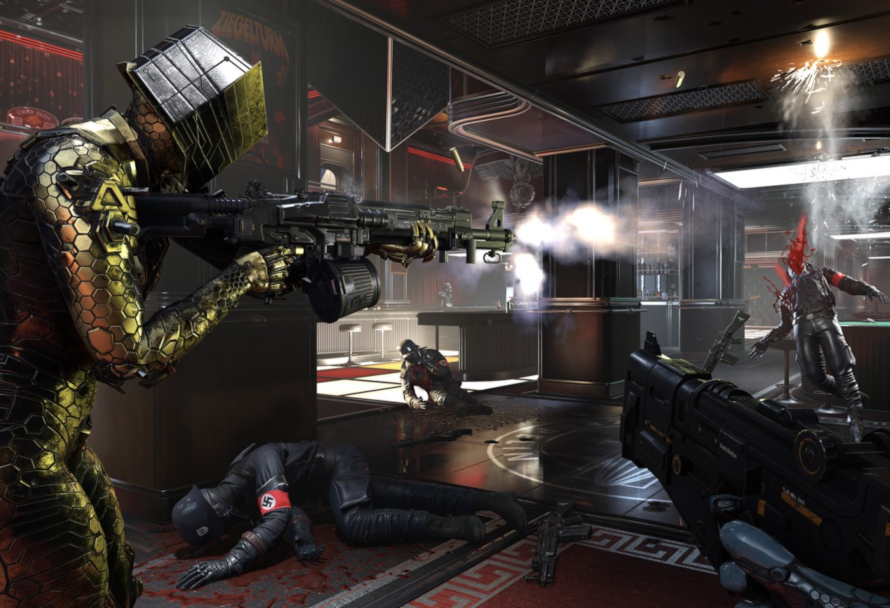
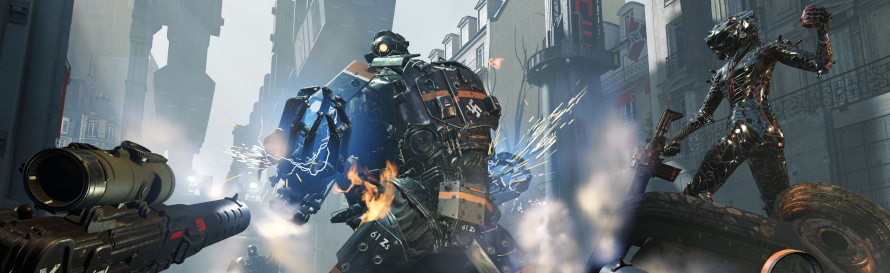
Wolfenstein Youngblood is a fresh new spin on the Wolfenstein series. Like its twin main characters, Youngblood is a partnership, formed by the team-up of MachineGames and Dishonored developers Arkane Studios.
Here’s our brief guide to playing through Wolfenstein Youngblood for the first time.
Wolfenstein Youngblood’s Storyline
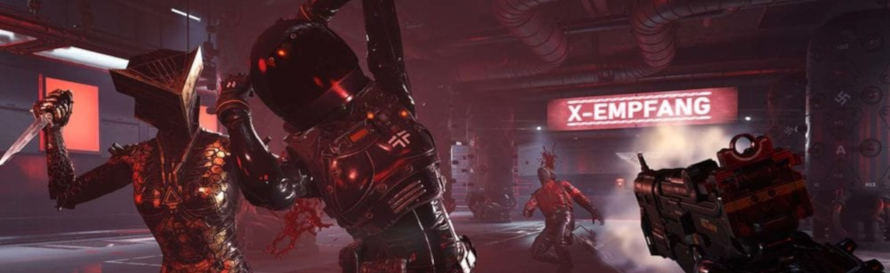
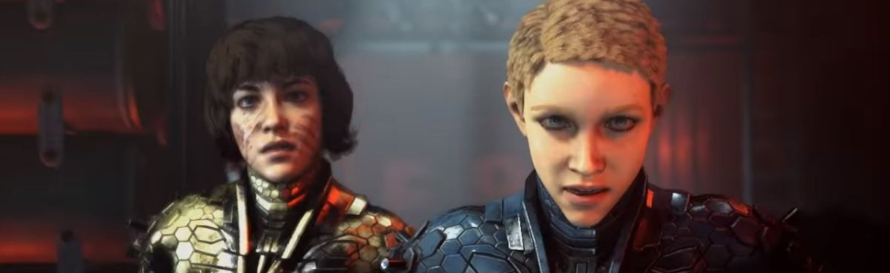
The year is 1980, and series hero B.J. Blazkowicz has disappeared without a trace. In his place, Youngblood follows his twin daughters, Jessie and Zofia, as they track down their disappeared dad. Their journey takes them to Nazi-owned Paris, where they gain the help of the local resistance.
Youngblood focuses on the dynamic between Jessie and Zofia, which is reflected in the co-op gameplay and Pep Signals system that serves a dual role as both emotes and gameplay buffs. It’s another departure for the series, placing an emphasis on working together to take down the Nazi machine.
Weapons, Upgrades, and Abilities in Wolfenstein Youngblood
Wolfenstein is all about the Nazi-killing mayhem, so it pays to know your Nazi-killing tools.
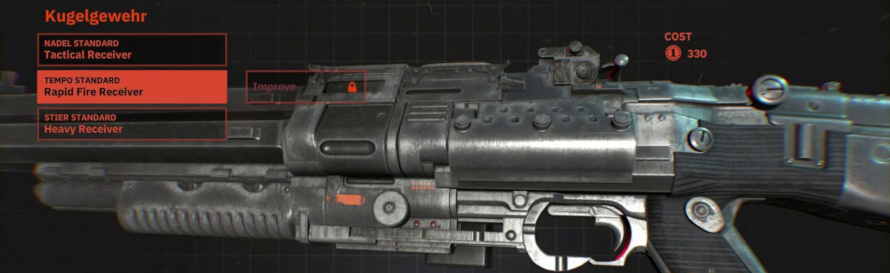
Youngblood features a healthy variety of weapons, from hatchets and hand-grenades to the Kraftwerk category of weapons. Each ranged weapon can be upgraded in four ways: grip, barrel, receiver, and sight. Each upgrade has a Brand, which reflects whether it upgrades accuracy, power, or speed. Stacking your Brand upgrades will allow you to tap into Brand bonuses.
Youngblood brings another new feature to Wolfenstein: RPG elements. This means enemies have levels and you’ll grow stronger, unlocking new abilities with Ability Points as you advance.
Mission Objectives in Wolfenstein Youngblood
There’s plenty to do in Youngblood. In a departure for the series, Youngblood introduces Metroidvania elements, with Paris acting as the game’s central hub. This means you’ll encounter plenty of side quests along the way, and gives you the chance to complete missions in a non-linear fashion. On top of the main and side missions, there are also daily and weekly challenges to tackle.
To help navigate this mission structure, here are the main quests in Youngblood and how to progress them.
Three missions kick off the game and bring you to the game’s main hub. They are:
Der Nachtfalter
Riverside
Catacombs
After that, you can tackle these, along with various side quests you’ll want to take on to gain levels and unlock new abilities:
Raid – Brother 1
Raid – Brother 2
Raid – Brother 3
This leads to the final mission: Raid – Mission Lab X, and the final boss of the game.
Sidequests
Thanks to the non-linear nature of Youngblood, you can tackle side quests as you please, though you’ll want to keep an eye on their recommended levels:
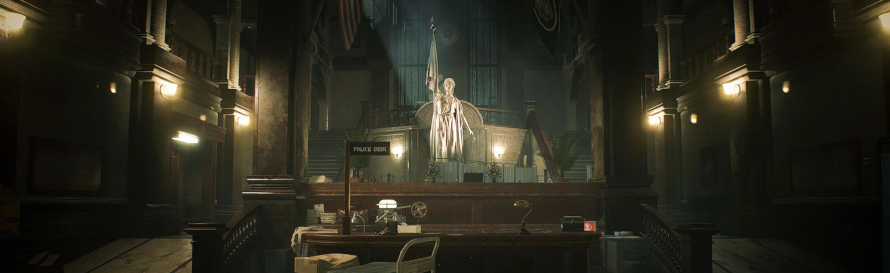
It’s not easy to find your way through Raccoon City in the Resident Evil 2 Remake. With zombies, fires, dangers, and worse out to get you it’s a bit of a nightmare. But have no fear, we can at least help with some of that. If you’re stuck on a locker, need help with a safe, or just want a bit of assistance with a code we’ve got your back.
This guide should see you safe with every code, locker, portable safe, and code all unlocked.
Leon’s Desk Codes
There are two codes to unlock Leon’s Desk. The answers come from Leon’s colleague’s initials, using their first names as the key. For the first code on the right side of the desk use Marvin Branagh, Rita Phillips, and George Scott to spell out MRD.
The left side of the desk can be unlocked with Neil Carlsen, Elliot Edward, and David Ford to spell NED.
Police Station Statue Combinations
There are several combinations you’ll need for the three medallions in the Police Station. These are:
Lion Statue – Combination is found in the Officer’s Notebook in the Watchman’s Room. The combination is Lion, Sprig, and Eagle. On a B-run this is Crown, Fire, and Bird.
Unicorn Statue – Combination also found in the Officer’s Notebook. Combination is Fish, Scorpion, and Jug. On a B-Run this is Children, Scale, and Worm.
Maiden Statue – You’ll need the Detonator from the Operations Room and the Battery from the STARS Office in order to blow open the debris in the West Storage Room to access this statue. The combination is Woman, Bow, and Snake. On a B-Run this is Ram, Harp, and Bird.
Locker Combinations
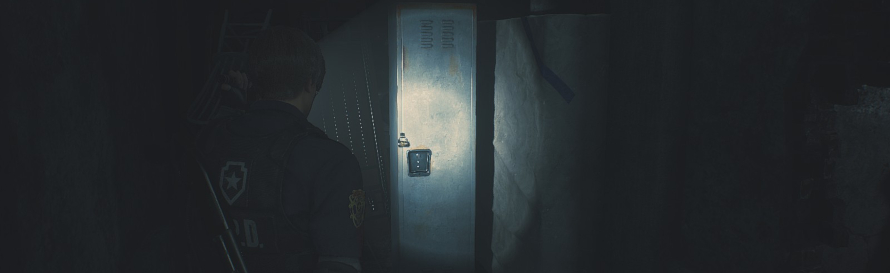
There are three lockers to open in the Resident Evil 2 Remake, each with their own little puzzle revolving around a three letter code. These are:
3rd Floor Locker – Can be found in the Firing Range near the Parking Garage, the locker combination is DCM.
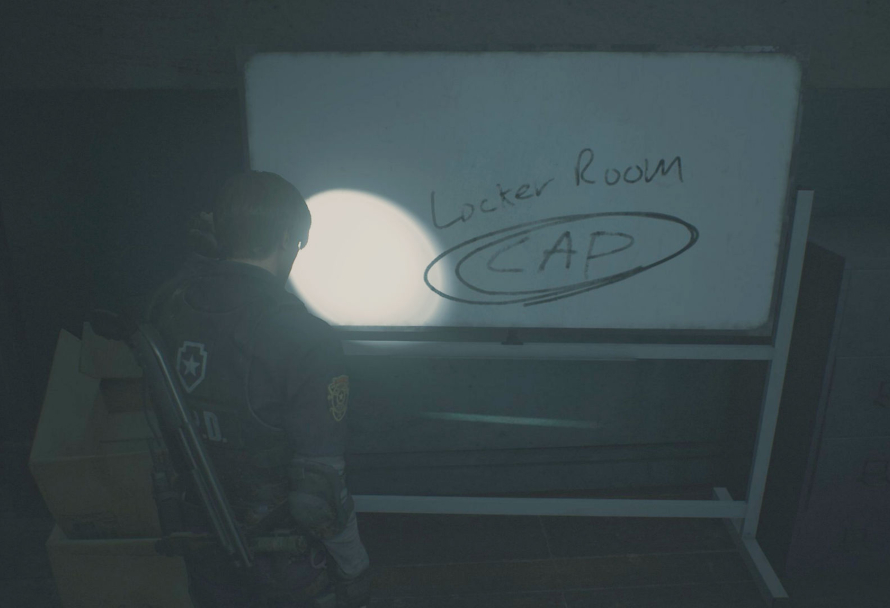
2nd Floor Shower Room – Combination is on a whiteboard a room to the south of the Operations Room. Code is CAP.
Sewer Control Room – Code is found a jazz flyer in the upper sewers, in the Worker’s Break Room. Code is SZF.
Safe Combinations
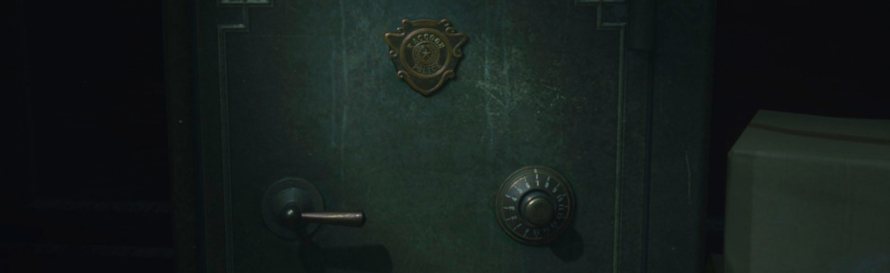
Again, three safes for you to break your teeth upon. These can be found in the following locations:
First Floor West Office Safe – You can find the code on the STARS Office memo. Code is left 9, right 15, left 7.
East Wing Waiting Room Safe – Code is found on the Confiscation Report File. The combination is left 6, right 2, left 11.
Treatment Pool Room Safe – Combination is found on the side of the safe, so you won’t have to go far. This combination is left 2, right 12, left 8.
NEST Laboratory and Greenhouse Codes
These codes are written via symbols, meaning you’ll have to memorise a sequence in order to open the hatches and doors that they lock.
Greenhouse Code – The hatch in the Greenhouse can be opened simply by using the code on the hatch itself. Input this combination code into the Facility Control Terminal in the Greenhouse Control Room and it’ll pop open.
Dispersal Unit Code – This code can be found in the downstairs area in the Lounge under a trophy on a table. Use this upstairs again on the Facility Control Terminal in the Greenhouse Control Room and the Dispersal Unit in the Drug Testing Lab will open.
Portable Safe Combinations
There are two portable safes in the Resident Evil 2 Remake, and unfortunately for once we cannot give you a location for their codes or simply give you the codes themselves. These reset randomly when you start your game, so you’ll need a new code each time.
Thankfully you can brute force them quite easily. To open them you’ll need to light up the wheel at the top in an anti-clockwise order. We recommend experimentation, writing down which buttons light up which lights, and patience to get through.
These portable safes can be found in the following places depending on the playthrough:
Playthrough A:
Shower Room Locker
Linen Room
Playthrough B:
Interrogation Room
Linen Room
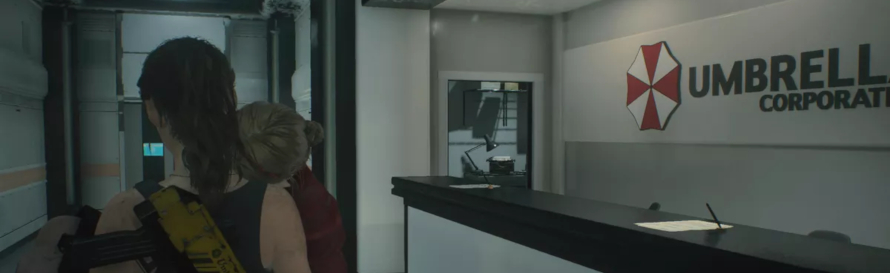
Now you should have everything you need to dive into the Resident Evil 2 Remake with a little more confidence. Of course, you’ll still need to escape from Mr. X and defeat the terrors that the Umbrella Corporation has unleashed, but at least locks won’t hold you back.
The 80s were a time of excess and optimism, and no game quite captures the spirit of the 80s like OutRun.
Released smack in the middle of the decade, OutRun redefined racing games and encapsulated the 80s in arcade cabinet form. But its influence doesn’t stop there, as it left a lasting (and unlikely) mark on music and cinema, too.
So let’s take a look at OutRun and the legacy it sketched in burning rubber.
Life’s A Beach
By 1986, the full effects of the video game crash of 1983 had become apparent, ending the Golden Age and the second generation of video games. Arcade gaming was on a downswing, and it wouldn’t recover until fighting games breathed new life into the format in the 90s.
But somewhere in all this doom and gloom was the carefree spirit that produced one of the greatest racing games of all time.
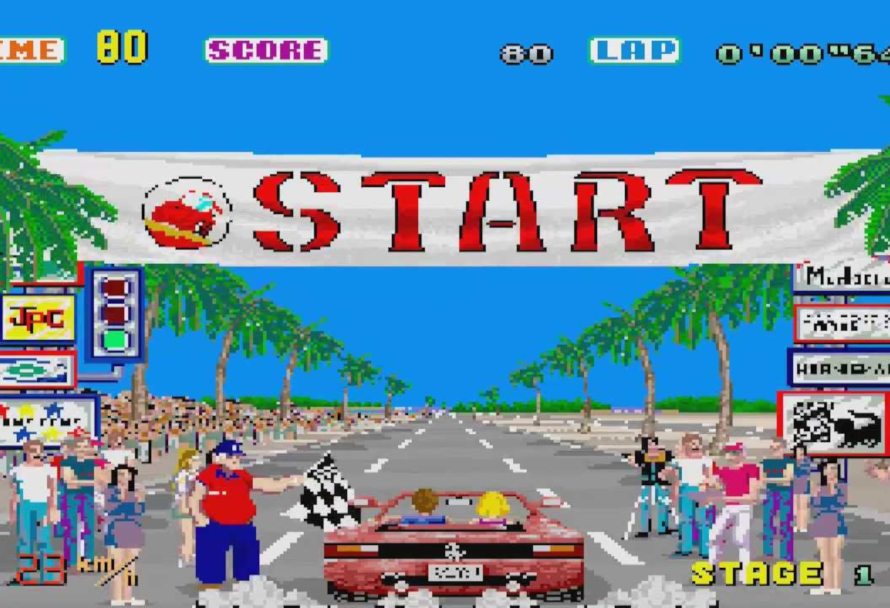
OutRun was released to arcades in 1986. Conceived by Yu Suzuki, whose other claims to fame include arcade legends Hang-On, Space Harrier, and After Burner. To develop the game, Suzuki took inspiration from a scouting trip to Europe, though only after being told that the USA was too dangerous for location scouting. He returned from his trip with both a backdrop for his game and its main star: the Ferrari Testarossa.
OutRun didn’t pit players against other racers—at least not directly. It played out as one extended time attack played against the game. Instead of racing against opponents, the main goal of the game was to reach the end as fast as possible, dodging civilian traffic along the way. A checkpoint marked the end of each stage, and passing through the checkpoint would extend playtime.
In essence, OutRun felt less like a street racer and more like an irresponsible driving simulator. It was about the pure petrol-headed joy of it all, the feeling of driving with the top down on a summer’s day distilled into video game form.
The whole game played into this breezy power fantasy, with its bright, pristine graphics, and boppy 80s soundtrack. Even its main characters personified the idea: a shades-wearing dude and his token blonde blazing across European landscapes in the game’s true star, the Ferrari Testarossa.
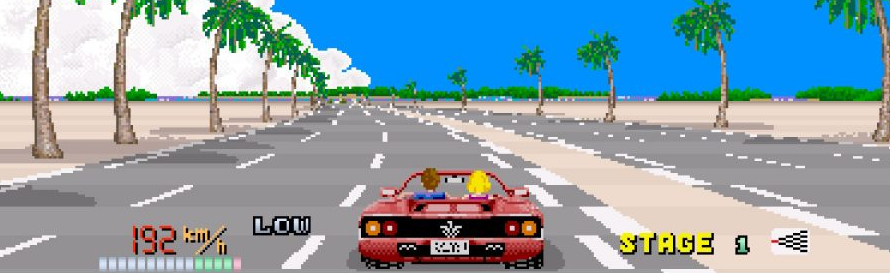
OutRun’s graphics were incredible for their time. Though sprite-based, the illusion of 3D was unparalleled. Players could see every crest and downslope in the road, fields of crops whooshing by on either side, with the whole thing painted in vivid, saturated colours.
The game’s soundtrack was one of its most memorable features, perhaps best described by one of the track titles: a magical sound shower. It blended 80s synth with Latin-esque beats, and players could select tracks to race to, creating a personal connection between the player and the soundtrack. Essentially, this gave the player control over the car stereo.
The sense of adrenaline and power was elevated further for players who got the chance to play in the sit-down arcade cabinet, which modelled a car seat and included the wheel, pedals, and gear stick.
On top of everything else, OutRun also featured a uniquely non-linear design. The entire game consists of one long “track” unlike the many separate stages common to most racing games. There was more than one path through the game, however. Just before each of the checkpoints located along the track, there was a fork in the road. Which fork the player chose would determine which area they would pass through next, and their final path would even determine what kind of ending sequence the player would see.
The Road Most Travelled
OutRun received rave reviews from critics and is one of the games credited with keeping the gaming industry going through the difficult mid-80s. Even today, OutRun is consistently listed as one of the best games of all time and noted for its influence and legacy.
OutRun received ports to just about every console in the years after its release, carrying it through to the early 90s. It also received a number of follow-ups, though none that could capture the public imagination like the original game had done.
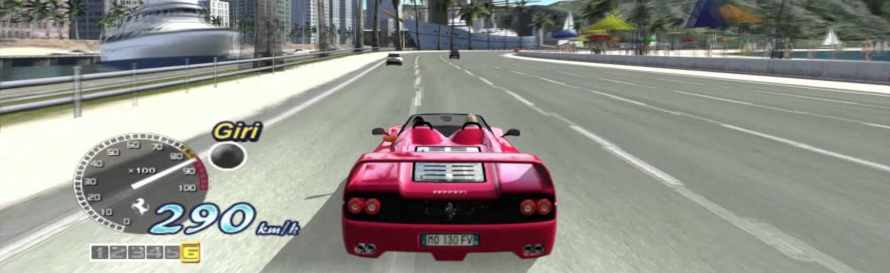
Finally, the series received a “true” sequel in the form of OutRun 2 for arcades in 2003. Somewhere between a sequel and a modern remake, OutRun 2 was also released on the Xbox and expanded on the original game with a larger soundtrack, multiplayer, and a choice of cars. Its main game mode echoed the forked paths of the original, but it also included a stunt-focused Heart Attack mode and the option to race against a time-attack “ghost” car.
The Future in the Past
We can measure the true legacy of a game in influence, which puts OutRun up there with some of the most successful games of all time.
Dozens of racing games in the last few decades have drawn inspiration directly from OutRun or included references to it.
In a rare feat for a racing game, however, OutRun’s influence even transcends the medium. The game was such an iconic distillation of everything 80s that it spawned an entire sub-genre of music and aesthetic sensibility. As the r/outrun subreddit puts it, OutRun is “a revisionist 80s music style of synthesizers and pulsing beats, and the retrofuturist 80s aesthetic of fast cars, neon lights and chrome”.
This outrun genre has even cracked the mainstream, thanks to French electronic artist Kavinsky. OutRun is the name of Kavinsky’s debut album, which features a cover that could easily be the poster image for a hypothetical gritty remake of the original OutRun. The song Nightcall, from the same album, played over the opening credits of the 2011 movie Drive, starring Ryan Gosling and featuring one of the most mainstream showings of the synth-wave OutRun aesthetic. Drive also helped to codify the retro-80s aesthetic of the genre, with its electric pink font layered on visuals of muscle cars and set to synth-wave tunes.
This outrun genre has circled right back around to video games, too. There’s a particular sub-genre deeply tied to the synth-wave/outrun music genre. This includes titles like Neon Drive and OutDrive—their titles wear their influences on their sleeve, presenting the 80s nostalgia of OutRun through a trippy neon filter.
Other games that share DNA with OutRun include Need for Speed, Project Gotham Racing, and the Burnout series, all of which share the same wild joyriding feel of the classic game. More recently, Forza Horizon 4 included an OutRun-themed mission in its list of missions referencing other racing games. Even indie platformer Horace gets in on the action with OutRun-themed arcade games cropping up in its story. Decades later, it’s clear OutRun inspired a generation.
Into the Sunset
While OutRun isn’t talked about much these days, its impact on gaming history and beyond is still felt. As OutRun drives on into the sunset, the games, music, and movies it helped inspire are sure to keep its legacy alive for a long time.
It’s a rare game series that can defy changing tastes to remain popular yet unchanged across seven titles, but the Metal Slug series has achieved it. The timeless franchise feels as much at home in today’s retro-styled indie scene as it did in its era origin.
So let’s take a look at the Metal Slug series and how it has gunned down the competition.
Metal…Slug?!
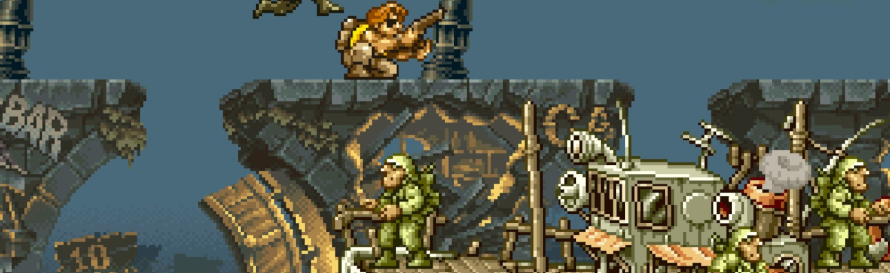
The original Metal Slug was an indirect descendant of several games from development studio Irem, which had already found success with titles like R-Type, In the Hunt, and Gunforce.
Metal Slug was the child of the latter two, developed by ex-pats from Irem in the form of new studio Nazca Corporation. It combined the frantic shoot-em-up style of the team’s previous titles with the lessons learned in their development, creating a final product that was pure, distilled game design perfection. This gameplay was presented in a now-iconic, timeless aesthetic, making Metal Slug easily one of the most complete packages in gaming.
The bizarre name of the series derives (in a curious bond with the similarly-named Metal Gear series) from its mascot weapon of the same name, the Metal Slug tank. This was originally to be the main player-controlled entity before the game was overhauled to feature human characters. The Metal Slug still features as a vehicle in the original game and was later joined by a host of other player vehicles, also referred to as Slugs.
The original game was released on Neo Geo arcade software and its home consoles in 1996, but was also ported to various other platforms throughout the 90s.
Metal Slug’s graphical style and art design were so incredible that it still holds up today, as though it were an indie game merely styled as retro. The Metal Slug aesthetic is instantly recognisable with its chunky, bulbous look, even bringing organic curves and bulges to mechanised infantry. Some of its bosses and enemy machines are beautifully complex in their design, making them a joy to fight. It’s no surprise that the series has stuck close to that aesthetic across many iterations.
The original Metal Slug was a commercial and critical success and was followed by Metal Slug 2 in 1998 and Metal Slug 3 in 2000, though not before series originators Nazca merged with SNK. Among its other refinements and additions, Metal Slug 2 brought character transformations to the series. Characters could become a mummy or grow obese, dramatically changing how they are controlled. Metal Slug 2 was later remade as the definitive Metal Slug X, released the following year.
Metal Slug 3’s big contribution to the series was the introduction of branching paths, which added to the game’s replayability. For many, Metal Slug 3 represents the high watermark of the series, the perfect distillation of everything that makes Metal Slug great.
Feeling Sluggish
In the early 2000s, SNK found itself in a rocky financial position and eventually declared bankruptcy, forced to sell the rights to several in-house IPs, including the Metal Slug franchise. Developers Mega Enterprise and Noise Factory acquired the rights to Metal Slug and would go on to develop Metal Slug 4 as their first game in the franchise.
Metal Slug 4 didn’t take any huge chances, sticking closely to the formula established by the franchise originators. However, it added a scoring system that tracked the number of enemies killed in a given time span, while also including a new transformation and several new vehicles.
Metal Slug 4 received a mostly okay reception, and, for the most part, established that the new developers were capable of aping the success of the old. However, this would turn out to be the only game developed in the interim between SNK’s collapse and its rebirth as Playmore Corporation, later renamed SNK Playmore.
After re-acquiring the rights to Metal Slug, SNK Playmore returned to the developer’s seat for Metal Slug 6. Leaving the Neo Geo behind, this iteration was developed for the Sammy Atomiswave arcade platform and was ported to PlayStation 2 in the same year.
Metal Slug 6 followed up on the story of Metal Slug 3, with its rebels and Martians. Metal Slug 6 introduced two difficulty levels, with the easy mode giving players heavier firepower at the expense of an early end to the game. As usual, a bevvy of new vehicles showed up alongside old classics, and each character gained access to character-specific abilities. While it may not sound groundbreaking, this was the first Metal Slug to introduce weapon switching, allowing players to carry multiple weapons at once.
The Future is Now
The most recent entry in the Metal Slug series was released in 2008. Developed by SNK Playmore, Metal Slug 7 made its debut on the Nintendo DS, marking the first time the franchise appeared on a handheld console.
Taking advantage of the DS’s dual screens, Metal Slug 7 introduced a touchscreen level map, providing players with a helpful overview of their current stage. This addition made navigating the game world easier and offered more strategic insight than previous titles.
Later, a remade version of the game called Metal Slug XX was released for the PlayStation Portable and Xbox Live Arcade. This version refined and expanded upon the original, featuring branching paths that increased replayability—a nod to the changes introduced in Metal Slug 3.
While the main series hasn’t seen a new release since Metal Slug 7, there’s still plenty to discuss when it comes to the franchise’s spin-offs, compilations, and remakes. Although we won’t go into full detail, Metal Slug has spawned several handheld adaptations and mobile games, though the latter has had a mixed track record. All in all, the Metal Slug franchise has over 30 titles in total.
Despite the mainline series coming to a halt after Metal Slug 7, the game’s arcade-friendly, 2D shooter format remains an underrepresented genre in modern gaming. Unlike first-person shooters like Call of Duty or Battlefield, Metal Slug embraces over-the-top action, colourful explosions, and outlandish vehicles, somewhat echoed in more recent titles like Titanfall.
If you’re itching for a new Metal Slug, you may find its spirit living on in the indie scene, with games like Cuphead or Blazing Chrome serving as direct descendants. Additionally, retro collections continue to offer a chance to relive the classic titles from Metal Slug’s era.
While innovation hasn’t always been Metal Slug’s focus, the franchise still has plenty of firepower left. The Neo Geo brand, which Metal Slug was a flagship title for, has seen a resurgence with the Neo Geo X, and with SNK teasing the release of a Neo Geo 2, there’s hope that Metal Slug 8 might follow suit. It would be the perfect partner for a new console, offering a return to slick, stylized warfare after over a decade of quiet.
Much like Metro 2033 and Metro: Last Light before it, Metro Exodus doesn’t skimp when it comes to endings. In keeping the same tradition, there are two Metro Exodus endings – a good ending and a bad ending, both of which require specific conditions to be fulfilled in order to be unlocked.
Naturally then, when it comes to knowing what those special prerequisites we’ve got your back – so without further ado, here is what you need to do in order to nab the good ending in Metro Exodus.
How Do You Get The Good Ending In Metro Exodus?
In Metro Exodus, the good ending depends on the survival of at least two of Artyom’s companions by the end of the game. This is essential because Artyom will need a blood transfusion to survive after being exposed to lethal radiation. Here’s how to ensure you get the good ending by keeping Duke, Alyosha, and Damir alive.
Saving Duke in Metro Exodus
Duke is one of the most difficult companions to keep alive, especially during the Volga chapter. To save him, follow these steps:
Escape the Church Unnoticed: Once inside, head to the top floor and use the window to escape when guards investigate the area.
Stealthily Escape on the Boat: When you reach the boat, avoid killing or seriously harming the boat traders. Instead, use stealth and stun them.
Avoid Killing the Cult Leader’s Men: Stealth is key here—don’t use Artyom’s knife, as killing enemies will negatively affect your chances of saving Duke.
Saving Alyosha in Metro Exodus
To save Alyosha in the Taiga chapter, you’ll need to use non-lethal methods and focus on stealth. Follow these steps:
Use Non-Lethal Force: Don’t kill any Children of the Forest.
Rescue All Prisoners: Free the prisoners you come across during your journey.
Get Help from Olga: If you rescue the prisoners and avoid conflict, Olga will help you, allowing Alyosha to continue safely.
Saving Damir in Metro Exodus
During the Caspian Sea chapter, Damir can be saved with a similar strategy – non-lethal combat and careful decision-making. Here’s what to do:
Stealth and Non-Lethal Force: Avoid killing the slave faction members. Use stuns and stealth to move past them.
Rescue Slaves: Complete side missions to help the slaves, which will increase Damir’s trust in Artyom.
Find Giul’s Mother’s Photo: In a bunker, find a photo of Giul’s mother and return it to her. This solidifies Damir’s loyalty and ensures his survival.
How to Get the Bad Ending in Metro Exodus
The bad ending is triggered when Artyom doesn’t have enough companions alive to perform the blood transfusion. Without this, he succumbs to radiation poisoning. Here’s how it plays out:
Artyom Dies from Radiation Poisoning: With no transfusion, Artyom perishes.
Funeral and Mourning: The remaining Spartans, including Anna, hold a funeral for Artyom.
Spiritual Limbo: Artyom’s spirit remains in limbo, surrounded by the spirits of past characters like Khan, Miller, and Bourbon.
Achieving the good ending in Metro Exodus requires keeping at least two companions alive: Duke, Alyosha, and Damir. Use stealth, non-lethal methods, and complete key objectives to ensure their survival.
Failing to do so leads to the bad ending, where Artyom dies from radiation exposure. With this guide, you’re now equipped to choose your path and influence the game’s outcome.
Gears 5 multiplayer is arguably one of the best things about Microsoft’s fifth entry in its ultra-violent, cover shooter franchise. Rife with different modes and challenges, we’ve got everything you need to know about Gears 5 multiplayer, Gears 5 ranks and the Gears 5 ranking system. Lancers at the ready!
Skill Cards – What Do They Do?
One of the biggest changes to Gears 5 multiplayer is the inclusion of a new skill card system, as it provides a number of rather nifty buffs and upgrades to whichever character you assign them to. Limited to the Horde and Escape modes, these cards can be earned by simply using the same character over and over in these modes and can provide a range of useful bonuses from improving your fortifications to providing a much-needed boost to your final score.
What Modes Are There?
More than any other games in the series, Gears 5 multiplayer offering certainly does not skimp on content. Broadly speaking, there are three separate, very different categories of Gears 5 multiplayer modes and they each offer a series of smaller game types within themselves.
Versus Mode
Arguably the most traditional of Gears 5 multiplayer offerings, versus mode assembles many of the multiplayer game types seen in previous Gears titles. Folks who like to indulge in Ranked play will discover the usual King of the Hill and Team Deathmatch modes, but players who haven’t gotten into a Gears title for a while might be surprised to come across Escalation (like King of the Hill but you have to find your weapons) and Guardian, where you must murder the leader of the enemy team.
Arcade Mode
The cherry on the cake of all the versus modes on offer, and clearly deserving of its own category in this article, is the arcade mode which is new to Gears 5. A neat riff on the adversarial five-on-five deathmatch mode, Arcade Mode is essentially the closest that Gears 5 multiplayer has gotten to a hero shooter.
Each character that you can choose from has a set of passive skills that, in true hero shooter fashion, make them unique from any of their fellows. One character might have improved movement speed, while another boasts increased damage mitigation, for example. Where things get really interesting, however, is in the upgrade system that arcade mode leverages.
With each kill, you gain skulls that can be traded in for better weapon upgrades. The kicker though is that rather than having to wait for some shop to spawn, or for the end of the round to arrive, you can quite literally upgrade your weapons on the go – allowing you to turn the tables on foes who might, for a short time, boast superior firepower.
Horde Mode
Elsewhere, Gears 5 multiplayer brings back horde mode, arguably one of the franchise’s most beloved and recognised game types. The basic premise of horde mode remains the same in Gears 5 multiplayer – you (and some mates) must survive waves of Locust, build fortifications after each wave has been dealt with and then deal with a big bad boss that appears every tenth wave.
Where things are a little more sophisticated this time around, is in how Gears 5 multiplayer-focused horde mode doubles down on the class system that made its debut in Gears of War 4. This time, fortification construction can only be achieved by the Offense and Engineer classes, while a new Scout class places an emphasis on stealth, a Tank class does what it says on the tin, the Support class provides a mixture of battlefield support and combat possibilities.
Now more than ever before, success in Gears 5 is dictated by the class and role-based synergy that your team has, as much as it is their ability to pull the trigger and hit their target on command.
Escape Mode
A neat Gears 5 multiplayer mode with a difference, escape mode is entirely new to this latest entry in the series. Escape mode is a co-operative based mode for up to three players that begins folks off in a somewhat grim set of circumstances. After you and your human buddies claw your way free from the inside of a Locust egg sac, you must escape a massive complex and reach an escape helipad, killing waves of Locust along the way.
If escape mode seems similar to horde mode, it really isn’t. First off, while waves of Locust do try their best to kill you and your mates in quick fashion, you don’t have actually have to fight every group of foes that you see – as the option to sneak past them exists in many cases. Secondly, whereas in horde mode you almost have an overabundance of firepower, in escape mode, every bullet counts as ammo is sparse.
As you can well imagine, on harder difficulty levels the sparseness of ammo combined with the reinforced strength of your foes both conspire to turn escape mode into a hugely tactical and thoughtful game mode.
What Are The Best Tips For Winning?
Though Gears 5 multiplayer has more game modes than ever before. There are some common tips and tricks that you can employ to improve your performance across all of them.
Timing your active reload perfectly is essential, as it will allow you to reload and get back in the fight that much more quickly.
Blind shooting is great as it keeps you protected while allowing you to return fire, but only use it if you know how to be accurate with it. As a rule of thumb, imagine a patch in the middle of the screen – that will be where your rounds land from blind shooting.
Be a friend and mark everything. Whether it’s enemies, ammo crates or other crucial supplies, keeping your team in the know will benefit all of you in the short and long-term.
Making the most out of cover in Gears 5 multiplayer is essential, so be sure to conceal yourself frequently and switch to new cover consistently if things get too hot.
Additionally, making the most out of your cover also extends to being aware of how to use it against your enemy too. Rushing towards cover and pressing the ‘X’ button will cause your character to leap over and stun the enemy, allowing you to follow up quickly with an appropriately gory melee execution.
Staying close with your team with pay dividends. While it might seem attractive to be a lone wolf, having backup is always a good thing to have – and in many cases will be essential to your success.
If you find your performance in Gears 5 multiplayer slipping, practice against AI opponents in Gears 5 co-op modes is a great way to sharpen your skills and get you back on the leaderboard.
How Does It Work?
In order to obtain a rank in Gears 5 ranking system, you need to finish five separate and complete matches to achieve a rank. The keyword there is ‘complete’ as any sort of crash, loss of connection or quitting the match halfway through will ensure that the match does not contribute towards your total. Once you’ve polished off your fifth match, you will be placed into one of the five ranks depending on your overall performance – kills, objectives completed and so on within each of those matches.
What Can You Achieve?
These are the following Gears 5 ranks that you can be placed into based on your performance in the Gears 5 ranking system mentioned above (rated from best to worst):