Desperados 3 Characters

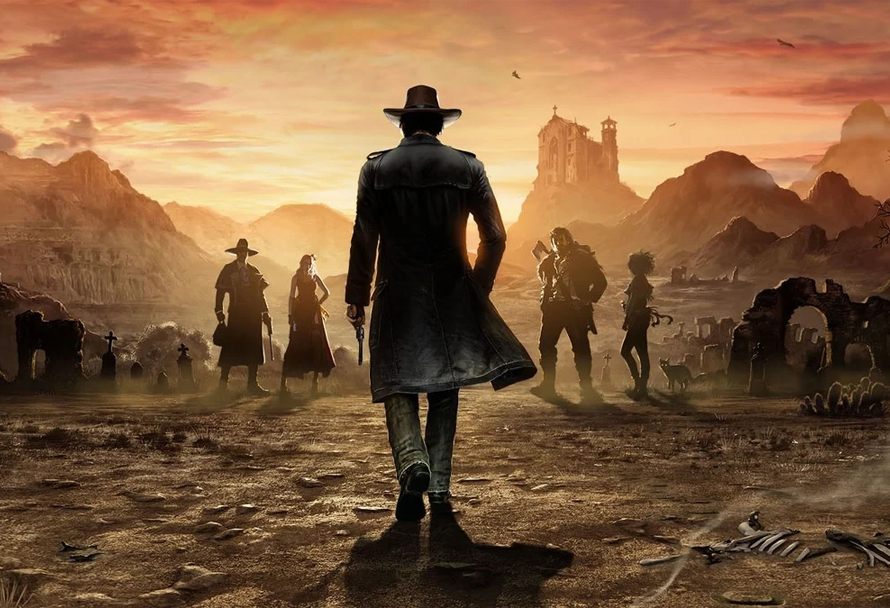
Yeehaw everyone and welcome to our guide to all the Desperados 3 characters along with their skills and when you’ll be meeting them. Desperados 3 lets you take control of five main playable characters over the course of the game, this guide will let you know who they are and how you can get the most of them.

So without further ado, it’s time to grab our guns, put on our spurs, and get to talking about Desperados 3 characters.

John Cooper

The main character of the game, John Cooper becomes playable after mission 2. John Cooper is one of the most versatile characters you’ll have access to throughout Desperados 3.

Armed with a knife for close combat work, John can also use it to cut ropes allowing you to take control of the environment itself. You can also throw the knife at enemies for ranged kills which are louder than a normal close combat kill but still quieter than unloading lead at them.

In addition John has a fake coin he can use for distractions as well as twin revolvers for blasting his way out of trouble.

Doc McCoy

Playable after mission 2, the good doctor is a skilled sniper as well as an alchemist who can heal and hurt in equal measure and can even open locks.

Equipped with a syringe and chloroform for close-ranged work, he can kill or put enemies to sleep if in the right position. His main weapon is a Colt Buntline Special revolver which allows him to take out opponents from a very long distance.

His Doctor’s Bag can be placed to draw enemies in as a distraction and it comes armed with a surprise – enemies become blinded for a short time when they investigate it.

Gas vials allow him to stun opponents in an area and his bandages allow Doc McCoy to heal any Desperados 3 character, making him essential at keeping your posse walking and talking.

Hector Mendoza

This trapper becomes playable during mission 3 and specialises in trapping and controlling enemies as well as the environment as his considerable strength allows him to interact with environmental elements.

His Axe is his weapon of choice for close combat while his bear trap – Bianca – lets him lay traps which kill enemies foolish enough to wander in. His Whistle lets him distract and draw enemies in and his ranged weapon is the sawed-off shotgun which can blast in a cone to destroy multiple foes.

He’s a tough wild man and this is reflected in his self sufficiency, his ‘The Good Stuff’ skill lets him restore his health meaning he doesn’t have to rely on anyone else to get back into the action as soon as possible.

Kate O’Hara

Available to you during mission 4, Kate is skilled in the use of disguises to blend in with foes. Her kick ability allows you to stun opponents and her perfume vial temporarily blinds enemies in a radius. 

Her disguise though is where she shines which lets her avoid detection by standard enemies, letting her move about the battlefield almost at will. She can flirt with foes when disguised to keep their eyes on her, letting your other characters get into position or get past troubling enemies.

Her ranged ability is the Derringer pocket pistol which is one of the stealthier ranged weapons in the game.

Isabelle Moreau

First seen in mission 8, Isabelle can control characters through her voodoo shaman abilities. Through these mystic powers she can mind control enemies and  link enemies so that actions performed on one affect another. With these abilities she is probably the most powerful character in the game, letting you take control of the battlefield and the enemies in your way.

She comes with her trusty cat sidekick, Stella, who can distract enemies, a sickle that lets her kill in melee, and a bag full of Jimson Weed which lets her perform mild heals on other Desperados 3 characters.
Now you should know who you’ll be fighting alongside as you play through Desperados 3, and have some idea of how to use them to successfully survive in the Wild West.

So, who’s your favourite character in the game? Let us know in the comments below or over on our forum.
Lovingly Evil – The super Villain Dating Sim

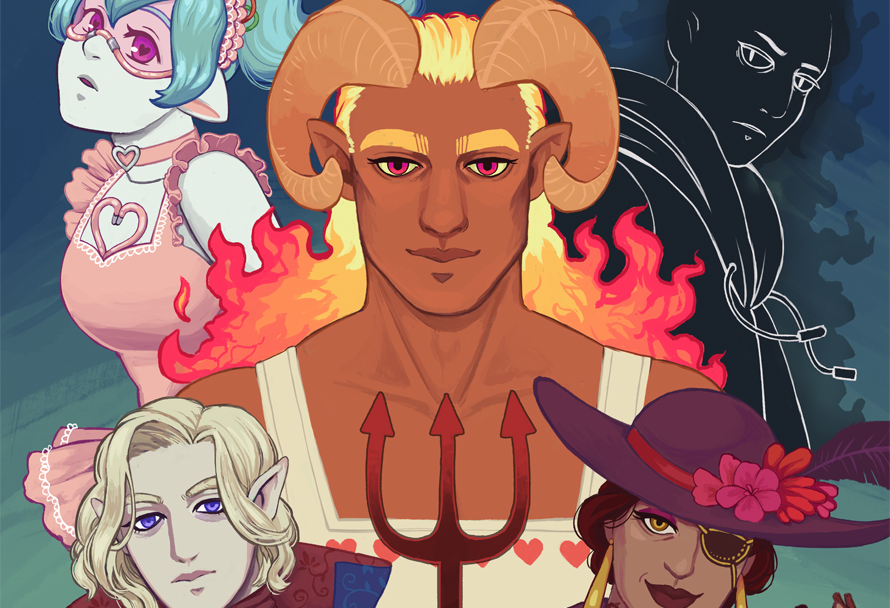
We all need love in our lives and villains are no different. That’s why Green Man Gaming Publishing and Lizard Hazard Games have teamed up to bring you a look at love with a distinctly villainous twist. Lovingly Evil is a dating sim with a difference, and it’s coming to PC later this Summer.

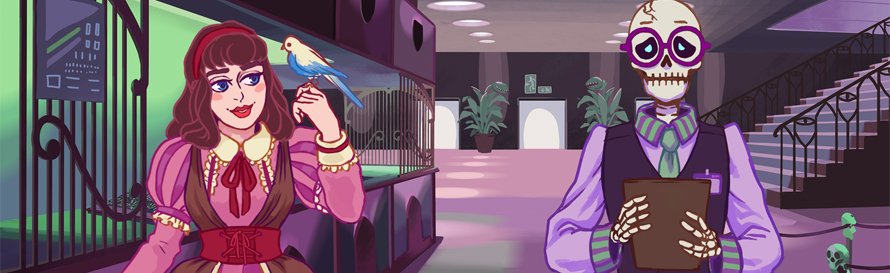
Lovingly Evil sees you create your very own villain as you attend The Villain Conference, an event devoted to evil doers the world over who want to just have a nice time talking about having horrible times. At the conference you’re there to find a partner, one who might help you in your own nefarious plans or even a villain you may fall in love with. 

Or you can just decide to attend some talks, learn more about improving your villainous ways, and become the best villain you can be. It’s up to you. 

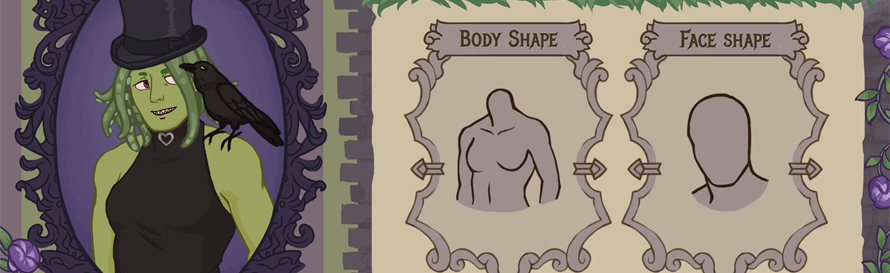
The journey to romance starts with villain creation, you’ll have a huge amount of customisation options allowing you to make the baddie from your worst nightmares or a hot hunk of meat who’s hungry for love. Make a necromancer, a criminal mastermind, or an evil demi-god from the nether reaches of the universe. Lovingly Evil has hundreds of different options including body types, facial features, clothes, accessories, pets, and much more helping you to express your evil side in the way you see fit.

Once you’ve made your villainous alter-ego it’s time to head to The Villain Conference where you can meet others just like you and learn how to really improve your villainous plans. Attend talks, network, wander the food court, and when you’ve worked hard enough you can rip it up on the dancefloor at the villain conference’s very own nightclub.

While you prowl the corridors and events of The Villain Conference and as you talk to your fellow villains, be on the lookout as you may encounter something most unexpected. Love. Lovingly Evil comes with five different potential love interests letting you fall in love with the dastardly demon of your heart’s desire. Will Felix the Vampire put a stake of love in your heart or will you make a deal with Lucifer himself, the font of all evil?

As you explore your potential romantic partners you’ll play minigames with them, from flower arranging to grilling sausages (on hellfire, of course). You can win card-based debates and test your knowledge to build better relationships with your evil love interests. Lovingly Evil even lets you customise this, so if you want to take a step back from minigames and have a more narrative-focused experience, you can switch them off and just start sweet talking a villain right away.

It’s choice that’s at the heart of Lovingly Evil – well, choice and romancing villains. From customising your evil avatar, deciding which romantic partner to pursue, to choosing your path in the game’s branching storylines, it’s all up to you. Lovingly Evil lets you take the reigns of your own villainous story, and your evil evil heart.

Here’s a quick rundown of the features you can expect in Lovingly Evil:

  • Create your own villain character (of any gender)
  • Five villainous love interests
  • Five minigames
  • Freely explore the conference area
  • Attend talks and learn villainous ways
  • Party hard at the nightclub

You won’t have to wait long to get your hands on romance, a demo will be available between the 16th and 22nd of June letting you feel the love. Here’s the system requirements so you can make sure your computer, as well as your heart, are ready for some romance:

  • OS: Windows 7 or higher
  • Processor: 1.8GHz Dual-Core CPU
  • Memory: 4 GB RAM
  • Graphics: Intel Integrated graphics
  • DirectX: Version 11
  • Storage: 600 MB available space

While you’re waiting for the demo, why not head over to our forum and let us know who you’re hoping to meet in the ultimate exploration of rogueish romance in Lovingly Evil.

Games That Resurrect 1980s Movie Icons

From Ridley Scott’s fearsome Xenomorph to James Cameron’s unstoppable Terminator, the 1980s gave birth to some of the most memorable movie icons the motion picture industry has ever seen.

Now well over thirty years later, games are starting to bring back these legends of the silver screen in new, interesting and often unexpected ways. So here’s a collection of some of the games that resurrect 1980s movie icons with aplomb. Let’s go back to the 80s!

Alien: Isolation – The Xenomorph

Easily one of the most terrifying screen icons ever seen, the Xenomorph is quite simply terror incarnate. A sleek, obsidian creature that moves with all the unsettling motion of a spider in a rave, the Xenomorph proves itself to be a constant terror in Creative Assembly’s superb Alien Isolation, where as the daughter of Ellen Ripley, players must use stealth in an attempt to evade and outsmart one of the most fearsome creatures in the universe. To say also that Alien Isolation captures the intensity of the first Alien film with aplomb would be something of an understatement.

Dead by Daylight: Freddy Krueger

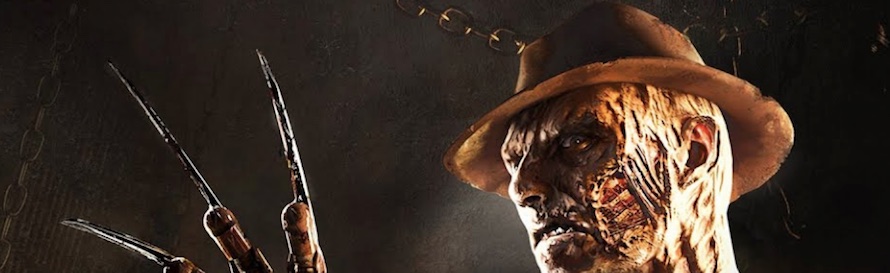
The eternal tormentor of dreams in the Nightmare On Elm Street movies makes his debut in Dead By Daylight, a game which, by accounts, lets our man Fredrick Krueger continue with his stalking, murderous ways unimpeded. With powers that allow him to project himself across the map and force players into a dream state where he can inflict yet further misery and pain upon them, Dead By Daylight does a cracking job of recreating one of the 1980s most fiendish movie terrors.

Friday the 13th: The Game – Jason Vorhees

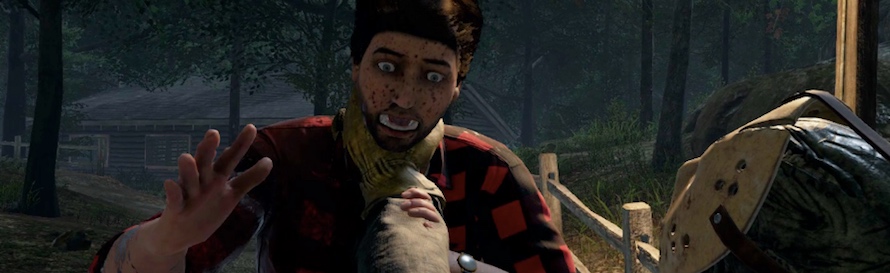
Another movie terror that has been brought to startling life recently has been the menace of Crystal Lake himself, Jason Vorhees. In Friday the 13th: The Game, players can recreate some of Jason Vorhees greatest hits, as doors can be hacked down with axes and single IQ skinny dipping students can be done away with in a number of gruesomely iconic ways. On the flipside, players can also attempt to escape the clutches of Crystal Lake madman too, neatly evoking the tense, pants-soiling spirit of one of the most famous 80s slasher movie franchises of all-time. 

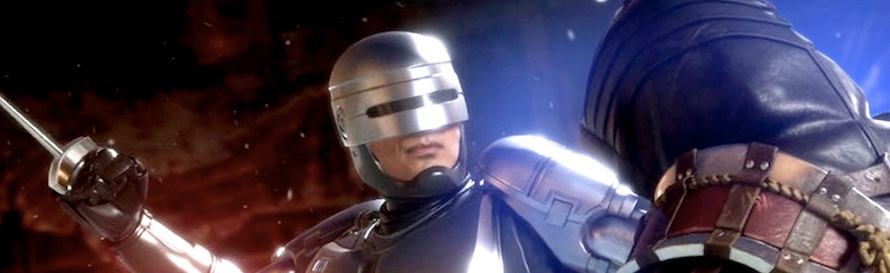
Mortal Kombat 11 – Robocop

It still seems strange to me that Robocop’s re-emergence onto the video game comes as a guest fighter in Mortal Kombat 11, but I guess this *is* 2020 after all. Voiced with delightful relish by original actor Peter Weller, Robocop’s appearance as a DLC character in Mortal Kombat 11 is something of a triumph, thanks in no small part to his trademark semi-automatic handgun, robotic movement and the presence of a certain ED-209, too. 

Oh and pairing him up with another guest starring, 80s icon in the form of the Terminator (voiced by Arnie, no less) produces some very interesting cinematics. Netherrealm Studios have done well by the Detroit Police Department’s finest to say the least. Now, can he have his own game please?

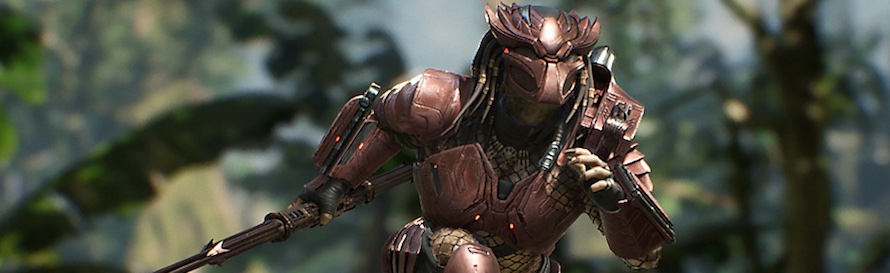
Predator: Hunting Grounds – The Predator

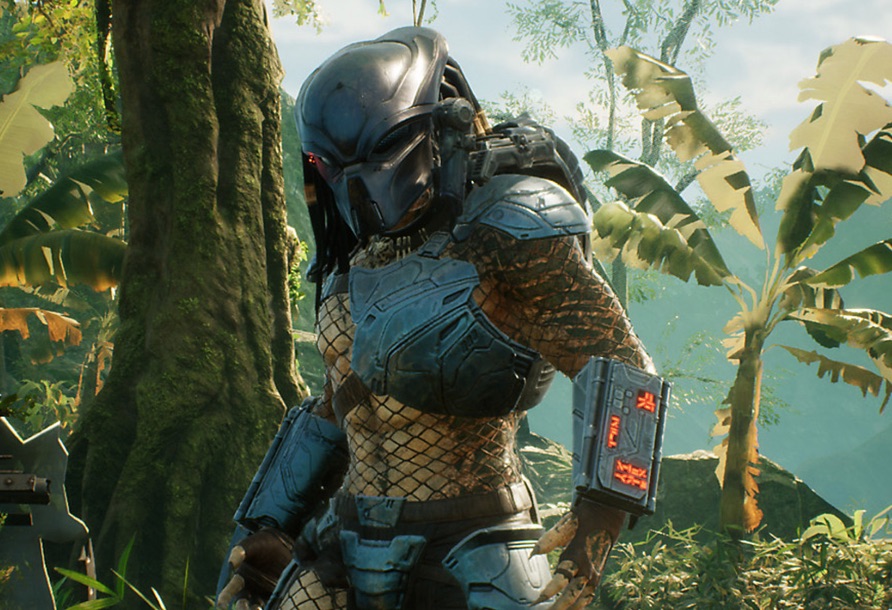
With the stirring, tense score of John McTiernan’s sci-fi horror epic fully intact, Predator: Hunting Grounds manages a rare double feat of not only making players feel immeasurably powerful as the masked, seven-foot tall extraterrestrial killing machine, but also as the resourceful human soldiers who find themselves in the Predator’s three dotted crosshairs, too. Showcasing an intensely violent game of cat and mouse, Predator: Hunting Grounds does an admirable job of capturing the ‘darkness of the jungle’ scenario that the original 1987 movie did so well.

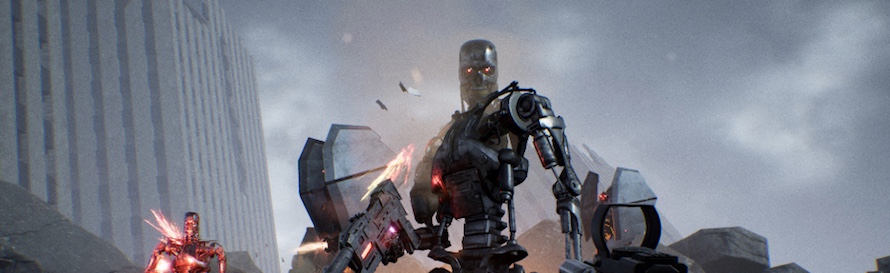
Terminator: Resistance – The Terminator

Rather than just the classic T-800 Terminator variant that Arnie made us all familiar with nearly 40 years ago, Terminator: Resistance presents a smorgasbord of different Terminator threats and sets it against the stirring and evocative backdrop of future war Los Angeles. Between the twisted metal motor vehicles that litter the landscape, the dusty grey ash of the environment and the stalking, red-eyed mechanical enemies that absolutely will, not, stop – Terminator: Resistance conjures up the post-apocalyptic, machine-ruled hell of the 1984 film with aplomb.

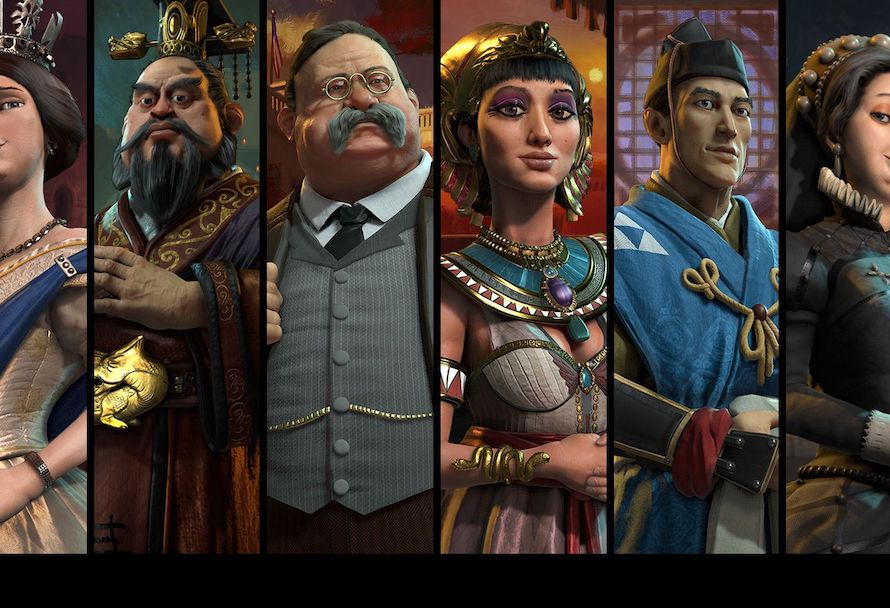
Civilization VI – Best Leaders for New Players

Civilization VI may be four years old, but that doesn’t stop this strategy giant from still being one of the top 20 played games on just Steam alone. The recent release of the New Frontier Pass also keeps the content fresh and interesting. But what if you’re someone who wants to start playing Civ 6 now? Where do you start, who do you pick as your leader? That’s where we come in to help you with a few of Civ 6 best leaders for new players.

There are a plethora of leaders to choose from in the game which can make picking a difficult decision. Not only that, but there are also different types of victory to strive for. Therefore, you’ll want leaders that excel above others in the victory type you’re aiming for. 

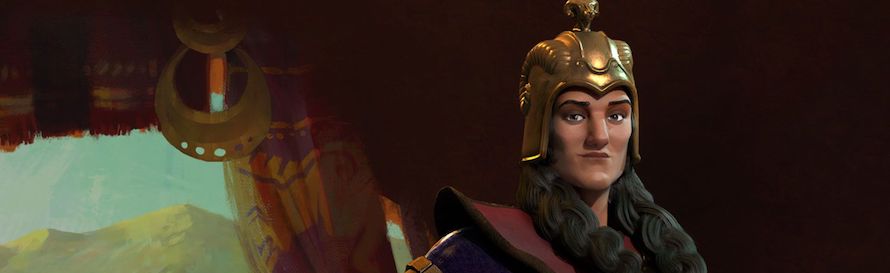
Tomyris Of Scythia

If conquering the world with the strength of your army is your kind of thing then choosing Tomyris of Scythia for your leader will suit you well. With such strong military units Tomyris is capable of crushing enemies in the early to mid game. The Saka Horse Archer can be an extremely powerful force. Although to make best use of them you won’t want to be on a map will lots of sea. This unit thrives with land to roam in. 

The +5 attack that Skathia units get when fighting damaged enemies can be devastating on it’s own. However, throw in the healing of upto 50 bonus points and you can rest assured that you will dominate the battlefield. 

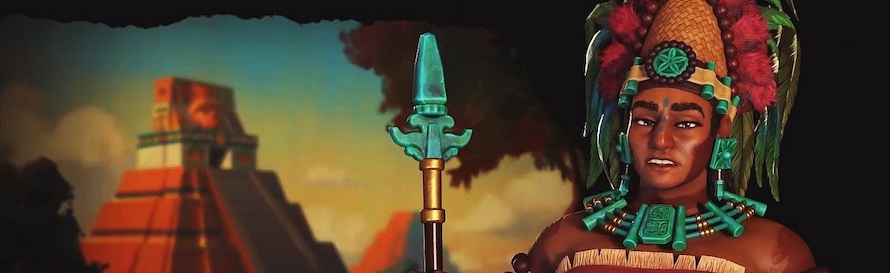
Lady Six Sky Of Maya

You might consider yourself to be a budding scientist, and if that’s your thing then Lady Six is an excellent option. Added with the latest New Frontier Pass, what makes Lady Six of Maya one of Civ 6 best leaders is that she can also flip fairly easily to other victory types – bar Religion. This makes her an incredibly strong and formidable leader. 

With the unique ability of Non-Capital cities within 6 tiles of the Capital gain +10% to all yields you’ll want to build a compact and tall empire. Whilst Korea have been considered probably the best for a Science victory in the past, Maya can certainly give them a run for their money. 

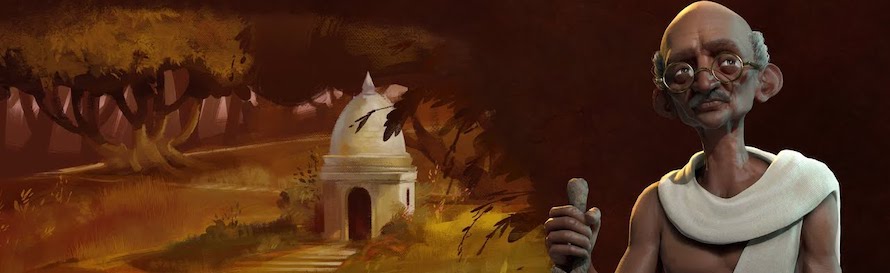
Gandhi Of India

For the religious approach you can’t go too far wrong with Gandhi. With a bonus of +5 to faith for every met civilisation you’re not at war with, you’re already off to a pretty good start for a win via religion. An extremely well known character from the series Gandhi can feel like a safe option. Thriving on peace and tolerant of other religions, this is the style of someone who wants a more relaxed experience. Additionally, opposing empires will face severe penalties for waging war with India. The side effects of which can catch an unprepared force by surprise. 

Wilfrid Laurier Of Canada

Should you feel like you’ve got the knack for politics then you may want to pursue a victory via diplomacy. Wilfrid Laurier is your best option for this route. Furthermore, Canada is a decent choice for a cultural victory with bonuses to building ice hockey rinks on tundra. However, their political prowess with +1 diplomacy favour for every 100 tourism and 100% bonus for every completed emergency and competition is what really makes them shine. They also have the perk of no one being able to spring a surprise war on them. 
Whomever you deem to be Civilization 6’s best leader, you’re sure to have hundreds of hours of fun mastering your tactics and play style. 
Pokemon Sword and Shield: Every Gym Leader Explained

Facing off against the gym leaders in Pokémon Sword and Shield? Whether you’re starting fresh or returning for another run, our guide will help you prep for each battle. Below, you’ll find each Gym Leader’s team and which Pokémon types and moves give you the best shot at victory.


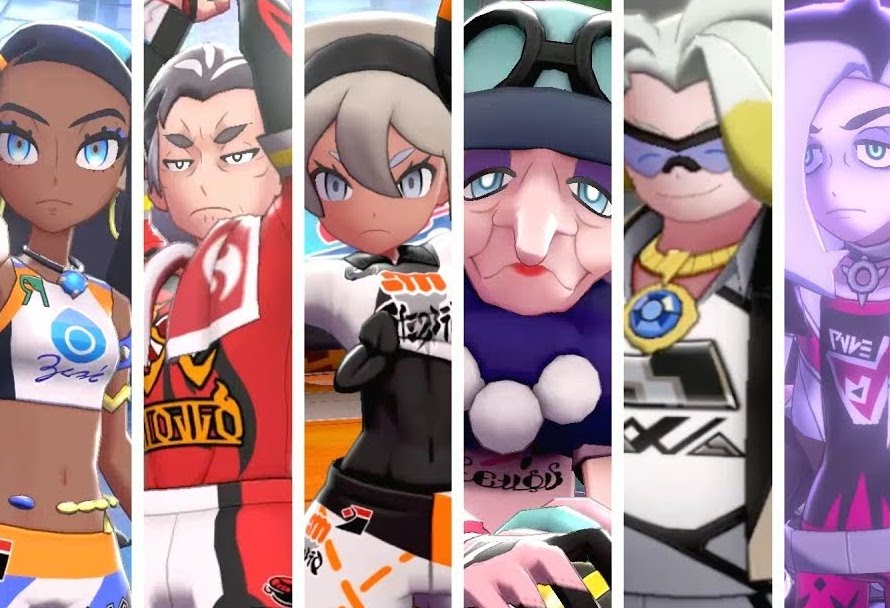
Milo – Turffield Gym Leader

Milo is the leader of Turffield Gym, which specializes in Grass-type Pokemon. His Pokemon include a Level 19 Gossifleur and a Level 20 Eldegloss (Dynamax). Use Flying, Poison, Bug, Fire or Ice-type Pokemon to deal mega damage to his Grass-type creatures.

  • Speciality: Grass-type Pokémon
  • Team:
    • Gossifleur (Level 19)
    • Eldegoss (Level 20) [Dynamax]
  • Counter: Use Flying, Fire, Bug, Ice, or Poison-type moves to deal massive damage to his Grass-types.

Nessa – Hulbury Gym Leader

Nessa is the leader of Hulbury Gym, who specializes in Water-type Pokemon. Her Pokemon include a Level 22 Goldeen, a Level 23 Arrokuda and a Level 24 Drednaw (Dynamax), which deals Rock damage as well as Water. Use Grass or Electric attacks to make short work of her Water creatures.

  • Speciality: Water-type Pokémon
  • Team:
    • Goldeen (Level 22)
    • Arrokuda (Level 23)
    • Drednaw (Level 24) [Dynamax]
  • Counter: Electric or Grass-type moves work best against Nessa’s Water-types.

Kabu – Motostoke Gym Leader

Kabu is the leader of Motostoke Gym, who specializes in Fire-type Pokemon. His Pokemon include a Level 25 Ninetales, a Level 25 Arcanine and a Level 27 Centiskorch (Gigantamax). Use Ground, Rock or Water-type moves to get rid of his Fire Pokemon quickly. 

  • Speciality: Fire-type Pokémon
  • Team:
    • Ninetales (Level 25)
    • Arcanine (Level 25)
    • Centiskorch (Level 27) [Gigantamax]
  • Counter: Use Ground, Water, or Rock-type moves to quickly shut down Kabu’s fiery team.

Bea – Stow-on-Side Gym Leader (Pokemon Sword)

Bea is the leader of the Stow-on-Side gym who specializes in Fighting-type Pokemon. Her Pokemon include a Level 34 Hitmontop, a Level 34 Pangoro, a Level 35 Sirfetch’d and a Level 36 Machamp (Gigantamax). Use Flying, Psychic or Fairy-type moves to deal extra damage to her Fighting creatures.

  • Speciality: Fighting-type Pokémon
  • Team:
    • Hitmontop (Level 34)
    • Pangoro (Level 34)
    • Sirfetch’d (Level 35)
    • Machamp (Level 36) [Gigantamax]
  • Counter: Fairy, Flying, or Psychic-type moves are your best bet against Bea’s Fighting types.

Allister – Stow-on-Side Gym Leader (Pokemon Shield)

Allister is the leader of the Stow-on-Side gym who specializes in Ghost-type Pokemon. His Pokemon include a Level 34 Yamask, a Level 34 Mimikyu, a Level 35 Cursola and a Level 36 Gengar (Gigantamax). Use Ghost or Dark-type moves to deal more damage to his ghostly creatures.

  • Speciality: Ghost-type Pokémon
  • Team:
    • Yamask (Level 34)
    • Mimikyu (Level 34)
    • Cursola (Level 35)
    • Gengar (Level 36) [Gigantamax]
  • Counter: Use Ghost or Dark-type moves to deal extra damage to Allister’s spooky team.

Opal – Ballonlea Gym Leader

Opal is the leader of the Ballonlea gym who specializes in Fairy-type Pokemon. Her Pokemon include a Level 36 Weezing, a Level 36 Mawile, a Level 37 Togekiss and a Level 38 Alcremie (Gigantamax). Use Poison or Steel-type moves to make short work of her Fairy-type creatures.

  • Speciality: Fairy-type Pokémon
  • Team:
    • Weezing (Level 36)
    • Mawile (Level 36)
    • Togekiss (Level 37)
    • Alcremie (Level 38) [Gigantamax]
  • Counter: Poison or Steel-type moves are highly effective against Opal’s Fairy-types.

Gordie – Circhester Gym Leader (Pokemon Sword)

Gordie is the leader of the Circhester gym who specializes in Rock-type Pokemon. His Pokemon include a Level 40 Barbaracle, a Level 40 Shuckle, a Level 41 Stonjourner, and a Level 42 Coalossal (Gigantamax). Use Fighting, Ground, Steel, Water or Grass-type moves to dispatch his Rock-type creatures.

  • Speciality: Rock-type Pokémon
  • Team:
    • Barbaracle (Level 40)
    • Shuckle (Level 40)
    • Stonjourner (Level 41)
    • Coalossal (Level 42) [Gigantamax]
  • Counter: Use Water, Ground, Fighting, Steel, or Grass-type moves to break through Gordie’s tough Rock-types.

Melony  – Circhester Gym Leader (Pokemon Shield)

Melony is the leader of the Circhester gym who specializes in Ice-type Pokemon. Her Pokemon include a Level 40 Frosmoth, a Level 40 Darmanitan, A Level 41 Eiscue and a Level 42 Lapras (Gigantamax). Use Fighting, Rock, Steel or Fire-type moves to make short work of her Ice-type creatures.

  • Speciality: Ice-type Pokémon
  • Team:
    • Frosmoth (Level 40)
    • Darmanitan (Level 40)
    • Eiscue (Level 41)
    • Lapras (Level 42) [Gigantamax]
  • Counter: Fire, Rock, Fighting, or Steel-type moves will melt her Ice-types fast.

Piers – Spikemuth Gym Leader

Piers is the leader of the Spikemuth gym who specializes in Dark-type Pokemon. His Pokemon include a Level 44 Scrafty, a Level 45 Malamar, a Level 45 Skuntank and a Level 46 Obstagoon. Use Fighting, Bug or Fairy-type moves to get rid of his annoying Dark-type creatures.

  • Speciality: Dark-type Pokémon
  • Team:
    • Scrafty (Level 44)
    • Malamar (Level 45)
    • Skuntank (Level 45)
    • Obstagoon (Level 46)
  • Counter: Fairy, Fighting, or Bug-type moves will help you overpower Piers’ Dark-types.

Raihan – Hammerlocke Gym Leader

Raihan is the leader of the Hammerlocke gym who specializes in Dragon-type Pokemon. His Pokemon include a Level 46 Gigalith, a Level 47 Flygon, a Level 46 Sandaconda and a Level 48 Duraludon (Gigantamax). Use Dragon, Fairy and Ice attacks to dispose of his Dragon-type creatures.

  • Speciality: Dragon-type Pokémon
  • Team:
    • Gigalith (Level 46)
    • Flygon (Level 47)
    • Sandaconda (Level 46)
    • Duraludon (Level 48) [Gigantamax]
  • Counter: Use Fairy, Dragon, or Ice-type moves to take down Raihan’s Dragons.

Final Tips:

  • Preparation: Always bring a balanced team that can cover a variety of types.
  • Items: Stock up on healing items and status healers for tough battles.
  • Strategy: Pay attention to each Gym Leader’s battle style and use moves that exploit their weaknesses.

With the right strategy and a little prep, you’ll be ready to take on each Gym Leader in Pokémon Sword and Shield and earn your badges in no time. Good luck, Trainer!

The Ultimate Guide To Selling Cars In Grand Theft Auto 5

So you want to know how to sell your car in Grand Theft Auto 5. It’s not an unusual thing in the game, after all, the entire series is named after stealing cars as it is. It;’s an excellent way to make money, and it’s not even that hard to do in the game. There are a lot of other ways to make money, of course, but stealing cars is a little bit easier than some other methods, and if you can find the right cars then you’ll be making very good money in a very short amount of time. 

How To Sell Cars In Grand Theft Auto 5

The first step towards selling anything is getting your hands on the stock. While you could attempt to pay owners of their cars for their hard-earned vehicles, or, given that the nature of the game is crime, you could just steal it. Given that there’s no real way to haggle with the NPCs of GTA 5, you’ve only really got one choice. So, you need to go ahead and take one, ideally a nice one, before you can sell it. A good rule of thumb to follow is to go for the ones that looks nicest, the kind that you’d expect the wealthy to be driving around in, so high-end sports cars, for example. Once you’ve done that, you just need to go to the right place to sell your car. 

Where To Sell Cars In Grand Theft Auto 5

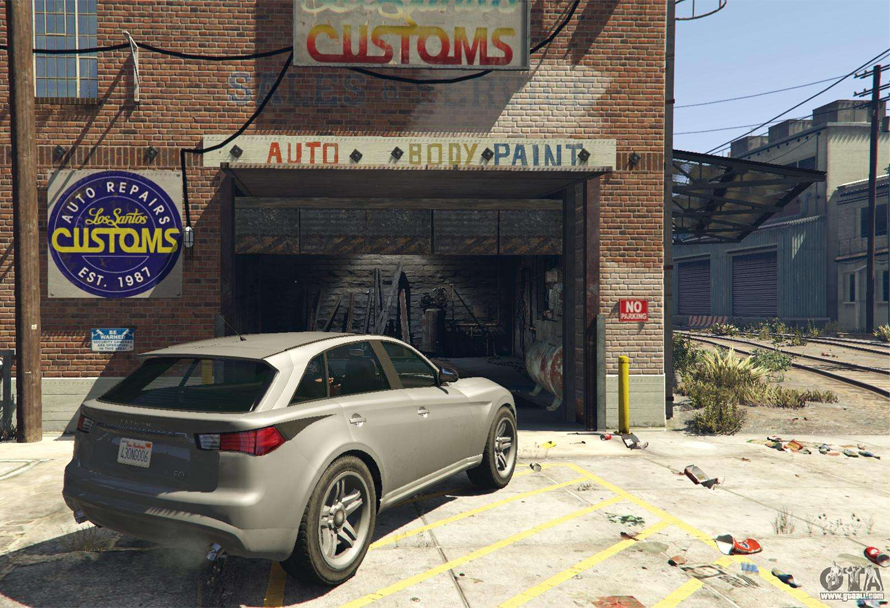
You need to find yourself a Los Santos Customs if you want to sell your car in GTA 5. They’re marked on the map with a spray can icon, so find your nearest one and then head to it. Once there, you’ll need to drive the car into the garage to be able to sell it. Once inside, you’ll have all sorts of options for customising your car if you want to, however, you want to sell it. Scroll down to the Sell option, and hit it to sell off the car you’re in and get some cold-hard cash. Once that’s done, you can just keep repeating it until you’re rich.

Everything You Need To Know About Minecraft Dungeons

Minecraft Dungeons is, unsurprisingly, an incredibly exciting game. It combines the much-beloved world of Minecraft with the incredibly satisfying gameplay of a Diablo-like, and the results seem to be really good. You might want to know more about it though, like when is the Minecraft Dungeons release date, or what is the Minecraft Dungeons gameplay? So, we thought we’d help you out with some answers, then you can decide if you want to jump into it or not. 

Minecraft Dungeons Release Date

The good news is that the Minecraft Dungeons release date is really close, in fact, it’s coming out on May 26th for Nintendo Switch, Xbox One, PS4, and PC. That means you’ll be able to spend the weekend playing it and enjoying the world with friends. It also means you can play it on almost every conceivable platform at the moment. It’s not out on mobile as it stands, but it’s not completely absurd to consider it coming there at a later date. 

The devs will probably want to focus on the current edition of it though, as it seems like a perfect candidate for post-release content and DLC, especially given that one of the versions you can buy, the Hero Edition, gives you access to two upcoming DLC packs. It’s also quite likely that this is being prepped for the next-gen, with it being a prime candidate for a port to both the Xbox Series X and PS5. 

Minecraft Dungeons Gameplay

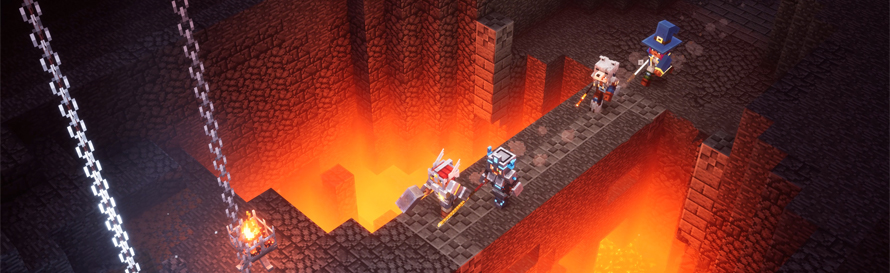
Minecraft Dungeons is an ARPG in the style of Diablo. That means lots of loot, special abilities, and an isometric viewpoint. It has a story with missions that you’ll follow along, but the levels themselves are procedurally generated, which means it’s a great choice for players looking for infinite replayability. 

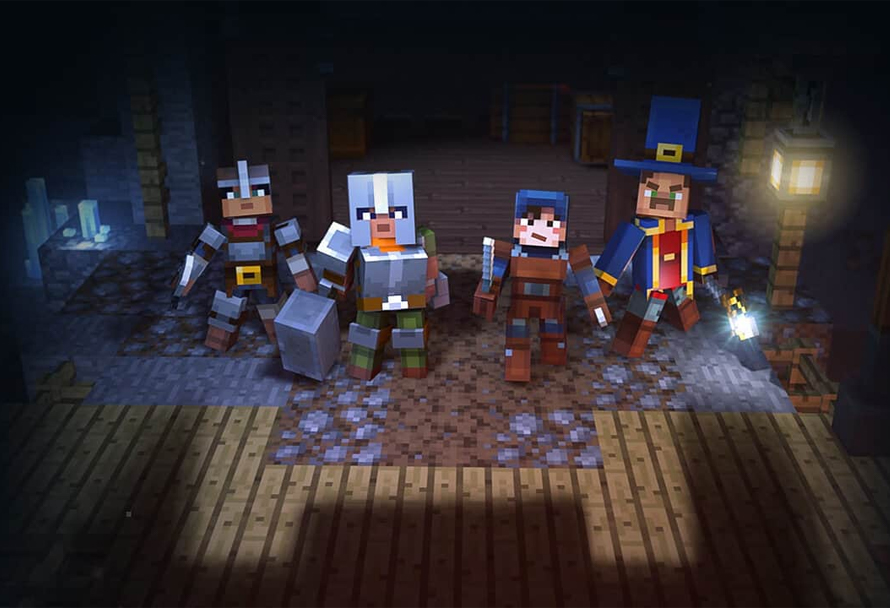
You can play Minecraft Dungeons with up to four players, which means it’s going to be huge with anybody who likes co-op gameplay, and you can play it in different ways depending on your preferred playstyle. For example, you can use melee attacks mainly, or choose to use a bow, or wear heavy armour and soak up damage. 

You can also unlock unique items and enchant your weapons to help customise your character even more. It should allow for a lot of depth, but is likely still aimed at a slightly younger audience, which means it could be a perfect choice for parents looking to play with their kids, or just anybody with younger siblings who are just starting to enjoy games. Of course, it should still be a lot of fun for everyone, but it’s worth keeping in mind.

Trailers

5 Video Games That Make You Feel Lonely

For the most part, gaming is about sharing experiences, whether you do so with the NPCs littered throughout your favourite adventure or with the friends and loved ones in your life. But sometimes, a break from the norm can be a comfortable change of pace. Gaming is a very social activity, but sometimes it’s cathartic to set off on adventures that let you enjoy the silence if you will.

There’s a small subset of games in the world – and we have listed five of our faves below – that let you take in what it means to be on your own, offering the truest facsimile of loneliness that the realm of gaming can offer. If you’re feeling the need for a bit of space from all the awfulness going on in the world or want to distance yourself from action-packed narratives for a bit, why not give these games that perfectly channel the feeling of loneliness a try?

Abzu

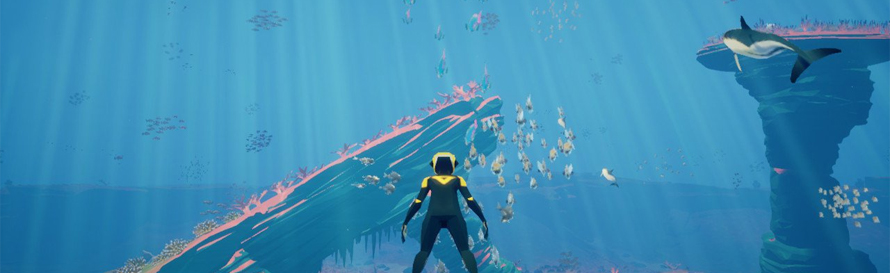
Abzu is a somber, solitary journey teeming with vast seascapes and endless calming environments. From your first dive, you’ll soon realize it’s a thrilling yet lonesome adventure as you take everything in. It’s a beautiful sensory experience that brings to mind the thrill of free diving, and that sense of weightlessness you experience when submerging your entire body underwater. The opening moments of Abzu give way to a pulsating, endless abyss of water that stretches out before you.

There’s a subtle feeling of grandeur, like you’re one small drop in the ocean of the universe – probably because in this one, you are. You’re a lone diver in what’s essentially an aquatic jungle, surrounded by the rainbow of life below the water. The multi-hued ocean floor, spectacular ocean wildlife, and flora of the sea are truly a sight to behold. This tranquil undersea narrative is truly stunning, but it’s also a solitary one.

Gris

Gris is a pastel watercolor brought to life, and it’s as isolating as it is beautiful. Players take on the role of a young woman who’s suffered a great deal of trauma, having lost her voice and entered an extremely fragile state, stripped of her powers. Stumbling around a vast, alien desert, she must work to eventually rebuild her self-worth as well as the world around her.

The world of Gris is a solitary one, as you navigate ornate, behemoth structures and weather violent storms with no one around you. No NPCs are waiting for you at the end of your struggle. There’s no one there to pick you up when you fail. It’s a journey of the mind as well as through this strange, multi-hued world, though you’ll have to go it alone. Perhaps it’s better that way, as you can come out on the other side a whole new person.

Journey

Journey is a solitary game that offers some elements of  social interactions, but for the most part, you’re left to your own devices in a vast desert. Across the sea of sand, you can see an enormous mountain in the distance. – that’s your goal. As you trudge through the dunes with the cruel sun beating down on your back, you may see others and they may even assist you, but there is no speaking or intimate interaction beyond the occasional wordless assistance others offer.

It’s not often that you find others playing at the same time, however, in the same area you’re in. Thus, your trek through the sands is like an awe-inspiring solo trip across a seemingly endless expanse toward a mountain  of some sort of renown. It’s easy to lose yourself in your surroundings as you make your move toward your goal, while feeling awestruck by your surroundings.

Firewatch

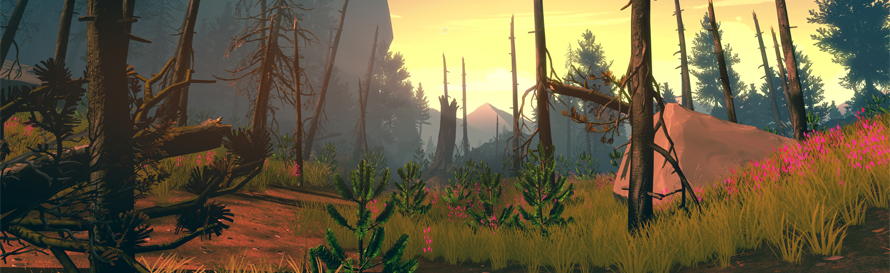
Firewatch reminds you how alone your fire lookout player character Henry actually is when he starts working at the Shoshone National Forest after losing his wife. Though he ends up interacting with his supervisor Delilah through walkie talkie, you can’t help but shake the feeling that you’ve just missed out on the individuals who have passed through the campgrounds.

Despite remaining in constant contact with Delilah, Henry’s job alone feels like isolation. Though there’s evidence of people throughout the game and even the items they leave behind (and later actual interactions) it can often feel like you’re chasing the ghosts of visitors who have long since been gone. In many ways, this improves the game’s experience and improves your time with Firewatch. Talking via walkie-talkie is only satisfying for a short time, after all.

The Witness

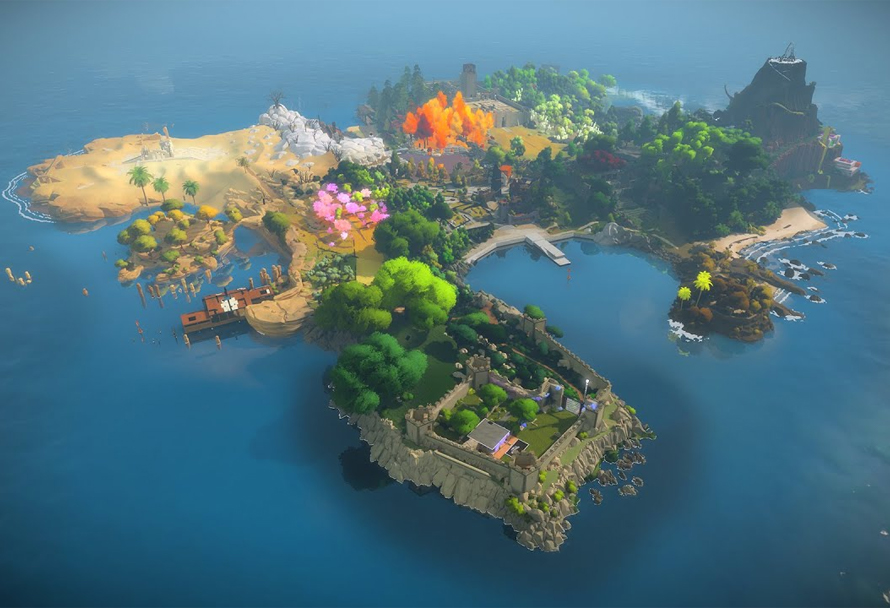
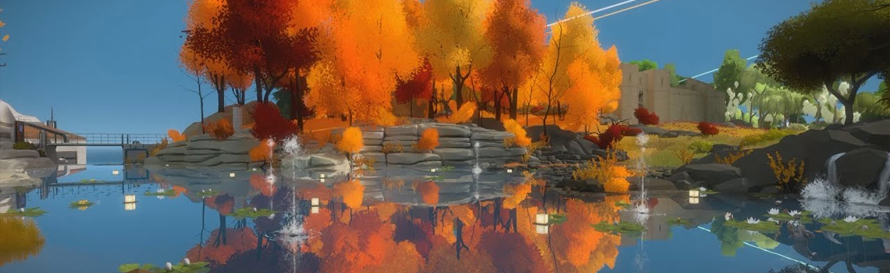
Jonathan Blow’s brilliant The Witness is an arresting and engaging series of puzzles that delight, obfuscate, and teach. Players find themselves on an island with no idea of why or how they’re there, much like Myst before it years ago. They’re also completely alone, from start to finish. Challenges manifest across the island in the form of “line puzzles,” or grids featuring an entrance and an exit you’ve got to reach by drawing a line. On the other side of the puzzle the line is mirrored, and the lines you’re drawing cannot touch.

It sounds simple, but in action it can become very involved and frustrating. When you figure it out, there’s a refreshing “a-ha!” moment as well – but no one in-game to share it with or chat about your moments of intellectual prowess. Still, it’s a moving and gorgeous adventure that feels wonderful to set out on, even if you can’t help but wish there were others around to, well, witness.

Those are our picks, whats your favourite game steeped in atmosphere and intrigue? let us know in the comments below.

Borderlands 3 Chapter Overview

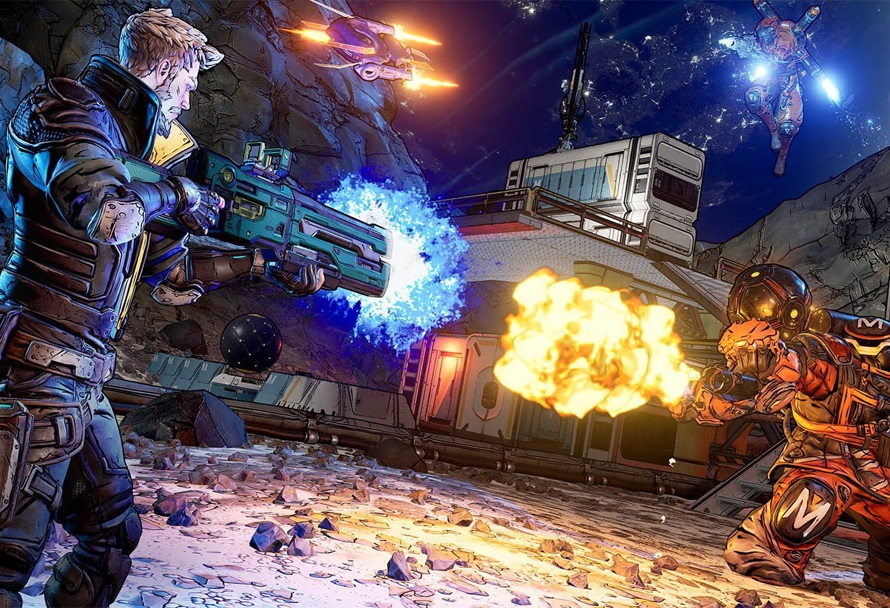
Borderlands 3 has been out for a while now but with the colossal shooter released on Steam a whole new audience has opened up for Gearbox’s mighty shooter sequel. Many are now picking up Borderlands 3 for the first time and if you’re a new player you might be wondering how many chapters are in the game and how long the game is. Especially if you’re at the start or nearing the middle, you might want to know just how much longer your quest will be.

Well that’s alright, because we have the answer for you. Borderlands 3’s story and campaign is split into chapters which is common in many RPGs. Borderlands 3 has 23 chapters you need to complete to chase down the story, finish the main quests, and complete the campaign. This does not count the innumerable side quests, objectives, and other tasks you may encounter in your journey. When you’re playing, keep an eye out for the yellow exclamation mark. This will let you know when there’s a side quest or task that you can pick up to complete for extra rewards, or just for the fun of it.

Each chapter can itself be broken down into several quests which progress the story and move the game’s campaign and narrative onwards. In addition to new quests, objectives, and rewards, each chapter takes you to a new location and unlocks new areas for you to explore, quest, and of course loot in.

So without further ado, here’s our list of all the Borderlands 3 chapters. Be warned, however, the names of some of these chapters will be spoilers themselves. So only read on if you’re absolutely sure you want to know what’s ahead of you in your adventure.

Borderlands 3 Chapters List

  • Chapter 1 – Children of the Vault
  • Chapter 2 – From the Ground Up
  • Chapter 3 – Cult Following
  • Chapter 4 – Taking Flight
  • Chapter 5 – Sanctuary
  • Chapter 6 – Hostile Takeover
  • Chapter 7 – The Impending Storm
  • Chapter 8 – Space-Laser Tag
  • Chapter 9 – Atlas, At Last
  • Chapter 10 – Beneath the Meridian
  • Chapter 11 – Hammerlocked
  • Chapter 12 – Lair of the Harpy
  • Chapter 13 – The Guns of Reliance
  • Chapter 14 – The Family Jewel
  • Chapter 15 – Going Rogue
  • Chapter 16 – Cold as the Grave
  • Chapter 17 – Blood Drive
  • Chapter 18 – Angels and Speed Demons
  • Chapter 19 – The Great Vault
  • Chapter 20 – The First Vault Hunter
  • Chapter 21 – Footsteps of Giants
  • Chapter 22 – In the Shadow of Starlight
  • Chapter 23 – Divine Retribution

There you have it, twenty three chapters of looting and shooting for you to sink your teeth into, and no matter where you are in the Borderlands 3 campaign you now know how many more chapters you have ahead of you and how far you have to go. 

Borderlands 3 is out now and you can head over to our store to check it out today and start your journey to the stars. If you have played Borderlands 3, what’s your favourite chapter? Jet over to our forum and have your say.

Gears Tactics Character Customisation Guide

As well as being an excellent strategy spin-off, Gears Tactics offers a strangely robust character customization system, so fans can tinker with the appearance of their favourite characters and plucky recruits, turning them into pop culture icons or assembling avatars of real-life friends. Inevitably, you’re going to lose them to the horror of the locust horde, but in the meantime, they may as well look good, right? In this guide, we’re going to show you how to customize characters in Gears Tactics, and include some tips to make the process more efficient. 

Can you customize hero characters in Gears Tactics?

Short answer: no. Every character in the game can have their aesthetics altered in specific ways, but the hero characters must retain certain features like their facial appearance so that the cutscenes make sense. So you can’t give Gabe Diaz a facelift, unfortunately – the only facelift he’ll be getting is when he falls foul of a locust’s shotgun. 

However! You can customize the armour that every hero character in the game wears, which means that you can change the way they look in battle. In my personal playthrough, I made Gabe look like Buzz Lightyear and Sid look like Sherriff Woody with some colour mods, just because. 

Beyond that though, you can change their weapons, add patterns and sheens, but you’re stuck with their facial features. That isn’t the case for the rest of the recruits in your roster, though. 

How to customize recruits in Gears Tactics

The rest of the upstart soldiers that you’ll rescue from locust torture chambers can be fully modified once you’ve got them stationed in your home base. Simply liberate them from the chambers in a mission, get them home safely and then head to the Barracks. From there you can choose a particular character and modify their loadout, armour or appearance. 

Of particular interest is the appearance section, as you can exclusively modify the way recruits look in-game. As well as being able to change the look of their armour, clothing and weapon skins, there are a variety of options to make the characters you recruit your own. Appearance is below all of the armour and weapon modifications, and you’ll see at the bottom you can change the name of your characters, which is where you should start. As well as the name you can change their callsign from a set of random tags, the quotes adjective or descriptor in the middle of the name of every recruit that you save.

As well as being able to change their hairstyle and hair colour, you can add facial hair and hats, paint tattoos on your recruits and even add a series of facial and bodily scars to make them look like they’ve lived a life. Once you’re finished tinkering with this oddly deep character customization system, you should take them out into the field and level them up, so they can become a potent part of your team of soldiers. By bringing customization and lore to characters through custom design, you can create your own little narratives, which deepen the connection between the player and the soldiers on-screen – be warned though, it’ll make it much worse when they’re getting pulled apart by a Brumak.

So whats your favourite thing about Gears Tactics? Comment below and check out our full guide on Everything you need to know for Gears tactics.

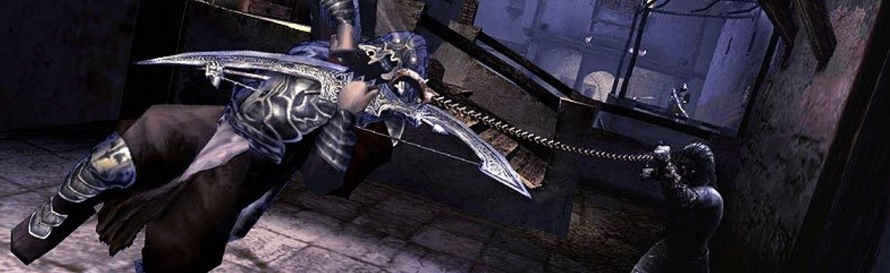
Prince Of Persia Retrospective – Celebrating Ubisoft’s Magical Platformer

It’s always a good time to look back through the past three decades and take stock of one of the industry’s most recognizable platforming adventure icons. Join us as we pick up our sword and leap through time, taking a look at each core title that has cemented the legacy of the Prince of Persia franchise.

To adventure!


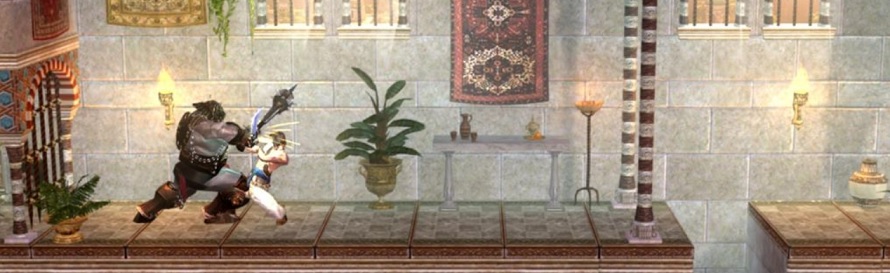
Prince Of Persia (1989)

The game which kicked everything off, Jordan Mechner’s Prince of Persia was quite unlike anything the industry had seen up until that point in 1989. A two-dimensional platformer, Prince of Persia allows players control of the titular royal lad as he leaps, swashbuckles and casually impales himself on spikes on a quest to defeat the Grand Vizier Jaffar and save a captive princess – and all within a decidedly tight 60-minute time limit.

Later re-released as Prince of Persia Classic with high-definition assets, Prince of Persia was revolutionary for its time because it leveraged rotoscoping, an animation process that extracted sprite movement from actual film footage, lending the Prince’s animation a level of smooth realism that was unique at the time. 


Prince Of Persia 2: The Shadow and The Flame (1993)

Some four years later, an attempt was made to recapture the lightning in the bottle with Prince of Persia 2: The Shadow and The Flame, a much more combat-heavy entry than its immediate predecessor. Though Prince of Persia 2 could be considered largely similar to the first game (if it ain’t broke, don’t fix it after all), it did bring in much larger levels and far higher detailed visuals than players had experienced previously. 


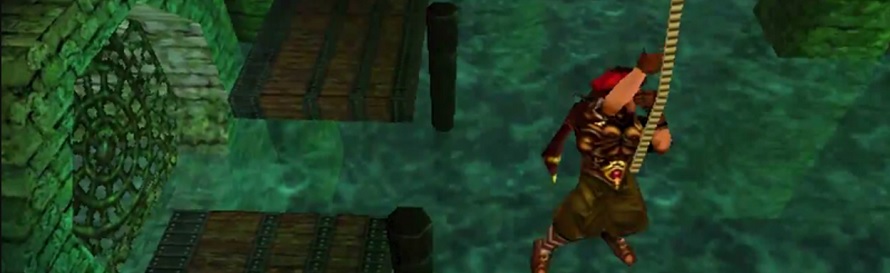
Prince Of Persia 3D (1999)

A decade after the release of the first game, Prince of Persia would take its first steps into the realm of three-dimensional shenanigans with, you guessed it, Prince of Persia 3D. Unfortunately, while it was certainly novel to see Prince of Persia showcased in a fully three-dimensional setting, the final product was lacking to say the least with poor character models, worse platforming and the sort of unresponsive controls that made you want to plant your controller into the nearest wall.


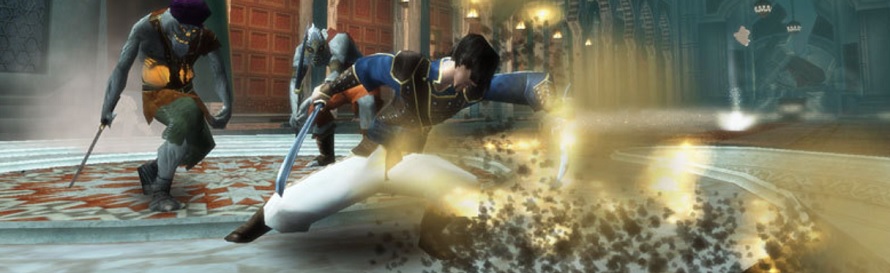
Prince Of Persia: The Sands Of Time (2003)

Now this is how you do Prince of Persia in three dimensions. A reboot of the series, Ubisoft would take the core Prince of Persia formula and beautifully engineered a compelling platforming adventure around it with Prince of Persia: Sands of Time. Boasting gorgeous visuals, great platforming (you could wall run!), top combat and the titular Sands of Time mechanic that allowed players to rewind and manipulate time, Prince of Persia: The Sands of Time was a strong and much-needed return to form for the franchise. 


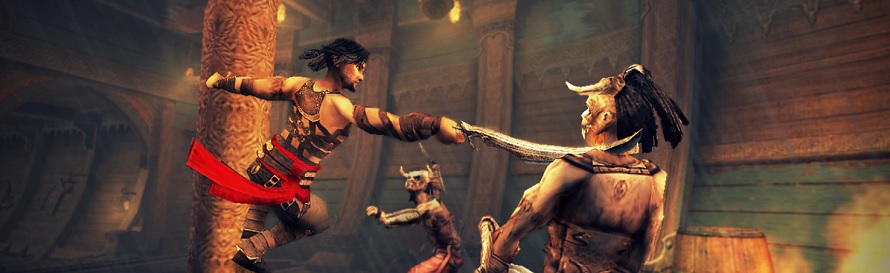
Prince Of Persia: Warrior Within (2004)

Wasting little time, Ubisoft soon followed up The Sands of Time with Prince of Persia: Warrior Within. Following something of a similar design trajectory to Prince of Persia 2: The Shadow and the Flame, Prince of Persia: Warrior Within was less about the innovative platforming and more about the combat side of the equation, with gory finishing moves, demonic-looking monsters and a much more edgy presentation to boot.


Prince Of Persia: The Two Thrones (2005)

A much more rounded combination of the platforming aspects from Sands of Time and the combat from Warrior Within, Prince of Persia: The Two Thrones sought a middle ground of sorts between the previous two games, much as the plot did in the struggle that existed between the titular prince and his dark alter ego. 

The end result was a perfectly enjoyable, gothic-styled Arabian Nights adventure that never quite hit the highs of Sands of Time but was still much better than the previously released Warrior Within. Oh, and sometimes the Dark Prince would transform you into a massive sand monster. So there was that, too.


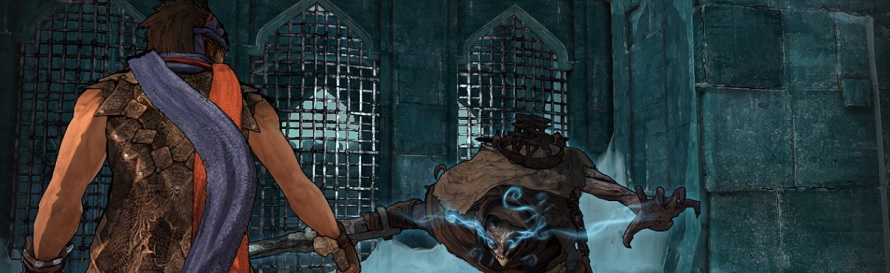
Prince Of Persia (2008)

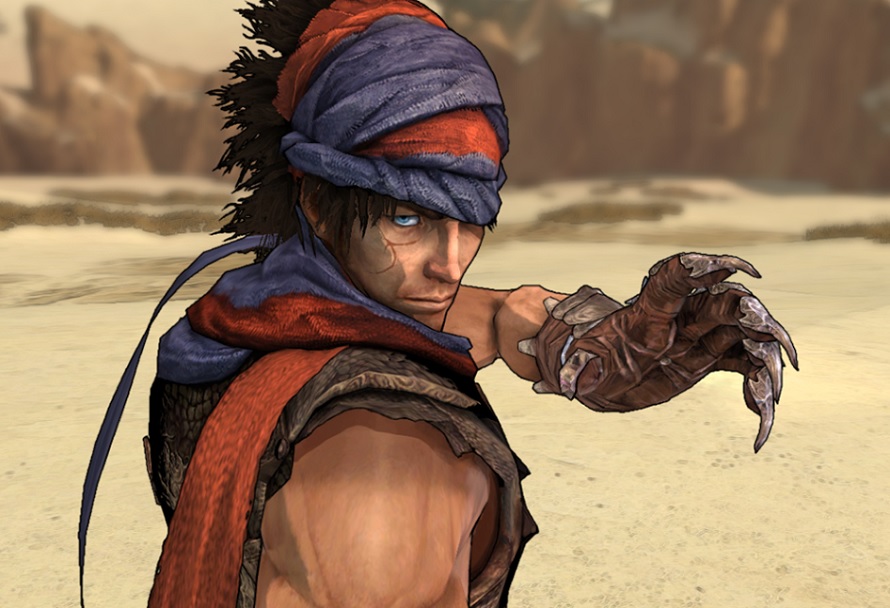
With three titles under its belt for the first reboot of the Prince of Persia franchise, Ubisoft decided to go back to the drawing board in 2008 for the next title in the series. Also a reboot, 2008’s Prince of Persia was a stunning vivid, colorful and painterly-looking effort that was easily among some of the most visually appealing games to release during that year.

Prince of Persia would also rewrite the traditional narrative once again, providing players with a mysterious sidekick called Elika who together with the prince himself must rid the ancient Tree of Life from the evil corruption that lay within. With breathtaking visuals, great platforming and a genuinely compelling storyline, the fact that there hasn’t been a remastered version of this still rankles me deeply to this very day.


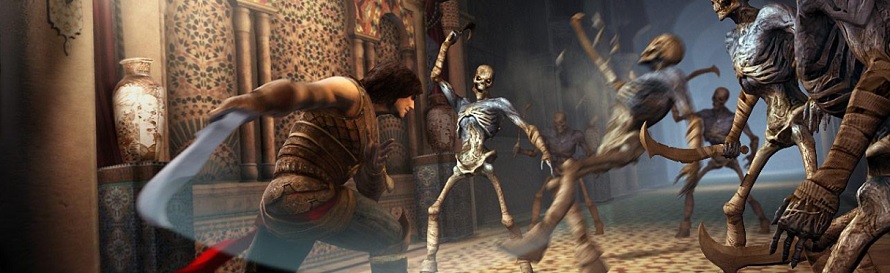
Prince Of Persia: The Forgotten Sands (2010)

Marking something of a return to conservative game design, Prince of Persia: The Forgotten Sands would also hop back to the narrative established in the previous reboot trilogy that was established by Prince of Persia: Sands of Time. Much more similar to 2003’s Prince of Persia: Sands of Time, Forgotten Sands once again combines platforming and combat to great effect, though this time things are a little different.

Rather than just going town on your enemies with regular weapons, Prince of Persia: The Forgotten Sands lets players leverage a variety of different elemental powers to wreck their foes. Whether you’re creating tornados or fashioning rockslides out of thin air, your options for violence are substantial – so too are the enemies you’ll fight, frequently numbering in the 40s and 50s on the regular and requiring decent player crowd control skills to boot.

Beyond its application in combat, our hero’s newfound elemental affinity is also used elsewhere in the game. Freezing a waterfall, for example, allows you to create a climbable column of ice, whereas using an elemental flame to burn down a frost wall will allow you access to a previously inaccessible area. Though hardly representing the long-standing series at its most innovative, Prince of Persia: The Forgotten Sands nonetheless delivers an absorbing action-adventure platformer that we could all do with seeing a lot more these days.

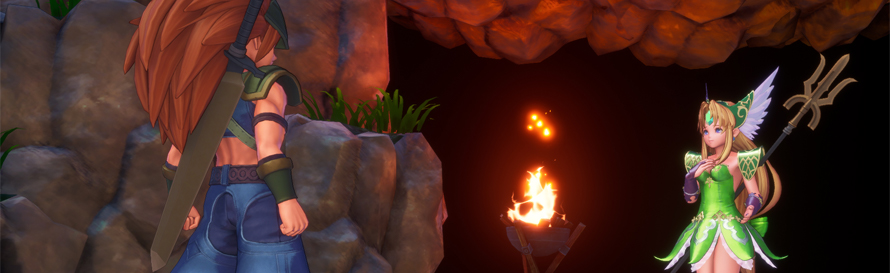
Trials of Mana: Character And Class Guide

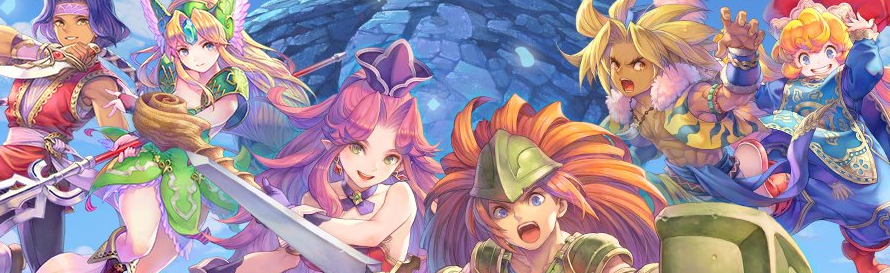
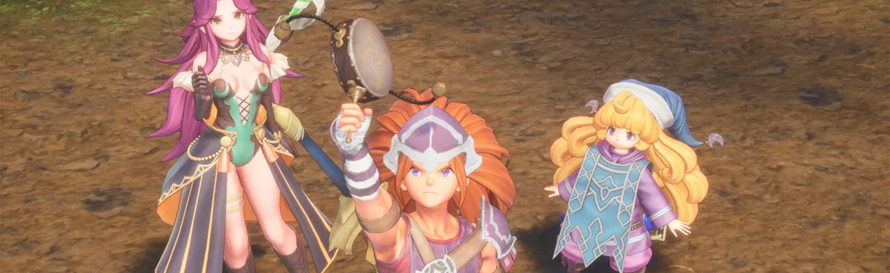
Seiken Densetsu 3 was one of the most expansive and celebrated action RPGs of its era. Now, over twenty-five years later, it’s been remade as Trials of Mana. Previously unreleased outside Japan, Trials of Mana is a massive game with staggering replayability – thanks in large part to its unique class and character system.

The biggest decisions you’ll make are which characters to bring on your adventure and which classes they’ll eventually unlock. So let’s break it down in our Trials of Mana character and class guide.

Trials of Mana Character Narratives

The first major choice you’ll make is selecting your main character. You’ll control them directly throughout the game, and the story will centre around them. You’ll also choose two additional party members, and these choices affect both gameplay and the storyline.

In Trials of Mana, certain characters are narratively linked. Selecting these pairings allows for intertwined storylines and shared character arcs. The narrative pairs are:

  • Riesz and Hawkeye
  • Angela and Duran
  • Kevin and Charlotte

Trials of Mana Characters

There are six characters in Trials of Mana and whilst you can, of course, choose whoever you want in your party (and we do recommend experimenting and choosing you you like the most), each character has a role to fill. Here’s what they’re good at and their starting class:

Duran – Warrior

Duran is a warrior, meaning he’ll be taking the front line and battling foes with weapons. He can also apply elemental buffs to attacks, so other melee attackers can get bonuses from him.

Angela – Magician

Angela blasts enemies with elemental spells but outside of that her attack can be a little low and she does need protection while she builds power.

Charlotte – Cleric

Charlotte is your healer, she brings attack buffs and heals to make her an all-rounder in support.

Kevin – Grappler

Kevin is a werewolf, so if that tickles your fancy, he’s the one for you. He has the highest melee attack power in the game but that is offset by a poor defence.

Hawkeye  – Thief

Hawkeye is a typical thief/rogue style character with quick attacks and debuffs that can control the battlefield and deal decent damage.

Riesz – Amazon

Riesz’s weapons are all focused around polearms and spears, making her a great melee attacker who also learns how to deliver enemy debuffs and party buffs.

Trials of Mana Classes

Class progression begins at level 18, where you choose between Light and Dark paths. Then at level 38, with a special class item found by planting ??? Seeds, you choose another path for a final class upgrade.

Each character has six total class options (two per Light/Dark path). Here’s a breakdown of all classes:


Duran

Level 18 Classes:

  • Knight – Light – Gains healing magic and specialises in shields.
  • Gladiator – Dark – No more shields, higher attack power and gains elemental spells.

Level 38 Classes:

  • Paladin – Light/Light – Defensive class that gains elemental buffs.
  • Liege – Light/Dark – Balances between attack and defence, gains a heal.
  • Edelfrei – Dark/Light – Attack-focused that buffs party attacks.
  • Duelist – Dark/Dark – Dark elemental buff gives Duran huge damage buffs.

Angela

Level 18 Classes:

  • Sorceress – Light – General upgrade with elemental spells.
  • Mysticist – Dark – Gains access to dark elemental spells.

Level 38 Classes:

  • Grand Diviner – Light/Light – Gains the Doppelganger spell and upgrades elemental spells.
  • Archmage – Light/Dark – Upgrades elemental spells and gains Glitter Dust as a spell.
  • Rune Seer – Dark/Light – Learns status effect spells and an instant death spell.
  • Magus – Dark/Dark – Learns all elemental spells as well as an upgraded dark spell.

Charlotte

Level 18 Classes:

  • Priestess – Light – Gives more magic attack and buff options whilst powering up her heals.
  • Enchantress – Dark – Gives more damage options than the Priestess class.

Level 38 Classes:

  • High Cleric – Light/Light – Lots of healing, lots of magic protection.
  • Sage – Light/Dark – Upgrades all Priestess skills to affect the whole party.
  • Necromancer – Dark/Light – Balances attacks and healing with more summons.
  • Warlock – Dark/Dark – Balances attacks and healing with summons and a breath attack.

Kevin

Level 18 Classes:

  • Monk – Light – Kevin explores a bit of healing.
  • Brawler – Dark – Upgrades attack power considerably.

Level 38 Classes:

  • Divine Fist – Light/Light – Specialises in using Class Strikes to deal damage.
  • Warrior Monk – Light/.Dark – Absorbs MP from enemies and heals the party.
  • Enlightened – Dark/Light – Steals HP with attacks and buffs attacks.
  • Fatal Fist – Dark/Dark – Highest attack power for Kevin and increases critical hits.

Hawkeye

Level 18 Classes:

  • Ranger – Light – Puts enemies to sleep and transforms them, also adds ranged attacks.
  • Ninja – Dark – Gives more debuffs and boosts magic.

Level 38 Classes:

  • Nomad – Light/Light – Learns lots of status affecting spells that can buff the party and debuff foes.
  • Rogue – Light/Dark – Gains traps and ranged attacks.
  • Ninja Master – Dark/Light – Upgrades the Ninja class across the board.
  • Nightblade – Dark/Dark – Specialises in dealing single target attacks that also debuff enemies.

Riesz

Level 18 Classes:

  • Valkyrie – Light – Buffs the party and becomes more defensive.
  • Rune Maiden – Dark – Debuffs single foes and increases attack.

Level 38 Classes:

  • Vanadis – Light/Light – Learns powerful Light-powered summons.
  • Starlancer – Light/Dark – Learns powerful summons and party buffs.
  • Dragon Master – Dark/Light – Learns powerful Dark-powered summons.
  • Fenrir Knight – Dark/Dark – Can debuff multiple enemies.

Now you’ve got a clearer idea of how your Trials of Mana team might shape up—and which classes best suit your playstyle. Whether you’re aiming for a balanced party or trying out bold new combinations, the game’s class system gives you plenty of room to experiment and strategize. So, who will you choose for your ultimate adventure?

Final Fantasy 7 Remake Chapters And Game Length Guide

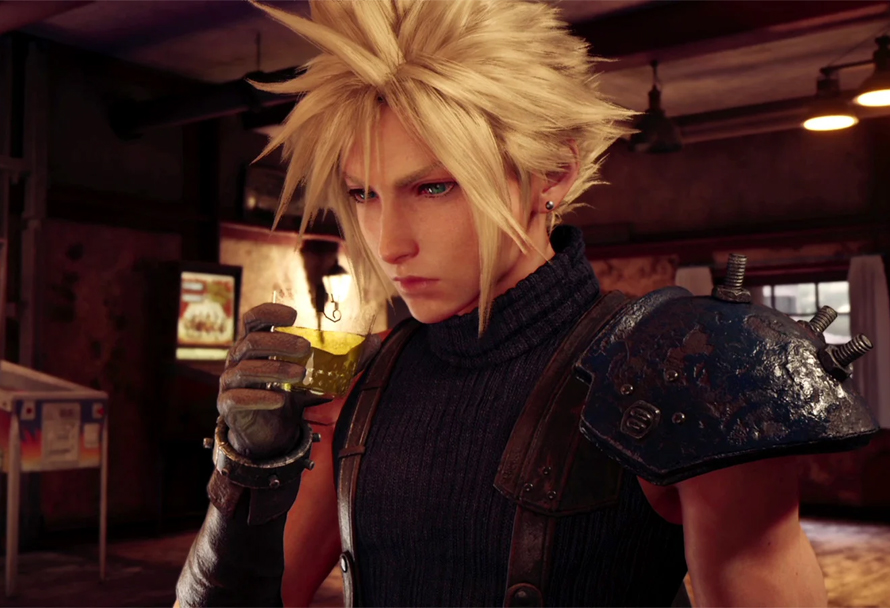
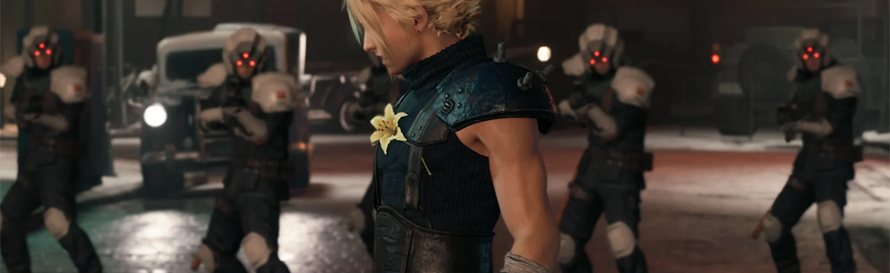
After beginning life as an ambitious PlayStation 3 tech demo nearly 15(!) years ago, Final Fantasy 7 Remake is now finally here. Much more than just a contemporary polishing up of the game that we all fawned over two decades ago, Final Fantasy 7 Remake instead goes much further, expanding on previous plot points and creating all new stories for the player to experience. 

As a result, the game is a fairly mammoth undertaking to say the least. So in this guide we’ll be listing off each of the Final Fantasy 7 Remake chapters, whilst also providing an insight into how long the game actually is and what could come after. Buster Swords at the ready!

How Many Are There?

Despite the fact that Final Fantasy 7 Remake ‘only’ takes into account the Midgar section of the traditional Final Fantasy 7 story, this is still quite a large game indeed. Split into 18 different chapters with a total of some 26 side quests to be taken on (some of which cannot be done on your first playthrough), Final Fantasy 7 Remake is certainly one action RPG that will take a good chunk of your time and then some.

You can catch the full number of Final Fantasy 7 Remake chapters and their respective names below:

  • Chapter 1 – The Destruction of Mako Reactor 1
  • Chapter 2 – Fateful Encounters
  • Chapter 3 – Home Sweet Slum
  • Chapter 4 – Mad Dash
  • Chapter 5 – Dogged Pursuit
  • Chapter 6 – Light the Way
  • Chapter 7 – A Trap is Sprung
  • Chapter 8 – Budding Bodyguard
  • Chapter 9 – The Town That Never Sleeps
  • Chapter 10 – Rough Waters
  • Chapter 11 – Haunted
  • Chapter 12 – Fight for Survival
  • Chapter 13 – A Broken World
  • Chapter 14 – In Search of Hope
  • Chapter 15 – The Day Midgar Stood Still
  • Chapter 16 – The Belly of the Beast
  • Chapter 17 – Deliverance from Chaos
  • Chapter 18 – Destiny’s Crossroads

Now that we know just how many chapters are in Final Fantasy 7 Remake and what they’re each called, it begs the question; just how long is the game? Well, funny you should ask…

How Long Is It?

Clocking in at 18 chapters strong and with a multitude of side-quests, you’d think that Final Fantasy 7 Remake is quite a substantial effort – and you would be right, but just how long is Square-Enix’s latest epic?

Ultimately, the length of a single Final Fantasy 7 Remake playthrough will depend on a number of factors. Chief among these is just how much of the game’s considerable side quests and extra content you decide to take on.

A quick whip through the game without doing any of the optional content will, in all likelihood, take you between 30 and 35 hours depending on how much you’re rushing around (or not as the case may be).

If however, you’re wanting to go through Final Fantasy 7 Remake whilst doing a dollop of side content you’ll be looking at a playthrough time of around 40 hours. Finally, if you’re something of a completionist, to complete all the side content that you can in a single playthrough, in addition to the main story scenario, will take around 45 hours.

However, there are some side quests or ‘odd jobs’ as they are called, that require more than one playthrough in order to discover and complete, thus pushing that 45 hour total play time even higher as a result.

Is It A Standalone Game?

Well here’s the thing about Final Fantasy 7 Remake, whereas the original Final Fantasy 7 which released back 1997 was very much a self-contained game, Square-Enix’s bold re-imagining most certainly is not.

As mentioned previously, Final Fantasy 7 Remake only includes the Midgar section of the narrative which when compared to the old-school original, accounts for much less than a quarter of the locations and content stored on its first disc.

Because of this, Final Fantasy 7 Remake has long been designated as an episodic affair, and even if the absence of an episodic suffix is a touch odd in the light of such a fact, we do know that future instalments of Final Fantasy 7 Remake are in development and on the way.

As to how many additional episodes of Final Fantasy 7 Remake we can expect to have in the future, the answer to that is much less clear. Given how this year’s release only accounts for what is a small portion of the first disc of the original game, it stands to reason that we might have many more episodes of varying sizes in the future. 

Of course, Final Fantasy 7 Remake is remarkable not least because of how deeply it reimagines certain parts of its legendary mythos. As such, don’t be surprised if in future episodes some areas and plot points are melded together, expanded upon or even removed completely. 

When Can We Expect To See Whats Next?

Ah, the 64,000 Gil question! The answer, as of right now, is that we can probably expect to see the next part of Final Fantasy 7 Remake sooner rather than later, if comments from Director Tetsuya Nomura are to be believed.

Speaking in the latest volume of Square-Enix Japan’s Ultimania book, Nomura said that we will likely get smaller episodes instead of larger episodes in the future. His reasoning? Developing and releasing smaller episodes can be achieved much more swiftly, as opposed to larger more unwieldy instalments which would require protracted development, release and marketing timetables.

As to a potential release window for the second part of Final Fantasy 7 Remake then, Nomura has said that he wants to get it out ‘ASAP’, meaning that details should be forthcoming probably a little quicker than many of us think. Given that the engine has already been created and established for the game, along with the template for combat and other key features of the game we would be surprised to see it any later than early 2022.

Want to know more about the Final Fantasy VII Remake? Check our Remake Character guide to see who you’ll encounter, or find out how the game has changed from the 1997 original.

The 5 Best Boss Fights In Games

Often, the most memorable aspect of any game worth its salt are the boss encounters. Frequently characterised as mesmerising battles in which spectacle is equalled only by the skillful demands it places on the player, we’ve come up with five of the best big baddie battles available in games right now.


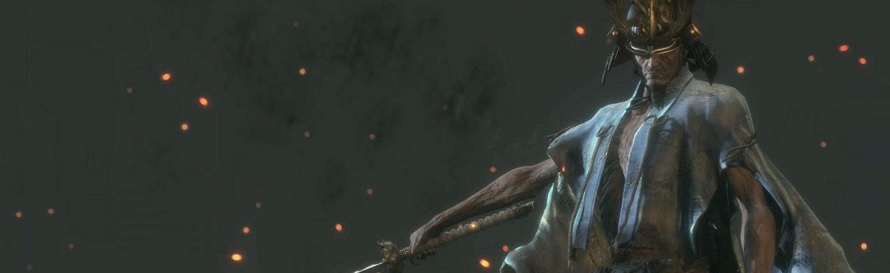
Isshin the Sword Saint – Sekiro

In every way that a final, end-of-game boss should be a toweringly difficult and thorough test of everything that you’ve learned, so is Sekiro’s Isshin the Sword Saint just that. A screamingly fast and highly devastating combatant who evolves in leaps and bounds from one phase of the fight to the next, defeating Isshin the Sword Saint isn’t just an achievement, it’s a platinum-plated celebration of a player’s overwhelming skill, reaction speed and battlefield IQ. A true end-of-game big bad if there ever was one.


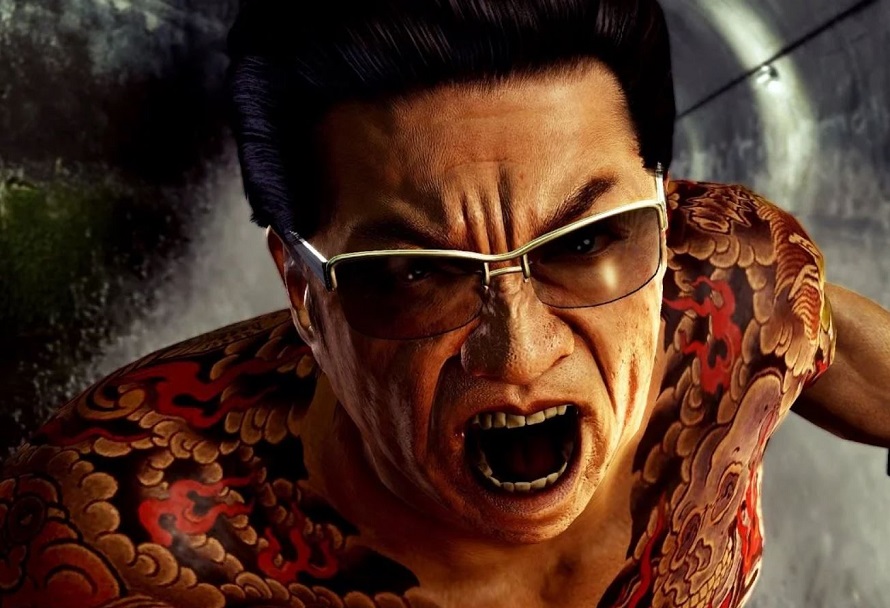
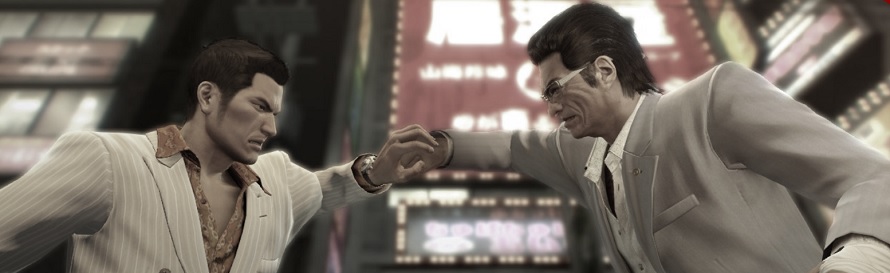
Kuze – Yakuza 0 

Longtime Dojima family lieutenant Daisaku Kuze is a force to be reckoned with, make no mistake. An elder statesman Yakuza officer who rather than retire behind a desk has vowed to remain on the street in order to keep breaking skulls, in Kuze’s mind player protagonist Kiryu is a vagrant, believing him to be an arrogant upstart villain who wants nothing more than personal glory at the expense of the Dojima family.

Emboldened by a seemingly inexhaustible supply of righteous fury, Kuze proves to be a more than formidable combatant and a constant threat to Kiryu. The eventual result? Players must fight an increasingly miffed Kuze some five times across the duration of the game in order to finally put down this very hard old man who just doesn’t know how (or wants to) quit. Whether he’s charging Kiryu on a bike with a pipe in hand or goading the Yakuza series frontman into a brawl in a torturer’s basement, each and every scrap with Kuze lingers long in the memory.


Mr. X – Resident Evil 2

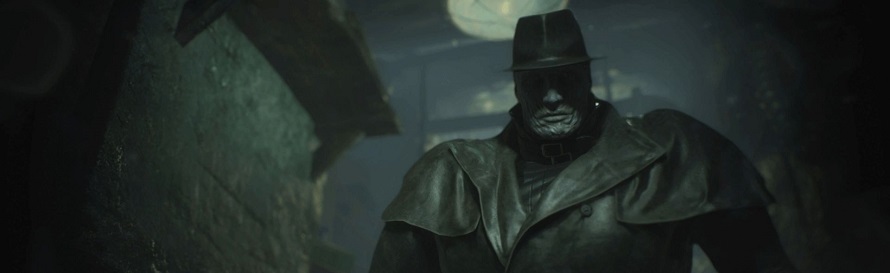
Imagine a massive undead version of the Terminator that soaks up bullets like Brock Lesnar does red meat, and you’re somewhat close to the intimidating spectacle that is Resident Evil 2’s Mr. X. A relentless force, Mr. X’s thunderous footsteps are a grim prelude to the chase that invariably follows as he shows up both when you least expect it and when you least need him to. Look, if your heart doesn’t jump out of your chest each time the fedora wearing Mr. X storms onto the scene, then there’s something wrong.


Ornstein & Smough – Dark Souls

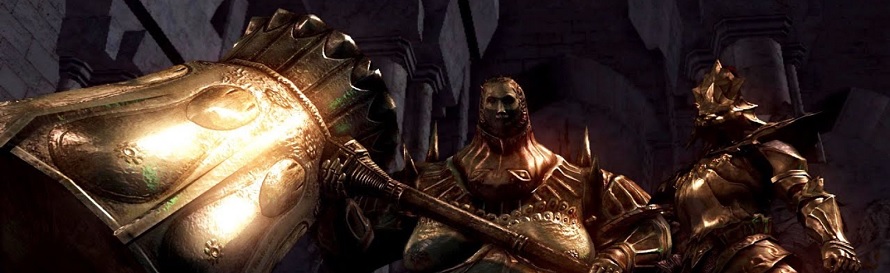
You see, depending on the order in which you vanquish Orstein and Smough, both the fight and the rewards you get for coming out the other side can vary greatly. For instance, if you fancy an easier scrap, dispatching the lanky Ornstein first will nab you the armour of his partner as soon as the fight is over. Conversely, those who crave a challenge can flip the order and attempt to kill Smough first, which not only makes the battle much harder but grants extra loot at the end. 


Ragnaros – World of Warcraft Classic

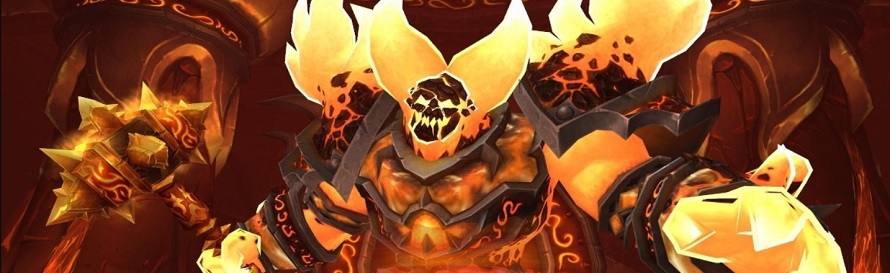
One of the most defining memories for anyone who played World of Warcraft at the time of its initial release was Ragnaros, the super popular MMORPG’s first honest-to-goodness raid boss. A gargantuan fire elemental titan, the Ragnaros battle in the depths of Molten Core was World of Warcraft’s first-ever 40-man raid, in which every player and every class had a vital role to play in a hugely epic scrap that spanned multiple phases. To this day, there still really hasn’t been another boss battle in Blizzard’s long-running MMORPG effort that has come close and so we duly salute the big fiery lad in the lava pit.


So what was the most satisfactory boss fight you’ve had? Comment below and head over to the Green Man Gaming Community to see what all our gamers have to say.

A Beginners Guide To Getting Started In Mount & Blade II: Bannerlord

Mount and Blade II: Bannerlord continues to stand out in the action RPG genre, offering an expansive, sandbox-style experience set in the land of Calradia. For both newcomers and veterans of the series, the game’s rich world and complex mechanics can be overwhelming. However, with the right tips, you can quickly immerse yourself in the game and start building your legacy. Here’s a set of essential tips to help you get started or refine your gameplay in the ever-evolving Mount and Blade II: Bannerlord.


1. There’s No Shame in Playing on Easier Difficulty

One of the key attractions of Bannerlord is its challenge, but if you’re struggling, don’t feel bad about starting on an easier difficulty. Mount and Blade II offers a wide range of customizable difficulty settings. Starting on very easy mode can give you a better chance at survival, especially in the early hours of the game. Don’t forget: the game allows you to adjust the difficulty at any time, giving you the flexibility to fine-tune the challenge as you gain more experience.

The difficulty options aren’t just about overall difficulty; they can be fine-tuned to suit specific aspects, such as combat damage or enemy movement speeds. This flexibility means you can tailor the experience to your liking and gradually ramp up the difficulty as you become more proficient.


2. Don’t Skip the Combat Tutorial

Combat in Mount and Blade II: Bannerlord can be tricky, especially for new players. Even if you’re a veteran of the series, it’s a good idea to revisit the combat tutorial. The tutorial covers essential mechanics like timing, blocking, and manoeuvring your troops – skills that are crucial for surviving in both large-scale battles and one-on-one skirmishes.

Over time, combat mechanics have been fine-tuned with updates, making the tutorial even more useful for understanding the intricacies of weapon handling and mounted combat.


3. Use Multiple Save Slots

As you adventure through Bannerlord, you will undoubtedly encounter moments of unexpected failure, especially during large-scale battles or when facing powerful factions. Bannerlord’s autosave feature can be unforgiving, so having multiple save slots is a smart strategy. You can save frequently in different slots to ensure that if things go wrong, you won’t have to backtrack too far.

This practice remains important with the release of new updates, as various changes to the game can impact your strategies or outcomes in battle, making quick access to earlier saves a useful tool.


4. Recruit Companions Early

Companions, known as “mates” in the game, are essential to your army’s success. These hero-class characters bring much-needed abilities such as healing, leadership, and specialized skills. They’re also significantly more powerful than regular troops.

Make sure you recruit companions early on to help you with both combat and non-combat roles. Companions can also be levelled up, so investing time in them early can make your army much more formidable down the line. New patches have introduced additional companions and customization options, making this even more beneficial as you progress.


5. Don’t Hoard Gold – Spend Wisely

Gold is essential to building and maintaining your army, but early on in the game, you should prioritize quantity over quality. Recruiting a larger number of lower-tier soldiers can help you win early battles without bankrupting yourself.

That said, don’t waste gold on unnecessary luxuries. Focus on building your forces, and remember that Bannerlord’s economy is dynamic, meaning you’ll need to stay mindful of the costs of maintaining a larger army as you expand and progress in the game.


6. Use Archers to Your Advantage

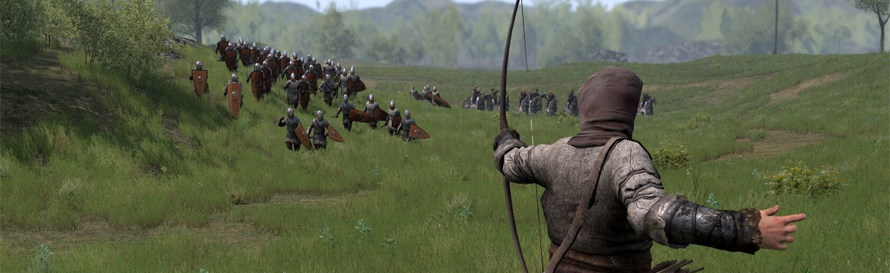
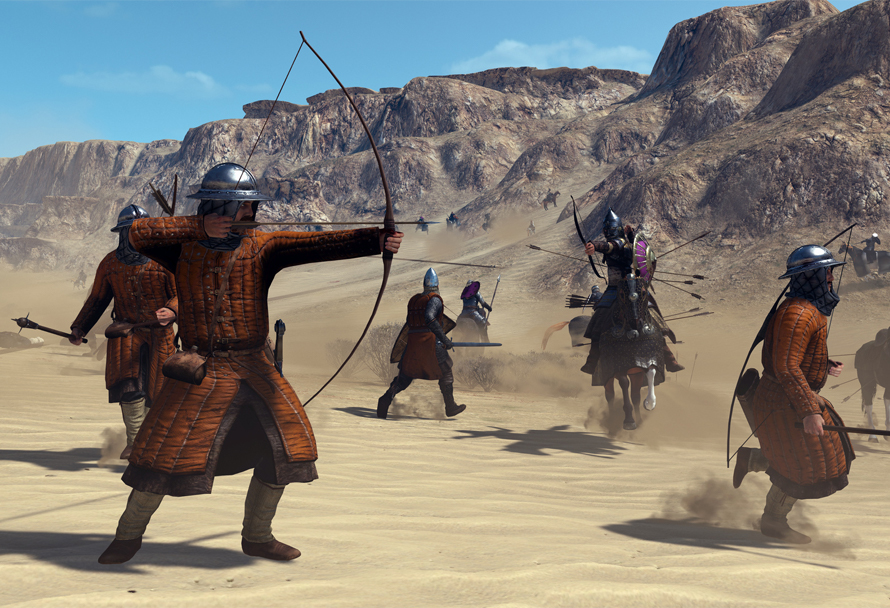
Archers continue to be one of the most effective unit types in Mount and Blade II: Bannerlord. Their ability to deliver devastating damage from a distance, particularly in large-scale battles, is crucial. A solid strategy is to position archers behind your front line of melee fighters, allowing them to rain arrows on enemies while staying relatively safe.

Make sure you position your archers carefully to avoid friendly fire. Recent patches have adjusted archery mechanics, improving their accuracy and effectiveness, making them even more important as a core part of your army.


7. Build Workshops for Steady Income

Building workshops remains one of the most reliable ways to earn money in Bannerlord. Workshops provide a consistent stream of income with minimal risk compared to caravans, which can be vulnerable to enemy attacks.

The addition of new workshops and locations in the latest updates gives you even more options for creating passive revenue streams, and the ability to expand these businesses can help fund your military campaigns with a stable cash flow.


8. Focus on Completing Main Quests Early

While it’s tempting to get lost in side activities like bandit hunting and looting, completing the main quests in Mount and Blade II: Bannerlord is critical for gaining early-game power and unlocking new features. The main quests will help you build your clan’s influence and provide important rewards that will benefit your empire-building efforts.

Even if you’re focused on creating your own story, don’t neglect these quests – they provide structure and context to the world of Calradia, helping you navigate its complex politics.


9. Carry a Shield at All Times

Shields are one of the most valuable pieces of equipment you can carry in Mount and Blade II: Bannerlord. No matter how skilled you become, there will be times when you’re surrounded by enemies or need to buy time for reinforcements to arrive. A large shield can absorb incoming damage, giving you the breathing room you need to regroup or counterattack.

Recent patches have made shields even more viable, with improved stats and the ability to block a wider range of attacks, making them even more critical in both one-on-one duels and larger battles.


Once you’re comfortable with the basics of the game, you can dive deeper into Mount and Blade II: Bannerlord’s many factions, trade systems, and political dynamics. If you’re looking to enhance your strategy further, guides to factions and maps are excellent resources for understanding Calradia’s intricate world. Whether you’re interested in learning more about factions or exploring the expansive map for strategic opportunities, there’s always something new to discover.

Mount & Blade II: Bannerlord Map and Faction Location Guide

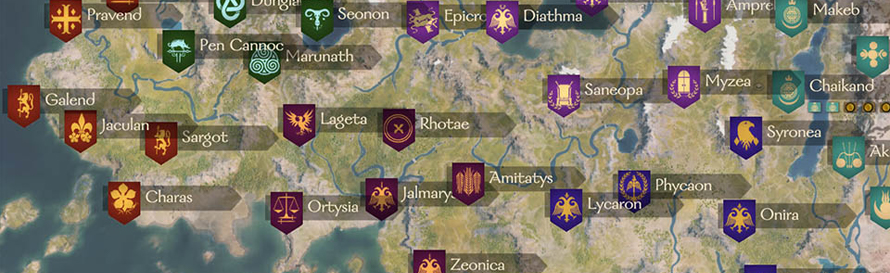
After years of anticipation, Mount & Blade II: Bannerlord has delivered on its promise of large-scale medieval warfare, deep sandbox gameplay, and a vast, living world. Central to that world is its map – the continent of Calradia – a dynamic battlefield where politics, trade, and open warfare shape every campaign.

Whether you’re chasing down roaming bandits or building your own empire, understanding the layout of the land and the factions that inhabit it is key to your success. Here’s a detailed breakdown of the world map and the factions that dominate it.


The Map of Calradia

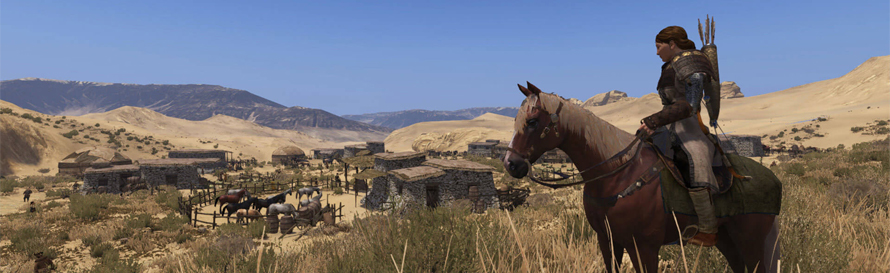
Calradia is a richly varied continent filled with deserts, forests, mountains, and plains, each home to a unique culture. With eight major factions and countless minor ones, every part of the map tells a story — from snowy northern tundras to sunbaked southern sands.

The map is larger and more complex than in Mount & Blade: Warband, and faction placement affects everything from strategy to trade routes to tactical engagements. Let’s look at each major faction and its territory.


Vlandians

  • Location: Western Calradia, near the coastline
  • Inspiration: Normans/Feudal Europeans
  • Leader: King Derthert
  • Troop Specialization: Heavy cavalry and crossbowmen
  • Faction Bonus: +20% experience to troops from battles

Vlandia is a powerful feudal kingdom with strong economic centres and well-defended borders. Their heavy cavalry and elite crossbow units make them a formidable force both defensively and offensively.


Sturgians

  • Location: Northern Calradia, across snowy forests
  • Inspiration: Norse/Slavic cultures
  • Leader: Prince Raganvad
  • Troop Specialization: Heavy infantry and shock troops
  • Faction Bonus: -20% movement speed penalty in snow

Sturgia excels in infantry-focused warfare and is adapted to harsh northern terrain. Their economy benefits from fur trading and woodcutting, making them rugged and resourceful.


Northern, Southern, and Western Empires

  • Location: Central Calradia (split into three regions)
  • Inspiration: Byzantine Empire
  • Leaders:
    • Northern Empire – Senator Lucon
    • Southern Empire – Empress Rhagaea
    • Western Empire – General Garios
  • Troop Specialization: Balanced units with strong cataphract cavalry
  • Faction Bonus (All Empires): +20% construction speed for town projects, wall repairs, and siege engines

Once a unified empire, the Calradic Empire has fractured into three competing states, each claiming to be the legitimate successor. They dominate the centre of the map, making them geopolitically pivotal.


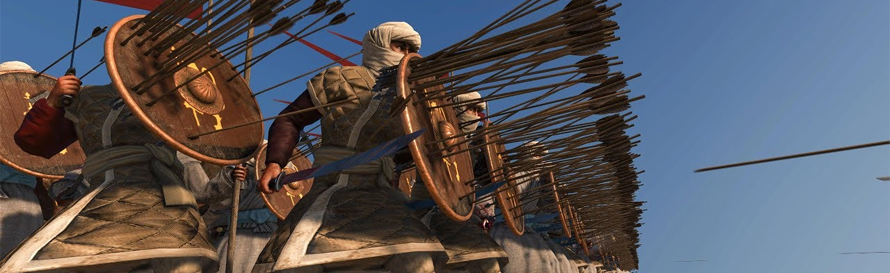
Aserai

  • Location: Southern Calradia, mostly desert terrain
  • Inspiration: Pre-Islamic Arab tribes
  • Leader: Sultan Unqid
  • Troop Specialization: Mixed cavalry and infantry
  • Faction Bonus: 30% cheaper caravans, 10% less trade penalty

The Aserai control vast deserts and rely on commerce and mobility. Their mixed armies are especially effective in open terrain, and their economy thrives on trade and caravans.


Khuzait Khanate

  • Location: Eastern Calradia, steppe region
  • Inspiration: Mongol tribes
  • Leader: Khan Monchug
  • Troop Specialization: Horse archers and light cavalry
  • Faction Bonus: +10% campaign map speed for cavalry units

The Khuzaits dominate the steppes with blisteringly fast armies. Their horse archer units are perfect for hit-and-run tactics, making them deadly in open-field engagements.


Battanians

  • Location: Western highlands and forests
  • Inspiration: Celtic tribes
  • Leader: King Caladog
  • Troop Specialization: Archers and guerrilla infantry
  • Faction Bonus: -10% movement penalty in forests

Battania is a rugged kingdom of skilled archers and forest warriors. They excel at ambush tactics and defensive play in rough terrain.


Each faction in Mount & Blade II: Bannerlord brings unique strengths, regional advantages, and strategic challenges. Whether you prefer fast cavalry warfare, infantry-heavy armies, or balanced, empire-building playstyles, your faction choice will shape your journey through Calradia.

A Meticulous Analysis On The Writing Of ‘V’ From Devil May Cry 5

Major spoilers for Devil May Cry 5 are contained within this article.

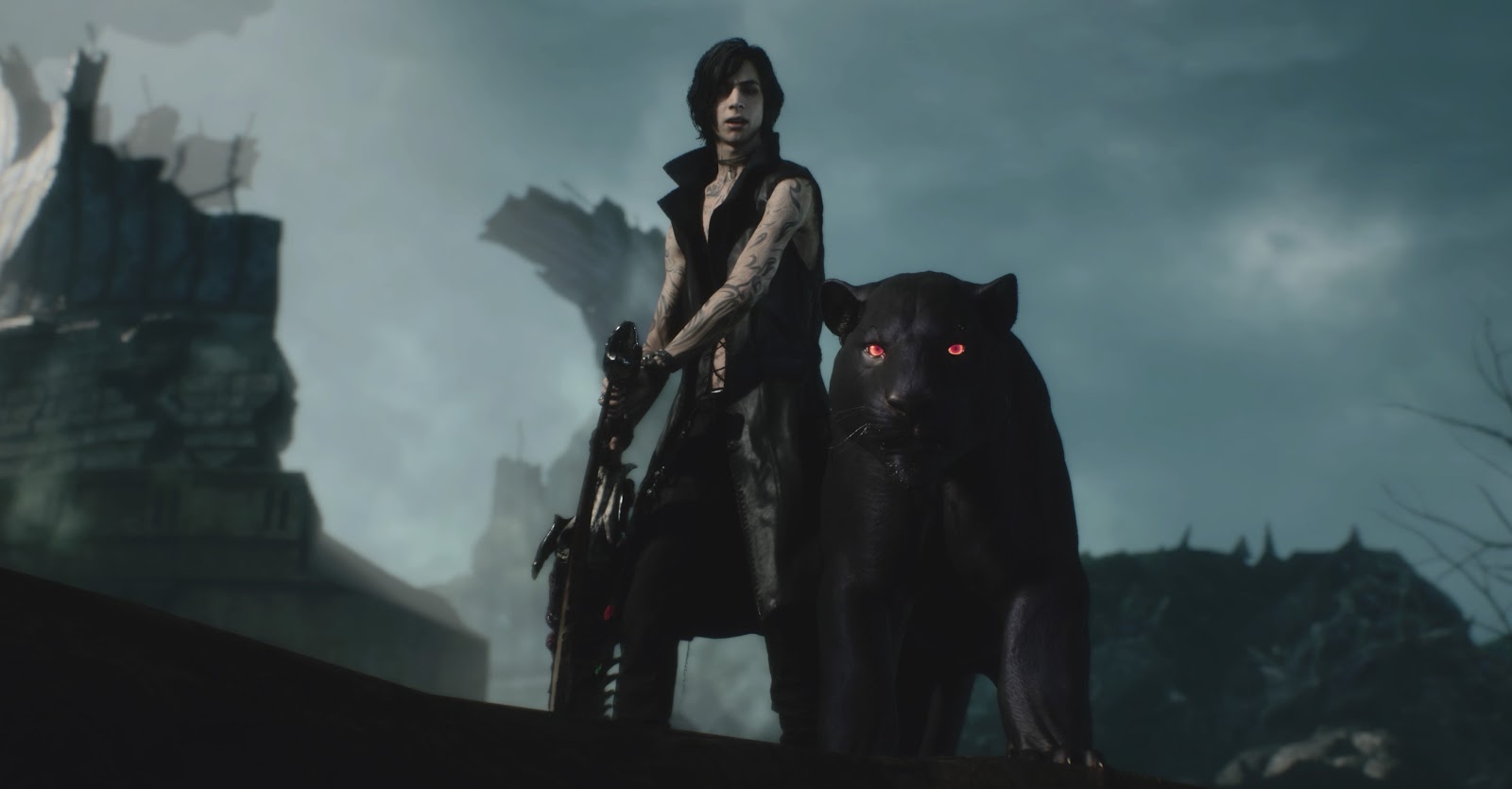
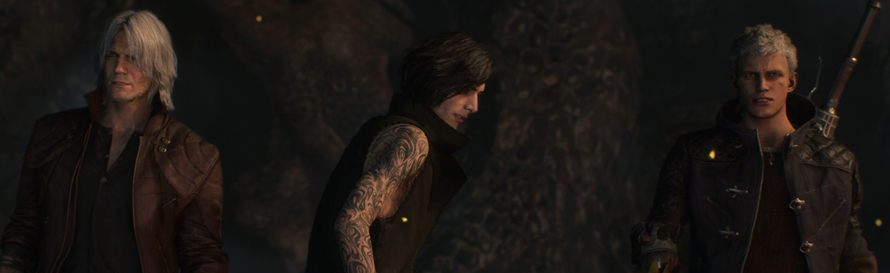
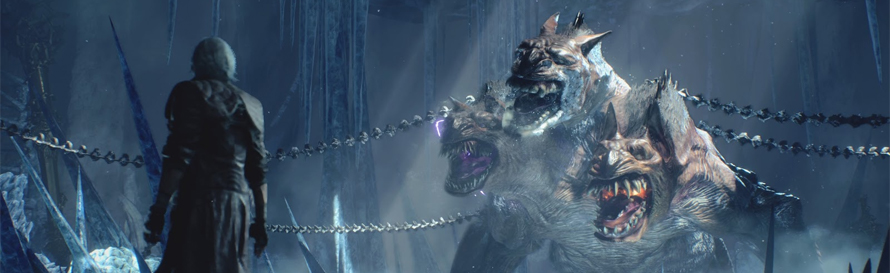
Devil May Cry 5 excels at intertwining tremendously enjoyable gameplay with a world which emits a sense of ecstatic awe from us as we venture through the desolate hellscape which has grasped the city of Red Grave. Main protagonists Nero, Dante, and V all share a similar motive to viscously eradicate the demons roaming the streets. Needless to say, each protagonist has their own endeavours which they wish to undertake. No other protagonists ultimate goal is as mysterious as that of V’s. The character of V exhibits a sense of mystery from the very flourishing moments of the story; making us question if he has any more sinister intent held captive within his soul.

Who is V? What is his story?

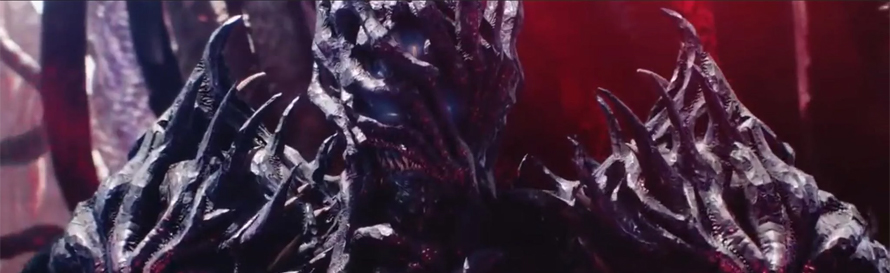
V has a convoluted past which he has evolved from; born from Dante’s brother Vergil when he separated his body into two parts: demon and man. Vergil is the main antagonist of Devil May Cry 5 who has become a mass of twisted flesh exhuming abhorrent nature after separating his former self in two. Namely transforming into “Urizen”. There is no crystal-clear correlation between Urizen and V until later in the story when V combines himself once again with Urizen, transmuting himself back into one amalgamation of both counterparts. V is the embodiment of mystery and uncertainty which makes V such a compelling character. This all interlinks with the thought-provoking writing which is present throughout the entirety of the plot.

Philosophy, mystery, and a whole lot of William Blake references.

Games can draw out many different emotions from us but nothing is more powerful to draw out these emotions than writing which transcends familiarity. V’s writing has been intricately crafted to ensure players have different opinions about V’s true motives throughout the story. V is trapped within a constant perceived state of preternatural alienation for being different from everyone within the world, his only true companions may be seen as his “minions” Griffon, Shadow, and Nightmare. Although he is polite to everyone he meets, there is still something which is hidden underneath the surface, simmering steadily beneath his softly spoken voice.

V always has a book by his side to read from; it is obvious that V takes effusive amounts of pride in being able to articulate his thoughts through not just his own words, but others whose work has been passed down for generations. There is vital significance held within the quotes that V says throughout the game. Before we can have a look at these quotes we first have to understand and analyse V’s own inner cerebral consciousness. The most prominent piece of narrative which allows us to do this is as follows: “I’ve tried to hold together my crumbling flesh with whatever demonic power I have left but… I’m approaching my limit. In separating and regaining my human soul, I’ve realised the gravity of the crime I’ve committed. I’ve realised how important everything was; everything I’ve thrown away in my pursuit for power.”

Not only does this quote showcase V’s sense of reality but it showcases that he realises how futile his journey really was. He has given up hope for the power he sought knowing that he cannot venture too much further without falling to the cracked ground beneath him. There is a clear aspect of both Existentialism and Nihilism exhibited here at the same time, V chooses his own fate. His own choices. V is not Vergil nor Urizen. He is V, so he has his own will, it is not shared but he realises the eventuality that it will be if he wants to live.

As aforementioned, the poet William Blake is a prominent subject in V’s mind who he clearly takes inspiration and comfort from. Intriguingly the poem which V quotes the most from is Proverbs of Hell, fitting is it not? Considering the universe of Devil May Cry. The writers of V have devised perfect symbolism which links to V’s motives. Proverbs of Hell is not just any poem from Blake’s work—no—Proverbs of Hell is a tale about a god manifesting itself in the human mind. Akin to the link between V and Urizen, everything interconnects and through these references we gain a much more coherent understanding of V. “If the fool would persist in his folly, he would become wise.” Just as V persisted in pursuing Urizen and his eventual fate, he became wise and stronger once again by becoming Vergil.

Conclusion

V enraptured me throughout my playthrough of Devil May Cry 5 for his uniqueness and diverse writing. After finishing the game I immediately began learning more about V and I wanted to share my findings with you all. I hope that this article has allowed you personally to garner further knowledge about the character. Now if you’ll excuse me, I have an abundance of demons to slay once again… and perhaps some William Blake poems to read on top of that.

Ori and the Will of the Wisps Multiplayer Guide

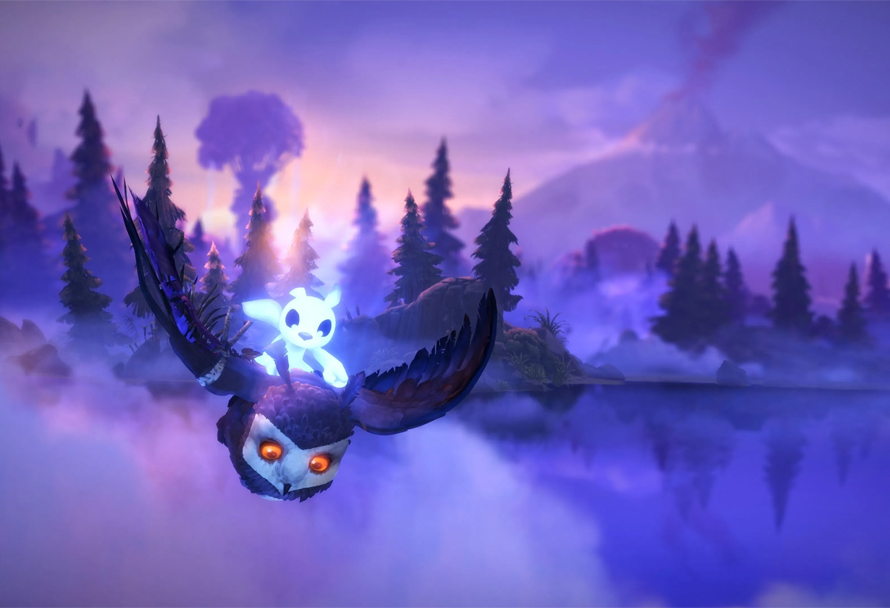
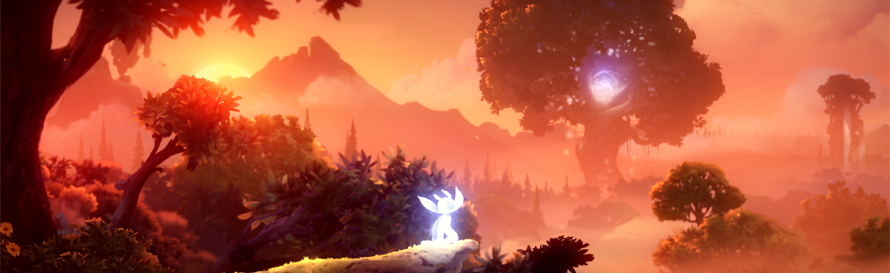
Ori and the Will of the Wisps is undoubtedly one of the best Metroidvanias around. Moon Studios somehow built on the expertly crafted first game and delivered a completely improved sequel full of character, amazing artwork, and a beautiful story. You might have questions about the new entry though, like, what even is Ori, can I buy a plushie, or what is the Ori and the Will of the Wisps Multiplayer? 

Ori and the Will of the Wisps Multiplayer

So, the bad news is that there is no full multiplayer in Ori and the Will of the Wisps. You can’t team up with a friend to take down the dreaded spider boss in co-op, and you can’t smash your friend into a wall using a hammer in a deathmatch either. Granted, the second option would be a little out of character for the game, but hey. 

However, there is a touch of multiplayer in the game, but whether or not you’ll enjoy it properly is based on how much you like racing against your friends. You see, there are things called Spirit Trials in this new game, and they basically function like time trials. 

The Spirit Trials 

The Spirit Trials are actually a lot of fun. Each one challenges you in a different way, with the aim always being to progress through it as quickly as possible. You’ll end up using all of the tools at your disposal, and revisiting them later on in the game with more abilities under your command makes for an exciting way to flex your digital skills. 

The fact that you can do all that with a view to trashing the scores that your friends leave is just the cherry on top. It’s a shame there isn’t a full co-op mode or something similar for the Ori and the Will of the Wisps multiplayer, but the Spirit Trials are an entertaining step towards something more solid in the future. Maybe Ori 3 (Orthree?) will have something more substantial. That being said, there’s nothing wrong with such a well-made single-player game either.

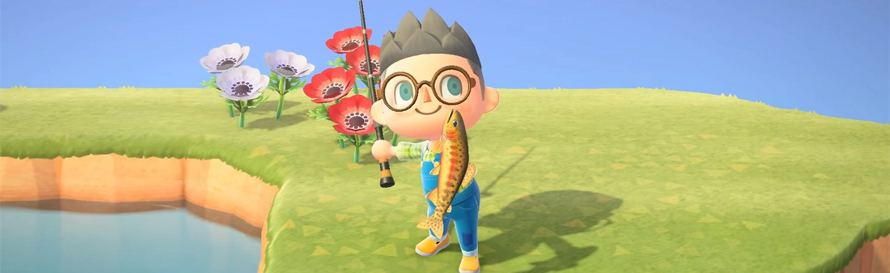
How to catch a Golden Trout in Animal Crossing New Horizons

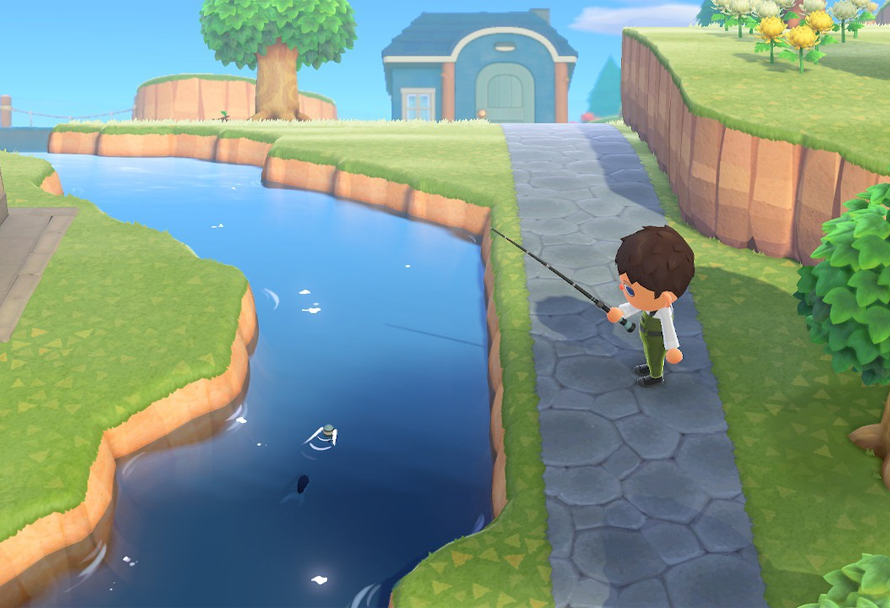
With tons of fish to catch in Animal Crossing New Horizons, the Golden Trout is among the rarest. If you plan to go fishing for this prized catch, there are a few things you’ll need to know before you set out for a day of fishing. Here’s everything we know about how to catch a Golden Trout in Animal Crossing New Horizons.

When to Catch, Where to Find, and How to Sell

As you might have learned already, there are certain fish in New Horizons that can only be caught in specific months of the year at specific times of day – and the Golden Trout is one of them. In New Horizons, the Golden Trout can be caught between 4pm – 9am in the months of March, April, May, September, October, and November.

To find a Golden Trout in Animal Crossing New Horizons, you’ll need to travel to the highest point on your island and cast your line. This means you’ll need to have built a ladder, which will unlock after building Nooks Cranny. Obviously, you’ll also want to make sure you have a fishing pole or two handy for the trip.

Lastly, you’ll need to walk along the beach and collect a decent amount of clams to craft into fish bait at Resident Services. With your bait, pole, and ladder in hand, you should be all set to begin your hunt for a valuable trout, assuming its the right month and time.

Using your ladder, travel to the highest point on your island and make your way to a body of water. If you don’t see a fishing spot, throw some bait in the water and then cast your line. Since the Golden Trout is one of the rarest fish in the game, it’ll likely be a while before you reel in the big catch.

To recap, to catch a Golden Trout in Animal Crossing New Horizons:

  • Make sure you have a ladder, fishing pole, and bait in your inventory
  • Check the date and time to make sure a Golden Trout can be caught
  • Travel to the highest point on your island and find a pond to fish in
  • Keep fishing until you reel in the big catch

While it may seem like a lot of work, the seasonal fish is actually quite valuable. Specifically, the Golden Trout can be sold at the shop for 15,000 Bells – not a bad day’s work, huh? However, if you’re feeling generous, you can also donate your catch to Blathers at the museum, who will proudly display your prized catch.

For more tips check out our full Animal Crossing New Horizons Beginners guide and join the Green Man Gaming Community site to join the conversation with all our gamers.

Gears 5 Best Relic Weapons Guide

Over the years the Gears of War franchise has offered players hours upon hours of content to get stuck into. Everything from challenging campaigns, competitive multiplayer, horde mode and more. Not only that, there’s also two other areas that the franchise has always been good at, and that’s collectibles and achievements. 

It started with cog tags – gears’ version of dog tags, and the Seriously 1.0 achievement which needed you to get 10,000 kills in multiplayers matches. Since then, they’ve evolved to include more ridiculous versions of ‘Seriously’ and the collectibles expanded to include documents and files with lore attached to them to build on the world of Gears of War.

The Gears 5 collectables and achievements are no different. With over 90 different items for players to find and the base game featuring 68 achievements for the completionists amongst us. 

Gears 5 Collectibles

Across the 4 acts of the campaign collectable items in Gears 5 are split between a few different types, cog tags, files and documents. Then you have other items like glasses, watches, pictures and more. But probably the most fun Gears 5 collectables to squire are the Relic Weapons, of which there are 17 to collect. Mainly because these actually have an impact on gameplay and provide you with new and exciting versions of Gears 5 weapons that mostly cause maximum devastation in a typical Gears of War fashion. I want to share with you some of the best ones! For the completionists out there Relic weapons are worth tracking down as there are some Gears 5 achievements tied to them. 

Boomshot Relic 

This changes the Boomshot to hold three explosive rounds and lets you fire them all by holding down the trigger. Which means you can deal massive damage in a short amount of time – perfect for when the Locust start to swarm you. 

Longshot Relic

People say two heads are better than one. But Gears 5 says two shots are better than one! The Longshot Relic provides you with a bonus extra shot when you perform an active reload successfully. Exactly what you want when popping heads from afar. 

Torque bow Relic

Normally I’d say that bigger explosions are better. HOwever, in the Torque bow’s case the relic version removes the explosive tip. In exchange you get a much quicker reload time. If you’re accurate with headshots then this bonus can prove deadly. 

Lancer Relic

The Lancer is an iconic weapon. When you think Gears of War you think of chainsaw assault rifles. You therefore cannot have a list of best weapons without it. The Lancer Relic gives players the ability to perform a rifle-butt that stuns enemies, setting them up for the kill with the weapons chainsaw. We all want more chainsaw action in Gears and this is the perfect weapon to help you do that. 

Overkill Relic

What could possibly make a shotgun more destructive, why, making it automatic of course. If you’re looking to clear out enemies when you’re in a tight spot the Overkill Relic will gladly assist you. 

When it comes to Gears 5 collectables, you’ll be kept busy for hours searching for them all. The Relic weapons are just there to make that journey a little more interesting.